

Boulder County announces omicron case; patient has recent travel to South Africa
Boulder County identified its first case of the omicron variant Friday, county officials said, 24 hours after Colorado confirmed its first case.
The Boulder County man had recently traveled to South Africa, the county’s public health department said. The patient tested positive for COVID-19, and given their recent travel history, their sample was flagged for further investigation. The omicron case was confirmed by the state Department of Public Health and Environment on Friday. The patient is isolated, and health investigators are notifying their close contacts.
A spokeswoman for the county health department said the man is fully vaccinated, has mild symptoms and is recuperating at home. She said she has no booster information, and it remains unclear when he returned.
The state identified its first omicron case Thursday, in an Arapahoe County woman. She had also recently traveled to southern Africa. She has mild symptoms, officials said, and her close contacts have thus far tested negative.
The state is recommending any international travelers be tested within three to five days of returning, regardless of symptoms or known exposures. Rachel Herlihy, the state’s epidemiologist, said Thursday that the state was also working with the Centers for Disease Control and Prevention to develop increased travel monitoring.
“Because the omicron variant is new, we are still gathering information about whether it is more contagious and whether it will cause people to have more severe disease,” Michelle Haas, the chief medical officer of Boulder County Public Health, said in a statement. She added that the identification of a new variant is “not unexpected.” “However, what little we do know would indicate there is still some protection from vaccines, and that masking and other mitigation strategies are still highly effective.”
The state health department uses targeted sequencing for specific samples, like the Boulder County case, as well as a random sampling of roughly 15% of positive cases statewide. It also uses wastewater testing to identify any variants moving on a community-wide level.
Gov. Jared Polis said Thursday that he wasn’t “terribly alarmed” by the variant’s arrival in Colorado, which was inevitable. He said the state’s detection systems indicate that “if community transmission is happening in Colorado, it’s very small.” Much remains unknown about the latest variant, and Polis said more information will likely come in the next two to three weeks.
Both the state and Boulder County said that current mitigation strategies – vaccines, boosters, masks, distancing and good hygiene – will remain the primary tools to ward off omicron, just as they were for delta and dominant strains before it.
The variant, first reported in South Africa last week, appears to have been spreading in Europe prior to its official identification. It’s been labeled a “variant of concern” because early signs suggest its more transmissible than the initial strain of the virus.
New COVID-19 cases in South Africa have burgeoned from about 200 a day in mid-November to more than 16,000 on Friday. Omicron was detected over a week ago in the country’s most populous province, Gauteng, and has since spread to all eight other provinces, Health Minister Joe Phaahla said.
Little is known about the new variant, but the spike in South Africa suggests it might be more contagious, said South Africa’s Sikhulile Moyo, the scientist who may have been the first to identify the new variant, though researchers in neighboring South Africa were close on his heels. Omicron has more than 50 mutations, and scientists have called it a big jump in the evolution of the virus.
It’s not clear if the variant causes more serious illness or can evade the protection of vaccines. Phaahla noted that only a small number of people who have been vaccinated have gotten sick, mostly with mild cases, while the vast majority of those who have been hospitalized were not vaccinated.
But in a worrisome development, South African scientists reported that omicron appears more likely than earlier variants to cause reinfections among people who have already had a bout with COVID-19. Herlihy, Colorado’s state epidemiologist, said earlier this week that the potential for reinfections from omicron are “certainly going to be a possibility.”
The Associated Press contributed to this report.


From Pope Francis to Charlie Kirk, many deaths in 2025 had a wide impact
The Associated Press
the-associated-press@coloradopolitics.com
Updated 4 hours ago
The death of Pope Francis brought change to the Catholic Church, which counts 1.4 billion adherents and is now led — for the first time — by an American pope. The fatal shooting of conservative activist Charlie Kirk as he...

Democrats and Republicans tied on economy heading into 2026, survey finds
Rachel Schilke, Washington Examiner
rachel.schilke.washington.examiner@gazetteedit.wpenginepowered.com
Updated 14 hours ago
Voter confidence in Democrats and Republicans regarding the handling of the economy is evenly split, according to recent polling, highlighting the challenge both parties face on a central matter ahead of the 2026 midterm elections. A survey released on Thursday...

Advance Colorado initiative allowing law enforcement cooperation with ICE clears 200,000 signatures
Marissa Ventrelli
marissa.ventrelli@coloradopolitics.com
Updated 13 hours ago
A petition supporting a proposed 2026 ballot measure that would allow law enforcement to cooperate with federal immigration officers has received more than 200,000 signatures, according to Advance Colorado. If passed, Initiative 95 would allow Colorado law enforcement to report...

Trump sets his sights on peace progress in the new year with Netanyahu and Zelensky meetings
David Zimmermann Washington Examiner
davidzimmermannwashingtonexaminer@wpstage.coloradopolitics.com
Updated 13 hours ago
In the days leading up to the new year, President Donald Trump is reportedly preparing to meet with Israeli Prime Minister Benjamin Netanyahu and Ukrainian President Volodymyr Zelensky again to discuss peaceful resolutions to the foreign nations’ respective conflicts. The...
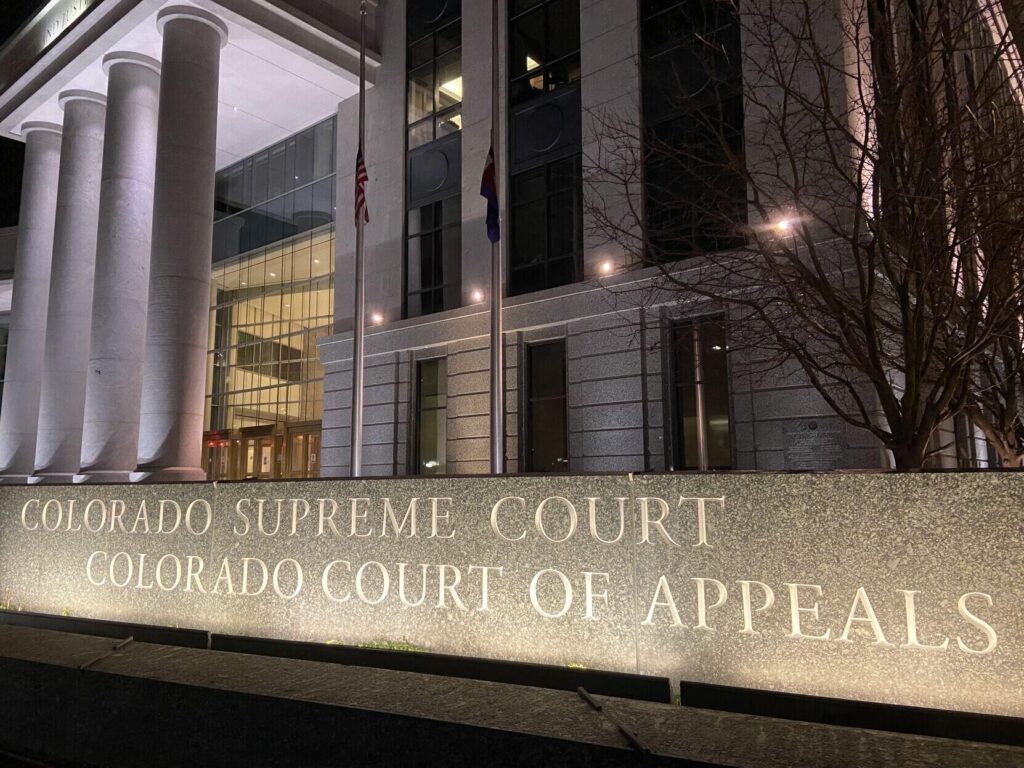
$3 million penalty upheld against for-profit college following half-decade of appeals
Michael Karlik
michael.karlik@coloradopolitics.com
Updated 9 hours ago
Colorado’s second-highest court upheld a $3 million penalty against a defunct for-profit college on Wednesday, agreeing the state had proven multiple violations of its consumer protection law. The Court of Appeals’ decision against CollegeAmerica followed a trial judge’s order in...

Colorado ski areas suffer, nobody has measured over 70 inches of total snowfall for winter 2025-26
Jonathan Ingraham
jonathan.ingraham@denvergazette.com
Updated 15 hours ago
Big changes coming as 10-15 inches of snow possible from incoming weekend storm, second snow event could double figure to start 2026 No Colorado ski area or resort has surpassed 70 inches of reported or estimated total snowfall amounts for...
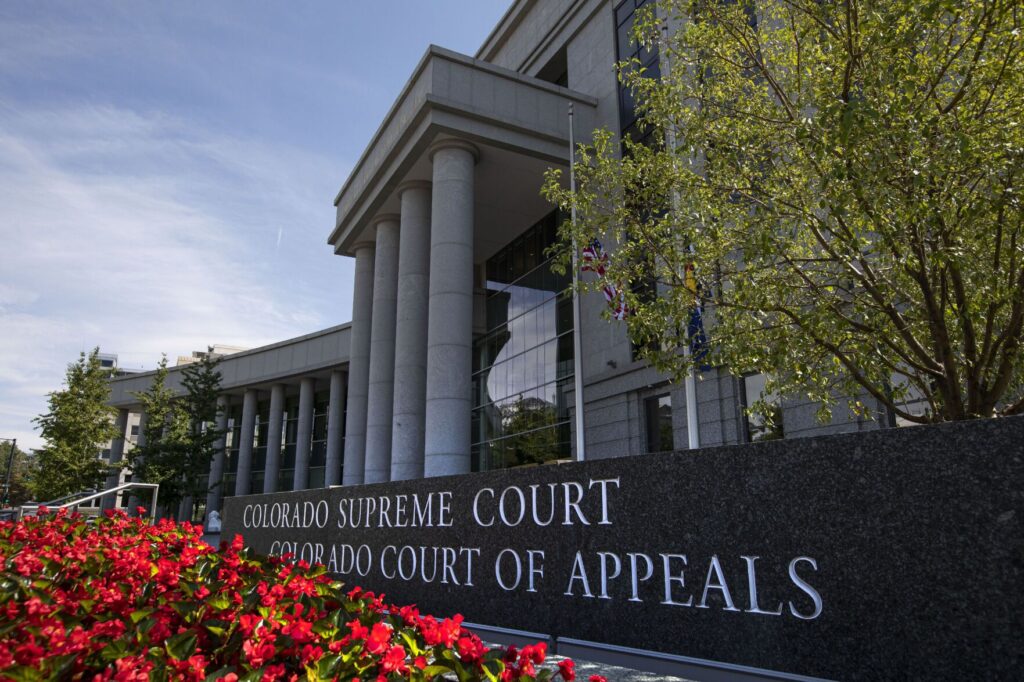
Appeals court decides violations of child custody orders may be prosecuted per child
Michael Karlik
michael.karlik@coloradopolitics.com
Updated 1 day ago
Colorado’s second-highest court concluded for the first time on Wednesday that a defendant may be charged with violating a child custody order based on the number of children affected, not the number of orders violated. Mesa County jurors convicted Tiffany...

Douglas County judge violated defendant’s right to counsel at sentencing, appeals court finds
Michael Karlik
michael.karlik@coloradopolitics.com
Updated 1 day ago
A Douglas County judge violated a defendant’s constitutional right to the counsel of her choice by refusing to postpone sentencing until her lawyer returned to the country, Colorado’s second-highest court concluded on Wednesday. In early 2023, Lyndie J. Felsher received...

New year, higher wages for Denver hourly and tipped workers
Deborah Grigsby
deborah.smith@denvergazette.com
Updated 9 hours ago
Some Denver workers will be starting the new year with a pay raise as the city’s minimum wage rises to $19.29, up from $18.81. For tipped food and beverage workers, the minimum wage will jump from $15.79 to $16.27 per...

Businesses face losses after Xcel power shutoffs
Sage Kelley
sage.kelley@denvergazette.com
Updated 15 hours ago
Restaurants west of Denver are still coming to grips with product losses and future revenue concerns after power shutoffs last week by Xcel Energy, which cited high winds as the rationale for the decision. “It’s like living in a third-world...
PREV
PREVIOUS

Imagination Library of Colorado launches statewide expansion
When last we saw Republican former state Sen. Jack Tate, he was headed off to his hometown of Nashville, Tenn., to help manage a nonprofit called Project Return and take care of his mother. But longing to come home to his Colorado family, he’s now managing another nonprofit that he had a hand in setting […]

Polis says he is not 'terribly alarmed' by omicron variant during ABC appearance
Gov. Jared Polis brushed off concerns about the omicron variant’s presence in Colorado during an appearance Sunday on ABC’s national news program “This Week.” Two omicron cases have been identified in Colorado, according to the state health department. The first case was confirmed Thursday in an Arapahoe County woman, followed by a Boulder County man […]