

Judge reverses decision to dismiss case of Colorado Springs I-25 protester
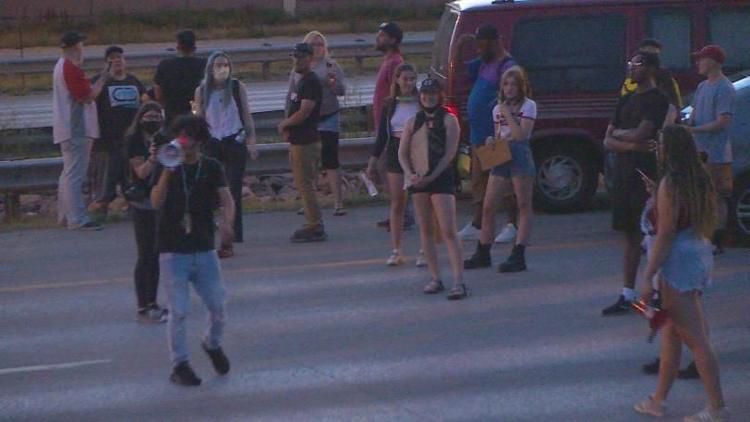
A judge on Tuesday reversed a ruling dismissing criminal charges against a Colorado Springs woman who used a vehicle to block Interstate 25 during a June 2020 Black Lives Matter protest.
In a ruling filed just before 5 p.m. Tuesday, district judge G. David Miller remanded the case of Molly Avion back to county court after a May ruling found the statute used to charge her could have invited arbitrary enforcement that could chill her First Amendment rights because it was “unconstitutionally vague” and dismissed the charges against her.
Judge tosses case against BLM protester in Colorado Springs, citing free speech
Avion, a 21-year-old artist who lives in Colorado Springs, was charged in 2020 with obstructing a public highway in a June 2020 Black Lives Matter protest that stretched across Interstate 25 near downtown Colorado Springs, blocking traffic for about half an hour.
After Miller’s ruling, Avion, who according to the ruling conceded before her case was dismissed that she had blocked traffic with a vehicle, will be sent back to county court for prosecution. According to court records, she’s due back Nov. 29.
In the ruling, Miller took aim at the defense’s claim and senior county judge Stephen Sletta’s eventual ruling that the statute barring people from obstructing highways, which includes an exception that people can do so if they’ve been granted the “legal privilege,” is vague and does not sufficiently define what that privilege might look like.
The vagueness of “legal privilege,” Sletta ruled in May, could cause enforcement of the statute to be arbitrary and selective, threatening Avion’s rights to free speech.
But in his ruling, Miller said that while that privilege was not specifically defined, the statute only seeks to prohibit someone from knowingly, intentionally, or recklessly obstructing a public area, and doesn’t reach into restricting someone’s constitutional rights.
In fact, Miller ruled, putting a stop to certain activities is entirely within the powers of law enforcement agencies, even if that means incidentally restricting someone’s right to free speech and assembly, if the conduct is “reasonably related to a legitimate safety interest.”
Ending obstructions on public highways, he said, can fall under that public safety category.
“It is not reasonable for the defendant in this case to believe that because she was exercising her right to protest a significant public issue, that she also had a commensurate right to shut down an interstate highway,” Miller wrote in the ruling. “It cannot be said that one can have a ‘legal privilege’ to cause such an obstruction because they are exercising their First Amendment rights.”
“There are plenty of other public areas available for exercising First Amendment rights which could have been utilized without creating an obstruction,” he added.
To obstruct an interstate, Miller said, common knowledge holds that someone would have to obtain a license, permit or some other form of government-sanctioned approval.
He also made clear that while I-25 is a public area many use, high-speed lanes of travel don’t qualify as traditional public forums on which people can gather to exercise their First Amendment rights.
“The statute, which seeks to prohibit intentionally, knowingly or recklessly obstructing public areas (such as an interstate highway), is certainly reasonable to ensure public safety,” Miller said. “The language of the statute does not show any effort to suppress activity due to a disagreement with a particular viewpoint.”
The defense’s claim that the statute was unconstitutional under the Colorado constitution, Miller said, couldn’t be the case because the statute didn’t prohibit a specific type of message in its language.
Miller also addressed claims from Avion’s defense that the Fourth Judicial District Attorney’s Office had vindictively prosecuted protesters for the Black Lives Matter movement for exercising constitutional rights while ignoring other protesters engaged in similar acts.
Defense attorneys, Miller said in the ruling, cited news articles discussing police responses to protests for former president Donald Trump, and compared a lack of arrests in those incidents to enforcement during Black Lives Matter protests.
They failed, however, to bring “any evidence” that prosecutors had misused the statute to only go after people with beliefs similar to Avion’s, Miller ruled.
Colorado Springs public defenders couldn’t immediately be reached for comment on the ruling. Howard Black, spokesman for the Fourth Judicial District Attorney’s Office, said it would be unethical to discuss an active case in a public forum. Miller said he had no further comment on the ruling when called Wednesday.
Eighteen people were originally charged in the 2020 I-25 protest. Some, like Charles Johnson, are still awaiting trial, and have similarly cited outrageous governmental conduct and First Amendment violations through motions.
Those claims, Johnson’s attorney Alison Blackwell said in an October interview, have gone over with mixed results, often because the cases deal with different circumstances.
“All the different protest cases have a different series of facts,” Blackwell said. “Based on my conversations with other attorneys, there [are] different judges ruling differently, so some people are denying the motion, and other judges are dismissing cases.”
Motion to dismiss in Colorado Springs activist’s case alleges ‘egregious’ police enforcement


Appeals court overturns Douglas County vehicular homicide conviction due to faulty jury instructions
Michael Karlik
michael.karlik@coloradopolitics.com
Updated 21 hours ago
Colorado’s second-highest court overturned a defendant’s vehicular homicide conviction and 12-year prison sentence on Thursday after determining a Douglas County judge omitted key language from the jury instructions that could have resulted in a different outcome. James Paul McDonald was...
Federal judge dismisses malicious prosecution claim against former Denver prosecutor
Michael Karlik
michael.karlik@coloradopolitics.com
Updated 2 days ago
A federal judge concluded on Monday that a former Denver prosecutor could not be sued for allegedly causing the arrests of two plaintiffs after they failed to appear for trial on the scheduled date, even though the trial had been...
Judicial discipline commission reports increased transparency, increased submissions
Michael Karlik
michael.karlik@coloradopolitics.com
Updated 2 days ago
The Colorado Commission on Judicial Discipline received 473 misconduct complaints about judges in 2025, which was nearly 29% higher than in 2024 and substantially greater than any time in the past decade. However, only 31 complaints were referred to the commission...
Colorado Gov. Jared Polis ignites fierce debate after raising clemency questions in Tina Peters case
Marianne Goodland
marianne.goodland@coloradopolitics.com
Updated 2 days ago
Gov. Jared Polis ignited a political firestorm Tuesday night after weighing in on the prison sentences of two former Colorado officials — a Democrat and a Republican — convicted of attempting to influence a public servant. The comments quickly fueled...

Colorado Supreme Court signals intervention in dispute over treatment for trans children
Michael Karlik
michael.karlik@coloradopolitics.com
Updated 3 days ago
The Colorado Supreme Court ordered Children’s Hospital Colorado on Tuesday to explain why it should not direct the organization to resume providing certain types of services to transgender children in compliance with the state’s non-discrimination law. Last month, a Denver...
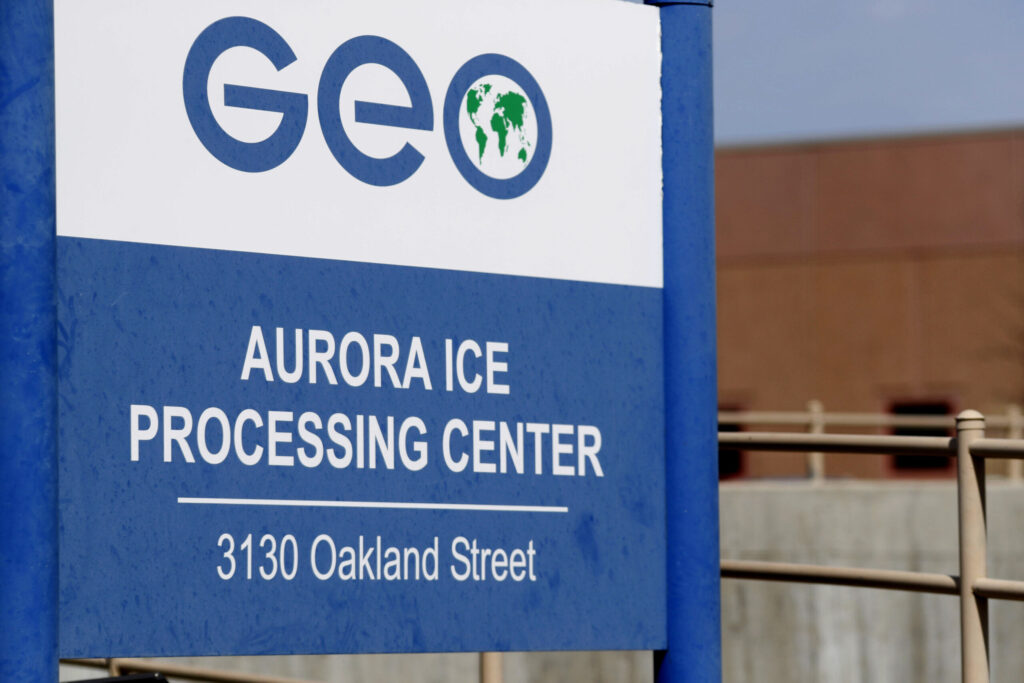
Judge nixes latest policy requiring 7 days’ notice for Congress members to visit ICE facilities
Michael Kunzelman
michael.kunzelman@associatedpress.com
Updated 3 days ago
WASHINGTON (AP) — A federal judge agreed on Monday to temporarily suspend the latest version of a Trump administration policy that requires members of Congress to provide a week’s notice before they can visit immigration detention facilities. U.S. District Judge...
Judge nixes latest policy requiring 7 days’ notice for Congress members to visit ICE facilities
Michael Kunzelman
michael.kunzelman@associatedpress.com
Updated 3 days ago
WASHINGTON • A federal judge agreed on Monday to temporarily suspend the latest version of a Trump administration policy that requires members of Congress to provide a week’s notice before they can visit immigration detention facilities. U.S. District Judge Jia...
Colorado Supreme Court clarifies restraining order violations can always support burglary charge
Michael Karlik
michael.karlik@coloradopolitics.com
Updated 2 days ago
The Colorado Supreme Court’s majority ruled on Monday that a violation of a restraining order can also serve as a basis for finding a defendant guilty of burglary. Under state law, a person commits second-degree burglary by unlawfully entering or...

10th Circuit judge creates vacancy, district court gets new chief judge | COURT CRAWL
Michael Karlik
michael.karlik@coloradopolitics.com
Updated 3 days ago
Welcome to Court Crawl, Colorado Politics’ roundup of news from the third branch of government. A longtime member of the Denver-based federal appeals court will give the president a vacancy to fill, plus Colorado’s federal trial court will see a...

Morgan County man accused of killing wife, staging her suicide charged with first-degree murder
Kyla Pearce
kyla.pearce@gazette.com
Updated 3 days ago
A grand jury announced the indictment of 52-year-old Ronald Lowry, who is accused of killing his wife in October 2023 and staging the crime scene to look like a suicide. Lowry, who was arrested Friday in Morgan County, was charged...
PREV
PREVIOUS

INSIGHTS | Colorado’s off-year election was more than it seemed
A casual observer of politics might see Tuesday’s statewide ballot as much ado about nothing, a zero-sum game. Those of us who spend our days and happy hours gossiping about politics, however, beg to differ. Today is no different than Monday in terms of taxes and laws. Voters rejected raising the sales levy on recreational […]

Senate committee advances nomination of Cole Finegan to be top prosecutor
The U.S. Senate Committee on the Judiciary advanced the nomination of Cole Finegan to be the U.S. Attorney for Colorado on Thursday, setting him up for a final Senate confirmation vote in the near future. Finegan is managing partner at the international law firm Hogan Lovells and previously spent four years as both the chief […]