

Lawmakers approve bills restoring PERA cut, addressing police and fire benefits
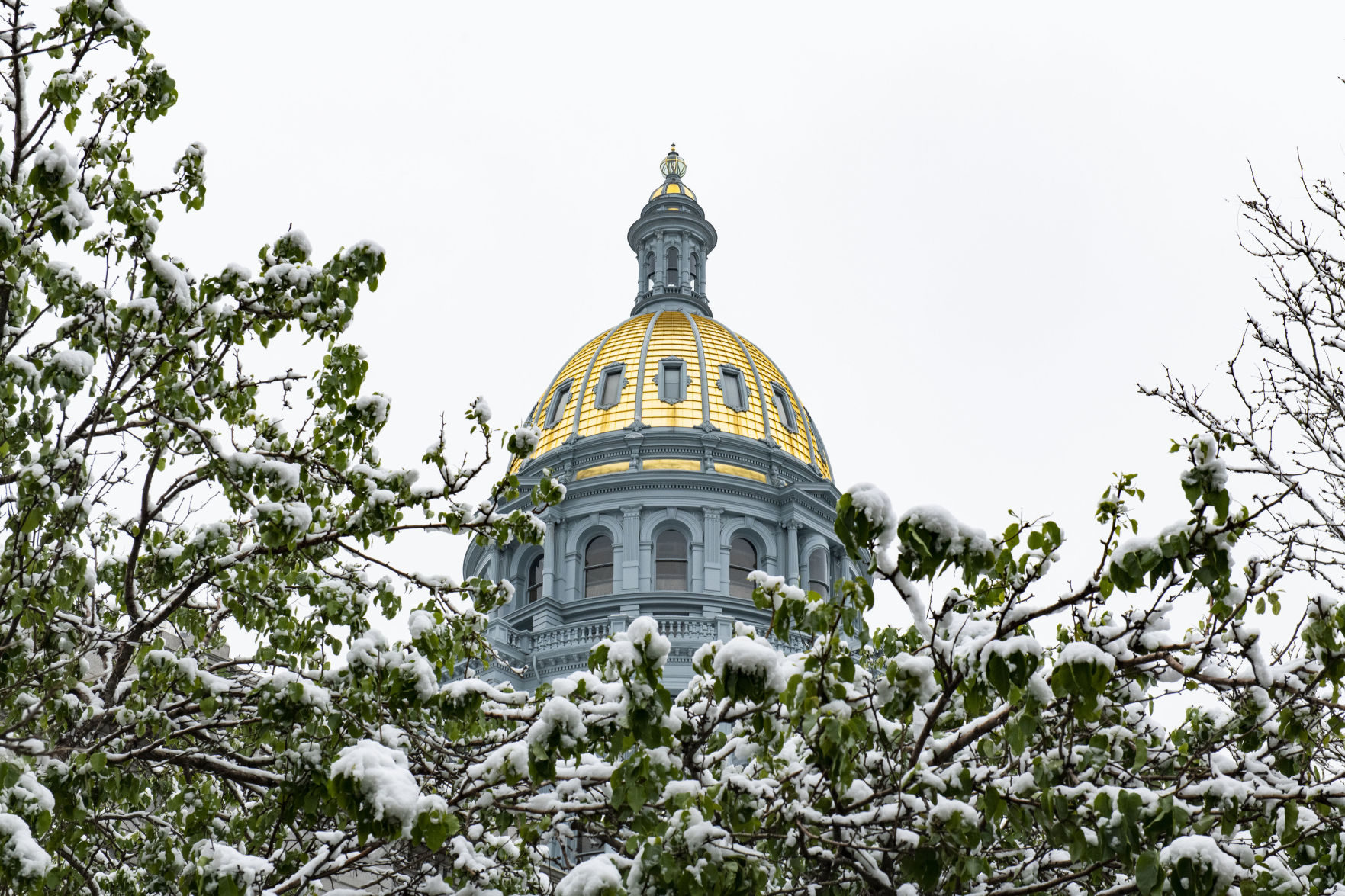
A panel of lawmakers charged with crafting legislation governing pensions for police, firefighters and state employees on Tuesday unanimously approved a trio of bills ahead of the coming legislative session.
The first bill of the trio to be approved by the Pension Review Commission seeks to combine a pair of retirement plans administered by the Fire and Police Pension Association.
The FPPA in 2020 convened a task force to study the future viability of the Statewide Hybrid Plan, one of the retirement plans it offered. Due to the small size of the plan, the task force in April returned suggestions to merge its assets and liabilities with those of the Statewide Defined Benefit Plan to create a new plan.
The bill approved by lawmakers reflects the recommendations of the task force. The bill’s fiscal analysis estimates costs for local governments “will increase for phased-in employer contribution rate increases,“ though the analysis doesn’t have an estimate on what that increase would look like.
The second bill seeks to send some $33.2 million to FPPA to provide funding for the state’s obligation to the organization’s Statewide Death and Disability Trust Fund.
Benefits from that fund go towards supporting so-called “old hires,” FPPA members that were hired before Jan. 1, 1997. State funding for the FFPA fund was discontinued in 1997 based on the actuarial assumption the final $39 million payment fully funded the plan.
However, a current actuarial analysis by FPPA’s actuarial firm show the fund is short by the amount of money the bill allocates.
“As it turns out, looking back at 1997 and the actual studies that were done then, the funding that we received from the state was insufficient to fund the full cost of providing benefits for that group of people,” said Kevin Lindahl, FPPA’s general counsel and deputy executive director. “We are here today to ask you to fund the amount of shortfall that we have in the plan due to that issue.”
The last the three bills would make a payment of more than $300 million to the Public Employees’ Retirement Association, the pension plan for state employees that was suspended as lawmakers sought to make budget cuts at the onset of the COVID-19 pandemic last year.
Under 2018 legislation, annual payments to PERA are due on July 1 until its unfunded liabilities are paid, which was estimated to be around 30 years. House Bill 1379, passed in June 2020, suspended those payments as the state stared down COVID-induced lockdowns and the economic fallout that accompanied them.
More than a year later, lawmakers are ready to restore that cut.
“To the extent that we have a significant unfunded liability facing our state, our state’s credit rating takes a hit,” said Rep. Shannon Bird, the Westminster Democrat who chairs the panel. “To the extent our state’s credit rating doesn’t look as good as, that increases our borrowing costs so that makes things more expensive for us as a state
“To the extent we can pay down our own unfunded liability, we strengthen our state’s credit rating and things become less costly. Also, paying down this liability helps protect our general fund for the long term.”
The bill would on July 1, 2022 send PERA the $225 million that was cut in 2020, plus an additional $78.6 million to cover the estimated investment gains that money would have accrued.
After presentations from FPPA on both bills, as well as one from Bird and Henderson Republican Sen. Kevin Priola on the third measure, the panel vote unanimously to approve all three.
The legislation moves on to the Legislative Council, the panel that vets the legal implications and other factors before bills can be introduced.
That panel is scheduled to meet in mid-November to review legislation approved by interim committees, which are groups of legislators assigned to meet during the off-session periods to study, propose and craft bills.

Colorado auditor finds serious issues with labor agency’s unemployment insurance accounting
Marianne Goodland
marianne.goodland@coloradopolitics.com
Updated 7 hours ago
Colorado’s state auditors found serious issues with the accounting practices of the unemployment insurance division of the Department of Labor and Employment, concluding the agency underestimated and overestimated figures to the tune of billions of dollars. The auditors labeled the...
Colorado’s newest federal judge speaks about techniques for advancing cases
Michael Karlik
michael.karlik@coloradopolitics.com
Updated 7 hours ago
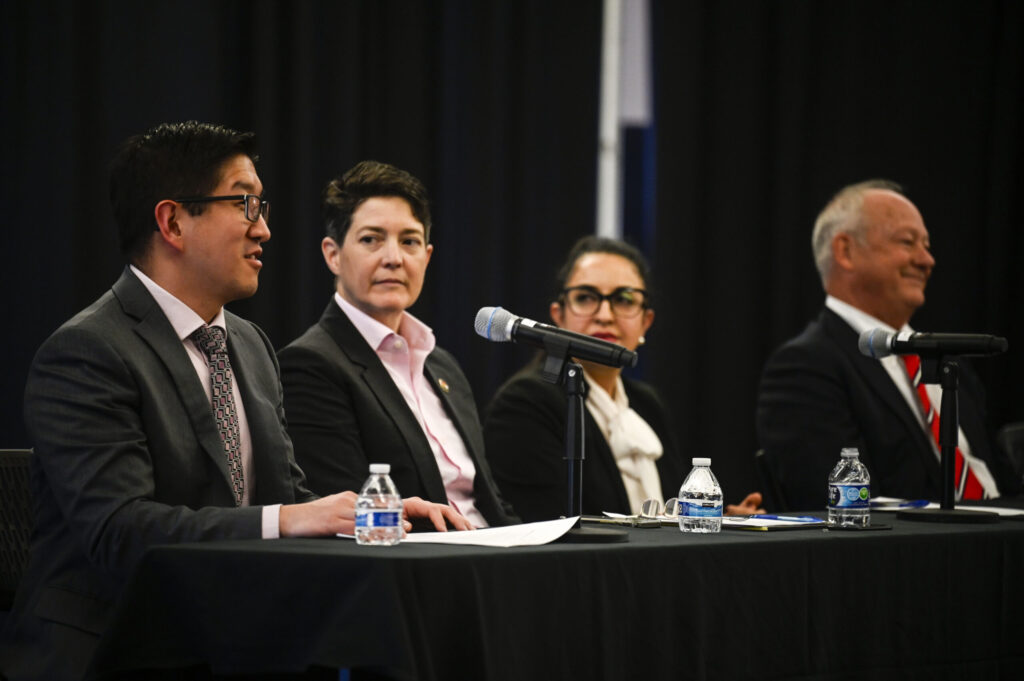
U.S. Magistrate Judge Cyrus Y. Chung described on Wednesday the various tactics he employs to resolve court cases, summing up his role with a laxative-based metaphor. “Someone told a group of us federal magistrate judges that magistrate judges are the...

Three cargo ships damaged by ‘projectiles’ in Strait of Hormuz
Brady Knox, Washington Examiner
brady.knox.washington.examiner@gazetteedit.wpenginepowered.com
Updated 11 hours ago
Three cargo ships were damaged by unspecified “projectiles” while navigating the Strait of Hormuz, jeopardizing President Donald Trump’s goal of preserving the shipping lane’s safety. The strait was de facto closed the morning hostilities began on Feb. 28, with announcements...

Trump calls on Thune to be a ‘leader’ and get the votes for the SAVE America Act
NAOMI LIM Washington Examiner
naomi-lim-washington-examiner@coloradopolitics.com
Updated 11 hours ago
President Donald Trump increased pressure on Senate Majority Leader John Thune (R-SD) to pass the SAVE America Act, imploring him to be a “leader” after he expressed concerns that there is not enough support for the measure in his chamber....
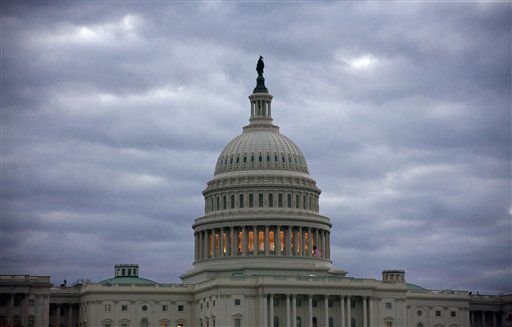
The ‘talking filibuster,’ explained
Molly Parks, Washington Examiner
molly.parks.washington.examiner@gazetteedit.wpenginepowered.com
Updated 11 hours ago
Senate Republicans have for weeks been debating the use of the “talking filibuster” to guarantee the passage of the SAVE America Act in the upper chamber, after President Donald Trump called the legislation his “No. 1” priority. The bill, which...
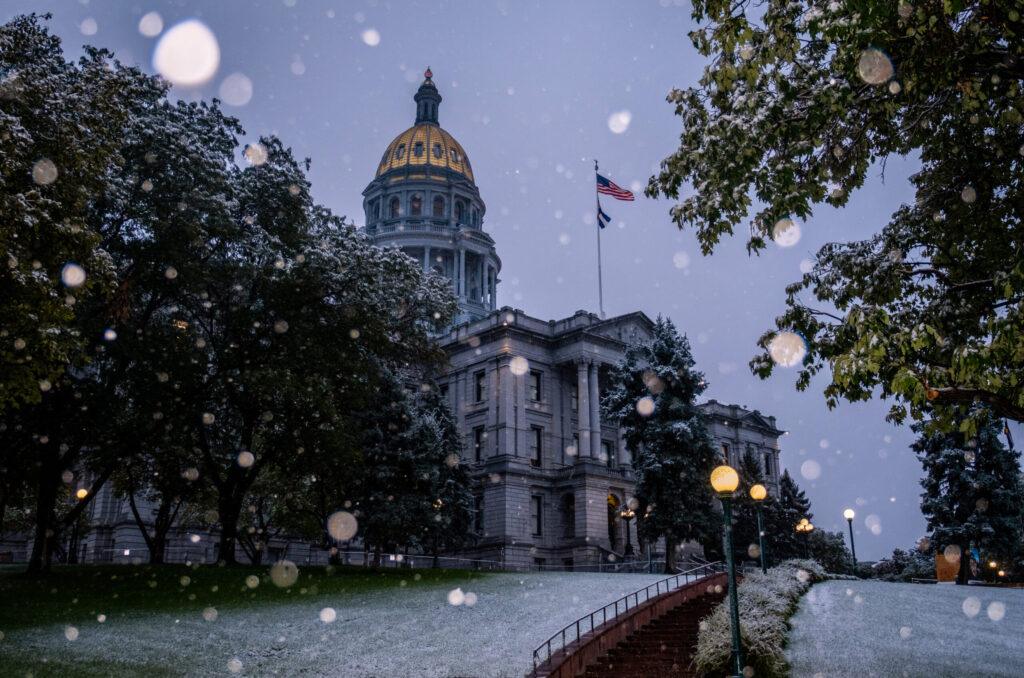
Colorado’s Polis joins coalition of governors urging Congress to reject Trump tariffs
Marissa Ventrelli
marissa.ventrelli@coloradopolitics.com
Updated 7 hours ago
Colorado Gov. Jared Polis has joined 18 other governors in writing a letter to members of Congress, urging them to reject President Donald Trump’s efforts to codify tariffs that the U.S. Supreme Court recently invalidated. “Governors across the country are...

Department of Agriculture warns of packages holding potentially invasive seeds
Michael Braithwaite
michael.braithwaite@gazette.com
Updated 5 hours ago
Spring planting is around the corner, and the Colorado Department of Agriculture wants residents to know where their seeds are coming from. Officials with the department warned Tuesday that they received reports of unsolicited packages containing plant seeds mailed internationally...

Federal judge hears ICE agents’ confusion about law, injunction on warrantless arrests
Michael Karlik
michael.karlik@coloradopolitics.com
Updated 1 day ago
A federal judge heard testimony on Tuesday from U.S. Customs and Immigration Enforcement agents in Colorado, who had trouble describing the requirements of his recent injunction and the training they received on making warrantless arrests pursuant to the law. On...

10th Circuit dismisses challenge to Colorado legislature’s decorum rules
Michael Karlik
michael.karlik@coloradopolitics.com
Updated 14 hours ago
The Denver-based federal appeals court concluded on Tuesday that Colorado lawmakers cannot be sued for creating and enforcing rules of decorum that circumscribe the public commentary allowed at legislative committee hearings. A three-judge panel of the U.S. Court of Appeals...
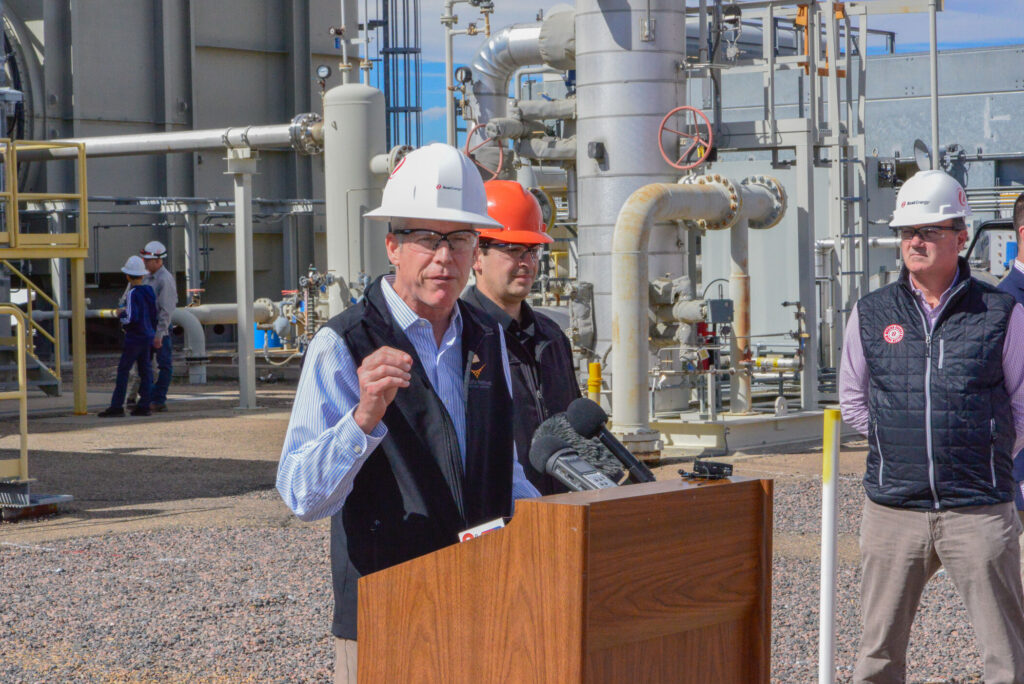
U.S. energy secretary warns Colorado’s energy policies could drive up prices, deter businesses
Scott Weiser
scott.weiser@gazette.com
Updated 9 hours ago
U.S. Energy Secretary Chris Wright on Monday warned that Colorado’s energy policies could lead to higher electricity prices and deter businesses, such as data centers, from locating in the state. Wright, a former executive of a Colorado-based energy company tapped...
PREV
PREVIOUS
Investigations mount into campaign finance complaints filed against Tina Peters
The Secretary of State’s Office announced on Monday that it’s investigating a second complaint alleging campaign finance violations by Mesa County Clerk and Recorder Tina Peters. The two complaints are related and both were filed by Scott Beilfuss, co-chair of the Mesa County Democratic Party. The first, filed Aug. 16, charges Peters failed to report […]

Tancredo backs Erik Aadland in Colorado's GOP US Senate primary
Former U.S. Rep. Tom Tancredo made it official Tuesday: the Lakewood Republican is endorsing U.S. Senate candidate Erik Aadland, one of eight Republicans running for the Colorado seat held by Democratic U.S. Sen. Michael Bennet. “Erik has served our country proudly in combat, and now he’s taking that leadership experience into the U.S. Senate race […]