

Judge declines to drop excessive force lawsuit against Colorado Springs for man’s death
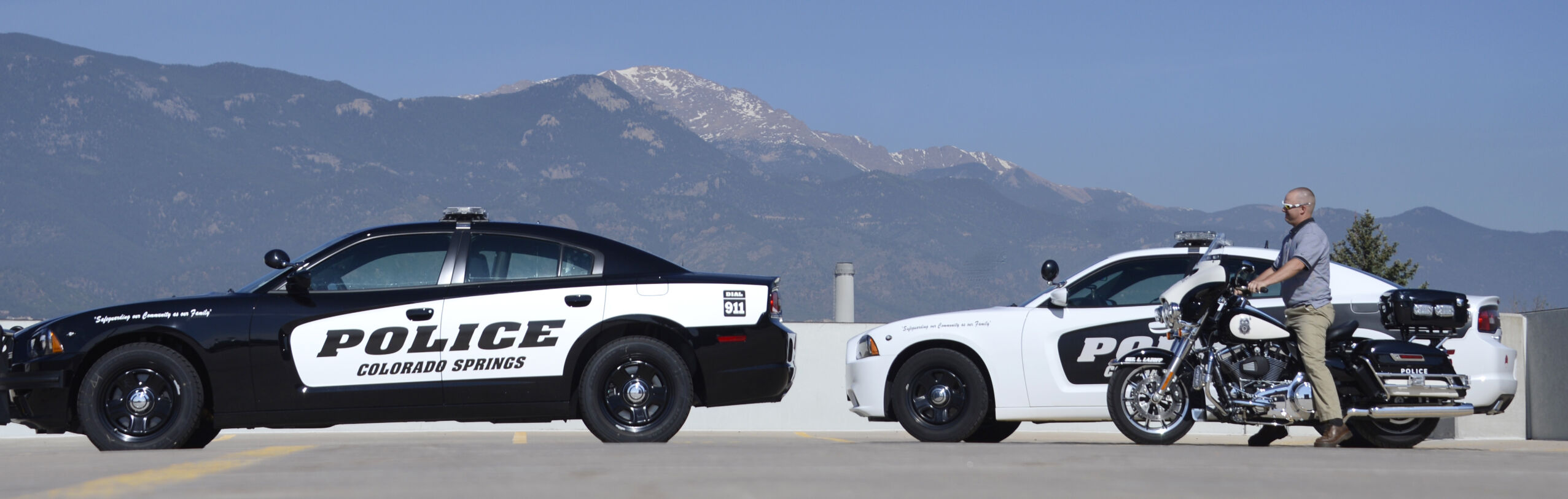
Colorado Springs may be held liable for the death of Jeffrey Melvin after police officers reportedly restrained, choked and tased him, a federal judge determined on Wednesday.
The decision from U.S. District Court Judge Christine M. Arguello deviated from the earlier recommendation of a magistrate judge, who found Melvin’s surviving father had not shown in his lawsuit that there were similar incidents of alleged racially-based policing involving Colorado Springs’ officers. But a single constitutional violation, Arguello said, is enough to trigger the city’s liability if Colorado Springs did not adjust its training in response.
“Plaintiff has alleged facts which, if true, would demonstrate that the city was on notice of at least one similar prior violation of federal rights, giving rise to an obligation to train,” she concluded in a September 29 order keeping Jeffrey Melvin Sr.’s claim against the city intact. “The plaintiff has also alleged that, despite this obligation, the city has failed to provide the necessary training.”
In addition to prior instances of reportedly racially motivated policing, Colorado Springs police also have come under scrutiny for the shooting death of De’Von Bailey, who, like Melvin, was Black. Officers were responding to a false report of a crime when they shot Bailey, 19, as he was running away in August 2019.
Darold W. Killmer, a partner with Killmer Lane & Newman who has litigated both the Melvin and Bailey lawsuits against Colorado Springs, said the lack of consequences for officers who target racial minorities is itself a sort of informal training exercise.
“When the conclusion, which was forgone, is made that the officers did nothing wrong and their conduct was consistent with policy and practice, the rest of the troops see that the department has their back,” he said.
According to the federal lawsuit, Colorado Springs officers were responding to a disturbance at the Remington Apartments just past midnight on April 26, 2018, when Melvin, 27, showed up. Officers forcibly detained him, choked him, pepper sprayed him and used a Taser five times in fewer than two minutes.
“Just to hear somebody screaming and hearing it again, and again, and again. I’ve heard shots before but I’ve never seen somebody tased so many times,” Melvin’s friend Jordan Bruno said at the time.
The El Paso County coroner ruled Melvin’s death a homicide. Police said Melvin had hastily entered and was reportedly “flailing around,” resisting orders to comply and allegedly trying to leap from a second-story window.
Jeffrey Melvin Sr., alleged in the lawsuit that Colorado Springs police were the aggressors, and his son was faced with the choice of remaining in the apartment and being beaten by officers or else trying to flee.
“The Colorado Springs Police Department has a long history of unjustified violence and discriminatory law enforcement against people of color,” wrote lawyers for Melvin Sr. “This brutality continues because CSPD, through the repeated formal tolerance and approval of violent, racially biased policing by its officers, has made clear that CSPD officers are authorized and even encouraged to use excessive force against people of color.”
The lawsuit stated that while 6.5% of Colorado Springs residents are Black, between one-fifth and one-quarter of people against whom police used force between 2014 and 2017 were Black. That, Melvin Sr. alleged, indicated a longtime custom of racially-biased policing that the city should have known about and addressed. Instead, it adopted a “policy of inaction.”
The city defended itself and the officers involved, Daniel Patterson and Joshua Archer, by pointing out a lack of evidence that its police force as a whole knew of any sanctioned practice of discriminatory policing. Of the six prior instances the lawsuit referenced of Colorado Springs police arresting mem of color without probable cause, the city said those were not at all similar to the circumstances of Melvin’s arrest.
“None of the six cases involved an officer’s attempt to detain someone who ‘hastily entered’ a dwelling where officers were investigating a reported disturbance and shut the dwelling door in an officer’s face,” wrote Assistant City Attorney Anne H. Turner.
In February, U.S. Magistrate Judge Kathleen M. Tafoya reviewed the allegations and recommended dismissal of the liability claim against Colorado Springs. She agreed that the other cited cases of alleged racially biased policing were not close enough to Melvin’s case to illustrate a pattern of insufficient training and supervision.
Melvin Sr. objected to Tafoya’s findings, arguing that Tafoya had set too high of a bar at this early stage in the lawsuit.
“Certainly, the previous constitutional violations were not ‘the same’ as defendants’ killing of Mr. Melvin — that would be mind-boggling,” his attorneys wrote. “However, Pplaintiff has alleged substantial similarity in Fourth Amendment violations focused upon legally unjustified stops and arrests, as well as the use of excessive force, especially against Black individuals.”
Arguello agreed with Melvin Sr., finding he had plausibly alleged the officers involved in his son’s death used excessive force in a situation that is likely to recur, and that the officers’ conduct was linked to inadequate training. Finally, the city was indifferent to the lack of training on racially-biased policing.
Killmer said that with Arguello’s ruling, the discovery of evidence may resume. Melvin Sr. is asking for monetary damages, a formal apology and policy changes in the city.
The case is Estate of Jeffrey Melvin v. Colorado Springs et al.
Colorado Politics Must-Reads:

Bennet, Hickenlooper to vote against Trump’s 10th Circuit nominee from Colorado
Michael Karlik
michael.karlik@coloradopolitics.com
Updated 1 day ago
Colorado’s two Democratic senators will not vote to confirm President Donald Trump’s nominee to a vacancy on the Denver-based federal appeals court. Trump has selected U.S. District Court Chief Judge Daniel D. Domenico, who he appointed as a federal trial...
U.S. government declines to oppose multiple challenges to immigration detention in Colorado
Michael Karlik
michael.karlik@coloradopolitics.com
Updated 2 days ago
Multiple federal judges in Colorado granted petitions from people challenging the lawfulness of their immigration detention this week after the government took the unusual step of declining to submit arguments in opposition. Colorado’s federal trial court is facing a flood of...
Colorado justices discuss solution to confusion from prior criminal ruling
Michael Karlik
michael.karlik@coloradopolitics.com
Updated 2 days ago
The Colorado Supreme Court pondered the fallout on Tuesday from its nearly six-year-old decision interpreting the state’s impaired driving laws, with the justices now addressing how defendants affected by the legal change must seek postconviction relief. In contrast to other...
Colorado justices suggest father entitled to appeal of custody decision
Michael Karlik
michael.karlik@coloradopolitics.com
Updated 3 days ago
Members of the Colorado Supreme Court signaled strongly on Tuesday that a father deserved some avenue for challenging a temporary child custody order that no lower court believed it could review due to the unusual circumstances of the case. Because...

Court snuffs out challenge to Denver’s flavored tobacco ban
Deborah Grigsby
deborah.smith@denvergazette.com
Updated 2 days ago
The smoke finally cleared in Denver’s battle over a citywide ban on flavored tobacco products when a Denver court dismissed a challenge from local vape shop owners seeking to declare the ordinance unconstitutional and block its enforcement. On Wednesday, Denver...
Colorado justices agree fraud claims belong in corporate dispute
Michael Karlik
michael.karlik@coloradopolitics.com
Updated 3 days ago
The Colorado Supreme Court decided on Tuesday that a corporate plaintiff validly pursued fraud claims over conduct that was not covered by a contract or by a set of interrelated business agreements leading up to the contract. Previously, the Court...
Colorado Supreme Court says intimate messages irrelevant to assault case
Michael Karlik
michael.karlik@coloradopolitics.com
Updated 3 days ago
The Colorado Supreme Court decided on Tuesday that a Douglas County judge acted reasonably by blocking evidence of a defendant’s BDSM-related conversations with the victim in his trial for assault and false imprisonment. While the Court of Appeals believed that...
Trump’s 10th Circuit nominee declines to name 2020 election winner, defends immigration decisions
Michael Karlik
michael.karlik@coloradopolitics.com
Updated 3 days ago
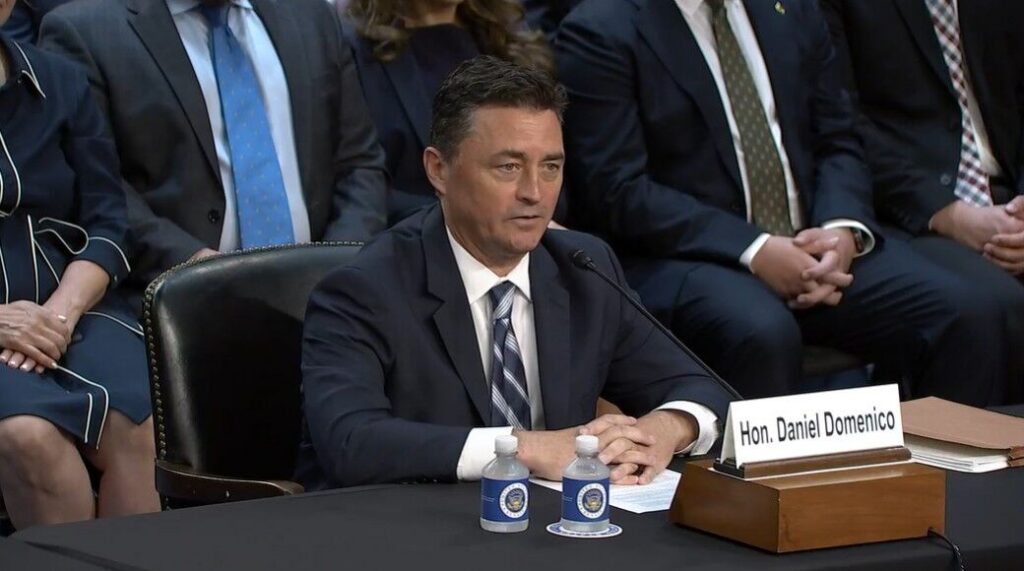
President Donald Trump’s nominee to the Denver-based federal appeals court declined to say who won the 2020 presidential election during his appearance before the U.S. Senate Judiciary Committee on Wednesday, and defended his recent rulings in immigration detention cases. U.S....
Colorado law allowing lawsuits against ‘conversion therapy’ providers takes effect July 1
Marissa Ventrelli
marissa.ventrelli@coloradopolitics.com
Updated 2 days ago
With a new law taking effect July 1, Colorado is creating a legal pathway for people to sue licensed providers of “conversion therapy,” even as debate over the practice’s constitutionality continues in the wake of a recent U.S. Supreme Court...
Colorado justices expand ability for civil defendants to avoid participating, win after trial
Michael Karlik
michael.karlik@coloradopolitics.com
Updated 3 days ago
The Colorado Supreme Court decided on Tuesday that a civil defendant, whose non-participation in the case meant that he legally admitted to the sexual assault allegations against him, could nonetheless prevail after he showed up to testify at trial. A...
PREV
PREVIOUS

Denver officer may be held liable for arresting wrong woman at wrong hospital, judge says
An Aurora woman may sue the police officer who arrested her at Denver Health by mistaking her for a different person at a different hospital, a federal judge has ruled. Two members of the Denver Police Department, Officers Don Whyde and Brian Long, were investigating a burglary and assault in downtown Denver when they arrived at the […]

State Supreme Court to weigh Arapahoe judge's partial courtroom closure during trial
The Colorado Supreme Court will decide whether an Arapahoe County judge violated a man’s Sixth Amendment right to a public trial by excluding his co-defendant’s wife from the courtroom. Previously, the state’s Court of Appeals determined the answer was yes, and ordered a new trial for Terrel Shameek Turner. The Attorney General’s Office appealed, arguing […]