

BIDLACK | How about a mandatory prayer — to Satan?
In a recent column I confessed to being rather grumpy and ticked off by the actions of those who are refusing to get vaccinated because of “freedom” and, well, stupidity. That particular column got quite a bit of attention on social media, and what was interesting was the response of my kindly readers toward my irritation. I had pledged at the end of the column to be less grumpy in the future, but every response posed to my account implored me to “stay angry” and to keep venting, I guess. Perhaps the steam coming out of my ears is entertaining.
So, in keeping with the theme of “grumpy Hal,” let’s take a peek at a recent Colorado Politics story that has made me annoyed and wondering if certain people ever read the Constitution. I refer to the reporting on a gentleman who had violated the law and as a result, had served some time in custody. One of the conditions of his parole was that he would live in a particular place for a set period of time, under supervision.
So far, so good…
But here is where it gets a bit tricky and, well, unconstitutional. It seems that the parole officer in charge of this fellow’s case directed that he live in a very specific sort of halfway house in Fort Collins. If he didn’t do as directed, he’d be returned to jail. But here’s the problem: the place the parole officer said he had to live in was the Fort Collins Rescue Mission. That last word might give you a hint where we are headed.
Yes, the Mission had a Christian program, requiring the man to attend morning Christian prayer services and Bible study. For many people, that might fit in well with their own belief systems. But the parolee in question was an atheist. And the Court official had ordered him to enroll in a specific religious program with a specific religious belief system as a requirement of his parole. Now, I know that many of my kindly readers are, in fact, Christians, and likely think that such a sentence might be good for the guy, who was, after all, a criminal.
But that misses the point.
The Constitution of the United States, in the famous and vital First Amendment, clearly states that the government “shall make no law respecting an establishment of religion, or prohibiting the free exercise thereof.” That means that the government cannot compel citizens to worship, nor can the government prevent people from worshiping as they wish. Now, like all rights, this is not an absolute right. For example, you can’t, say, sacrifice Golden Retriever puppies as part of your religious ceremonies, nor claim that robbing a bank is a religious exercise. More fundamentally, the 1st Amendment says that, within reason, the government cannot force religion on you, nor prevent you from having your own religious beliefs.
And, very importantly, the government is required to be neutral when it comes to religion. The Congress cannot, for example, give a tax break to Baptists that it denies to Quakers. Which means, of course, that the government (in this case in the form of a parole officer) can’t force any religion on the people in his charge.
If you still think forcing Christianity on people is a good thing for the government to do, I’d ask you to consider how you would react if this same government official had decided to force not Christianity, but rather, Islam, Shinto, or Druidism? In an earlier column, I mentioned a teaching technique I came up with while teaching the Constitution at the US Air Force Academy. I’d get my students – always quite Republican and conservative – to agree to a forced prayer in class, as a good idea. But when I started a fake prayer to Satan, their heads shot up, and they felt betrayed. Why? Because I, a government official (and a guy who outranked them by a light year) was forcing a religion they found abhorrent on them in a government setting. And they were right to be outraged.
I admit I have major problems with most major religious organizations. And once again, I’m not talking about beliefs or personal relationships with a creator and such. No, I’m talking about the business of religion found in many of the formal organizations of the various faiths. But I accept that the existence of these religious businesses is both constitutional and legitimate. I disagree sharply, however, with the idea that any particular religion, or no religion at all, should be forced onto the backs of any Americans.
So, if you still believe the actions of the parole office were just fine, I’d ask you if you are still ok with him ordering a parolee to attend a madrasa? A Buddhist convent? An atheist summer camp?
If you are ok with all those choices, at least you are being consistent. But if you find one religious option to be acceptable, but other faiths to be less so, well, we have a problem. The Constitution simply isn’t on your side.
We don’t get to tell people what they must believe and to whom, if anyone, they must pray. Because, you know, freedom.


Mum on his own replacement, Bennet disrespects voters | Dick Wadhams
Dick Wadhams
dick-wadhams@coloradopolitics.com
Updated 2 days ago
U.S. Sen. Michael Bennet is playing an arrogant game of hide-and-seek with Colorado voters as he seeks to abandon his Senate seat to become governor. Bennet insists that if he is elected governor in November, he will wait until he...
What kind of energy independence did we pay for? | Miller Hudson
Miller Hudson
miller-hudson@coloradopolitics.com
Updated 2 days ago
It was during the summer of 1972 AT&T published an internal solicitation for installation and repair supervisors with “inner-city” experience to transfer to Mountain Bell. The catch was an applicant’s readiness to work 10 hours a day, six days a...

Those who cannot live without wild things | Rachel Gabel
Rachel Gabel
rachel-gabel@coloradopolitics.com
Updated 2 days ago
Aldo Leopold wrote in his Sand County Almanac, “There are some who can live without wild things and some who cannot.” The collection of essays first published in 1949 was accepted by a publishing house after a steady stream of...
Thank God for Wyoming — the un-Colorado | Jon Caldara
Jon Caldara
jon-caldara@coloradopolitics.com
Updated 2 days ago
Years ago, I interviewed a Canadian health-care broker whose job was helping his countrymen escape their own failing system. When their “free” health care turned into “free to wait until you die,” he’d save his clients by routing them to...
It’s time to let unaffiliated voters caucus | Vince Bzdek
Vince Bzdek
vince.bzdek@gazette.com
Updated 2 days ago
There’s no getting around it: Colorado’s 3,000 county caucuses, which just wrapped up recently, left half the electorate out in the cold. Since unaffiliated voters now make up 51% of all Colorado voters, a majority of Colorado electors are barred...
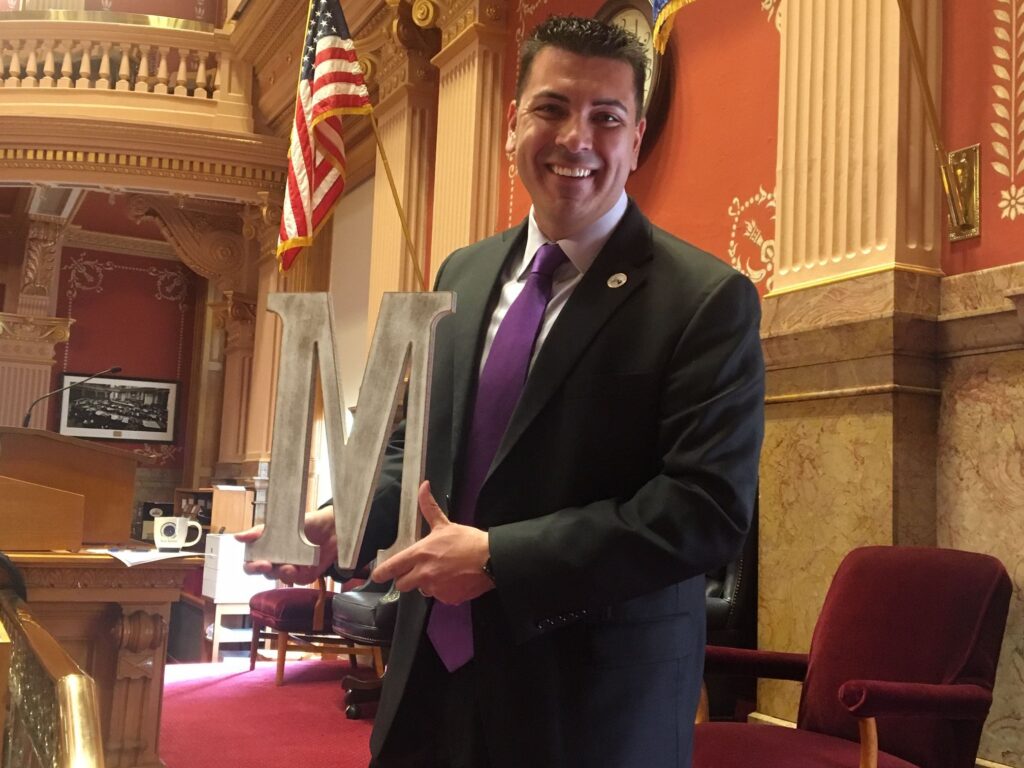
A Mile High, again: Capitol M | Week of March 21, 2026
Marianne Goodland
marianne.goodland@coloradopolitics.com
Updated 5 days ago
The lighter side of the Capitol, usually…. Local Journalism Day, except they forgot their very own local journalists. The state Senate on Thursday, March 19, passed a resolution recognizing Local Journalism Day. Everyone voted for it, which is good, because...

The insular bubble of caucuses and assemblies | SONDERMANN
Eric Sondermann
eric-sondermann@coloradopolitics.com
Updated 4 days ago
Nearly 30 years ago, then-Federal Reserve Chairman Alan Greenspan coined the term “irrational exuberance” to describe the overheated stock market. That descriptive phrase could also apply to much of the political realm. The hype in politics often grossly exceeds the...
Set appropriate state guidelines for critical surveillance technology | OPINION
Colorado Politics
colorado-politics@coloradopolitics.com
Updated 3 days ago
I admit it: I’m worried. I’m hearing a lot about surveillance in the public arena. I hear cameras are capturing my car’s license plate wherever I drive, my face as I go in and out of stores and health facilities,...

Puppy trafficking bill promotes inhumane breeding | OPINION
Colorado Politics
colorado-politics@coloradopolitics.com
Updated 3 days ago
By Patti Strand When Justice Thurgood Marshall wrote “The Constitution does not prohibit legislatures from enacting stupid laws,” he wasn’t wrong. He was referring to a political process sometimes ill-equipped to deal with complex issues that require subject-matter knowledge and a...
Penny wise but foolish by pounds | Paula Noonan
Paula Noonan
paula-noonan@coloradopolitics.com
Updated 4 days ago
Leadership of Colorado’s General Assembly introduced the Fiscal Year 2026-2027 Legislative Appropriation bill, HB26-1333, at $75.72 million. That will be the budget to run the state legislature next year. About $74 million comes out of the general fund and the...
PREV
PREVIOUS
HUDSON | Gig economy upends ground transportation
Miller Hudson Most Colorado residents have only the fuzziest notion of what constitutes a publicly regulated utility. The Public Utilities Commission is recognized, at best, as playing a role in setting the cost of energy for both gas and electric rates. During the past 40 years public policy has favored deregulation. In the markets for […]

SENGENBERGER | Ending GOP primary would backfire
Jimmy Sengenberger There’s a movement afoot in the Colorado Republican Party to abandon the state’s open-primary system and exclusively use the caucus-assembly process. The main argument against open primaries seems like common sense: unaffiliated voters should not be involved in determining who either party runs as their nominee for any position. Unfortunately, opting out will […]