

US Drought Monitor: monsoons diminishing drought on Western Slope
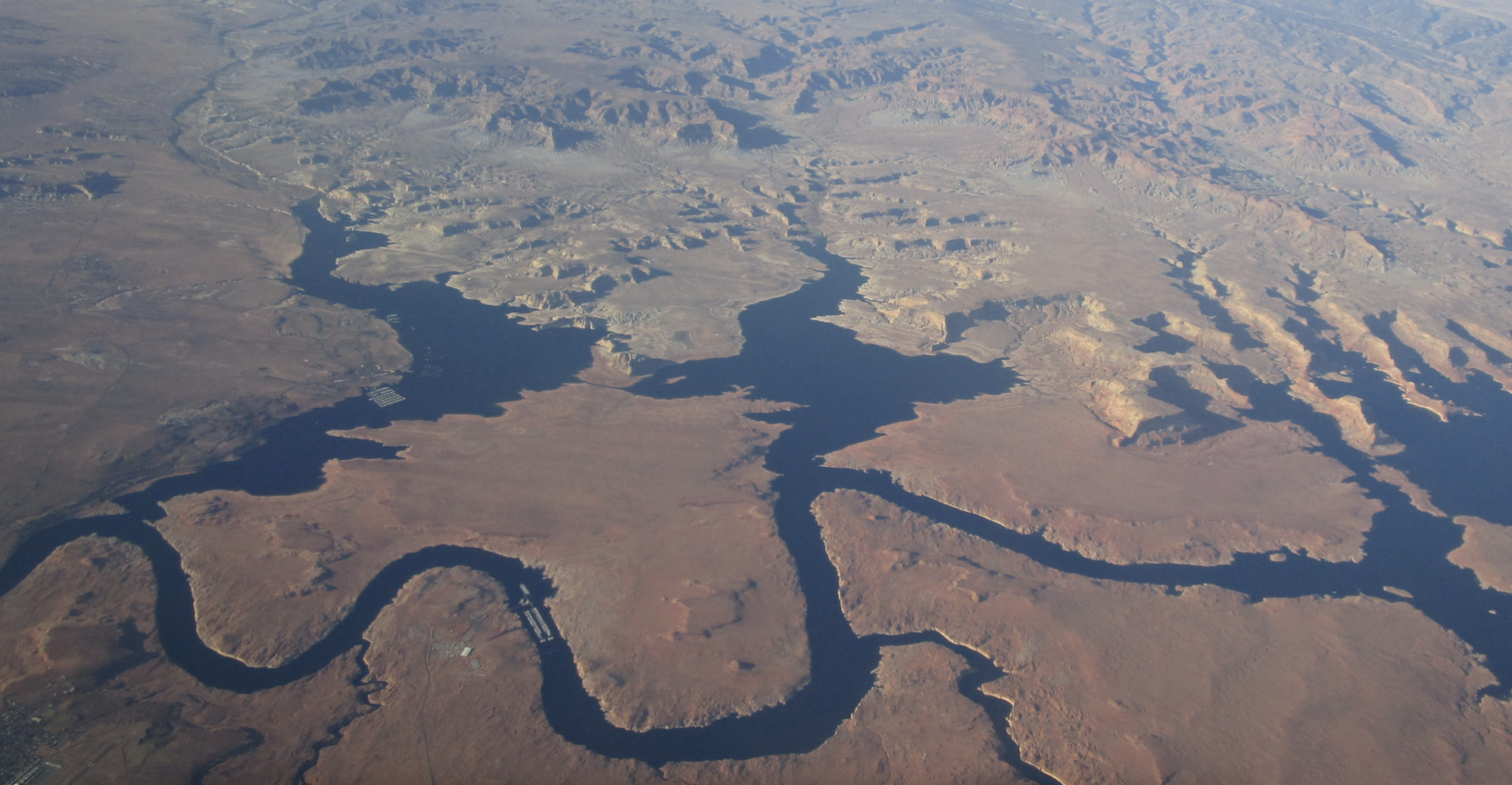
The recent monsoons, while triggering mudslides on several roadways on the Western Slope, have helped reduce the state’s drought conditions, according to new information released Thursday from the U.S. Drought Monitor.
As of Aug. 3, 56.64% of the state is no longer in drought. That’s up from 7.84% of the state just three months ago.
The news gets better for the areas hardest hit by drought earlier this year. Only 6.38% of the state, mostly in northwestern Colorado, is still in exceptional drought (D4), the worst category of drought. That’s down from 15.43% just a week ago.
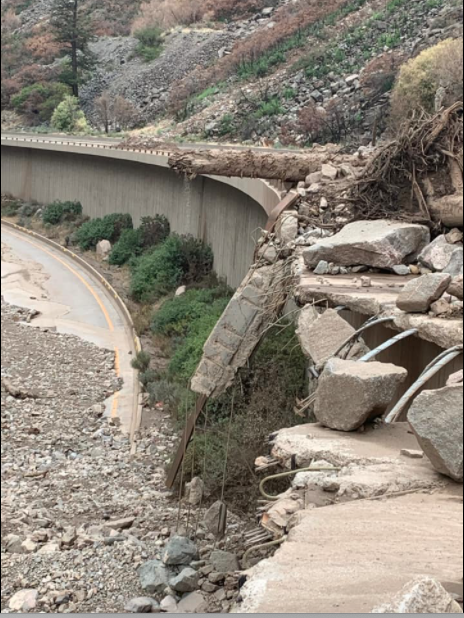
Moffat and Routt counties continue to experience the worst drought, although compared to just a week ago, those conditions have also improved slightly. Rio Blanco and Garfield counties have seen more dramatic improvements, although that’s also led to the mudslides that are plaguing Glenwood Canyon and which led to the closure of I-70 through the canyon a week ago, with no announced date for reopening from the Colorado Department of Transportation, which is working to remove debris 10 feet deep from the highway.
Becky Bolinger, a climatologist with the Colorado Climate Center at Colorado State University, tweeted a drought monitor chart Thursday that showed how dramatic the improvements have been.
“How benefit has monsoon moisture been in eliminating #drought conditions in western CO over the last month? Here are the category changes that have occurred over the last 4 weeks.”

Bolinger added that there are still lingering impacts of the drought while conditions are improving, and the drought has not been eliminated.

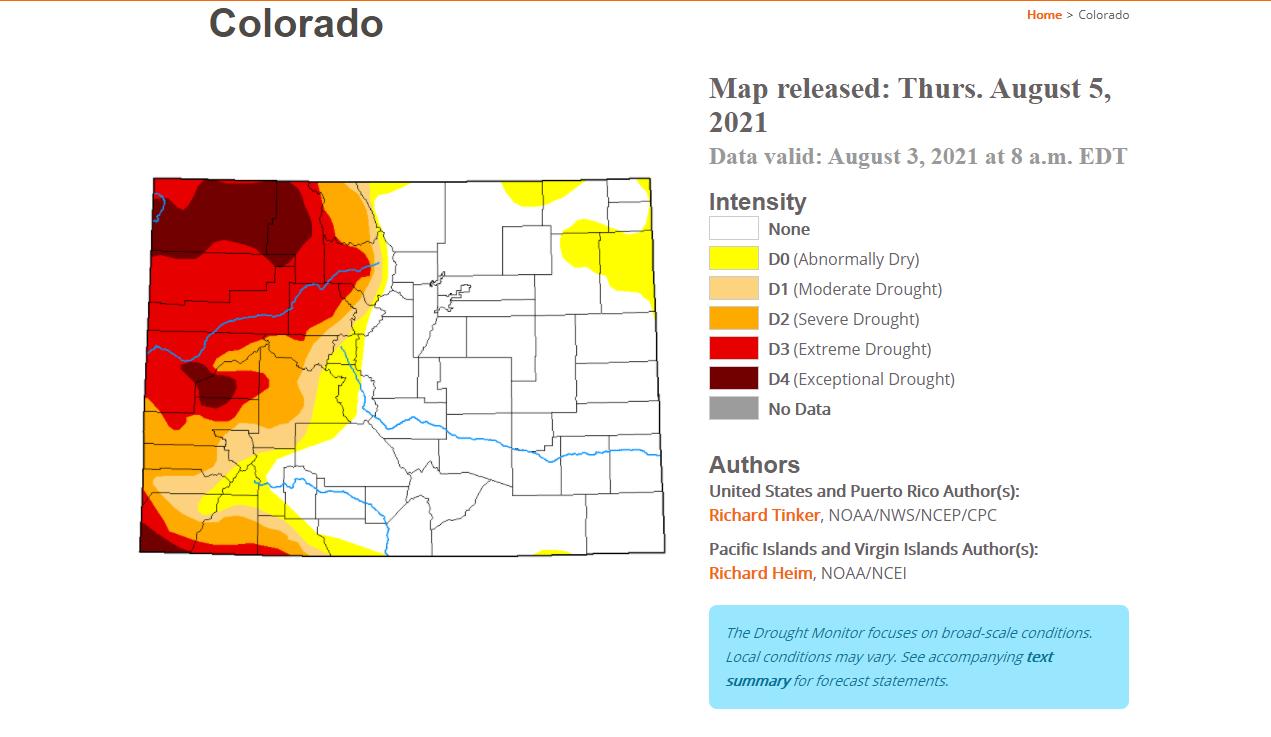
At the beginning of 2021, the entire state was in at least low-level drought while 27.6% of the state was in exceptional drought.
There are signs of the drought beginning to creep into northeastern Colorado, notably Yuma and Washington counties, although those conditions are at the lowest level of drought.
The recent rains, however, have not dampened the need for wariness around wildfires. The National Weather Service in Grand Junction has issued a fire weather watch – meaning gusty winds, low humidity and dry fuels – for Friday for Moffat, Mesa and Routt counties.
The U.S. Drought Monitor is a partnership between the National Drought Mitigation Center at the University of Nebraska-Lincoln, the United States Department of Agriculture and the National Oceanic and Atmospheric Administration.



Colorado to get $615M from Meta child safety settlement
Thelma Grimes
thelma.grimes@coloradopolitics.com
Updated 5 hours ago
The parent company of Facebook and Instagram will pay hundreds of millions of dollars to Colorado, part of an $18 billion multistate deal, in which the company also agreed to adopt extensive child-safety changes to its operations. The settlement ended...
Colorado’s chief federal judge orders return of wrongfully deported man, second judge to explore ‘series’ of violations
Michael Karlik
michael.karlik@coloradopolitics.com
Updated 8 hours ago
Colorado’s chief federal judge took the extraordinary step of directing the government on Tuesday to do everything it can to return a man it deported in violation of his order. At the same time, Colorado’s chief magistrate judge has set...

Counties warn CPW that new comment limits sideline local governments
Marianne Goodland
marianne.goodland@coloradopolitics.com
Updated 6 hours ago
The September meeting of the Colorado Parks and Wildlife Commission will feature newly revised public‑comment rules — changes introduced by chair Jay Tutchton of Bent County, who announced them without first discussing the revisions publicly with the rest of the...

Controversial two-bag furbearer limit heads to CPW meeting under legal threat
Marianne Goodland
marianne.goodland@coloradopolitics.com
Updated 6 hours ago
Next week’s Colorado Parks and Wildlife Commission meeting in La Junta is likely to open under the cloud of threatened legal action. Safari Club International and the Sportsmen’s Alliance Foundation warned the commission this month that its July vote imposing...

Golden to pay $155,000 to fired city manager
Matt Kyle
matt.kyle@denvergazette.com
Updated 8 hours ago
The Golden City Council on Tuesday approved a roughly $155,000 severance payout to former city manager Scott Vargo, who was fired earlier this month following a “racist incident” at a city fire station. The payout is part of a separation...

Trump says the US doesn’t need Canada. America’s economy says otherwise.
The Associated Press
the-associated-press@coloradopolitics.com
Updated 9 hours ago
TORONTO (AP) — U.S. President Donald Trump says his country does not need Canada. But every day, roughly 4 million barrels of Canadian crude oil flow south, helping fuel American cars, trucks and airplanes and supply U.S. industry. And oil...

USPS ballot rule faces lawsuit from Colorado, other states
Thelma Grimes
thelma.grimes@coloradopolitics.com
Updated 7 hours ago
Colorado, along with 25 other states, filed a lawsuit against the U.S. Postal Service to challenge a new rule that seeks to restrict the mailing of ballots to American citizens in an eligible voters list. Colorado relies heavily on the...

FDA approves landmark pancreatic cancer drug that’s shown to improve survival
The Associated Press
the-associated-press@coloradopolitics.com
Updated 9 hours ago
WASHINGTON (AP) — The Food and Drug Administration on Wednesday approved a groundbreaking new drug for advanced pancreatic cancer, offering U.S. patients a more effective treatment against one of the deadliest types of cancer. FDA officials gave expedited approval to...

Trump defends pause on beef tariffs: Prices are ‘coming down very rapidly’
Naomi Lim
naomi-lim@coloradopolitics.com
Updated 12 hours ago
President Donald Trump defended his decision to pause tariffs on some beef imports, even as Republicans criticize the decision. “Prices are coming down very rapidly, and now beef is starting to come down,” Trump told The Glenn Beck Program on...
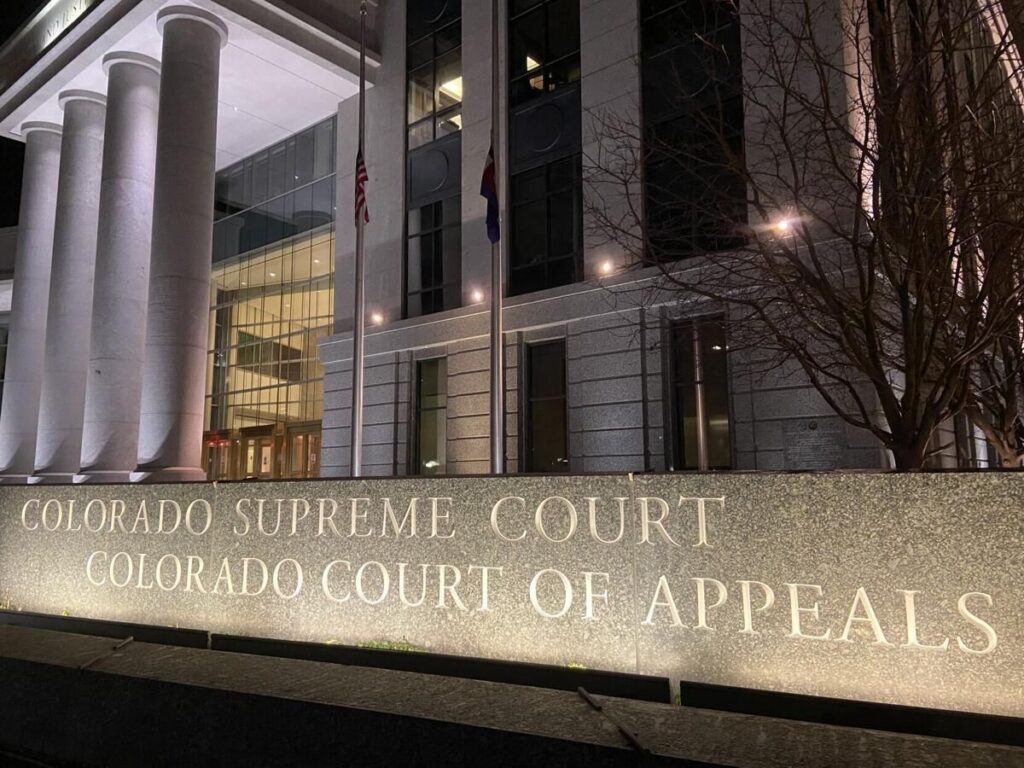
Denver murder, assault convictions reversed due to faulty jury instructions
Michael Karlik
michael.karlik@coloradopolitics.com
Updated 6 hours ago
Colorado’s second-highest court reversed a defendant’s convictions for murder and assault last week after concluding a Denver judge incorrectly omitted key jury instructions that could have affected the verdict and sentencing. Stephen C. Swainson fatally stabbed Israel Casillas in downtown...
PREV
PREVIOUS

Report: Colorado’s new business filings up nearly 26% from 2020
Colorado’s new business filings experienced record gains in quarter two of 2021, increasing by 25.7% compared to the same quarter in 2020, according to a report released Wednesday. The Quarterly Business and Economic Indicators report from the University of Colorado Boulder and Secretary of State’s Office concluded that this puts Colorado “firmly in recovery mode” […]

Arizona governor's chief of staff to join Denver-based Ascent Media next month
Ascent Media, the national consulting firm led by noted Colorado politico Josh Penry and others, added another big name to its team, Daniel Scarpinato, who served as chief of staff to Arizona Gov. Doug Ducey since 2018. Ascent is a national advertising and political consulting operation, based in Denver and Washington, D.C. Scarpinato, who officially joins […]