

Working group created to examine policing reform report holds first meeting

A Denver City Council working group formed to examine policing reform ideas took an inaugural step this week, holding its first public meeting to review a citizen-led task force report with 112 recommendations.
“I agree that to increase public safety in Denver extends far past just policing. The more we invest in housing, mental health, drug treatment, et cetera, I believe we can create a reality where we can spend less on policing,” said District 6 Councilmember Paul Kashmann, the working group’s chair. “That said, I believe that policing is a critical element of public safety, as we look at ways to increase the equitable nature of policing throughout our neighborhoods.”
Monday’s working group meeting had a free-flowing structure, with council members in attendance having a chance to ask the questions they would like answered as the working group continues to examine and discuss the task force report.
Councilmember Pro Tem Jamie Torres serves as vice chair of the group, which is open to all council members and will decide which recommendations the city will pursue and steps the council will take towards implementation.
Councilmembers Candi CdeBaca, Amanda Sawyer, Kevin Flynn and President Stacie Gilmore also attended Monday’s meeting.
The Reimagining Policing and Public Safety task force led by Pastor Robert Davis convened in June 2020 in response to the killing of George Floyd in Minneapolis police custody and the Denver police response to the resulting protests in the city.
In late May the task force released sweeping recommendations that include directing more resources at programs that can help reduce people’s involvement with the criminal justice system, decriminalizing offenses that don’t pose a public safety threat, rethinking the types of situations that require a police response, changing policing practices that disproportionately harm marginalized groups, and increasing power of the Office of the Independent Monitor.
The report divides its recommendations into categories based on several overarching goals, such as minimizing contacts between civilians and the criminal legal system and improving independent oversight of public safety agencies. It also divides the recommendations by the agency best suited to implement the changes, such as the judicial system, human services, City Council and community organizations.
Davis recognized Denver has already implemented or is in process for some of the changes the task force’s report suggests, such as expanding the Support Team Assisted Response program, which sends mental health professionals and paramedics instead of police officers to low-level, non-violent incidents. He said a goal of still including those types of recommendations in the report is to encourage institutionalizing changes as much as possible so programs and policies aren’t dependent on who the mayor is or who sits on City Council.
At-large Councilmember Robin Kniech said she wants to break down perceptions people may have of walls between the city and community that hinder working together. Efforts already in progress or laws that may already address recommendations tend to trace back to community conversations and partnerships, she said.
“I just want to break down any kind of false walls that might exist between the city or the community, because I think that circle of feedback has informed many of the predecessors of these recommendations,” Kniech said. “To the extent we have anything that’s an alternative happening, it started there.”

Policing Reform Task Force Recommendations

8 exemplars to guide us into the new year | SONDERMANN
Eric Sondermann
eric-sondermann@coloradopolitics.com
Updated 4 days ago
It started as a one-off in my first year of writing this regular column. To ring in the new year back in the eventful year of 2020, I offered a shoutout to eight Coloradans who served as models of how...
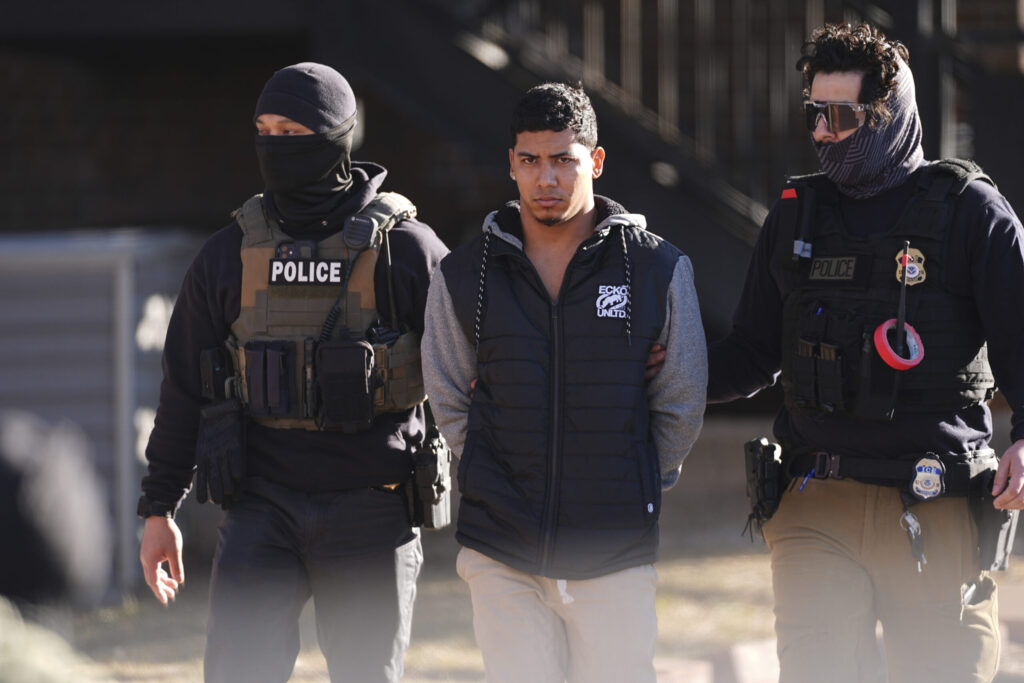
Raids, pushback and TdA indictments defined Denver’s immigration story in 2025
Nico Brambila
nico.brambila@denvergazette.com
Updated 10 hours ago
The Trump administration’s push for a large-scale, deportation effort — built around campaign warnings about Tren de Aragua, the Venezuelan prison gang that established a foothold in Colorado — collided with the realities on the ground in Denver, where raids...
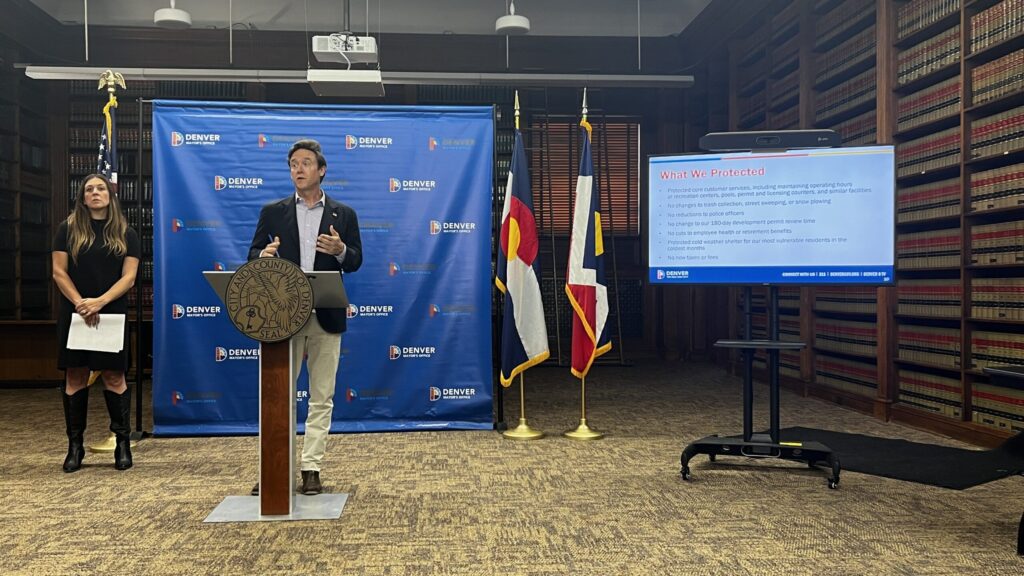
Denver’s budget deficit shaped 2025 news coverage
Deborah Grigsby
deborah.smith@denvergazette.com
Updated 9 hours ago
It was a year of big goals on a tight budget for the Mile High City, where Mayor Mike Johnston’s announcement of a $200 million city budget deficit dominated the news coverage. Facing a $50 million gap in its 2025...
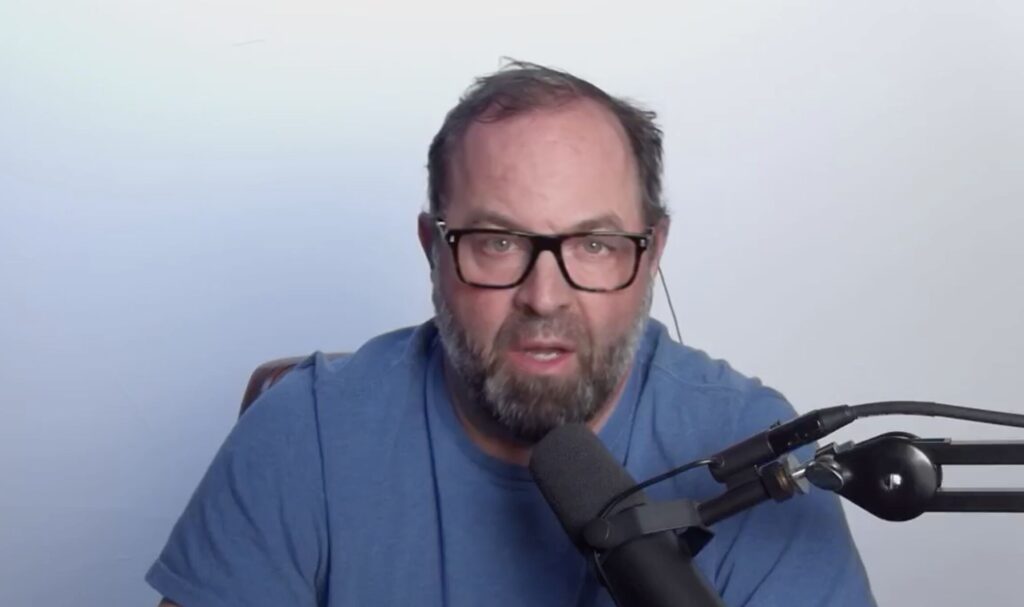
Colorado podcaster who has called for political foes to be executed joins GOP primary for governor
Ernest Luning
ernest.luning@coloradopolitics.com
Updated 11 hours ago
Joe Oltmann, the conservative Colorado podcaster who has repeatedly called for Colorado’s top elected officials to be executed and whose uncorroborated claims that the 2020 election was rigged spawned multiple defamation lawsuits, declared his candidacy for the Republican nomination for...
‘The canary in the democracy mine is local journalism’ | Vince Bzdek
Vince Bzdek
vince.bzdek@gazette.com
Updated 16 hours ago
Colorado could do a lot more to save newspapers – and democracy – in rural areas By Vince Bzdek As another new year and another legislative session dawn for Colorado, it’s a good time to ask what the absolute most...
Colorado’s national correspondent recounts violent KKK march in D.C. | A LOOK BACK
Rachael Wright
rachael.wright@coloradopolitics.com
Updated 5 days ago
by Rachael Wright Thirty-Five Years Ago This Week: “I had forgotten about the Ku Klux Klan,” said Ann Downing Schmidt, The Colorado Statesman’s Washington, D.C., correspondent. In a commentary piece published in The Statesman, Schmidt described trying to make the ten-minute drive from...
2025 Unfiltered: Ethics investigations, scandals plague Colorado Capitol
Marianne Goodland
marianne.goodland@coloradopolitics.com
Updated 15 hours ago
Over the course of the year, a series of investigations, allegations and controversies emerged at the state Capitol, drawing scrutiny to the behavior of elected officials and, in some cases, overshadowing policy debates. Here are some of the notable investigations,...
2025 Unfiltered: Top stories of the Colorado General Assembly
Marianne Goodland
marianne.goodland@coloradopolitics.com
Updated 15 hours ago
In 2025, the Colorado legislature faced a budget deficit, sought to tackle a lingering housing crisis and saw a wave of lawmakers leaving for other opportunities, prompting multiple vacancy committees to act. Here are a look at the year’s top...
2025 Unfiltered: Colorado Supreme Court vacancy, surge in federal filings and more
Michael Karlik
michael.karlik@coloradopolitics.com
Updated 14 hours ago
This year was awash in legal news nationally, with federal courts taking an outsize role in responding to executive branch actions. In Colorado, that effect was evident, but it was not the only factor at play. Here are the top...
2025 Unfiltered: Unions, guns and vetoes — inside Colorado’s political year
Marissa Ventrelli
marissa.ventrelli@coloradopolitics.com
Updated 14 hours ago
From affordability and labor rights to gun policy — as well as public safety and gubernatorial vetoes — 2025 proved to be one of the most consequential and contentious years in recent Colorado political history. Lawmakers entered the session pledging...
PREV
PREVIOUS

White House to send out CDC response teams to help states deal with delta variant
The Biden administration will send out response teams made up mostly of government health experts to help areas of the United States experiencing an uptick in COVID-19 cases due to the highly transmissible delta variant. “As we continue to work with communities across the country to get more shots in arms, we will also be […]

Rampart, CU Boulder grad earns humanitarian award named for Princess Diana
A former Miss Colorado and current Rhodes scholar recently earned a global humanitarian award named for the late Diana, Princess of Wales. Serene Singh, 24, is a 2021 recipient of the Diana Award, the United Kingdom’s most prestigious honor for young people engaged in social action or humanitarian work. Singh, a graduate of Rampart High […]