

Court reinstates man’s lawsuit against corrections department for destroying property

The Court of Appeals reinstated a man’s lawsuit against the Colorado Department of Corrections for destroying his personal property while he was jailed on pending criminal charges.
Although a lower court believed the state’s governmental immunity law blocked Jacob Patrick Ind from suing the department, a three-member appellate panel on Thursday found a clear exception that gave Ind a viable claim for the property loss.
Ind was serving two consecutive life sentences in October 2017 for the 1992 murders of his mother and stepfather when he succeeded in overturning his convictions. He stayed in the El Paso County jail for his court hearing after transport from the Limon Correctional Facility, where he was incarcerated. Ind had his possessions at the prison packed, inventoried and handed over to jail staff.
He then moved to the Teller County jail awaiting a new trial, according to the appellate court. But when Ind attempted to retrieve his property, the Colorado Department of Corrections informed him that his possessions had been destroyed.
Ind filed a civil complaint in Logan County District Court in response to the destruction of his property, seeking $15,000. The Logan County court transferred the case to Lincoln County, where the prison is located, at the department’s request and over the objection of Ind.
The Lincoln County District Court in turn dismissed the case after agreeing with the department that governmental immunity shielded it from a civil lawsuit for its alleged actions.
The Colorado Governmental Immunity Act generally blocks civil liability suits against the government, but there are certain exceptions. For example, while a person may not sue if they have been convicted of a crime and are incarcerated, a person who is not yet convicted can file a negligence lawsuit.
In Ind’s case, the Department of Corrections allegedly destroyed his property after his convictions were overturned. Although Ind would later plead guilty to a new set of charges and receive a 60-year prison sentence, he was in fact a pretrial detainee at the time the department disposed of his possessions. As such, Ind’s lawsuit fit within the exception to governmental immunity.
The Court of Appeals panel also deemed the transfer of Ind’s lawsuit to Lincoln County a mistake. Ind had asked for the case to go to El Paso County because the decision to destroy his property allegedly occurred in the Colorado Springs office.
“We acknowledge that venue of this case may also be proper in Lincoln County where Ind’s property was most likely physically destroyed. However, if, as here, venue is proper in more than one county, generally the plaintiff has the right to choose the place of trial,” wrote Judge Sandra I. Rothenberg, who is retired from the Court of Appeals but sat on the panel at the chief justice’s assignment.
In response to a question about why it reportedly destroyed Ind’s property, a spokesperson said the Department of Corrections does not comment on ongoing litigation.
The panel ordered the lawsuit transferred to El Paso County District Court. Ind has since been released on parole.
The case is Ind v. Colorado Department of Corrections.

Denver detox center did not violate man’s rights with 10-hour hold, 10th Circuit says
Michael Karlik
michael.karlik@coloradopolitics.com
Updated 1 hour ago
The Colorado-based federal appeals court concluded on Tuesday that Denver’s detoxification facility did not violate a man’s rights by holding him against his will for 10 hours until his blood alcohol content was projected to reach zero. Unusually, Brian Garrett’s...

Federal judge clarifies ex-GOP treasurer candidate’s burden to prove defamation claims
Michael Karlik
michael.karlik@coloradopolitics.com
Updated 1 hour ago
A federal judge clarified last week that businessman and former Republican statewide candidate Brian Watson will need to surmount a higher hurdle in proving his claim that a party guest’s alleged description of him as a “criminal” amounted to defamation....
Colorado board permits state to appeal injunction against arthritis drug price cap
Marissa Ventrelli
marissa.ventrelli@coloradopolitics.com
Updated 9 hours ago
A Colorado board voted Friday to allow the Attorney General’s Office to fight an injunction against a price cap on a drug that treats arthritis. A U.S. district court judge had granted the company Amgen a preliminary injunction, temporarily blocking...

Federal judge rejects constitutional claims, ‘expressions of hatred’ by Club Q defendant
Michael Karlik
michael.karlik@coloradopolitics.com
Updated 1 day ago
A federal judge rejected a defendant’s claims that he received constitutionally ineffective assistance of counsel while facing federal hate crime and firearms charges for murdering five people at a Colorado Springs LGBTQ nightclub in 2022. Anderson Lee Aldrich is serving...

Divided 10th Circuit upholds Colorado congestion fee on car rentals
Michael Karlik
michael.karlik@coloradopolitics.com
Updated 22 hours ago
The Denver-based federal appeals court concluded on Monday that a 2024 “congestion impact fee” that lawmakers imposed on short-term vehicle rentals did not conflict with a federal prohibition on certain airport-related charges. Beginning in the 1970s, Congress began limiting the...
10th Circuit dismisses woman’s lawsuit following 10-year attempt to undo restraining order
Michael Karlik
michael.karlik@coloradopolitics.com
Updated 4 days ago
The Denver-based federal appeals court rejected a woman’s challenge on Friday to a restraining order imposed on her more than a decade ago, finding that she cannot credibly claim she will be prosecuted for violating the restraining order through her...
10th Circuit dismisses woman’s lawsuit following 10-year attempt to undo restraining order
Michael Karlik
michael.karlik@coloradopolitics.com
Updated 4 days ago
The Denver-based federal appeals court rejected a woman’s challenge on Friday to a restraining order imposed on her more than a decade ago, finding that she cannot credibly claim she will be prosecuted for violating the restraining order through her...
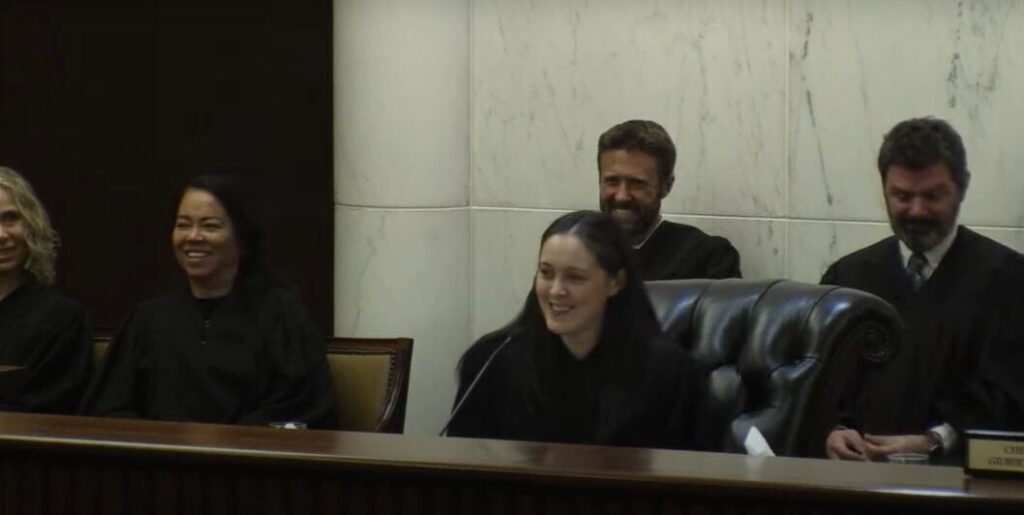
Colorado equal pay law does not require plaintiffs to allege gender-based retaliation, appeals court finds
Michael Karlik
michael.karlik@coloradopolitics.com
Updated 3 days ago
The 2019 Colorado law aimed at rooting out pay discrimination on the basis of sex does not require a plaintiff to allege their employer retaliated against them for sex- or gender-related reasons, the state’s second-highest court decided on Thursday. Lawmakers...
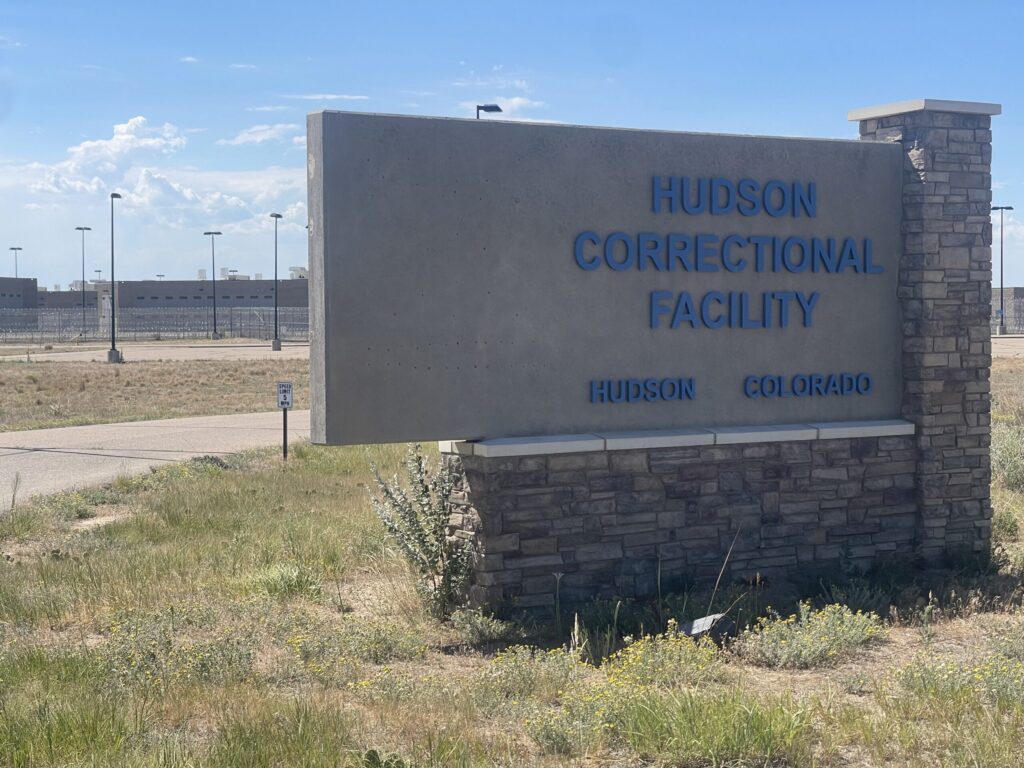
Hudson faces lawsuit over ICE detention facility
Nicole C. Brambila
nicole-c-brambila@coloradopolitics.com
Updated 4 days ago
A nonprofit organization filed a lawsuit against the Town of Hudson Wednesday, challenging plans to reopen a former federal prison in the town as a U.S. Immigration and Customs Enforcement detention facility. Together Colorado, along with Janet E. Carlson, filed...
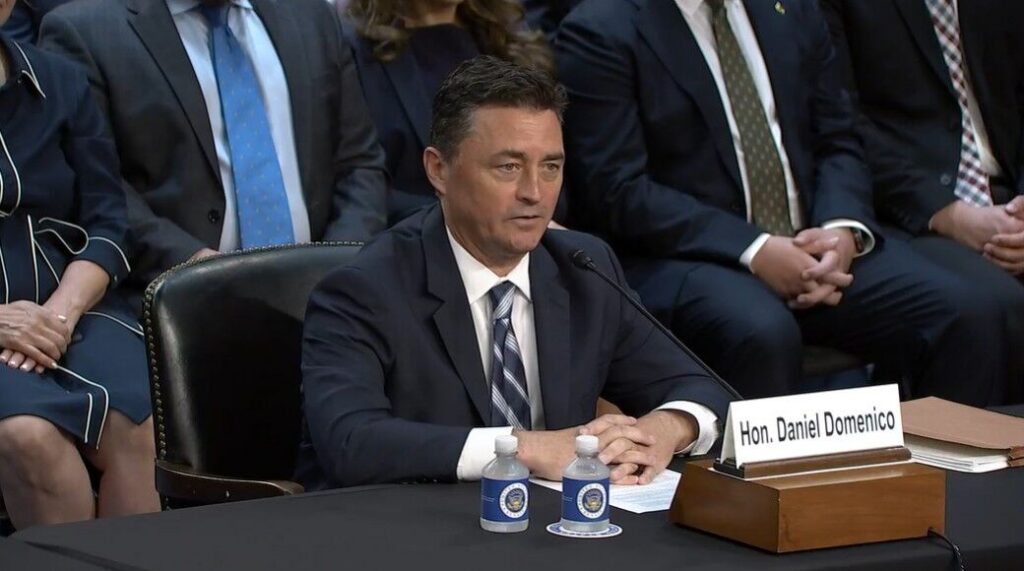
Senate committee advances Trump’s 10th Circuit nominee, as Domenico responds to questions about delays
Michael Karlik
michael.karlik@coloradopolitics.com
Updated 4 days ago
The U.S. Senate Judiciary Committee advanced President Donald Trump’s nominee to the Denver-based federal appeals court on Thursday by a party-line vote of 12-10. U.S. District Court Judge Daniel D. Domenico, who was Trump’s first-term appointee to Colorado’s federal trial...
PREV
PREVIOUS

Pay boosts and a prohibition on striking: Inside Denver’s first principals union contract
Denver’s first-ever contract with its principals union raises salaries for most school leaders, forbids them from striking, and gives them more input on big district decisions. Cesar Rivera, the principal at Samuels Elementary and co-president of the Denver School Leaders Association, said he hopes the new agreement results in predictability where there was previously ambiguity, […]

State audit finds Colorado's prescription drug monitoring program failed to keep track of opioid use
The state’s Prescription Drug Monitoring Program has not done its job in setting the right systems in place to curtail drug abuse, opioid use in particular, state auditors told the Legislative Audit Committee on Monday. The audit detailed failures in following standard practices and in enforcement, which have led to the program not operating as […]