

2021 GENERAL ASSEMBLY INSIGHTS | A session of strife still helped Democrats
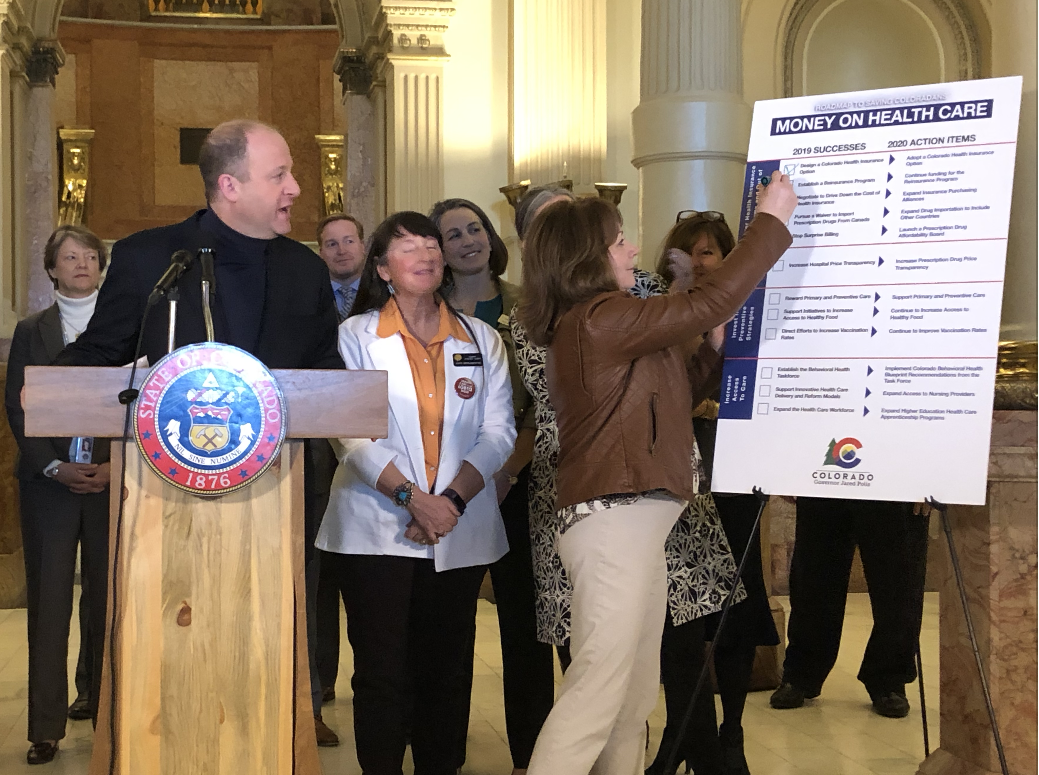
A signature piece of legislation for Gov. Jared Polis, a public option health care policy, wasn’t nearly what those on the march to single-payer health care would have hoped for.
This is a pragmatic progressive governor who gave up a congressional seat, after helping drive the implementation of Obamacare, largely on a promise to save people money on their health care.
The public option is a watered-down version of a threat: shave 15% off premiums across the board, or face the wrath of government competition and bureaucratic rate setting.
That’s something Democrats consider to be better than nothing, and you’ll hear them say on the campaign trail they passed the public option, which they did not. They passed something that started out being called a public option, but that’s like saying you beat Alabama in football after you edged out Colorado Mesa State.
RELATED:
In politics, a touchdown is a touchdown.
My friend Chris Brown, the vice president of policy and research at the Common Sense Institute, gets flabbergasted, as much as a wonky brainiac can, over the right-brain logic, or lack thereof, of what’s going on.
The government is saying cut costs, period, with little consideration for why the costs are what they are.
Factor in across-the-board formulas, and somebody is going to pay, starting with people who will lose their jobs or won’t get one in the contracted health care industry and potentially hitting rural communities barely hanging on to a local clinic.
A three-year window was a compromise that served a political purpose. The legislature could look much different in three years, when the time to crack down on hospitals and insurance companies is largely somebody else’s political nightmare.
If you’re grading Democrats on health care, the public option gets an I for incomplete.
As first-term signature achievements on health care and the environment go, however, Polis has been a graffiti artist.
He drove and signed a reinsurance bill that slashed overall premiums simply by moving high-risk and high-cost customers into a separate pool supported by taxpayers and new fees on hospitals.
Democrats made it easier for groups, including counties and trade professions, to band together to form a co-op to get cheaper group rates. Democrats also capped out-of-pocket insulin prices at $100 (with additional safeguards this year) and took on surprise billing by out-of-network providers in 2019. They followed up this year with Senate Bill 175 to create the Prescription Drug Affordability Board, which will require drug makers to justify their seemingly willy-nilly price hikes. Understanding why things cost what they cost before mandating a price cut – what a novel idea.
Public what, option how?
I’m sure I’ll be moderating a few debates next year between Polis and the yet-to-be-mentioned Republican challenger. I’m not sure I’d include a question about what went wrong with the public option.
“Babe Ruth had a lifetime batting average of .342,” the baseball-loving governor might reply. “I’m hitting way better than 1-for-3.”
That’s not to say Polis and the Democrats haven’t sometimes acted like their majorities are carved into Yule Creek marble.
This session, Polis had to step in and threaten a veto to derail Senate Bill 200, which would have given state regulators more aggressive, unilateral powers to enact politically unattainable curbs on oil and gas production, just two years after the state adopted its first climate action plan to do that very thing.
Back then it was the best thing ever. Now it was never good enough. This is how political missions creep: crack open the door before you kick it in.
Nonetheless, you have to question the stability of a party where some Democrats, the week before they put the legislation on ice, rile up a protest crowd in the hometown of their party’s governor, the same hometown as Steve Fenberg, the fast-rising Senate majority leader who slow-walked the bill until it ran out of steam. Fenberg is the same chamber boss who singularly controls the fate of future bills. That’s the protest you should worry about, if you’re a lawmaker.
A small handful of Democrats could slink to the background at the next governor’s mansion gathering, if they’re invited.
Moreover, redistricting is in the works right now with more of a premium than ever on competitive districts. Incumbents in both parties who have grown used to easy rides on Election Day likely will face a more moderate playing field next year.
Republicans would need a seismic shift to flip a 41-24 margin in the House next year, but the 19-16 Senate spread needs to flip two seats to reestablish a Republican firewall against the Democrats’ agenda. That vastly complicates at least the first two years of the governor’s second term, when Polis has nothing to lose by letting all of his progressive ideas hang out, assuming he has no designs on returning to Washington.
I don’t assume that. I assume Polis will be the president of the University of Colorado someday. The Buffs sure weren’t satisfied with a former conservative congressman from Minnesota, Mark Kennedy, so their hometown governor might fit right in.
If Polis and the Democrats want to leave a legacy on health care and climate change, however, the future is now, not in three years when their health care bills come due.


Federal judge dismisses malicious prosecution claim against former Denver prosecutor
Michael Karlik
michael.karlik@coloradopolitics.com
Updated 12 minutes ago
A federal judge concluded on Monday that a former Denver prosecutor could not be sued for allegedly causing the arrests of two plaintiffs after they failed to appear for trial on the scheduled date, even though the trial had been...

Judicial discipline commission reports increased transparency, increased submissions
Michael Karlik
michael.karlik@coloradopolitics.com
Updated 1 hour ago
The Colorado Commission on Judicial Discipline received 473 misconduct complaints about judges in 2025, which was nearly 29% higher than in 2024 and substantially greater than any time in the past decade. However, only 31 complaints were referred to the commission...
Colorado Gov. Jared Polis sparks backlash after raising clemency questions in Tina Peters case
Marianne Goodland
marianne.goodland@coloradopolitics.com
Updated 1 hour ago
Gov. Jared Polis ignited a political firestorm Tuesday night after weighing in on the prison sentences of two former Colorado officials convicted of attempting to influence a public servant. The comments quickly fueled speculation about possible clemency for former Mesa...

Colorado Supreme Court signals intervention in dispute over treatment for trans children
Michael Karlik
michael.karlik@coloradopolitics.com
Updated 20 hours ago
The Colorado Supreme Court ordered Children’s Hospital Colorado on Tuesday to explain why it should not direct the organization to resume providing certain types of services to transgender children in compliance with the state’s non-discrimination law. Last month, a Denver...

Trump faces first domestic test on Iran conflict with Senate war powers vote
Ramsey Touchberry, Washington Examiner
ramsey.touchberry.washington.examiner@gazetteedit.wpenginepowered.com
Updated 21 hours ago
Administration officials are scrambling to sell members of Congress on President Donald Trump’s military operations in Iran ahead of bipartisan attempts to limit his war powers in the Middle East without approval from lawmakers. The Senate and House are set...
Supreme Court hands California parents win over secret gender transition policy
Jack Birle, Washington Examiner
jack.birle.washington.examiner@gazetteedit.wpenginepowered.com
Updated 22 hours ago
The Supreme Court gave California parents a significant victory late Monday when it kept in place a lower court’s block of the Golden State’s public school policy hiding students’ gender identity and preferred pronouns from parents. A 6-3 majority on...

Judge nixes latest policy requiring 7 days’ notice for Congress members to visit ICE facilities
Michael Kunzelman
michael.kunzelman@associatedpress.com
Updated 22 hours ago
WASHINGTON (AP) — A federal judge agreed on Monday to temporarily suspend the latest version of a Trump administration policy that requires members of Congress to provide a week’s notice before they can visit immigration detention facilities. U.S. District Judge...
Judge nixes latest policy requiring 7 days’ notice for Congress members to visit ICE facilities
Michael Kunzelman
michael.kunzelman@associatedpress.com
Updated 19 hours ago
WASHINGTON • A federal judge agreed on Monday to temporarily suspend the latest version of a Trump administration policy that requires members of Congress to provide a week’s notice before they can visit immigration detention facilities. U.S. District Judge Jia...

Gov. Polis, Upper Basin states criticize federal draft plan for managing the Colorado River
Marianne Goodland
marianne.goodland@coloradopolitics.com
Updated 22 hours ago
With no agreement among the seven Colorado River states and federal deadlines now passed, the Upper Colorado River Commission on Monday sharply criticized the U.S. Department of the Interior’s draft plan for managing the river after current guidelines expire this...

Ballot access, dual-office ban bills move swiftly through Colorado legislature
Marianne Goodland
marianne.goodland@coloradopolitics.com
Updated 23 hours ago
With an eye on the 2026 election cycle and mounting tensions with the Trump administration, Colorado lawmakers are fast-tracking a pair of election bills they say will protect the state’s mail ballot system and tighten rules for elected officials. The...
PREV
PREVIOUS

DENVER COUNCIL SPOTLIGHT | Councilwoman Robin Kniech on breaking barriers and leaving an impact
Denver Councilwoman Robin Kniech made Denver history in 2011 when she was elected to council as the first out member of the LGBTQ community. In the last decade, she has worked tirelessly on issues including affordable housing, labor laws and minimum wage. Kniech grew up in Milwaukee, Wisconsin, moving to Denver after she graduated from […]
Biden administration credits rescue plan subsidies for 1M new Obamacare sign-ups
Biden administration officials attributed the more than 1 million new Obamacare sign-ups to the advance tax credits established by the massive coronavirus relief package passed in March that drove down many people’s plan premiums to around $10 per month. “This far into a special enrollment period to see the numbers as high as they are […]