

OPINION | ‘Public option’ only makes health care costlier


It would be difficult to find someone in Colorado who believes health care is inexpensive. We know that Coloradans, from sole proprietors to those who work in large companies, struggle with health care costs. Yet, the legislature’s latest attempt to address this issue, House Bill 1232, doesn’t truly cut costs at all. It simply moves costs from some Coloradans to others, which isn’t a solution for Colorado.
This year’s proposal directs the Commissioner of Insurance to establish a single, standardized health benefit plan for the individual and small group markets. Private insurers in the individual and small group markets would then be forced to offer this government-designed plan and meet arbitrary premium reduction goals of 18% for the new product, without any real leverage to lower underlying health care costs. If plans fail to meet the premium reduction goals, the Commissioner of Insurance is empowered to establish reimbursement rates for health care services that hospitals and doctors are forced to accept.
In summary: a government-designed benefit plan. Government-set premium reduction targets. A government mandate to insurance companies to sell the plan. Government-set reimbursement rates for hospitals, doctors and other health care providers. But no real solutions to lower the underlying cost of providing health care.
It is illogical and short-sighted to believe that the state can demand insurers and health care providers arbitrarily reduce their costs by 18% without consequences elsewhere in the system. And so, this is where the real concern lies: this legislation won’t solve any of our health care cost challenges – it simply shifts the burden.
If current experience is our guide, then the most likely – almost inevitable – consequence of this policy is that losses incurred from this state standard plan will be made up for in increased costs to the rest of the market. This is called cost-shifting and it happens today. Underpayment in Medicare and Medicaid gets shifted to privately insured Coloradans, a contributing factor in our annual premium increases. And, here’s the kicker: just over 50% of Coloradans get their insurance through their employer, and that’s who will likely get stuck with increased health care costs to cover a modest benefit for a few.
Supporting a modest cost savings for a sliver of the population by increasing costs for everyone else is not only bad policy; it doesn’t even address the issue we are demanding be addressed – the cost of care for all of us.
We fear there could be other consequences as well, primarily, reduced competition in the marketplace and reduced access to care exacerbating both cost and quality no matter what health care plan we buy or where we buy it.
Coloradans need market-driven, sustainable solutions that will lower costs for all of us, not gimmicks that only reshuffle the costs.
While we’re far from a sustainable solution to our health care challenges, we have made real progress in addressing health care costs in Colorado in recent years. This progress has been achieved in large part through private market solutions and public-private collaborations. Reinsurance, growth in high-value limited-network insurance plans, value-based payment arrangements between health care providers and insurers, and the health care industry’s investments in telehealth and other innovative technology solutions have all begun to drive premiums down. And those premium reductions have come for consumers across the state: in mountain, Western Slope, eastern plains and Front Range communities alike. It is a good start. And, yes, there is more work to do.
Colorado has seen larger reductions on a percentage basis in the Affordable Care Act’s average benchmark health insurance premiums than Washington State, the first state to establish a public option two years ago. Since 2018, Colorado’s benchmark premiums have fallen by 25.3%, compared to a 15.5% increase in Washington State. While the approach in House Bill 1232 is not the same as Washington’s plan, it is still an instructive comparison as we look to contrast the results of a market-driven approach vs. a government-driven approach.
We know there is much more work needed to achieve real solutions to the health care woes that we face. But let’s be honest: we are all saddled by the burden of high costs in health care. And we should focus on solutions that benefit us all.
Laura Giocomo Rizzo is senior vice president of external affairs at the Denver Metro Chamber of Commerce.


The real impact of regulations on businesses, employees and Colorado’s way of life | OPINION
Colorado Politics
colorado-politics@coloradopolitics.com
Updated 10 hours ago
By Loren Furman and Steve Swinney Every day in Colorado, business owners are faced with decisions most people never see, shaped by rising costs and a regulatory environment that has grown more complex over time. Those choices eventually reveal themselves...
Should we have recall votes for all Colorado elected officials? | Hal Bidlack
Hal Bidlack
hal-bidlack@coloradopolitics.com
Updated 17 hours ago
As I write this on the Sunday before you read it, we’ve just learned of the first American casualties of our, what — war? conflict? attack? — on Iran. The Supreme Leader of Iran, for the past 36 years or...
Colorado legislature should not reverse lottery modernization | OPINION
Colorado Politics
colorado-politics@coloradopolitics.com
Updated 18 hours ago
By Bill Clayton Four years ago, the Colorado General Assembly passed bipartisan legislation to modernize the state’s lottery system and strengthen funding for Colorado’s outdoor projects and open spaces. Lawmakers recognized a simple reality: consumer behavior has evolved. Most Coloradans...

Could Weiser or Bennet as governor each be an improvement over Polis? | Miller Hudson
Miller Hudson
miller-hudson@coloradopolitics.com
Updated 2 days ago
The weekend before last was a forerunner to numerous forums and debates where U.S. Sen. Michael Bennet and Attorney General Phil Weiser will jostle for position in the Democratic primary for governor. The victor seems certain to be headed to...

Poison, poultry and prostitution — the Colorado legislature marches on | Rachel Gabel
Rachel Gabel
rachel-gabel@coloradopolitics.com
Updated 2 days ago
Many weeks my search history is odd but the past two weeks might worry our county sheriff if he didn’t know me as well as he does. This week has been the week of poison, poultry and prostitution. Not to...

Thoughts on President Trump’s State of the Union address | Cronin & Loevy
Tom Cronin Bob Loevy
tom-cronin-bob-loevy@coloradopolitics.com
Updated 2 days ago
The U.S. Constitution’s Article Two states “He (the president) shall from time to time give to the Congress Information of the State of the Union, and recommend to their Consideration such Measures as he shall judge necessary and expedient….” On...

Are Colorado businesses leaving or evacuating? | Jon Caldara
Jon Caldara
jon-caldara@coloradopolitics.com
Updated 5 days ago
At this point, if you hear beeping downtown, it’s not a construction crew. It’s a company backing out. And look, I get it. Businesses relocate for all sorts of reasons: taxes, regulations, labor costs, office space, crime, commute times, the...

Additional thoughts on State of the Union address/rally | Cronin and Loevy
Tom Cronin Bob Loevy
tom-cronin-bob-loevy@coloradopolitics.com
Updated 3 days ago
The U.S. Constitution’s Article II states that “He (the president) shall from time to time give to the Congress Information of the State of the Union, and recommend to their Consideration such Measures as he shall judge necessary and expedient...
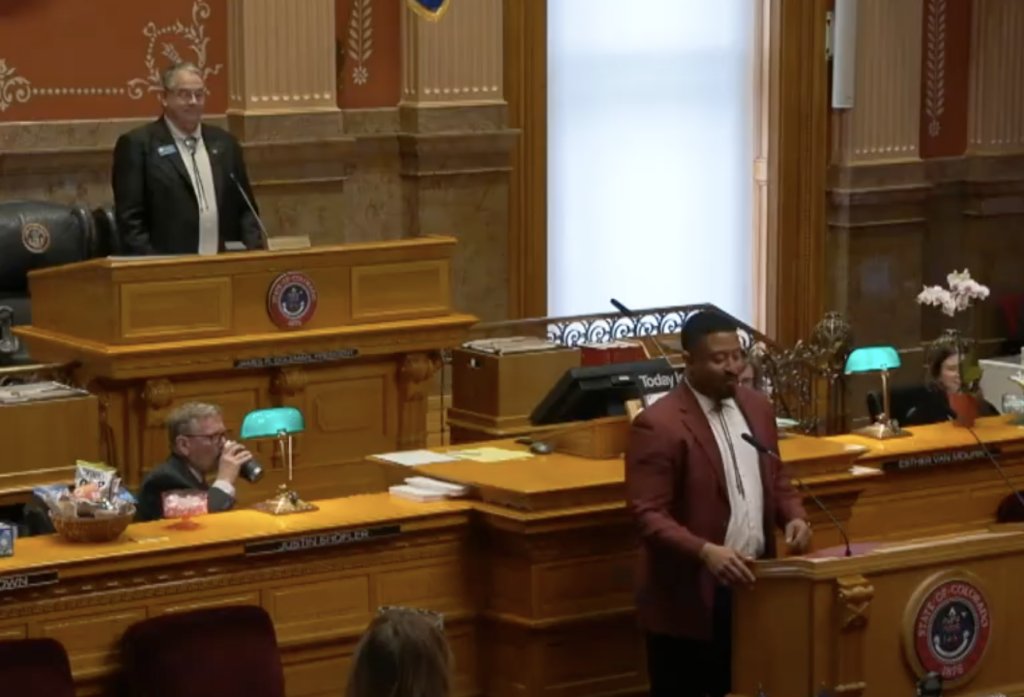
Cute puppy overload and an audition of a different kind: Capitol M | Week of Feb. 28, 2026
Marianne Goodland
marianne.goodland@coloradopolitics.com
Updated 5 days ago
The lighter side of the Capitol, and most days, you ought to be really grateful for it. There’s a rumor (jk) floating around that an amendment is coming for the bill to legalize prostitution. The amendment would ban condoms made...
A cynical import Colorado doesn’t need | SONDERMANN
By Eric Sondermann
by-eric-sondermann@coloradopolitics.com
Updated 3 days ago
“But mommy, he started it.” Every parent, definitely those with more than one kid, has heard this instinctively defensive reaction to the point of exhaustion. It is the ultimate deflection or shifting of the blame. A similar rationale, often about...
PREV
PREVIOUS

Let's keep guns out of violent hands in Colorado
Eileen McCarron In the days following the mass shooting tragedy at a Boulder King Soopers, an oft-repeated question was, “How was the alleged shooter allowed to buy a gun?” Yes, he had a history of violence, yet was able to purchase high-powered weaponry with ease and used it to kill ten people while they innocently […]

OPINION | Act on climate change — and protect kids' health
Jessica Miller As a general pediatrician, most of my time is spent in a clinic or hospital. I am venturing out of these settings to write this piece because I know climate change is one of the largest health threats facing children in Colorado. Climate change is not just an environmental issue but a health […]