

Judge greenlights lawsuit against Aurora officers who tased man having seizure

A federal judge has cleared the way for a man to sue the Aurora police personnel who tased him while he was having a seizure and posed no threat to the officers.
“The law has been clearly established that the use of a taser on a suspect who has ceased resisting arrest and did not receive adequate warning is unreasonable,” wrote U.S. District Court Judge Raymond P. Moore in a March 16 order.
“Judge Moore applied the law to the facts and reached the right conclusion with respect to the police officers,” responded Faisal Salahuddin, one of the attorneys for Andre Williams. Lawyers for the five officers involved did not reply to an email seeking comment.
On Sept. 6, 2018, Williams got into an automobile accident. One officer who responded noticed the behavior of Williams, who had a history of epileptic seizures, seemed oddly “lackadaisical.” The officer subsequently left.
When a tow truck arrived, Williams reportedly climbed into the truck’s bed and refused to come down. The driver called police, and body-worn camera footage showed Officer Dominic Marziano unsuccessfully trying to order Williams down.
“It’s not your truck. Get off,” Marziano barked at Williams, before saying into his radio, “This guy’s being a pain in the butt.”
At one point, Williams idly swung the door of the car on the truck bed open and closed, then stared blankly at Marziano.
“I have given you lawful orders. Get off the truck or your will go to jail,” Marziano repeated. The video did not depict any offer of medical assistance from Marziano.
When Williams eventually descended, Marziano allegedly grabbed his arm. Williams pulled away, prompting the officer to tackle him, and four other officers joined in. The officers reportedly punched Williams in the head, causing him to tense and repeatedly tell them “stop” while he suffered a seizure. As such, Williams was unable to comply with officers’ request to stop resisting.
The officers tased Williams, then tased him again after they had secured his arms behind his back. Williams went to the hospital, and law enforcement later cited him for resisting arrest and obstructing a peace officer. The charges were later dropped.
Williams sued the officers for excessive use of force, and sued Aurora for failing to provide seizure-related training and for an alleged pattern of excessive force.
This was not the first instance of Aurora police personnel being the target of legal action for their response to someone experiencing a seizure. The city entered into a settlement in early 2013 that mandated “annual seizure-related training to all of its peace officers by July 2013,” following the use of force against Rickey Burrell in 2010.
Reportedly, however, Aurora discontinued its training in 2016. The city, in its motion to dismiss Williams’s lawsuit, maintained the settlement did not require ongoing training.
The officers asserted qualified immunity, which is a judicial doctrine that generally shields government employees from civil liability, unless they violate a clearly-established legal right. Finding Williams posed no threat to the officers, was only committing a minor offense, and that previous federal decisions out of Colorado put officers on notice about the limits of their conduct, U.S. Magistrate Judge Scott T. Varholak recommended last year that Williams be allowed to take his claim to a jury.
“There were five officers present. Plaintiff did not have any weapons and was being investigated for passively refusing to exit the bed of a tow truck,” wrote Varholak. The multiple instances of Taser use “are not objectively reasonable” and, if proven, would constitute a violation of Williams’ Fourth Amendment rights against unreasonable searches and seizures, which encompasses police use of force.
Varholak concluded, however, that Williams had not plausibly alleged a pattern of excessive force by the city, nor had he shown a lack of ongoing seizure-related training from Aurora led to constitutional violations. Moore, the district court judge, accepted those findings this month.
The officers had objected to that determination, asserting Williams was not simply “passively resisting,” and that the magistrate judge’s recommendation overlooked how Williams “was actively resisting Individual Defendants’ efforts by pulling his hand away, failing to follow verbal commands on multiple occasions, tensing his body and growling at the Individual Defendants.”
That claim stemmed from Marziano’s written report of the incident, in which he described Williams as “growling at us, almost imitating an aggressive animal.” (Varholak instead characterized the sound as a “groan.”) Salahuddin, the attorney for Williams, implied to The Denver Post in 2019 that the officer’s description was rooted in racism because “when a Black person has a medical issues it’s a threat but when a white person does it’s a medical issue.”
Salahuddin also indicated on Friday he has pertinent facts about the city’s actions that may change Moore’s determination about Aurora’s liability. “We are confident when the court sees that new information, any attempts to escape responsibility will fail,” he added.
The case is Williams v. Aurora et al.


Colorado justices weigh fairness concerns after defendant prevailed despite ghosting case
Michael Karlik
michael.karlik@coloradopolitics.com
Updated 4 hours ago
Members of the Colorado Supreme Court struggled on Tuesday to balance the need for one defendant to shield itself against a plaintiff’s claim that its employee sexually assaulted her child, and the fact that the employee legally admitted the allegations...
Colorado justices skeptical of appellate court’s limitation on prosecution’s appeal
Michael Karlik
michael.karlik@coloradopolitics.com
Updated 2 days ago
The Colorado Supreme Court seemed skeptical on Tuesday that Denver prosecutors should be barred from appealing a trial judge’s permanent dismissal of a criminal case, based upon the sequence of events after the original ruling. Prosecutors charged Quinn M. Jebe...
Federal judge: Government violated order shielding man from deportation in ‘one-off mistake’
Michael Karlik
michael.karlik@coloradopolitics.com
Updated 4 hours ago
A federal judge acknowledged on Thursday that the government violated his order by deporting a man in immigration detention during his pending court case, but it “serves nobody’s interests” to require the government to return him. On Feb. 18, Tesfami...
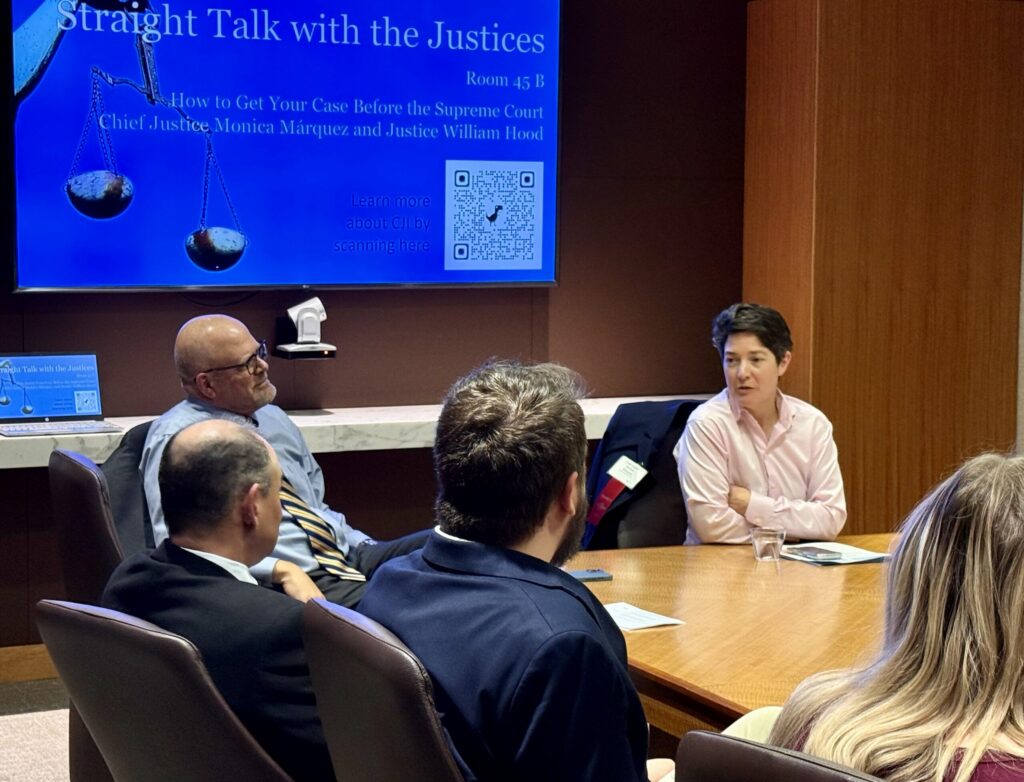
Colorado Supreme Court lifts curtain on decision-making at legal event
Michael Karlik
michael.karlik@coloradopolitics.com
Updated 2 days ago
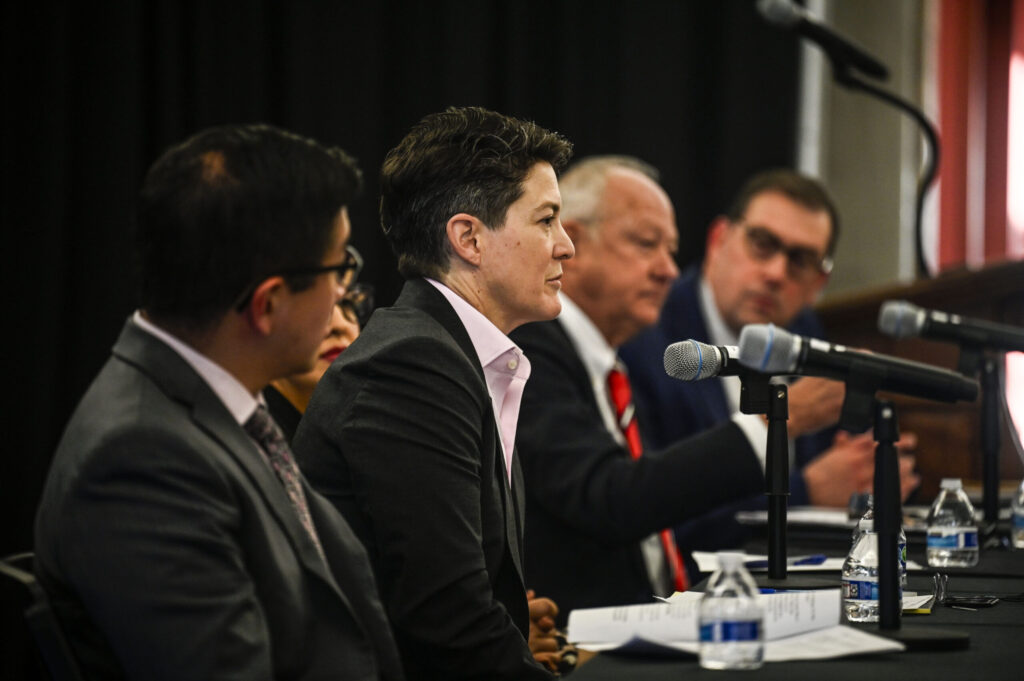
Members of the Colorado Supreme Court sat down with lawyers on Wednesday to answer questions about behind-the-scenes topics, including what happens immediately after an appeal is argued, why they might intervene in an ongoing case, and the consequence of a...
Colorado’s newest federal judge speaks about techniques for advancing cases
Michael Karlik
michael.karlik@coloradopolitics.com
Updated 3 days ago
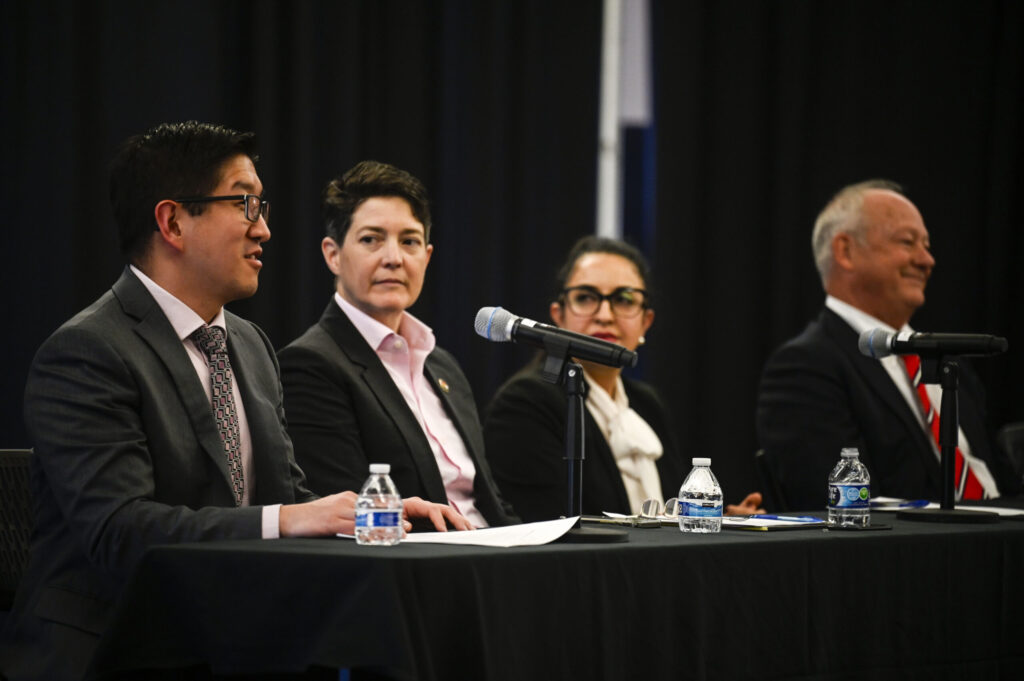
U.S. Magistrate Judge Cyrus Y. Chung described on Wednesday the various tactics he employs to resolve court cases, summing up his role with a laxative-based metaphor. “Someone told a group of us federal magistrate judges that magistrate judges are the...

Federal judge hears ICE agents’ confusion about law, injunction on warrantless arrests
Michael Karlik
michael.karlik@coloradopolitics.com
Updated 4 days ago
A federal judge heard testimony on Tuesday from U.S. Customs and Immigration Enforcement agents in Colorado, who had trouble describing the requirements of his recent injunction and the training they received on making warrantless arrests pursuant to the law. On...

10th Circuit dismisses challenge to Colorado legislature’s decorum rules
Michael Karlik
michael.karlik@coloradopolitics.com
Updated 7 hours ago
The Denver-based federal appeals court concluded on Tuesday that Colorado lawmakers cannot be sued for creating and enforcing rules of decorum that circumscribe the public commentary allowed at legislative committee hearings. A three-judge panel of the U.S. Court of Appeals...
Colorado Supreme Court blocks ballot initiative defining ‘fees’
Michael Karlik
michael.karlik@coloradopolitics.com
Updated 5 days ago
The Colorado Supreme Court blocked a proposed ballot initiative on Monday that would have required voter approval for new fees above a certain threshold, while also enshrining a definition of “fee” into the state constitution for the first time. Chief...
Colorado justices, by 5-2, say Longmont detective did not violate suspect’s Miranda rights
Michael Karlik
michael.karlik@coloradopolitics.com
Updated 1 day ago
The Colorado Supreme Court’s majority ruled on Monday that a Longmont detective did not coerce a suspect into talking by making references to how a judge would look at his character, and by suggesting he may get out of prison...
Colorado justices find Fort Collins police lacked probable cause to arrest suspect in park
Michael Karlik
michael.karlik@coloradopolitics.com
Updated 5 days ago
The Colorado Supreme Court agreed on Monday that Fort Collins police lacked probable cause to arrest a man for a child sex offense based on his presence in a public park around the time they intended to meet with their...
PREV
PREVIOUS
Colorado unemployment rate unchanged in February
Colorado’s unemployment rate in February remained unchanged from January at 6.6% even as the state eased COVID-19 pandemic restrictions on businesses early in the month. While 1,900 more people found jobs than returned to Colorado’s job market, that wasn’t enough to push the state’s jobless rate lower, the Colorado Department of Labor and Employment reported […]

Matthew Dolloff, involved in fatal shooting after Civic Center rally, is now free to roam without GPS tracker
A man charged with second-degree murder in a deadly altercation after a downtown Denver rally in October is now no longer required to wear a GPS tracker after a court appearance Friday. Second District Judge Ronald Mullins ruled to drop Matthew Dolloff’s bond requirement that made him wear the tracker at all times. The prosecution […]