

Joint Budget Committee takes another run in asking for public testimony on state budget
Want to tell the state legislature how to spend your tax money? Here’s your chance.
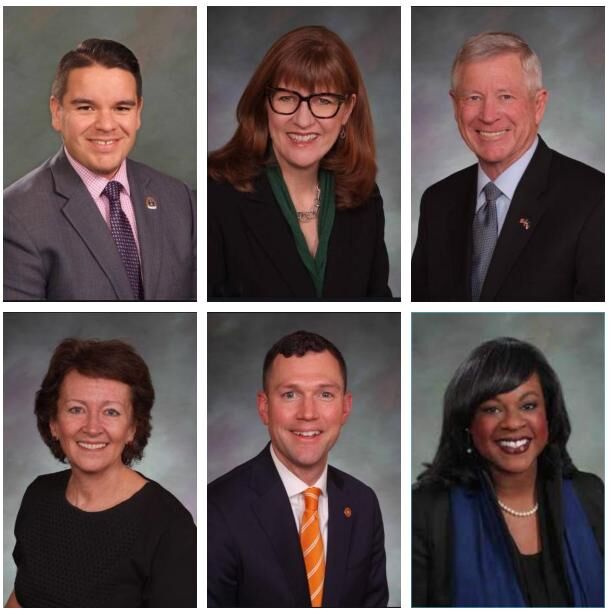
At 1:30 p.m. Wednesday, the six-member Joint Budget Committee will hear remote public testimony on Colorado’s state budget, including ideas for fiscal year 2020-2021 stimulus proposals and FY 2021-2022 budget requests. The hearing is scheduled to run until 5 p.m.
Taxpayers always had the right to tell lawmakers what they think of how their money is being spent, but that right has usually been reserved to emails or phone calls. Public testimony has been available only after the budget is already written and in appropriation committee hearings in March and April.
This is a chance for the public to provide input on the state’s budget for 2021-22 while it is being crafted by the JBC. The state budget is expected to be introduced in late March or early April and must be approved by the General Assembly and signed by the governor before June 30. Lawmakers and the governor try to finish it by June 1 to allow school boards time to finalize their budgets for the upcoming fiscal year that begins July 1.
The General Assembly is required by the state Constitution to pass a balanced budget.
“The legislature is able to deliver real results for our constituents when everyone has the chance to make their voice heard,” said JBC Chair Dominick Moreno, D-Commerce City. “The JBC is excited to hold this public hearing once again to give Coloradans from across the state the ability to weigh in on budget priorities and share what matters most to them as we recover from the pandemic and repair our economy.
“Citizen input is invaluable to the work we do, and we want to make sure the public has a seat at the table as we craft our budget. We encourage all to take part in this opportunity and share their vision for how we can rebuild Colorado together.”
The JBC held its first, and to date, only public hearing on the state budget in 2019, but the witness list was primarily made up of those from the education community, who testified in support of full-day kindergarten (a top priority that year for Gov. Jared Polis) and for cutting the state’s debt to K-12 education.
Lawmakers are hoping that members of the public will sign up (link here for the hearing) to offer either remote testimony or submit written comments. The link also includes information on how to testify in front of the JBC.
No budget idea is off-limits. However, witnesses are limited to three minutes each for their oral testimony. If you have trouble signing up, call 303-866-3521 or send an email to committees.lcs.ga@state.co.us. For questions about the JBC or the hearing, call 303-866-2061. To listen to the hearing, click here.
A primer on how the state budget is crafted can be found here.
RELATED: Joint Budget Committee holds first-ever public hearing on budget development
“The JBC wants to hear from you!” said JBC Vice Chair Julie McCluskie, D-Dillon. “On Wednesday, Coloradans can share their ideas and priorities as we work to craft a balanced budget that helps our state recover as fast as possible and build back stronger.
“We’re committed to fostering a budget process that considers voices from across our state and is as open and transparent as possible during this pandemic. This is a great opportunity for Coloradans to share their vision for how we can create jobs, support students and teachers, and ensure no one is left behind as our state recovers.”
To date, the General Assembly has passed two sets of stimulus bills intended to help Coloradans recover from the economic impacts of the pandemic. In November, Polis, in submitting his 2021-22 budget request, also suggested another package of stimulus ideas, with spending at $1.3 billion.
Related: Governor presents his 2021-22 budget to lawmakers, but the state faces troubling days ahead
In December, updated revenue forecasts projected the General Assembly will have about $3.75 billion in one-time-only money to spend in fiscal year 2021-22, but the funds can’t be used for new programs that would require funding past 2021-22.
Related: December revenue forecast shows short-term weakness in state economy but better days ahead


From Pope Francis to Charlie Kirk, many deaths in 2025 had a wide impact
Bernard Mcghee
bernard.mcghee@associatedpress.com
Updated 10 hours ago
The death of Pope Francis brought change to the Catholic Church, which counts 1.4 billion adherents and is now led — for the first time — by an American pope. The fatal shooting of conservative activist Charlie Kirk as he...

Democrats and Republicans tied on economy heading into 2026, survey finds
Rachel Schilke, Washington Examiner
rachel.schilke.washington.examiner@gazetteedit.wpenginepowered.com
Updated 7 hours ago
Voter confidence in Democrats and Republicans regarding the handling of the economy is evenly split, according to recent polling, highlighting the challenge both parties face on a central matter ahead of the 2026 midterm elections. A survey released on Thursday...

Advance Colorado initiative allowing law enforcement cooperation with ICE clears 200,000 signatures
Marissa Ventrelli
marissa.ventrelli@coloradopolitics.com
Updated 7 hours ago
A petition supporting a proposed 2026 ballot measure that would allow law enforcement to cooperate with federal immigration officers has received more than 200,000 signatures, according to Advance Colorado. If passed, Initiative 95 would allow Colorado law enforcement to report...

Trump sets his sights on peace progress in the new year with Netanyahu and Zelensky meetings
David Zimmermann Washington Examiner
davidzimmermannwashingtonexaminer@wpstage.coloradopolitics.com
Updated 7 hours ago
In the days leading up to the new year, President Donald Trump is reportedly preparing to meet with Israeli Prime Minister Benjamin Netanyahu and Ukrainian President Volodymyr Zelensky again to discuss peaceful resolutions to the foreign nations’ respective conflicts. The...
$3 million penalty upheld against for-profit college following half-decade of appeals
Michael Karlik
michael.karlik@coloradopolitics.com
Updated 3 hours ago
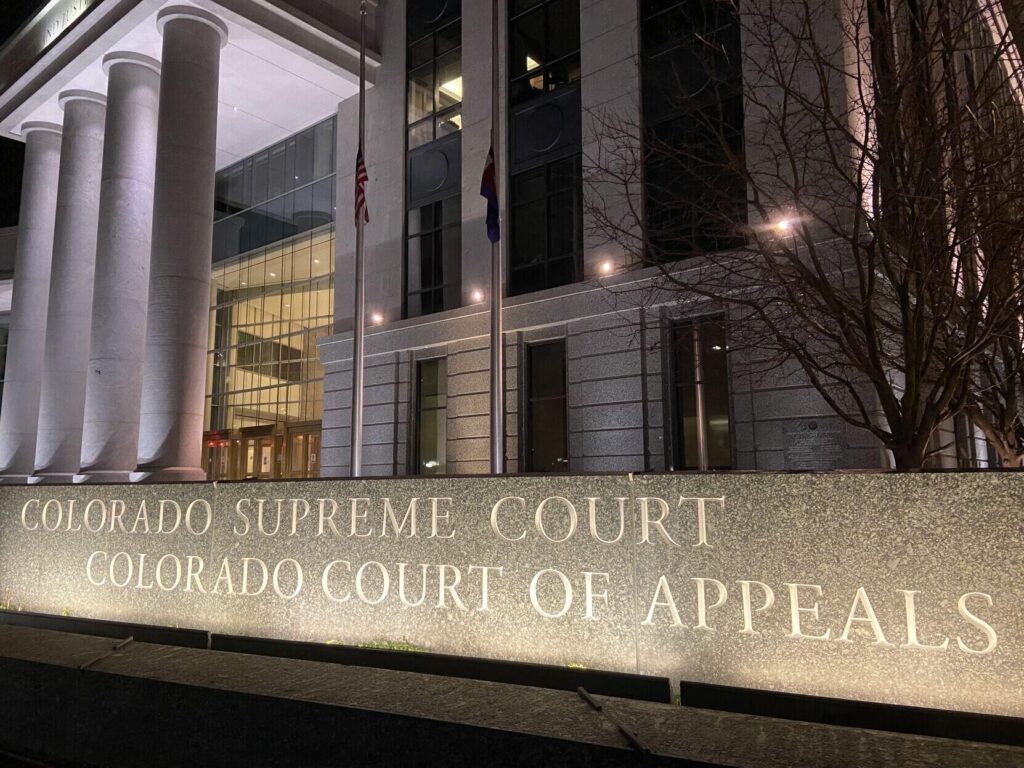
Colorado’s second-highest court upheld a $3 million penalty against a defunct for-profit college on Wednesday, agreeing the state had proven multiple violations of its consumer protection law. The Court of Appeals’ decision against CollegeAmerica followed a trial judge’s order in...

Colorado ski areas suffer, nobody has measured over 70 inches of total snowfall for winter 2025-26
Jonathan Ingraham
jonathan.ingraham@denvergazette.com
Updated 9 hours ago
Big changes coming as 10-15 inches of snow possible from incoming weekend storm, second snow event could double figure to start 2026 No Colorado ski area or resort has surpassed 70 inches of reported or estimated total snowfall amounts for...
Appeals court decides violations of child custody orders may be prosecuted per child
Michael Karlik
michael.karlik@coloradopolitics.com
Updated 1 day ago
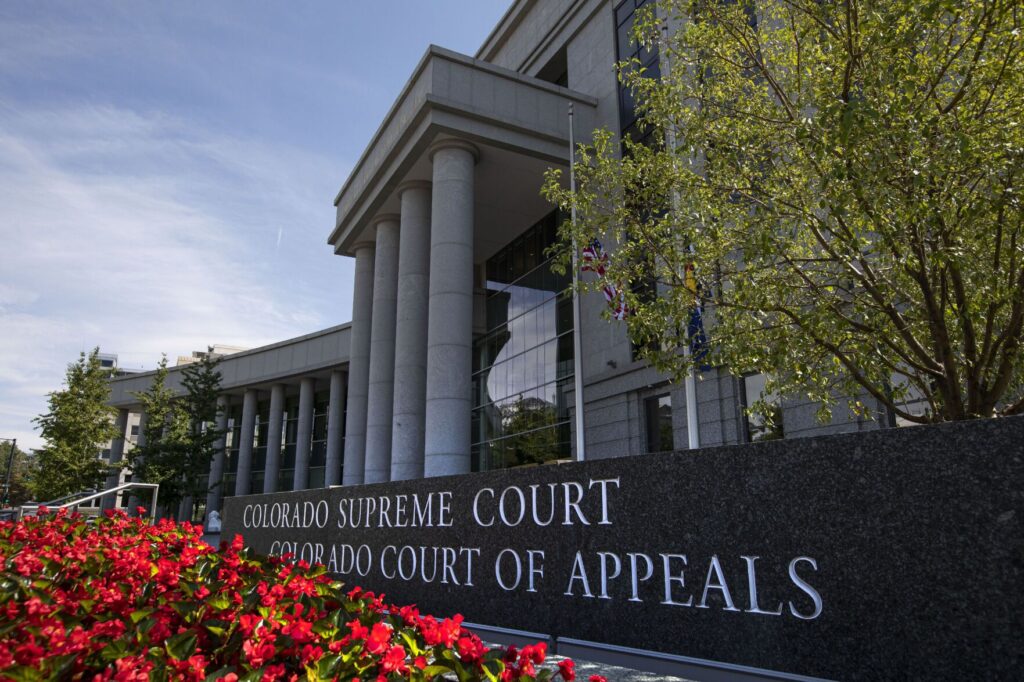
Colorado’s second-highest court concluded for the first time on Wednesday that a defendant may be charged with violating a child custody order based on the number of children affected, not the number of orders violated. Mesa County jurors convicted Tiffany...

Douglas County judge violated defendant’s right to counsel at sentencing, appeals court finds
Michael Karlik
michael.karlik@coloradopolitics.com
Updated 1 day ago
A Douglas County judge violated a defendant’s constitutional right to the counsel of her choice by refusing to postpone sentencing until her lawyer returned to the country, Colorado’s second-highest court concluded on Wednesday. In early 2023, Lyndie J. Felsher received...

New year, higher wages for Denver hourly and tipped workers
Deborah Grigsby
deborah.smith@denvergazette.com
Updated 3 hours ago
Some Denver workers will be starting the new year with a pay raise as the city’s minimum wage rises to $19.29, up from $18.81. For tipped food and beverage workers, the minimum wage will jump from $15.79 to $16.27 per...

Businesses face losses after Xcel power shutoffs
Sage Kelley
sage.kelley@denvergazette.com
Updated 9 hours ago
Restaurants west of Denver are still coming to grips with product losses and future revenue concerns after power shutoffs last week by Xcel Energy, which cited high winds as the rationale for the decision. “It’s like living in a third-world...
PREV
PREVIOUS

Colorado criminal justice leaders urge Biden to end federal death penalty
Several Colorado criminal justice leaders signed a nationwide bipartisan letter Monday, asking President Joe Biden and Vice President Kamala Harris to immediately take action to end the federal death penalty in the U.S. The letter was signed by nearly 100 leaders, including Colorado’s Attorney General Phil Weiser, District Attorneys Michael Dougherty and Beth McCann, former District Attorney […]

State declares Colorado waters free of quagga and zebra mussels
The Colorado Parks and Wildlife division, after three years of negative testing, has removed Green Mountain Reservoir in Summit County from the positive waters list for quagga mussels, a prohibited aquatic nuisance species. Since the Summit County reservoir was the only body of water in the state suspected of having quagga mussels, “this de-listing makes […]