

OUT WEST ROUNDUP | Study finds wildfires produced half of region’s pollution; Grisham sets legislative agenda

THE WEST
Study: Wildfires produced up to half of pollution in region
BILLINGS – Wildfire smoke accounted for up to half of all health-damaging small particle air pollution in the western U.S. in recent years as warming temperatures fueled more destructive blazes, according to a study released Jan. 11.
Even as pollution emissions declined from other sources including vehicle exhaust and power plants, the amount from fires increased sharply, said researchers at Stanford University and the University of California, San Diego.
The findings underscore the growing public health threat posed by climate change as it contributes to catastrophic wildfires such as those that charred huge areas of California and the Pacific Northwest in 2020. Nationwide, wildfires were the source of up to 25% of small particle pollution in some years, the researchers said.
Marshall Burke, an associate professor of earth system science at Stanford and lead author of the study, said wildfire should be foremost in the minds of those concerned about climate change.
Air pollution experts say that residents of the West Coast and Northern Rockies in particular should expect major smoke events from wildfires to become more frequent.
Loretta Mickley, an atmospheric chemist at Harvard University, and researchers from Colorado State University cautioned that fires can vary significantly from year to year because of weather changes, making it hard to identify trends over relatively short periods such as the decade examined in the new study.
An AP analysis of data from government monitoring stations found that at least 38 million people in California, Oregon, Washington, Idaho and Montana were exposed to unhealthy levels of wildfire smoke for at least five days in 2020. Major cities in Oregon suffered the highest pollution levels they had ever recorded.
NEW MEXICO
Governor announces priorities for legislative session
SANTA FE – New Mexico Gov. Michelle Lujan Grisham enthusiastically backed recreational marijuana and a crackdown on predatory lending as she outlined her list of top priorities for 2021 legislative session on Jan. 13.
The endorsements include major initiatives that have been championed by the governor in the past: the authorization and taxation of recreational cannabis, an effort to shore up abortion rights and a proposed constitutional amendment to tap more money for education from a multibillion-dollar state trust.
The ouster of several conservative Democratic senators in the 2020 primary elections increases the odds for those initiatives during the 60-day legislative session that begins on Jan. 19.
On pandemic recovery and economic development issues, Lujan Grisham wants to provide a lifeline to restaurants by allowing alcohol delivery and broadening the state’s tightly controlled monopoly on liquor licenses.
Lujan Grisham, a Democrat, also called for adjustments to a small business loan fund that was created in the midst of the pandemic – and received a lukewarm reception from businesses.
The governor’s proposal to expand tuition-free college is back with a proposed $22 million allocation to “opportunity scholarships” for in-state students. The Legislature last year downsized the initiative, paying tuition and fees for associate and two-year college degrees only.
A slate of policing reforms from legislators was not included on the governor’s top list of priorities.
Judge says public school building funding unfair
ALBUQUERQUE – A New Mexico judge has ruled that the state’s system for funding the construction of buildings in public school districts is unconstitutional and ordered officials to devise a fair system.
The ruling by 11th Judicial District Court Judge Louis E. DePauli Jr. on Dec. 29 said the funding system was not properly equitable.
DePauli said in his report that the current system makes “property-poor” districts pay more in taxes but receive less.
Democratic state Rep. Patty Lundstrom said lawmakers should change the system in the upcoming 60-day legislative session.
Democratic state Sen. Mimi Stewart believes that some parts of the judge’s ruling don’t accurately describe the state’s capital outlay funding and that the state should appeal the order.
Bob Rosebrough, a lawyer representing one of the districts suing the state, said a significant amount of funding for the construction and maintenance of public schools is dependent on how much money property taxes can generate.
WYOMING
Lawmakers adjourn after one-day session, look ahead
CHEYENNE – In a one-day session Jan. 12 marking the start of the 66th Wyoming Legislature’s business, lawmakers in both chambers agreed to delay much of the general session as a precaution against the spread of COVID-19, despite a few objections from some far-right members of the body.
Although the one-day session was conducted virtually, about half of the state’s 90 lawmakers came to the Capitol to participate in the day’s proceedings, which mainly focused on adopting legislative rules and formally electing new leadership officials. Ultimately, the Wyoming Senate and House of Representatives both voted to adjourn until Jan. 27, at which point they’ll reconvene for an eight-day virtual session.
The decision to delay the session was not unanimous, however, as 14 lawmakers in the 60-member House voted against delaying the session. In the 30-member Senate, six legislators were opposed to the postponement.
A handful of House lawmakers pushed back on proposed rules that would essentially allow lawmakers to be considered present for session meetings that they attend virtually.
The position drew pushback from members of Republican leadership, many of whom were formally elected Jan. 12. House Speaker Pro Tempore Mike Greear, R-Worland, said he understood his colleagues’ frustration, but he emphasized the amended rules were necessary to protect legislative staff, especially the retired volunteers who help out during the session.
Lawmakers’ work will continue, as virtual committee meetings have been scheduled for three consecutive days starting Jan. 19.
From there, the bills advanced by the committee will be considered during an eight-day virtual session set to begin Jan. 27.
If health conditions allow for the in-person gatherings at the state Capitol, the general session is set to run from March 1 until April 2.
NEBRASKA
Judge blocks strike over railroad’s virus safety precautions
OMAHA – A federal judge has blocked one of Union Pacific’s main unions from going on strike over its concerns about the railroad’s efforts to protect employees from the coronavirus.
The Brotherhood of Maintenance of Way Employees Division in December threatened to strike because it wants the Omaha, Nebraska-based railroad to strengthen its virus-safety precautions in the workplace. It also wants Union Pacific to offer its more than 30,000 employees full pay if they have to quarantine themselves.
But Judge Brian Buescher ruled Jan. 7 that the union must address its concerns through contract talks with the railroad and it doesn’t have the right to strike now.
The judge also agreed with the railroad that a strike would harm companies that rely on the railroad for shipping.
Union Pacific officials have defended their efforts to protect workers from the virus, and they have said the railroad is following the recommendations of public health experts. It has stepped up its efforts to sanitize locomotives and other equipment employees use and eliminated most meetings to keep workers from gathering in groups. It also requires employees to wear masks on the job.
The union had said Union Pacific employees that have to quarantine themselves because they have been exposed to the virus aren’t being paid their full wages, and the railroad may not pay employees if they have to quarantine themselves multiple times, so there is an incentive to continue coming to work even when sick.
Union Pacific is one of the nation’s largest railroads, and it operates 32,400 miles of track in 23 Western states.


Judge rules that Colorado law makes it too hard for parties to bar unaffiliated voters from primaries
Ernest Luning
ernest.luning@coloradopolitics.com
Updated 6 hours ago
A federal judge ruled in favor of the Colorado Republican Party late Tuesday, saying that a portion of the state law that allows unaffiliated voters to cast ballots in party primaries is unconstitutional because it imposes an unrealistic burden on...
10th Circuit upholds regulator’s methodology for Tri-State exit fees
Michael Karlik
michael.karlik@coloradopolitics.com
Updated 9 hours ago
The Denver-based federal appeals court upheld a regulatory agency’s methodology for calculating the fee owed by entities seeking to withdraw from Tri-State Generation and Transmission Association last week. Tri-State is a Westminster-based cooperative that provides and transmits electricity to member...
Federal judge proposes sanctions against Mike Lindell’s lawyers for continued fake citations
Michael Karlik
michael.karlik@coloradopolitics.com
Updated 10 hours ago
A federal judge is once again pursuing sanctions against lawyers for MyPillow CEO Mike Lindell for continuing to cite to court cases that do not exist, likely based on the faulty output of artificial intelligence tools. Last year, a jury...

Front Range cities oppose Democratic proposal to permit lot‑splitting as a path to affordable housing
Marianne Goodland
marianne.goodland@coloradopolitics.com
Updated 10 hours ago
Colorado lawmakers are pressing ahead with a plan to let homeowners split their lots to make room for smaller, more affordable houses. The proposal has drawn sharp opposition from Aurora, Colorado Springs, Denver and other Front Range cities that argue...
Susan Blanco signals views on role of appellate courts in first opinion as Colorado justice
Michael Karlik
michael.karlik@coloradopolitics.com
Updated 13 hours ago
Justice Susan Blanco’s first solo opinion as a new member of the Colorado Supreme Court made clear her view of the guardrails that keep the state’s highest court tethered to the issues it is asked to decide. On Monday, the...

Hegseth features Fort Carson soldiers after returning from Middle East, gives warning on Iran war
Reuters
reuters@gazette.com
Updated 13 hours ago
Defense Secretary Pete Hegseth said on Tuesday the next few days in the war against Iran would be decisive and warned Tehran that the conflict would intensify if it did not make a deal. Hegseth also highlighted his trip to the Middle...

Denver Council narrowly approves deal with Axon
Deborah Grigsby
deborah.smith@denvergazette.com
Updated 17 hours ago
After weeks of delay, the Denver City Council narrowly approved a one-year $150,000 contract with Axon for 50 automated license plate-reading cameras and the necessary system hardware, replacing the city’s former vendor, Flock. The 7-6 vote came during Tuesday’s regular...

Colorado leaders weigh next steps after Supreme Court rejects state ban on ‘conversion therapy’
Marissa Ventrelli
marissa.ventrelli@coloradopolitics.com
Updated 1 day ago
Colorado leaders said they are weighing next steps after the U.S. Supreme Court on Tuesday rejected the state’s ban on “conversion therapy” for children, as critics and supporters cheered or lambasted the ruling. The court’s near-unanimous decision called the Colorado...
Aurora homeless shelter opened too early, CEO says, as mold and plumbing issues emerge
Kyla Pearce
kyla.pearce@gazette.com
Updated 17 hours ago
Aurora’s largest homeless services project launched “way too early,” its CEO told city leaders Tuesday, saying the rushed opening left residents living amid mold, plumbing failures, and other issues inside the former hotel. During Tuesday’s Housing, Neighborhood Services and Redevelopment...
Gov. Polis declares April ‘dig safely month’ to mark 40th anniversary of Colorado 811
Scott Weiser
scott.weiser@gazette.com
Updated 17 hours ago
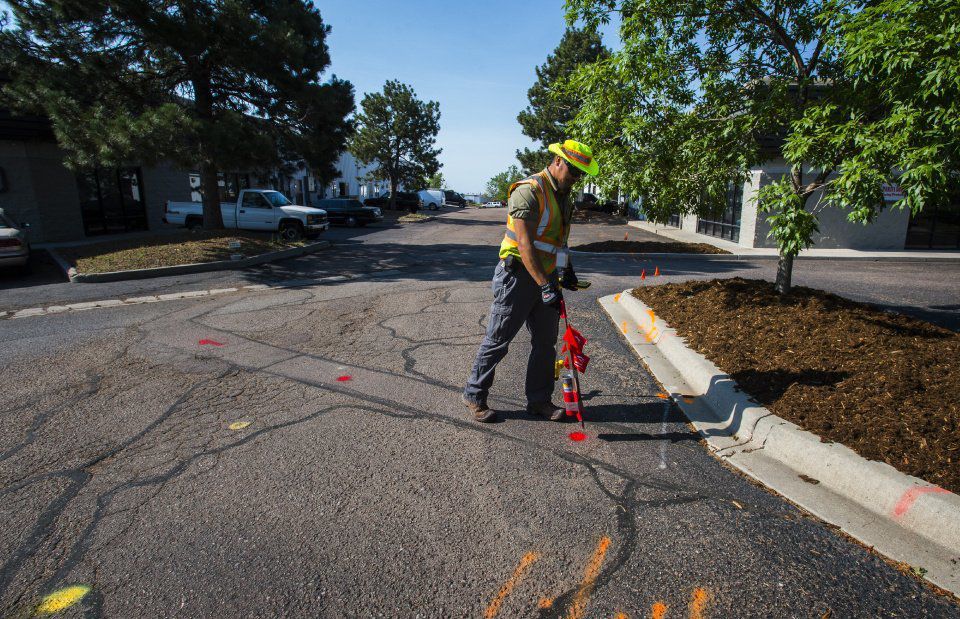
Gov. Jared Polis declared April 2026 as “Dig Safely Month” in Colorado, an annual observance that this year highlights the 40th anniversary of Colorado 811, the state’s One-Call Notification System. “Before everyone starts their warm weather projects around the house,...
PREV
PREVIOUS
SONDERMANN | Reflections on the Capitol siege
This was to be a week to write about the Colorado political scene and the key variables of the year ahead. But to be a political commentator and not focus on momentous national events is to miss the ball squarely in front of your face, coming in high and hard. Besides, if the Colorado legislature […]

Former state Rep. Bri Buentello sues U.S. Rep. Lauren Boebert for blocking her on Twitter
Former state Rep. Bri Buentello, D-Pueblo, who has been blocked from following U.S. Rep. Lauren Boebert (R-Rifle) on Twitter, has filed a lawsuit in U.S. District Court in Denver claiming First Amendment violations. As first reported by Colorado Politics, the first-year congresswoman blocked at least a half-dozen individuals from following her @laurenboebert account on Twitter. […]