

COVID-19 surging in Colorado’s Front Range again, if toilets are a sign
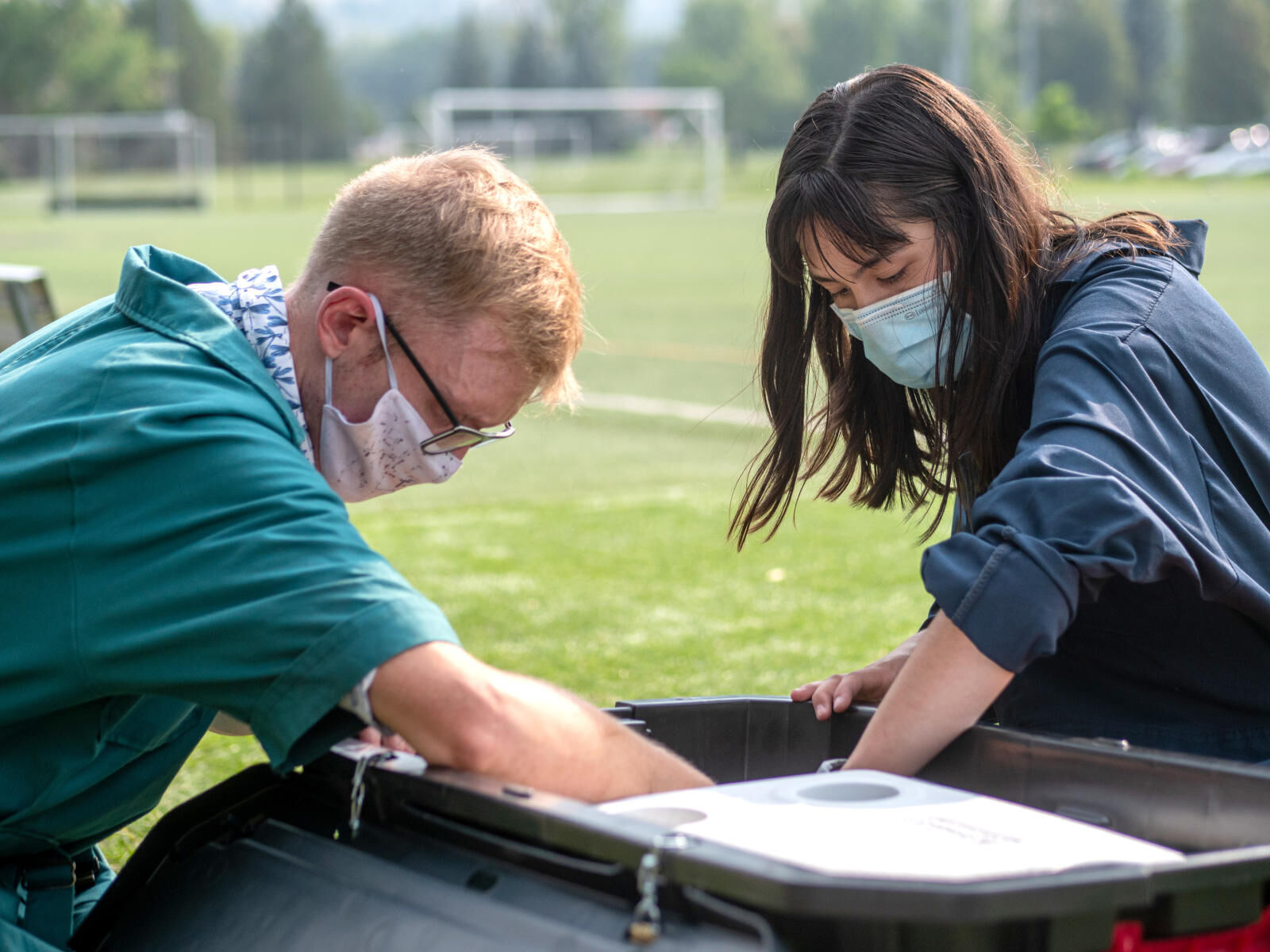
Coronavirus is again surging in Colorado’s Front Range, if toilets are a telltale, potentially signaling a post-holiday increase in cases.
Wastewater in large swaths of the Denver metro area, Boulder, northern Colorado Springs and Pueblo West is showing an increase in levels of the virus, shed by infected individuals in stool, according to data released by the state. Levels in those areas are up from all-time lows, or near all-time lows, in December. In the case of Pueblo West and Loveland, the increase is so dramatic that the jump between the two latest data points is nearly vertical.
Wastewater data mirrors rates of confirmed positive cases throughout the state, which are headed upward yet again. On Monday the state reported 3,246 new cases, up from 1,980 cases the day before. As of Tuesday, the state’s seven-day new diagnoses graph showed a rise in cases rather than the “high plateau” previously cited by state officials.
The percent of tests found to her positive was climbing Tuesday as well, with about 8% of COVID tests in the state returning positive, up from a holiday-season low of 6% in late December. The World Health Organization has recommended a rate of no higher than 5% in communities wishing to reopen.
“Case counts and test positivity have both been on the rise over the last week, raising concern about a holiday-related rise,” Dr. Jon Samet, dean of the Colorado School of Public Health, told The Gazette on Tuesday.
If B.1.1.7 – the new, more contagious variant of COVID-19 recently discovered in Europe – is circulating widely within the state, “perhaps it could be contributing as well,” to the increases, Samet said.
State officials on Tuesday said the state still had only one case of the variant but did not comment on how many potential cases it was investigating.
Last week state officials announced the United States’ first confirmed case of the variant and a second potential case were members of the Colorado National Guard deployed to a nursing home in Simla to assist with staffing in the wake of a COVID-19 outbreak. The confirmed positive case is a man in his 20s with no travel history or close contacts, state officials said.
Despite the increase in positive cases, 33 Colorado counties on Monday transitioned from “red” on the state’s COVID warning dial to “orange” at the behest of Gov. Jared Polis. His request to health officials came just hours after the announcement that the new variant had been identified in the state. The change allows indoor dining again at restaurants and increased gym capacity, but in a limited fashion.
In other Colorado COVID news:
– State officials sent a letter to Phase 1 vaccine providers Tuesday with additional guidance on whom to vaccinate with the available supply. Local public health agencies should prioritize any outstanding health care workers from Phase 1A, and moderate risk health care workers and first responders from Phase 1B, according to a news release about the letter. Staff and residents at long-term care facilities will be vaccinated through a federal program. All other Phase 1 providers such as hospitals and health systems should focus on vaccinating people 70 and older, who were added to the Phase 1B category by the state last week, according to the release.
– The state anticipates finishing vaccinations for Phase 1A health care workers in mid-January. Vaccines received from mid-January through late February will be allocated for moderate-risk health care workers, first responders and adults older than 70. Once these groups have been vaccinated, “frontline essential workers” such as teachers will be able to receive the vaccine, likely in late February, according to the release.
– State health officials updated the COVID-19 vaccination data dashboard Tuesday with additional data, including the number of vaccine providers that have administered the vaccine and the vaccines administered listed by manufacturer, according to another news release sent by the state Tuesday.
– The state’s health department added nearly 2,500 hospitalizations to the data dashboard Tuesday as a result of updates to Cenutra Health’s reporting system and data added over the weekend. Centura’s previously unreported hospitalizations didn’t make it into the state’s surveillance system because of “some hospital coding issues, which have been fixed,” according to a third Tuesday news release from the state. Some of the hospitalizations date as far back as April. The update may impact some counties’ metrics on the state’s COVID warning dial, but counties assigned to “orange” on Monday will remain in that category, the release stated.
– University of Colorado Boulder Chancellor Phil DiStefano and his daughter tested positive for COVID-19, the university announced Tuesday. DiStefano, who is experiencing mild symptoms, is isolating at home and will reduce his work schedule to focus on his health, according to a university news release. “I went with my family to participate in the campus monitoring program and am grateful we did,” DiStefano said in the release.


Colorado farmers begin spring planting season with soaring fertilizer costs and price-gouging fears
Marianne Goodland
marianne.goodland@coloradopolitics.com
Updated 1 hour ago
As Colorado farmers prepare their fields for spring planting, many are sounding the alarm over fertilizer prices that have surged far beyond what they say global supply disruptions can explain. With nitrogen costs up 30% in a matter of days,...
Federal judge refuses to authorize immediate appeal in World Cup trafficking lawsuit
Michael Karlik
michael.karlik@coloradopolitics.com
Updated 10 minutes ago
A federal judge declined to authorize an immediate appeal last week of a prior decision allowing companies operating out of Colorado to be sued for allegedly participating in a human trafficking venture involving Filipino laborers who constructed facilities for the...

Colorado lawmakers approve $150,000 ibogaine study bill targeting PTSD and addiction
Marissa Ventrelli
marissa.ventrelli@coloradopolitics.com
Updated 12 minutes ago
The Colorado House Health and Human Services Committee advanced a bill that would create a $150,000 research pilot program to study the safety and effectiveness of ibogaine, a psychoactive compound that claims to treat post-traumatic stress disorder, opioid addiction, and...

Federal judge considers second round of sanctions against ex-Colorado judicial discipline director
Michael Karlik
michael.karlik@coloradopolitics.com
Updated 3 hours ago
A federal judge ordered Colorado’s former judicial discipline director on Tuesday to explain why she should not sanction him a second time for filing documents for improper purposes, such as harassment or delay. U.S. District Court Senior Judge Kathryn H....

Colorado Democrats want large corporations to pay fee if employees are on Medicaid
Marianne Goodland
marianne.goodland@coloradopolitics.com
Updated 18 minutes ago
Democrats are seeking to require Colorado’s largest corporations to pay thousands of dollars for each employee that relies on the Medicaid program for health insurance. They don’t have to pay the fee if they can demonstrate offering an “affordable health...

Colorado justices agree to review insurance question that has divided federal judges
Michael Karlik
michael.karlik@coloradopolitics.com
Updated 9 hours ago
The Colorado Supreme Court granted a federal judge’s request on Friday to address an issue that has produced conflicting answers in policyholders’ lawsuits against insurance companies over unpaid benefits. “Parties (and judges) regularly spend undue time and money fighting in...

Farmworker overtime bill advances after lengthy debate in Colorado Senate
Marianne Goodland
marianne.goodland@coloradopolitics.com
Updated 1 day ago
The Colorado Senate on Tuesday narrowly advanced a bill to raise the overtime threshold for agricultural workers, defeating more than a dozen amendments from its leading opponent aimed at rewriting the measure. As introduced, Senate Bill 121 would raise the threshold for...

Colorado Agriculture Day: A feast for the ears, eyes and stomachs
Marianne Goodland
marianne.goodland@coloradopolitics.com
Updated 1 day ago
Gov. Jared Polis, legislators and friends of agriculture gathered at the state Capitol on Tuesday to celebrate Colorado Agriculture Day. The annual recognition of the contributions of Colorado farmers, ranchers and agribusiness drew hundreds to the Capitol’s west foyer, where...

Pueblo man held in Afghanistan for more than a year released, Taliban says
The Associated Press
the-associated-press@coloradopolitics.com
Updated 23 hours ago
KABUL, Afghanistan — Afghanistan’s Taliban authorities on Tuesday released American academic Dennis Coyle after holding him for over a year, with the foreign ministry saying the release came on the occasion of Eid al-Fitr, the Muslim holiday that marks the end of the...

Mortgage rates rise in defiance of Trump’s $200 billion push, hurting GOP on affordability
Zach Halaschak, Washington Examiner
zach.halaschak.washington.examiner@gazetteedit.wpenginepowered.com
Updated 1 day ago
After months of a gradual decline, mortgage rates are trending back up because of the war with Iran, defying President Donald Trump’s efforts to lower them and undercutting Republicans on the key issue of affordability. As of Monday, the average rate on a 30-year...
PREV
PREVIOUS
Democratic Latino Caucus outlines agenda for 2021
Housing, immigration, health care and jobs: that’s the progressive agenda for the 13-member Colorado Democratic Latino Caucus for the 2021 session. Whether the money will be there for some of the caucus’s bold ideas is another matter. Seven members of the caucus spoke with reporters Monday to outline their plans for the 2021 General Assembly […]

RTD CEO talks pandemic, Boulder rail, transit equity on podcast
Debra A. Johnson, the new general manager and CEO of the Regional Transportation District, weighed in last month on what it would take to lure riders back to public transit post-pandemic, rail to Boulder and what transit equity means to her. “Basically what we need to do is ensure there is a level of confidence. […]