

Weiser leads 38-state lawsuit against Google, citing antitrust violations
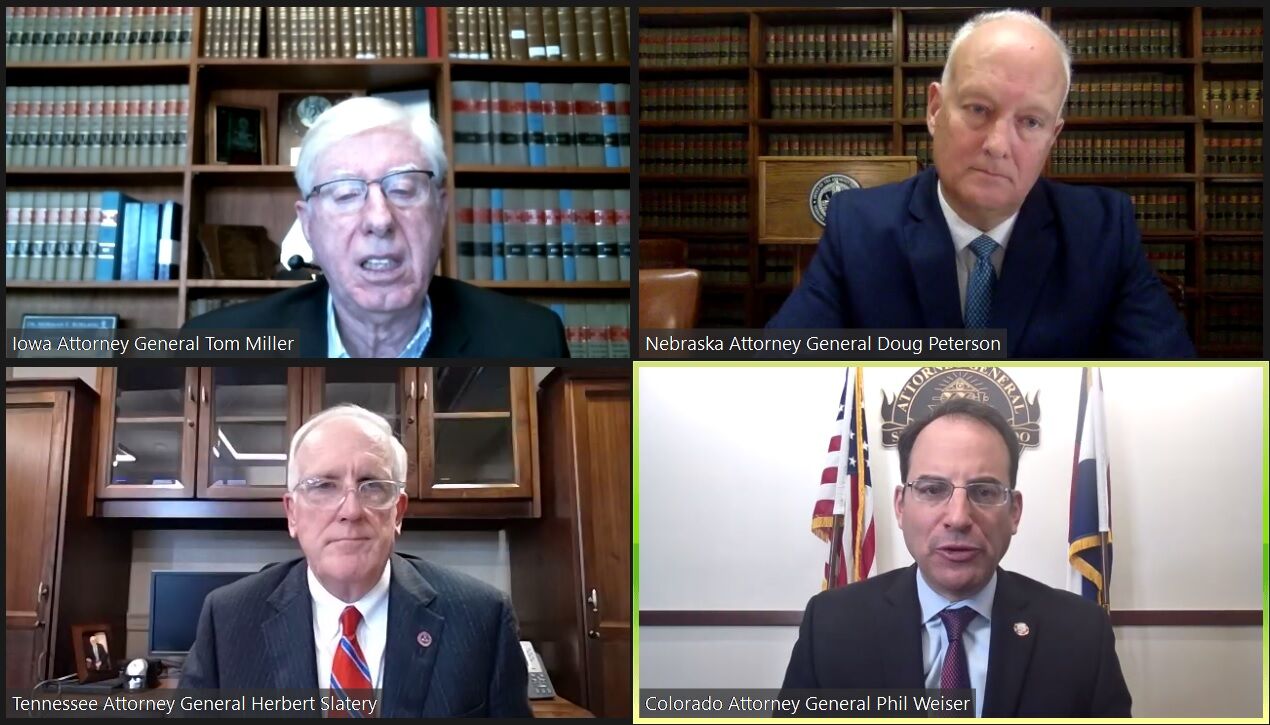
Attorney General Phil Weiser led a coalition of 38 states and territories in filing a federal antitrust complaint against Google, alleging the massive search engine company uses exclusionary tactics and stifles prospective rivals.
“By undermining competition in this market, Google leaves the consumers with less choice and forestalls innovations, as well as erects artificial barriers that protect its search engine monopoly,” said Weiser.
Attorneys general from three other states joined Weiser during a virtual press conference Thursday to announce the legal action. A central concern was the amalgamation of personal search data the company uses to maintain its dominance. In the complaint, the states quoted former Google CEO Eric Schmidt as saying, “We know where you are. We know where you’ve been. We can more or less know what you have been thinking about.”
“That’s kind of a creepy concept,” said Attorney General Doug Peterson, R-Neb. “It’s not ‘people use Google.’ It’s ‘Google uses people.’ Google uses people to take a tremendous amount of personal data and to create personal files of each individual and they monetize that in the market.”
He added, “the oxygen to developing that data to each individual is through the searches.”
In October, the U.S. Department of Justice and 11 state attorneys general filed a separate antitrust lawsuit, also targeting Google’s exclusionary agreements that require it to be set as the default search engine on mobile devices or computers. Although the members of the 38-state lawsuit had communicated with the Department of Justice about their work, the latest complaint includes allegations beyond those in the Justice action.
For example, Weiser said, his complaint addresses home-based smart devices and Internet-connected vehicle technologies, for which Google has begun to use its market power to allegedly “entrench its dominant position.”
“Your likes, your thinking, your shopping habits, your attention, your screen time, web history, personal information, changes in barometric pressure as you get in and out of cars, these are all tracked and accumulated by Google and sold to advertisers,” said Attorney General Herbert H. Slatery III, R-Tenn.
Peterson added that the states opted for a new lawsuit in order to retain their own experts and not be put into a “position of dependence” on the Justice Department.
The Connected Commerce Council, a membership organization that promotes small businesses’ access to technology, called the litigation “nuts.”
“Small businesses are hurting, and instead of helping them, these Attorneys General are trying to force middlemen between small businesses and their customers,” said President Jake Ward. “In every market, middlemen drive up costs, drive down value and drive small businesses further from their customers. Intervening on behalf of billion-dollar publicly-traded intermediaries insults small businesses and harms consumers. To do so now is nuts.”
Google held a conference call on Thursday afternoon to respond to the allegations, with the condition that no company employees be quoted or identified.
One speaker said the aim of the lawsuit was to force the company to redesign Google’s search function in a way that would harm Americans through worse search results. They added that Google discovered a simple list of websites was not an ideal presentation of information.
Another speaker, addressing voice assistant and car technology, called such competition fierce, with Siri and Alexa (from Apple and Amazon, respectively) platforms creating robust choice.
In the complaint, the states indicated that Google’s closest competitor, Bing, constituted only 7% of searches in the United States. By bundling Google’s application with devices and consumer products to the exclusion of rivals, responses to changing consumer demand may go unmet, the states allege.
“Instead of simply producing a better service that keeps consumers and advertisers loyal, Google focuses on building an impenetrable moat to protect its kingdom,” reads the complaint.
Among the other concerns is the treatment of “specialized vertical providers” like Yelp and Expedia who offer searches by product category. The complaint reports that 30% to 40% of traffic to those companies comes from Google, but the search engine has adopted exclusionary tactics in some cases where companies seek to have their advertising appear in Google’s search results.
“For example, Google does not allow certain specialized vertical providers, which may have significant brand recognition compared to their local service providers, to directly advertise the service provider’s affiliation with the specialized vertical provider’s business,” the states allege.
The litigation is reminiscent of the antitrust lawsuit against Microsoft in the late 1990s, which also involved the Justice Department and 20 states. A federal appeals panel reversed a lower court’s decision that the software company be broken up, but the department ultimately reached a settlement with Microsoft.
The European Union has also tried to take action against Google, fining the company approximately $10 billion. However, Google still controls 90% of the search market there.
“We have to give credit to our counterparts in Europe. They got into this area more quickly than we did,” said Attorney General Tom Miller, D-Iowa. “I think they’ve come to the conclusion that their efforts haven’t been as effective and they’re rethinking their situation. We should be careful to learn from them.”
He added that an effective remedy to Google’s alleged monopoly may be elusive, and could require policy changes beyond what the antitrust action seeks to achieve.
Weiser has also joined Colorado in a 48-state lawsuit alleging similar anticompetitive behavior against Facebook.
Parties to the Google lawsuit include Colorado, Nebraska, Arizona, Iowa, New York, North Carolina, Tennessee, Utah, Alaska, Connecticut, Delaware, Hawaii, Idaho, Illinois, Kansas, Maine, Maryland, Minnesota, Nevada, New Hampshire, New Jersey, New Mexico, North Dakota, Ohio, Oklahoma, Oregon, Rhode Island, South Dakota, Vermont, Washington, West Virginia, Wyoming, Massachusetts, Pennsylvania, Puerto Rico, Virginia, Guam and the District of Columbia.

Judge rules that Colorado law makes it too hard for parties to bar unaffiliated voters from primaries
Ernest Luning
ernest.luning@coloradopolitics.com
Updated 4 hours ago
A federal judge ruled in favor of the Colorado Republican Party late Tuesday, saying that a portion of the state law that allows unaffiliated voters to cast ballots in party primaries is unconstitutional because it imposes an unrealistic burden on...
10th Circuit upholds regulator’s methodology for Tri-State exit fees
Michael Karlik
michael.karlik@coloradopolitics.com
Updated 6 hours ago
The Denver-based federal appeals court upheld a regulatory agency’s methodology for calculating the fee owed by entities seeking to withdraw from Tri-State Generation and Transmission Association last week. Tri-State is a Westminster-based cooperative that provides and transmits electricity to member...
Federal judge proposes sanctions against Mike Lindell’s lawyers for continued fake citations
Michael Karlik
michael.karlik@coloradopolitics.com
Updated 7 hours ago
A federal judge is once again pursuing sanctions against lawyers for MyPillow CEO Mike Lindell for continuing to cite to court cases that do not exist, likely based on the faulty output of artificial intelligence tools. Last year, a jury...

Front Range cities oppose Democratic proposal to permit lot‑splitting as a path to affordable housing
Marianne Goodland
marianne.goodland@coloradopolitics.com
Updated 7 hours ago
Colorado lawmakers are pressing ahead with a plan to let homeowners split their lots to make room for smaller, more affordable houses. The proposal has drawn sharp opposition from Aurora, Colorado Springs, Denver and other Front Range cities that argue...

Susan Blanco signals views on role of appellate courts in first opinion as Colorado justice
Michael Karlik
michael.karlik@coloradopolitics.com
Updated 11 hours ago
Justice Susan Blanco’s first solo opinion as a new member of the Colorado Supreme Court made clear her view of the guardrails that keep the state’s highest court tethered to the issues it is asked to decide. On Monday, the...

Hegseth features Fort Carson soldiers after returning from Middle East, gives warning on Iran war
Reuters
reuters@gazette.com
Updated 11 hours ago
Defense Secretary Pete Hegseth said on Tuesday the next few days in the war against Iran would be decisive and warned Tehran that the conflict would intensify if it did not make a deal. Hegseth also highlighted his trip to the Middle...
Denver Council narrowly approves deal with Axon
Deborah Grigsby
deborah.smith@denvergazette.com
Updated 15 hours ago
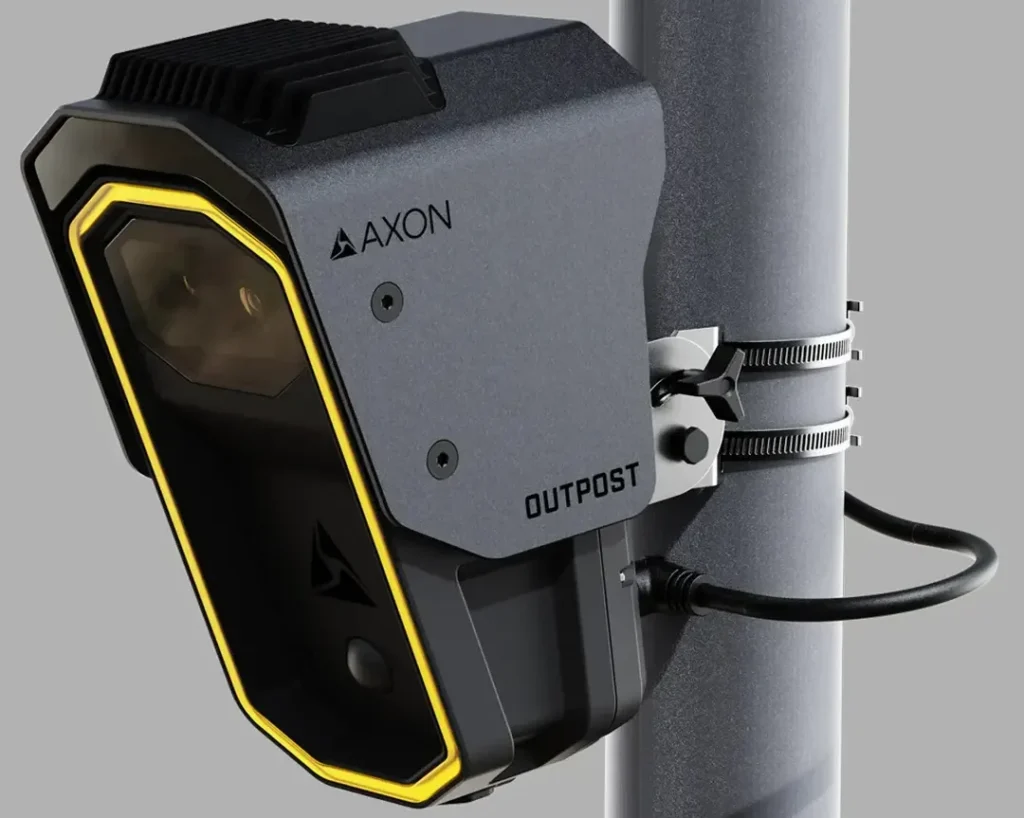
After weeks of delay, the Denver City Council narrowly approved a one-year $150,000 contract with Axon for 50 automated license plate-reading cameras and the necessary system hardware, replacing the city’s former vendor, Flock. The 7-6 vote came during Tuesday’s regular...
Colorado leaders weigh next steps after Supreme Court rejects state ban on ‘conversion therapy’
Marissa Ventrelli
marissa.ventrelli@coloradopolitics.com
Updated 1 day ago
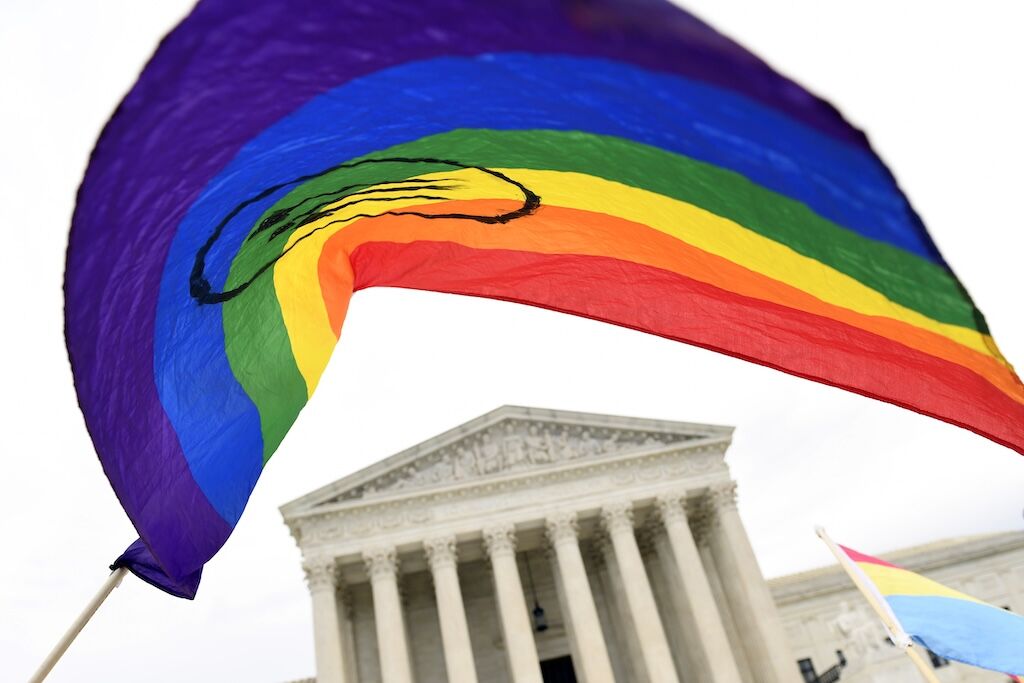
Colorado leaders said they are weighing next steps after the U.S. Supreme Court on Tuesday rejected the state’s ban on “conversion therapy” for children, as critics and supporters cheered or lambasted the ruling. The court’s near-unanimous decision called the Colorado...

Aurora homeless shelter opened too early, CEO says, as mold and plumbing issues emerge
Kyla Pearce
kyla.pearce@gazette.com
Updated 15 hours ago
Aurora’s largest homeless services project launched “way too early,” its CEO told city leaders Tuesday, saying the rushed opening left residents living amid mold, plumbing failures, and other issues inside the former hotel. During Tuesday’s Housing, Neighborhood Services and Redevelopment...

Gov. Polis declares April ‘dig safely month’ to mark 40th anniversary of Colorado 811
Scott Weiser
scott.weiser@gazette.com
Updated 14 hours ago
Gov. Jared Polis declared April 2026 as “Dig Safely Month” in Colorado, an annual observance that this year highlights the 40th anniversary of Colorado 811, the state’s One-Call Notification System. “Before everyone starts their warm weather projects around the house,...
PREV
PREVIOUS

State health agency finalizes 5-Star Variance Program
A statewide certifications program that would allow some businesses to operate at higher capacity limits than the COVID-19 dial allows will start accepting applications Friday. The “5 Star” Certified Business Variance Program by the Colorado Department of Public Health and Environment rewards businesses that implement extensive safety measures to surpass guidelines. Certified businesses in areas […]

ACLU of Colorado premieres "The Facility" a documentary about Aurora's GEO detention center Friday
For decades, many Aurora residents were unaware that there was a for-profit U.S. Immigration and Customs Enforcement detention center in their backyard. But as immigration became a hot-button issue, the center was thrust into the spotlight. On Friday, that spotlight will get a bit brighter with the premiere of a new documentary about the facility […]