

DPD recruit wants to be ‘part of the change’
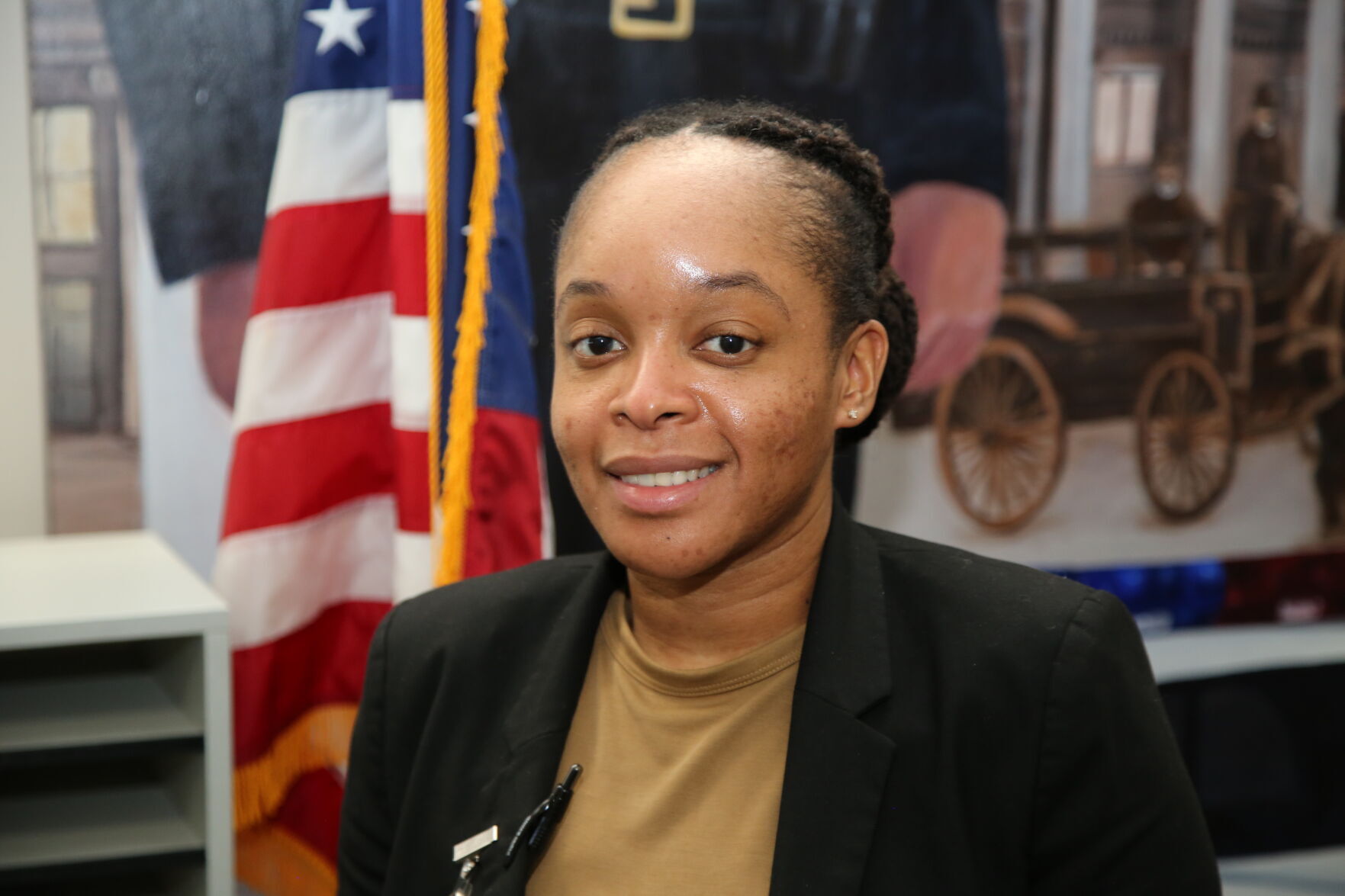
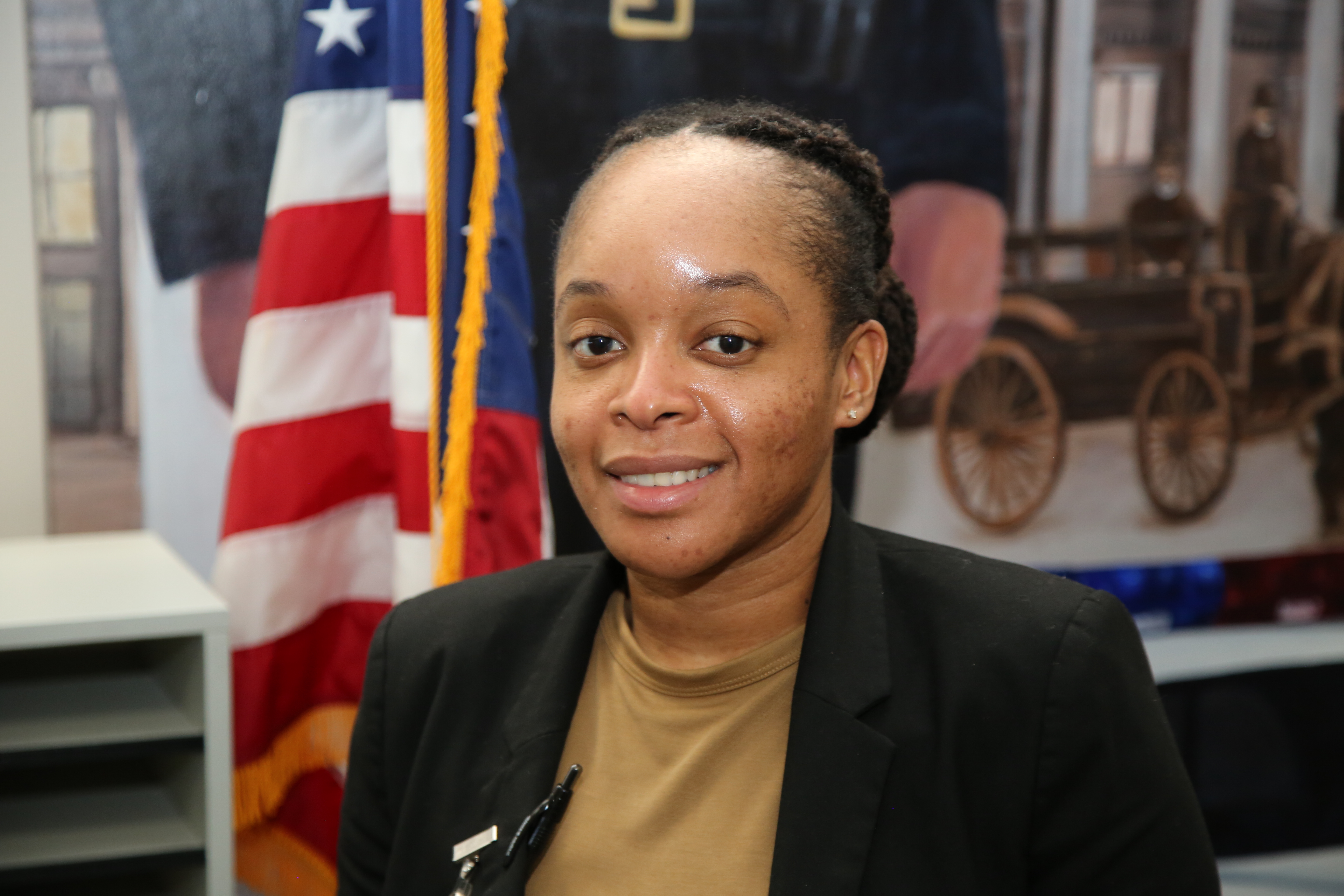
As a child growing up in Los Angeles, seeing the Rodney King riots on TV shaped Recruit Officer Marisa Henry’s understanding of how fraught relationships between police and their communities can be.
But she couldn’t have predicted she’d eventually be part of the Denver Police Department’s first recruit class during the most intense period of tension between citizens and law enforcement in the city’s recent memory, with Denver convulsed in a spasm of protests against policing treatment of people of color that themselves elicited violent police responses.
In August, she had a chance to back out of her commitment to enter Denver’s police academy given the volatile circumstances created by the city’s unrest and the COVID-19 pandemic. But when she saw Denver Police Chief Paul Pazen on the news speaking about Denver’s protests, she saw him calm and striking a tone of wanting to mend the DPD’s rifts with its communities.
“The way he speaks lines up with the type of program this is,” Henry said, adding she saw Pazen “trying to bring the community together and trying to be there and actually take actions instead of just speaking about it.”
She said it confirmed her desire to go through with becoming a police officer.
“This is my chance to actually be a part of the change; to be a part of a progressive department that has been pushing for certain things before all of this even started,” she said. “We kind of have a little bit of pressure on us right now. We’ve got to do the right thing and make sure we prove … this is what Denver PD is about.”
Chief Pazen Q-and-A: 2020 hits retentions, but he’s proud of officers’ resolve
In June, before Gov. Jared Polis signed the state’s sweeping law enforcement reform bill. the DPD announced changes to its use-of-force policy that included banning chokeholds, requiring SWAT team members to wear body cameras and making officers file reports about incidents when they point a weapon at someone.
Denver has also been selected for Project ABLE, or Active Bystandership in Law Enforcement, a program that provides training for law enforcement on peer intervention.
However, it’s necessary to mention that leadership during the DPD’s response to the spring and summer’s protests has received criticism from both citizens and government officials. On Tuesday the city’s Independent Monitor Nick Mitchell released a report detailing findings of an investigation into the protest responses. The investigation revealed gaps in the DPD’s keeping of assignment rosters, nonexistent body-camera footage from many officers assigned the protests and uses of less-lethal weapons that violated the department’s policies for crowd-control situations. Almost two dozen investigations of officer conduct during the protests have been closed because the officers involved could not be identified.
Henry said she has had conversations with people who question why she, as a person of color, would want to become a police officer given the intensity of racial tensions between law enforcement and citizens. But Henry sees being an officer as a productive way to change those relationships.
“Would you rather someone who knows nothing about your culture come to your community to try to solve a problem? They know nothing about you; they know nothing about your background; know nothing about your family,” Henry said. “Or would you rather have someone like myself who is a woman of color, who has life experience?”
The 24 Denver Police recruits that started Nov. 30 committed before the COVID-19 pandemic. They are the only class of new officers in the DPD this year because of the pandemic’s disruption. The department also took on one class of lateral hires.
Eleven women are among the new recruits, or just over 40%. About 54% are people of color, according to data provided by a spokesperson.
Henry said before starting the academy she thought the environment might be that of a “boys’ club,” but that hasn’t been her experience so far.
“It’s been fair. They talk about diversity; they talk about inclusion,” she said. “It’s actually really diverse and they’re accepting of who you are.”
She estimated she spent about 75 hours during the first week between the academy during the day, studying during the evenings and on the weekend, and going to the gym in the mornings.
The spokesperson confirmed the academy’s physical fitness requirements are the same for men and women.
Henry said even her work keeping in shape before starting the academy didn’t prepare her for how demanding the physical tests have been.
“I don’t know what I was doing, but I don’t think it’s what I thought I was doing,” she said, laughing.
She admitted she’s nervous about the training she’ll have to go through before graduating designed to test their stamina and grit in high-pressure situations, such as high-speed car pursuits and other confrontations. The instructor for their final physical tests has told the class it pushes the recruits to their limits, Henry said, “so that you know what your limit is, because out there on the street, you might get pushed to your limits and you’re going to want to be prepared for that.”
Henry has nearly six months to go before graduation and officially joining the Denver Police force. But she said her young niece is already telling her classmates she wants to be a police officer like her aunt. Henry didn’t know her niece looked up to her until she heard that, but influencing the next generation is important to her for changing perceptions of law enforcement.
“It’s important to reach them, too, and not let them grow up with that negative [perception] of police officers.”
Police watchdog meets with city officials to discuss scathing report on DPD response to protests

Judge rules that Colorado law makes it too hard for parties to bar unaffiliated voters from primaries
Ernest Luning
ernest.luning@coloradopolitics.com
Updated 7 hours ago
A federal judge ruled in favor of the Colorado Republican Party late Tuesday, saying that a portion of the state law that allows unaffiliated voters to cast ballots in party primaries is unconstitutional because it imposes an unrealistic burden on...

10th Circuit upholds regulator’s methodology for Tri-State exit fees
Michael Karlik
michael.karlik@coloradopolitics.com
Updated 10 hours ago
The Denver-based federal appeals court upheld a regulatory agency’s methodology for calculating the fee owed by entities seeking to withdraw from Tri-State Generation and Transmission Association last week. Tri-State is a Westminster-based cooperative that provides and transmits electricity to member...
Federal judge proposes sanctions against Mike Lindell’s lawyers for continued fake citations
Michael Karlik
michael.karlik@coloradopolitics.com
Updated 11 hours ago
A federal judge is once again pursuing sanctions against lawyers for MyPillow CEO Mike Lindell for continuing to cite to court cases that do not exist, likely based on the faulty output of artificial intelligence tools. Last year, a jury...

Front Range cities oppose Democratic proposal to permit lot‑splitting as a path to affordable housing
Marianne Goodland
marianne.goodland@coloradopolitics.com
Updated 11 hours ago
Colorado lawmakers are pressing ahead with a plan to let homeowners split their lots to make room for smaller, more affordable houses. The proposal has drawn sharp opposition from Aurora, Colorado Springs, Denver and other Front Range cities that argue...

Susan Blanco signals views on role of appellate courts in first opinion as Colorado justice
Michael Karlik
michael.karlik@coloradopolitics.com
Updated 14 hours ago
Justice Susan Blanco’s first solo opinion as a new member of the Colorado Supreme Court made clear her view of the guardrails that keep the state’s highest court tethered to the issues it is asked to decide. On Monday, the...

Hegseth features Fort Carson soldiers after returning from Middle East, gives warning on Iran war
Reuters
reuters@gazette.com
Updated 14 hours ago
Defense Secretary Pete Hegseth said on Tuesday the next few days in the war against Iran would be decisive and warned Tehran that the conflict would intensify if it did not make a deal. Hegseth also highlighted his trip to the Middle...

Denver Council narrowly approves deal with Axon
Deborah Grigsby
deborah.smith@denvergazette.com
Updated 18 hours ago
After weeks of delay, the Denver City Council narrowly approved a one-year $150,000 contract with Axon for 50 automated license plate-reading cameras and the necessary system hardware, replacing the city’s former vendor, Flock. The 7-6 vote came during Tuesday’s regular...

Colorado leaders weigh next steps after Supreme Court rejects state ban on ‘conversion therapy’
Marissa Ventrelli
marissa.ventrelli@coloradopolitics.com
Updated 1 day ago
Colorado leaders said they are weighing next steps after the U.S. Supreme Court on Tuesday rejected the state’s ban on “conversion therapy” for children, as critics and supporters cheered or lambasted the ruling. The court’s near-unanimous decision called the Colorado...

Aurora homeless shelter opened too early, CEO says, as mold and plumbing issues emerge
Kyla Pearce
kyla.pearce@gazette.com
Updated 18 hours ago
Aurora’s largest homeless services project launched “way too early,” its CEO told city leaders Tuesday, saying the rushed opening left residents living amid mold, plumbing failures, and other issues inside the former hotel. During Tuesday’s Housing, Neighborhood Services and Redevelopment...

Gov. Polis declares April ‘dig safely month’ to mark 40th anniversary of Colorado 811
Scott Weiser
scott.weiser@gazette.com
Updated 18 hours ago
Gov. Jared Polis declared April 2026 as “Dig Safely Month” in Colorado, an annual observance that this year highlights the 40th anniversary of Colorado 811, the state’s One-Call Notification System. “Before everyone starts their warm weather projects around the house,...
PREV
PREVIOUS

Boulder County opens applications for food and agriculture project fund
Applications opened Friday for Boulder County’s 2021 Sustainable Food and Agriculture Fund, supplying grants for environmental sustainability projects that benefit the county’s food and agricultural system. The fund, run by Boulder County’s Office of Sustainability, Climate Action and Resilience, offers the one-time grants to farmers, agricultural producers, businesses and nonprofits. Colorado requests disaster declaration for […]

Electoral College meets on Monday, with electors who want it abolished
At noon on Monday, in the governor’s office at the state Capitol, nine Colorado Democrats will cast their Electoral College votes for President-elect Joe Biden and Vice President-elect Kamala Harris, sealing the decision by Colorado voters who gave the Biden/Harris ticket a 13-percentage point win over incumbent Republican President Donald Trump and Vice President Mike […]