

State audit slams insufficient guiderails for paid leave, contracting at judicial branch office
With hundreds of thousands of dollars provided to employees with insufficient or no justification and millions of dollars awarded questionably for sole-source contracts, the Office of the State Auditor noted several areas of lax protocols in the judicial branch’s administrative office.
“The current State Court Administrator fully understands and accepts the fiduciary responsibility associated with administering the Office,” the State Court Administrator’s Office wrote in response to the critical audit report. “To this end, and with the support of the Supreme Court, the Office is operating within a set of core values to demonstrate integrity and ethical administration and use of public funds.”
The SCAO provides administrative, procurement, human resources and Internet technology services to the Judicial Department. It has 260 full-time equivalent positions, compared to 3,500 staff and 300 judges across the court system statewide. The chief justice, who heads the entire Judicial Branch, appoints an administrator to oversee the office.
In the fall of 2019, a new administrator took over following allegations of non-work involving at least two employees and scrutiny of a $2.5 million contract to a former employee who was previously subject to discipline. The former administrator, Christopher Ryan, resigned in July 2019.
From March through November this year, auditors interviewed SCAO staff, reviewed contracts and paid leave, examined purchases and scrutinized family and medical leave documentation.
Regarding voluntary separation agreements, also known as buyouts, nine employees with contracts received either three or four months’ compensation, but none of which received all of the required approvals.
“In all instances, the [voluntary separation] contracts had been approved by only the former State Court Administrator and were not signed by the other three parties required by the contract terms (the employee’s Division Director, the Director of the Division of Human Resources, and the Chief Financial Officer),” auditors wrote.
Further, there was no targeting involved for the buyouts, meaning SCAO had no plan for what happened if more employees left the office during a reorganization. Benefits paid out were also in excess of what executive branch employees would have received under similar conditions, including further paid leave.
Despite the reorganization, three staff positions involved in the buyouts were eliminated entirely, but the remaining openings were re-filled or slated to be.
“The SCAO’s [voluntary separation] contracts amounted to costs of more than $518,000 paid to employees, which is more than 50 percent higher than the maximum costs allowed ($343,000) for executive branch agencies,” the report noted.
Other problems with the office included 3,600 of discretionary administrative leave – for purposes that are “for the good of the state,” like volunteer service – that had no record of why personnel received the time off. An additional 10,000 hours had recorded instances of “family reunion” and “pre-operative appointment,” which did not obviously accrue to the state’s benefit.
Some employees also received discretionary leave above the normal range for staff.
“It would be reasonable and expected that some employees may warrant receiving additional leave awards above the normal range for reasons that the SCAO indicated,” auditors acknowledged. “However, the SCAO could not articulate what amounts of leave would be appropriate for these types of reasons and reasonably meet the Department’s requirement that discretionary leave awards must be for the good of the State.”
In nine instances, SCAO awarded nearly 3,100 hours of paid leave during disciplinary investigations, with an average of 43 days off per investigation. The auditor’s office faulted vague guidelines and a lack of monitoring or caps for administrative leave. Altogether, the loosely-documented leave time and leave for investigations cost more than $300,000.
For 10 cases of leave granted under the Family and Medical Leave Act, SCAO could not prove the employees were eligible for the amount of leave they received, or even if they were eligible, period.
“The SCAO confirmed that it did not know what became of these required documents,” auditors wrote. This leave cost approximately $40,500. Unlike the executive branch, SCAO employees earned regular compensatory time while they were taking their administrative leave.
“Employees are being paid for not working while still accruing the leave they receive as an employment benefit,” the report concluded bluntly.
Finally, the auditor’s office discovered issues with six sole-source contracts between fiscal years 2017 and 2020 that totaled $3.87 million. The problems ranged from lack of justification for the noncompetitive contract to the award of a contract to an employee who had just ended their work at SCAO when the office indicated it would move forward with the contract involving the employee’s company.
“Our system historically has a lack of structure and informality that should not be with a department of more than 200 employees and a $600 million budget,” SCAO administrator Steven Vasconcellos conceded to a legislative committee, according to The Denver Post.



Denver plans to spend $50M on improvements to Sloan’s Lake
Nicole C. Brambila
nicole-c-brambila@coloradopolitics.com
Updated 5 hours ago
Denver plans to spend $50 million for Sloan’s Lake improvements. Mayor Mike Johnston and Councilmembers Amanda P. Sandoval and Jamie Torres announced the project’s launch steps from the lake’s shore near the jetty in the park on Wednesday morning. “After...
Wildlife commissioner pushes for tougher penalties after hunter accidentally kills Colorado wolf
Marianne Goodland
marianne.goodland@coloradopolitics.com
Updated 5 hours ago
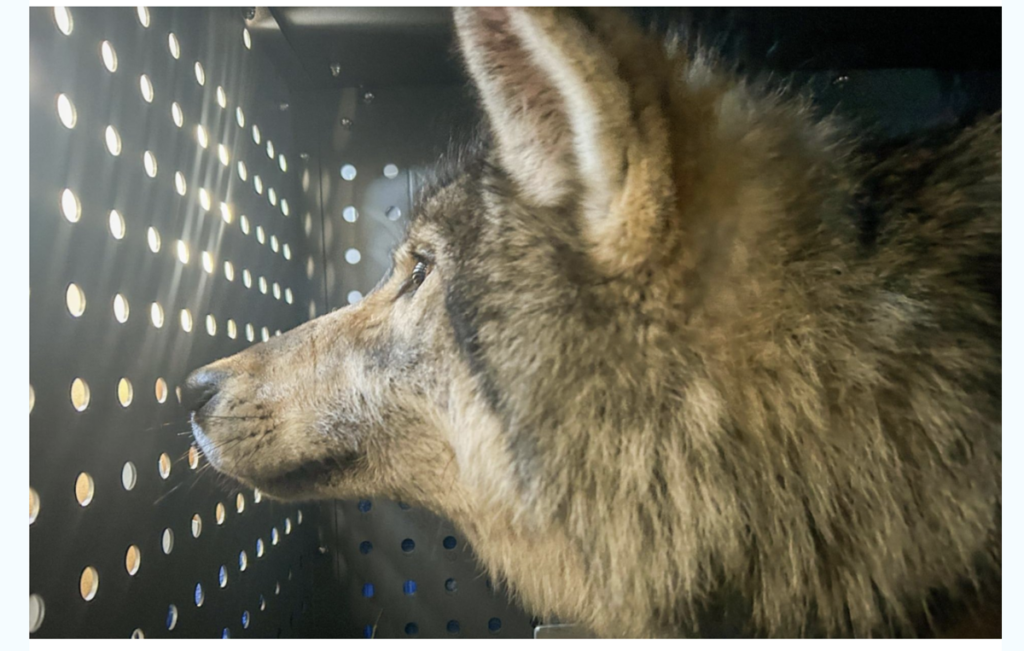
Colorado wildlife officials on Wednesday revisited the agency’s handling of violations involving protected species, prompting renewed debate over whether current penalties are sufficient. Colorado Parks and Wildlife Commissioner Rebecca Niemiec on Wednesday urged the agency to impose stronger penalties —...

10th Circuit disagrees Sterling officer had no basis to arrest motorist who lacked insurance details
Michael Karlik
michael.karlik@coloradopolitics.com
Updated 4 hours ago
The Denver-based federal appeals court disagreed on Tuesday with a trial judge’s decision to bar evidence from a pat-down search from being used against a defendant. Federal prosecutors obtained an indictment of Jorge Sigala-Baray for being a felon in possession of a...
Colorado Springs officers’ tasing, threats prompt federal judge to block use of suspect’s statements
Michael Karlik
michael.karlik@coloradopolitics.com
Updated 6 hours ago
A federal judge blocked the government last month from using some of a defendant’s statements as evidence, reasoning that the defendant made them involuntarily as Colorado Springs officers tased him five times and one officer threatened to kill him. Officers...
Appeals court rejects CDOT employee’s discrimination, retaliation claims
Michael Karlik
michael.karlik@coloradopolitics.com
Updated 9 hours ago
Colorado’s second-highest court agreed last week that a Colorado Department of Transportation employee had not shown that his employer discriminated and retaliated against him due to his religion and national origin. Ayman Salloum, who described himself as a 70-year-old Muslim...

Colorado’s Parks and Wildlife chair’s decision to limit public comments sparks backlash from fellow commissioners
Marianne Goodland
marianne.goodland@coloradopolitics.com
Updated 6 hours ago
Last week, the chairman of Colorado’s wildlife commission unilaterally decided to limit public comments, complaining, in particular, that elected officials often “grandstand” at meetings and noting that the election season is well underway. This week, the commission overturned its chair’s...

Colorado enacts new penalties for violent crimes and updates race categories on state forms
Marissa Ventrelli
marissa.ventrelli@coloradopolitics.com
Updated 8 hours ago
A trio of new laws, two regarding increased penalties for violent crimes and one establishing new requirements for government-issued forms, go into effect on Sept. 1. Here’s a breakdown of what they do. The bill: Senate Bill 25-050 What it...

US Mint releases commemorative Trump $1 coin for purchase
Claire Carter
claire.carter@washingtonexaminer.com
Updated 11 hours ago
The U.S. Mint released a commemorative $1 coin on Wednesday, celebrating America’s 250th anniversary and bearing President Donald Trump’s face. The coins became available for purchase at noon on the Mint’s website, with 100 coins costing $154.50 or a roll...

Douglas County sheriff warns of scam impersonating officer
Nicholas Fogleman
nicholas.fogleman@denvergazette.com
Updated 6 hours ago
The Douglas County Sheriff’s Office is warning residents about an ongoing scam in which a caller impersonates a sheriff’s office commander in an attempt to solicit payment. Officials said the scammer is posing as Sheriff’s Office Commander Chad Walker and...
Colorado judges may use professional name in lieu of legal name, ethics panel says
Michael Karlik
michael.karlik@coloradopolitics.com
Updated 8 hours ago
Colorado’s Judicial Ethics Advisory Board concluded on Tuesday that members of the bench may go by a professional name, rather than their legal name, so long as their intent is not to deceive. The board, which consists of judges, attorneys...
PREV
PREVIOUS

State increases DUI enforcement, offers free Lyft rides during holiday season
In an effort to fight impaired driving over the holidays, state officials are launching two heightened DUI enforcement periods and are offering free Lyft rides to communities most affected by DUIs. The first holiday DUI enforcement period began on Dec. 4 and ends on Monday. The second will be held from Dec. 29 to Jan. […]
Colorado AFL-CIO urges elected officials to implement reporting tool to keep workers safe
Officials from the Colorado American Federation of Labor and Congressional of Industrial Organizations are urging state and local elected officials to implement a statewide reporting tool to hold employers accountable for following public health orders. The call to action comes after Colorado’s AFL-CIO received over 1,000 complaints on their Colorado Unsafe Worksite reporting tool since […]