

POINT | COVID response forsakes Colorado’s kids
The academic, mental, and physical health of Colorado’s children have not been prioritized during the pandemic. As a result, we are irreparably damaging an entire generation of children and dramatically exacerbating inequities in our society that will have impacts for decades to come. Despite good intentions and hard work, Colorado’s education system has not shown that it is up to the challenge posed by COVID-19.
Also read: COUNTERPOINT | Schools have gone above and beyond
Fundamentally, our rigid public school system lacks the imagination and flexibility necessary to respond to the pandemic, and our children are paying the price.
Numerous studies have shown that school-aged children will suffer massive learning loss from school closures that may never be regained. Those academic gains are only part of the story, as children’s mental and physical health will also be permanently damaged by school closures. The proportion of mental health-related emergency room visits for children aged 5-11 are up 24% and up 31% for children 12-17.
The Journal of the American Medical Association calculated the impact school closures have on life expectancy. Researchers showed issues associated with missed instruction in 2020 will actually decrease our children’s life expectancy. They also found that “[t]his loss in life expectancy was likely to be greater than would have been observed if leaving primary schools open had led to an expansion of the first wave of the pandemic.”
School closures are causing massive, potentially irreversible damage to Colorado’s children. To say that we have let our children down is a gross understatement.
Early on in the pandemic, I was a cheerleader for pandemic efforts made by our public schools, highlighting the work done by schools across the state in the face of massive uncertainty. But as the school year approached, it became clear that schools were not taking the steps necessary to safely reopen schools. Denver Public Schools kept changing its plans, leaving working parents constantly scrambling to adjust. Some schools, like District 49 in El Paso County, told parents they were going to reopen in person, just to pull the rug out from under them later. Major districts across the state saw similar problems – failing to set up the procedures for a safe return to school, despite months to prepare.
Bizarrely, traditional public K-12 schools have been one of the least likely institutions to open after the lockdown. Bars, restaurants, marijuana dispensaries, offices, spas, salons, and even Mile High Stadium all found a way to open safely while children sat at home staring at a screen.
Schools didn’t fail to reopen because reopening represents an intractable danger. An avalanche of evidence from around the globe has shown that schools can be reopened with very little impact on infection rates in the community and many European countries have prioritized keeping schools open. Here in Colorado, many types of schools have safely reopened: preschools, private schools, rural school districts, and public charter schools have all shown that it can be done. Sadly, politics seems to be the deciding factor in traditional public school reopenings, not science.
We simply haven’t prioritized schools or children’s wellbeing. In Denver, the mayor proposed a temporary closure of liquor stores and marijuana dispensaries, which lasted about two hours before being rescinded in response to public outcry. Meanwhile, in Denver and other districts, thousands of kids have been robbed of their chance to learn to read, without much recognition from school boards or other local elected leaders.
What are we doing here? Historians will look back on this moment with equal amounts of disgust and confusion. Our society has put the needs of adults before the needs of children. We let them down when they needed us the most.
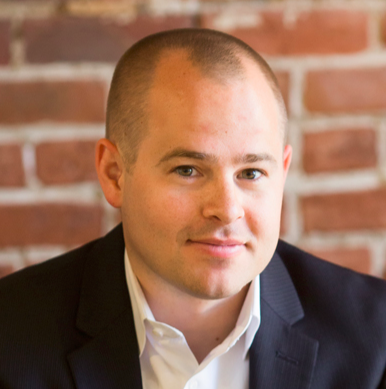
Luke Ragland is the president of Ready Colorado, a center-right education advocacy organization.


The delicate, ever-changing dance between politics and religion | SONDERMANN
Eric Sondermann for Colorado Politics
eric_sondermann_for_colorado_politics@coloradopolitics.com
Updated 2 days ago
The dance, really a marathon that brings to mind the classic movie “They Shoot Horses, Don’t They?”, has been going on as long as there have been governments and organized religion. That is to say that this delicate tango has...
Roasts, get yer roasts, here: Capitol M | Week of March 14, 2026
Marianne Goodland
marianne.goodland@coloradopolitics.com
Updated 3 days ago
The lighter side of the Capitol, especially in the past week Apparently, the pending and eventual switch to daylight stupid time has put people in some pretty funny moods. And thank goodness! On March 4, the Senate approved the appointments...

Colorado’s election audits are built on math, not politics | IN RESPONSE
Colorado Politics
colorado-politics@coloradopolitics.com
Updated 2 days ago
By Amanda Gonzalez You don’t build a secure election system overnight. You build it over years — layer by layer — reinforcing it with stronger safeguards, better technology and more transparency. In Colorado, one of those safeguards is a little-known...
The backstory behind the school-funding TABOR ballot initiative | Paula Noonan
Paula Noonan
paula-noonan@coloradopolitics.com
Updated 2 days ago
Last session, the General Assembly took in a report on K-12 public school funding. The legislature ordered the report because an idea circulated Colorado was among the bottom five states in dollars allocated per student even though it is one...
Senate Bill 22 critical to keeping energy costs affordable, power reliable | PODIUM
Colorado Politics
colorado-politics@coloradopolitics.com
Updated 2 days ago
By Brian Wortinger I love Colorado’s outdoors. I’m an avid skier and hiker and my happiest days are spent deep in the mountains with no one around for miles. I want to protect that environment as much as anyone along...
Swipe-fee ban a giveaway to big boxes, mega-chains | IN RESPONSE
Colorado Politics
colorado-politics@coloradopolitics.com
Updated 3 days ago
By Jenifer Waller Four Colorado lawmakers recently published an op-ed in Colorado Politics calling for legislation to prohibit interchange fees on the sales tax portion of credit and debit card transactions (“Why Colorado should stop charging swipe fees on sales...

Leveling the playing field —why Colorado must fight fire with fire on redistricting | OPINION
Colorado Politics
colorado-politics@coloradopolitics.com
Updated 3 days ago
By Curtis Hubbard So Dick Wadhams suddenly cares about mid-decade redistricting — hyperventilating about efforts to “hijack Colorado’s congressional map” and calling those of us involved with the effort “amazingly naive.” Where was his outrage last year when President Donald...
You get what you pay for in your state reps | Hal Bidlack
Hal Bidlack
hal-bidlack@coloradopolitics.com
Updated 4 days ago
My regular readers will know of my affection for the Out West Roundup, a Colorado Politics feature that lets us keep up to date with the goings on out here in the western U.S., and draws attention to stories that...
A warrant should mean something — expedite carrying them out | OPINION
Colorado Politics
colorado-politics@coloradopolitics.com
Updated 4 days ago
By Aaron Ping My name is Aaron Ping. I am a father from Washington state, and I am writing because my 16-year-old son, Avery, cannot. Avery died on Dec. 19, 2024. The drugs that killed him were ordered through Snapchat....
Lower Basin must adapt to Colorado River hydrology | OPINION
Colorado Politics
colorado-politics@coloradopolitics.com
Updated 4 days ago
By Nick Peters A February deadline for determining future operating guidelines for the West’s two largest reservoirs came and went with no agreement on the table and clear lines drawn in the sand. A seven-state resolution to how Lake Mead and Lake Powell will...
PREV
PREVIOUS

COUNTERPOINT | Schools have gone above and beyond
Kevin Vick The global COVID-19 pandemic has had a profound impact on our lives, one that we’ll not soon forget. While we don’t yet know in full the impacts of COVID-19 that will no doubt present challenges for the foreseeable future, one thing that we do know for certain is that educators have gone above […]

BIDLACK | GOP's COVID logic defies gravity
Hal Bidlack There are quite a few things going on in Colorado politics these days, including the remarkable cooperation of our entire slate of senators and House members coming together to request continued federal active duty for our wonderful National Guard troops, and the news that most Colorado businesses are following the needed COVID guidelines. So, that is all […]