

Denver detective who implied sufficient proof of sex assault prompts court to overturn convictions

A Denver police detective who testified about how uncommon it was to bring sexual assault charges prompted the Court of Appeals to toss a successful conviction for sexual assault.
“When probable cause to charge a defendant is not at issue, the prosecution may not present evidence of, or argument about, a pretrial screening process for bringing criminal charges,” wrote Judge Anthony J. Navarro in an opinion released on Thursday.
Prosecutors alleged that Carroll Hawkins sexually abused two minor boys, claims which came to light after Hawkins’ girlfriend discovered his journals alluding to such conduct. A forensic interview of the children in January 2014 further corroborated Hawkins’ acts.
Hawkins received six charges for sexual assault on a child, and a Denver jury found him guilty on all of them. He received 24 years to life in prison, but appealed, citing the testimony of Detective Umar Shabazz.
Shabazz was the first witness for the prosecution, and a detective for 10 years who worked on missing and exploited persons cases. Under examination from the prosecutor, Shabazz described the process for initiating child sexual assault cases: a patrol officer or social services agency most often forwards findings to a detective.
Shabazz then explained, “It is up to us, the detective, whether or not we have probable cause to arrest. If it is a case that we don’t develop probable cause then we meet with a member of the district attorney[‘s office] to discuss that and at which time the case gets refused and no charges.”
Around that time in the testimony, Hawkins’s lawyer objected, arguing it was irrelevant “whether a cop or DA thinks they ought to file a case.” Denver District Judge Sheila A. Rappaport overruled the objection, saying it was “helpful for the jury to see how cases get processed.”
Navarro, writing for the three-member appeals panel, explained that improper references to the process for bringing criminal charges may imply that only guilty people end up being charged, and therefore the defendant is guilty.
While prosecutors insisted Shabazz’s testimony intended to show the thoroughness of the investigation, the panel instead focused on what the jury heard: that the detective investigated over 100 cases, that he was not expected to arrest someone every time and that he worked on “many, many cases” with no charges.
“Considered in combination, the detective’s statements implied that the police and the prosecution had screened this case for sufficient evidence, decided that (unlike in many other cases) the evidence in this case was strong enough to justify criminal charges, and therefore the police and prosecution believed Hawkins was guilty,” wrote Navarro.
The appeals panel rejected prosecutors’ argument that the exchange with Shabazz was so brief as to have no likely effect on the verdict, with the judges pointing out it was the first evidence the jury heard. Combined with their belief that the evidence against Hawkins was “not overwhelming,” the panel determined the convictions warranted reversal and ordered a new trial.
A spokesperson for Denver District Attorney Beth McCann’s office said she was reviewing the ruling and had not yet decided whether to retry Hawkins.
According to The Blue Bench, a sexual assault prevention and services nonprofit, 77% of assaults go unreported and 99% of perpetrators do not go to prison. State data for 2019 indicate that only 30% of the 6,714 sex offense cases were resolved.
In February of last year, three researchers from Massachusetts, supported by funding from the U.S. Department of Justice, interviewed 24 prosecutors from six jurisdictions to understand decision-making in sexual assault cases.
“Although prosecutors stated that they were not assessed based on their conviction rates, they emphasized the need to determine and take forward those cases that will be most likely to reach a guilty verdict. The prosecutors were clear that many cases could not be taken forward for a variety of reasons,” such as victim credibility, the researchers wrote. However, the interviewees “also stressed the need they felt to reduce the number of cases that a unit takes forward to a manageable level given the resources they had available, problems of prosecutor burnout, and the likelihood of conviction.”
The case is People v. Hawkins.


Judge rules that Colorado law makes it too hard for parties to bar unaffiliated voters from primaries
Ernest Luning
ernest.luning@coloradopolitics.com
Updated 2 hours ago
A federal judge ruled in favor of the Colorado Republican Party late Tuesday, saying that a portion of the state law that allows unaffiliated voters to cast ballots in party primaries is unconstitutional because it imposes an unrealistic burden on...

10th Circuit upholds regulator’s methodology for Tri-State exit fees
Michael Karlik
michael.karlik@coloradopolitics.com
Updated 4 hours ago
The Denver-based federal appeals court upheld a regulatory agency’s methodology for calculating the fee owed by entities seeking to withdraw from Tri-State Generation and Transmission Association last week. Tri-State is a Westminster-based cooperative that provides and transmits electricity to member...
Federal judge proposes sanctions against Mike Lindell’s lawyers for continued fake citations
Michael Karlik
michael.karlik@coloradopolitics.com
Updated 5 hours ago
A federal judge is once again pursuing sanctions against lawyers for MyPillow CEO Mike Lindell for continuing to cite to court cases that do not exist, likely based on the faulty output of artificial intelligence tools. Last year, a jury...

Front Range cities oppose Democratic proposal to permit lot‑splitting as a path to affordable housing
Marianne Goodland
marianne.goodland@coloradopolitics.com
Updated 5 hours ago
Colorado lawmakers are pressing ahead with a plan to let homeowners split their lots to make room for smaller, more affordable houses. The proposal has drawn sharp opposition from Aurora, Colorado Springs, Denver and other Front Range cities that argue...
Susan Blanco signals views on role of appellate courts in first opinion as Colorado justice
Michael Karlik
michael.karlik@coloradopolitics.com
Updated 9 hours ago
Justice Susan Blanco’s first solo opinion as a new member of the Colorado Supreme Court made clear her view of the guardrails that keep the state’s highest court tethered to the issues it is asked to decide. On Monday, the...

Hegseth features Fort Carson soldiers after returning from Middle East, gives warning on Iran war
Reuters
reuters@gazette.com
Updated 9 hours ago
Defense Secretary Pete Hegseth said on Tuesday the next few days in the war against Iran would be decisive and warned Tehran that the conflict would intensify if it did not make a deal. Hegseth also highlighted his trip to the Middle...

Denver Council narrowly approves deal with Axon
Deborah Grigsby
deborah.smith@denvergazette.com
Updated 13 hours ago
After weeks of delay, the Denver City Council narrowly approved a one-year $150,000 contract with Axon for 50 automated license plate-reading cameras and the necessary system hardware, replacing the city’s former vendor, Flock. The 7-6 vote came during Tuesday’s regular...

Colorado leaders weigh next steps after Supreme Court rejects state ban on ‘conversion therapy’
Marissa Ventrelli
marissa.ventrelli@coloradopolitics.com
Updated 1 day ago
Colorado leaders said they are weighing next steps after the U.S. Supreme Court on Tuesday rejected the state’s ban on “conversion therapy” for children, as critics and supporters cheered or lambasted the ruling. The court’s near-unanimous decision called the Colorado...

Aurora homeless shelter opened too early, CEO says, as mold and plumbing issues emerge
Kyla Pearce
kyla.pearce@gazette.com
Updated 13 hours ago
Aurora’s largest homeless services project launched “way too early,” its CEO told city leaders Tuesday, saying the rushed opening left residents living amid mold, plumbing failures, and other issues inside the former hotel. During Tuesday’s Housing, Neighborhood Services and Redevelopment...
Gov. Polis declares April ‘dig safely month’ to mark 40th anniversary of Colorado 811
Scott Weiser
scott.weiser@gazette.com
Updated 12 hours ago
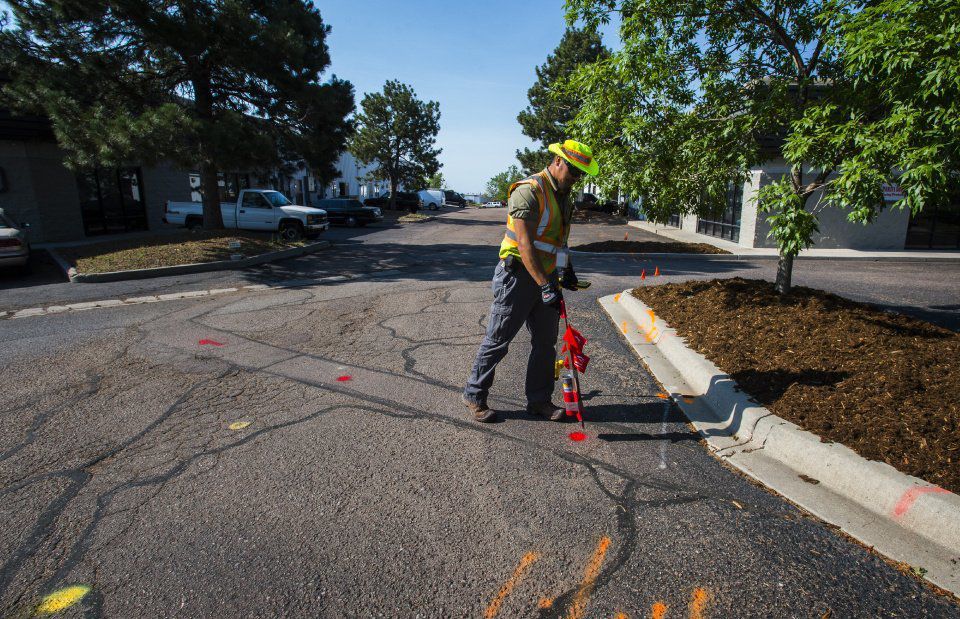
Gov. Jared Polis declared April 2026 as “Dig Safely Month” in Colorado, an annual observance that this year highlights the 40th anniversary of Colorado 811, the state’s One-Call Notification System. “Before everyone starts their warm weather projects around the house,...
PREV
PREVIOUS

Colorado Farm Bureau seats Carlyle Currier as first new president in a decade
Mesa County rancher Carlyle Currier is the new president of the Colorado Farm Bureau, succeeding Don Shawcroft, who held the position for a decade before announcing his retirement this year. Currier was Shawcroft’s vice president. He was elected from members across the state in the organization’s first virtual annual meeting Saturday night. James Henderson of […]

Attorney general: State will receive more than $220,000 in breach settlement with The Home Depot
Colorado will receive more than $220,000 in a multistate settlement with The Home Depot after a data breach that exposed payment information for about 40 million shoppers throughout the country. Attorney General Phil Weiser along with attorneys general from 45 other states and the District of Columbia received $17.5 million in the settlement with the […]