

TRAIL MIX | After ousting a pair of incumbents, Gardner faces the music
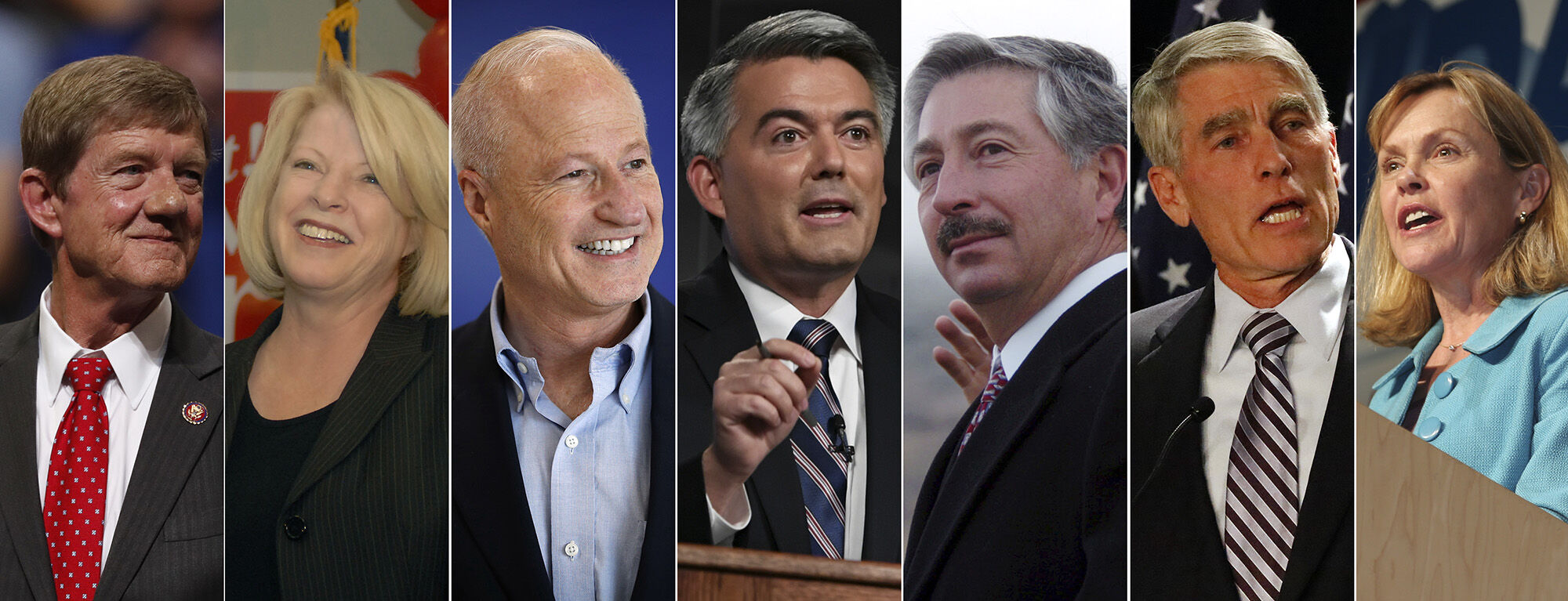
Colorado voters this week added Cory Gardner’s name to an exclusive club – members of the state’s congressional delegation who lost bids for re-election.
Gardner was denied a second Senate term by a restive electorate that shifted under the Republican’s feet in the six years since he won office.
To be sure, Gardner was defeated by Democrat John Hickenlooper, the popular former two-term governor, in a state where President Donald Trump’s unpopularity spelled a tough road to re-election from the start for one of Trump’s closest Senate allies.
Gardner’s fate was only sealed, however, by the state’s shifting demographics, as evidenced by the other endangered GOP senators who managed to win re-election in states that hadn’t shifted as far to the left as Colorado has in recent years – Joni Ernst in Iowa, Thom Tillis in North Carolina and Susan Collins in Maine.
Colorado’s voters, it appears, have been hard to satisfy in the last 10-year stretch.
The two federal elected officials who got pink slips at the ballot box this year – Gardner and fellow Republican Scott Tipton, whose plans to serve a sixth term in the House were short-circuited by a primary loss – both won their tickets to Washington at the beginning of the decade by defeating incumbent Democrats.
Not since the 1970s has Colorado’s electorate turned out so many incumbents as it has in the decade capped with this year’s election.
It isn’t even close.
For three consecutive decades in Colorado, incumbency in Washington meant job security. From the 1980s through the first decade of the new century, just two members of the state’s Capitol contingent were fired by voters, compared to six this decade and seven during the tumultuous 1970s.
Over the last 50 years, 36 Coloradans have served in the House of Representatives and 13 have served in the Senate. With seven of the senators in the modern era starting out in the House, that adds up to just 42 men and women who went to Washington, and more than one-third of them – 15 – were sent packing by voters.
Looked at another way, losing a race for re-election to Congress or the Senate from Colorado is a rare occurrence. Out of the 176 elections for federal office held in Colorado from 1970-2020 – 17 for the Senate and 159 for the House – only 15 times was an incumbent shown the door by voters.
Two of the Colorado Democrats who lost their campaigns for re-election this decade have Gardner to thank for sending them home early – U.S. Rep. Betsy Markey and U.S. Sen. Mark Udall, both denied second terms by Gardner wins, in 2010 and 2014, respectively.
Tipton, who lost a GOP primary this year to U.S. Rep.-elect Lauren Boebert, won his first term in Congress by beating Democrat John Salazar in 2010.
In addition to Gardner, Tipton, Udall, Markey and Salazar, the other Coloradan booted by voters this decade was Republican Mike Coffman, who lost his run for a sixth term two years ago to Democrat Jason Crow.
Even with all that involuntary turnover in the last 10 years, every other member of Colorado’s D.C. delegation first landed in office after their predecessors voluntarily moved on:
? Democratic U.S. Sen. Michael Bennet after Ken Salazar resigned in 2009 to serve as Interior secretary in the Obama administration;
? Democratic U.S. Rep. Diana DeGette after Pat Schroeder declined to seek a 13th term in 1996;
? Democratic U.S. Rep. Joe Neguse after Jared Polis made a successful 2018 run for governor after five terms in Congress;
? Republican U.S. Rep. Ken Buck after Gardner declined to seek a third term in order to challenge Udall in 2014;
? Republican U.S. Rep. Doug Lamborn after Joel Hefley retired in 2006, after 10 terms;
? Democratic U.S. Rep. Ed Perlmutter after Republican Bob Beauprez ran – unsuccessfully, it turned out – for governor in 2006, after two terms in office.
Across the three previous decades, the cadre of defeated incumbents only grew by two. In 2008, Markey ousted Republican U.S. Rep. Marilyn Musgrave from the heavily Republican 4th CD in the Obama wave year, and in 1986 then-Democrat Ben Nighthorse Campbell sent Republican U.S. Rep. Mike Strang home after just one term representing the 3rd CD.
The 1970s saw incumbent after incumbent fall out of favor with voters.
First elected in 1950, Democratic U.S. Rep. Byron Rogers lost a bid for an 11th term in the Denver-based 1st CD when young, anti-war attorney Craig Barnes beat him by a 30-vote margin in a primary.
Barnes went on to lose the general election to Republican Mike McKevitt, who was ill-suited to keep the predominantly Democratic seat and lost it in 1972 to Democrat Pat Schroeder, the first woman elected to Congress from Colorado, who went on to serve a dozen terms.
That same year, Democrat Floyd Haskell defeated Republican U.S. Sen. Gordon Allott, the last Colorado senator elected to three full terms.
Also in 1972, Democratic U.S. Rep. Wayne Aspinall, the powerful chairman of the House Interior and Insular Affairs Committee, was denied a 13th term representing the 4th CD with a primary loss to environmentalist Alan Merson – the last time an incumbent member of Congress from Colorado was sent packing in a primary until Boebert handed Tipton his walking papers this year.
Like Barnes two years earlier, Merson won the primary but lost the general, to liberal Republican Jim Johnson, who held the seat for four terms before retiring.
Two more incumbents lost their jobs in the 1974 general election, when the Watergate scandal spelled the end of the line for entrenched Republicans across the country.
That year, Democrat Gary Hart beat two-term Republican U.S. Sen. Peter Dominick and Democrat Tim Wirth ousted Republican U.S. Rep. Don Brotzman, who had served five non-consecutive terms representing the 2nd CD.
Haskell, like Gardner, wouldn’t make it to a second term in the Senate, losing in 1978 to Republican U.S. Rep. Bill Armstrong, who would go on to serve two terms after his three terms in the House.
The living members of the club that now includes Gardner have all so far landed on their feet.
Coffman was elected mayor of Aurora last year, Udall has served on the board of a number of nonprofits while keeping his hand in politics, Salazar served as agriculture commissioner in the Hickenlooper administration, Markey is executive director of the ?Colorado Office of Economic Development and International Trade in the Polis administration, and Musgrave is vice president of government affairs for the anti-abortion Susan B. Anthony List.
If Gardner can take any solace in his newly acquired distinction, it’s that he also belongs to the even more exclusive club of Colorado politicians who have unseated incumbent members of the House or Senate, and he’s the only one in living memory to have done both.

Phil Weiser wins top spot in Colorado’s Democratic gubernatorial primary at party’s state assembly
Ernest Luning
ernest.luning@coloradopolitics.com
Updated 4 days ago
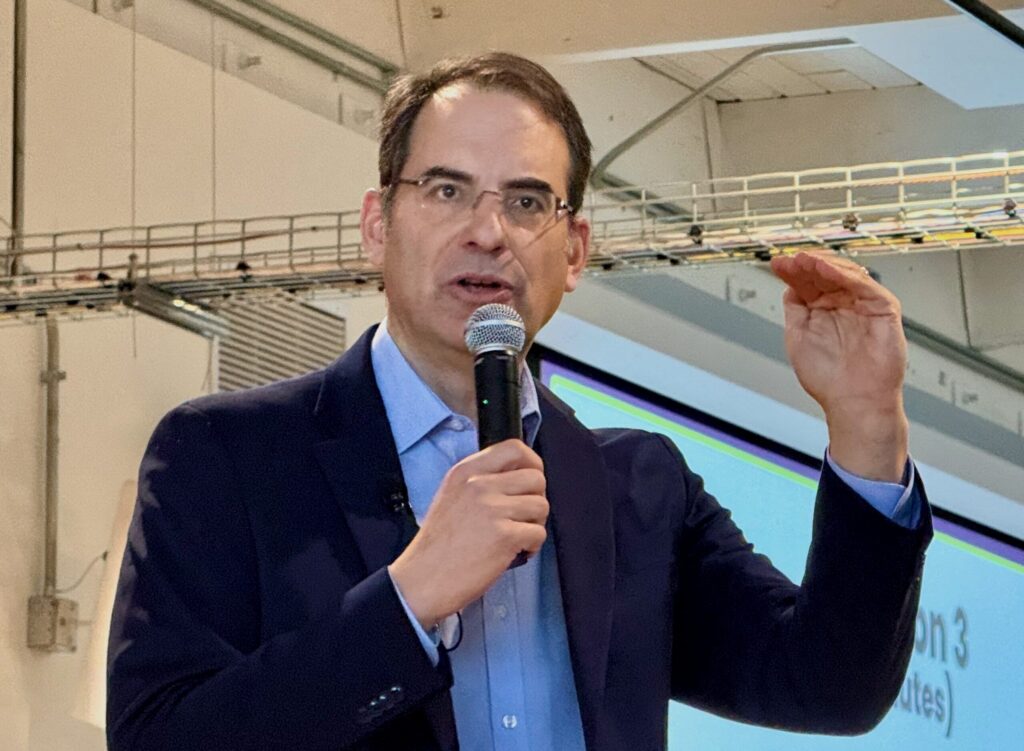
Attorney General Phil Weiser’s name will appear first on Colorado’s Democratic gubernatorial primary ballot after his overwhelming win Saturday at the party’s state assembly in Pueblo. Weiser joins U.S. Sen. Michael Bennet in the June 30 primary for the office...
Denver Democrat Diana DeGette trails challenger Melat Kiros at assembly as both qualify for primary
Ernest Luning
ernest.luning@coloradopolitics.com
Updated 22 hours ago
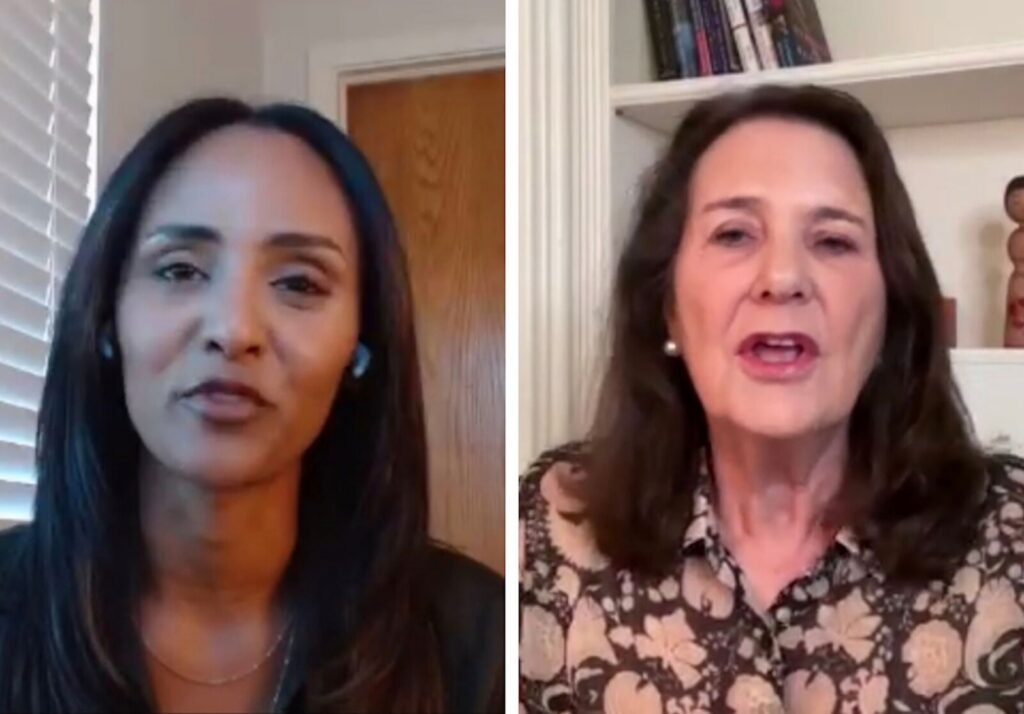
U.S. Rep Diana DeGette, a Denver Democrat, qualified for Colorado’s June primary by the skin of her teeth Friday at the party’s district assembly, where the 15-term incumbent received fewer than half as many delegate votes as her challenger, 28-year-old...
Federal judge upholds constitutionality of Colorado campaign contribution limits
Michael Karlik
michael.karlik@coloradopolitics.com
Updated 5 days ago
A federal judge upheld Colorado’s individual campaign contribution limits as constitutional on Thursday, finding that three Republican plaintiffs failed to prove the campaign finance framework violates their First Amendment rights. U.S. District Court Senior Judge John L. Kane recognized that...
Seligman, Bridges, Gonzales lead downballot races heading into Colorado Democrats’ state assembly
Ernest Luning
ernest.luning@coloradopolitics.com
Updated 5 days ago
As Colorado Democrats prepare to designate candidates to the June primary ballot at the party’s state assembly in Pueblo on Saturday, three candidates appear poised to win top-line designation in downballot statewide races, according to data compiled by the state...
Planned Parenthood, groups launch campaign against transgender ballot measures in Colorado
Marissa Ventrelli
marissa.ventrelli@coloradopolitics.com
Updated 5 days ago
Planned Parenthood and other groups have launched a coalition to oppose two ballot measures that would ban transgender surgeries among children and require student athletes to only join sports teams that correspond to their biological sex. The two measures will...

Democratic US Sen. John Hickenlooper qualifies for Colorado primary by petition, will skip assembly
Ernest Luning
ernest.luning@coloradopolitics.com
Updated 22 hours ago
U.S. Sen. John Hickenlooper has qualified for Colorado’s Democratic primary after the first-term incumbent submitted enough valid petition signatures to make the ballot, state officials said. Hickenlooper is facing primary challenges from state Sen. Julie Gonzales, D-Denver, and university professor...
U.S. Sen. Michael Bennet qualifies by petition for Colorado’s Democratic gubernatorial primary
Ernest Luning
ernest.luning@coloradopolitics.com
Updated 22 hours ago
U.S. Sen. Michael Bennet on Tuesday became the first gubernatorial candidate to qualify for Colorado’s June primary ballot after state election officials determined the three-term Democrat’s campaign submitted enough valid petition signatures. Bennet is running against Attorney General Phil Weiser...
Hickenlooper primary challenger Julie Gonzales endorsed by national progressive group Indivisible
Ernest Luning
ernest.luning@coloradopolitics.com
Updated 1 week ago
State Sen. Julie Gonzales’ bid to challenge U.S. Sen. John Hickenlooper in Colorado’s Democratic primary got a boost Tuesday from Indivisible when the national arm of the progressive grassroots group endorsed the Denver lawmaker. The national group’s endorsement comes less...
It’s time to let unaffiliated voters caucus | Vince Bzdek
Vince Bzdek
vince.bzdek@gazette.com
Updated 1 week ago
There’s no getting around it: Colorado’s 3,000 county caucuses, which just wrapped up recently, left half the electorate out in the cold. Since unaffiliated voters now make up 51% of all Colorado voters, a majority of Colorado electors are barred...

Colorado bill to fund mental health by raising alcohol taxes defeated in House committee
Marissa Ventrelli
marissa.ventrelli@coloradopolitics.com
Updated 2 weeks ago
Colorado legislators on Wednesday narrowly rejected a second measure that would raised taxes on alcohol products in order to fund mental health care treatment in the state. Proponents said the new revenue is necessary to help pay for mental health...
PREV
PREVIOUS

SONDERMANN | A tale of two elections – and two voting methodologies
Eric Sondermann There was the national election with the count still ongoing in some states. And then there was the Colorado election. There was the mass of ballots cast early and mostly via mail. And then there was the mass of votes cast in-person on Election Day. In those two tales lies the story of […]

Platteville officer placed on leave over incendiary comments toward Democrats
A police officer in Weld County posted on Facebook that he wanted to “beat the hell” out of Democrats, resulting in an investigation and his placement on administrative leave. The Denver Post reported that Platteville Officer Jason Taft posted the message the afternoon following Election Day. “If for some reason we lose, do we get […]