

Colo. Supreme Court mirrors previous 6-1 division in upholding ‘logically inconsistent’ verdict
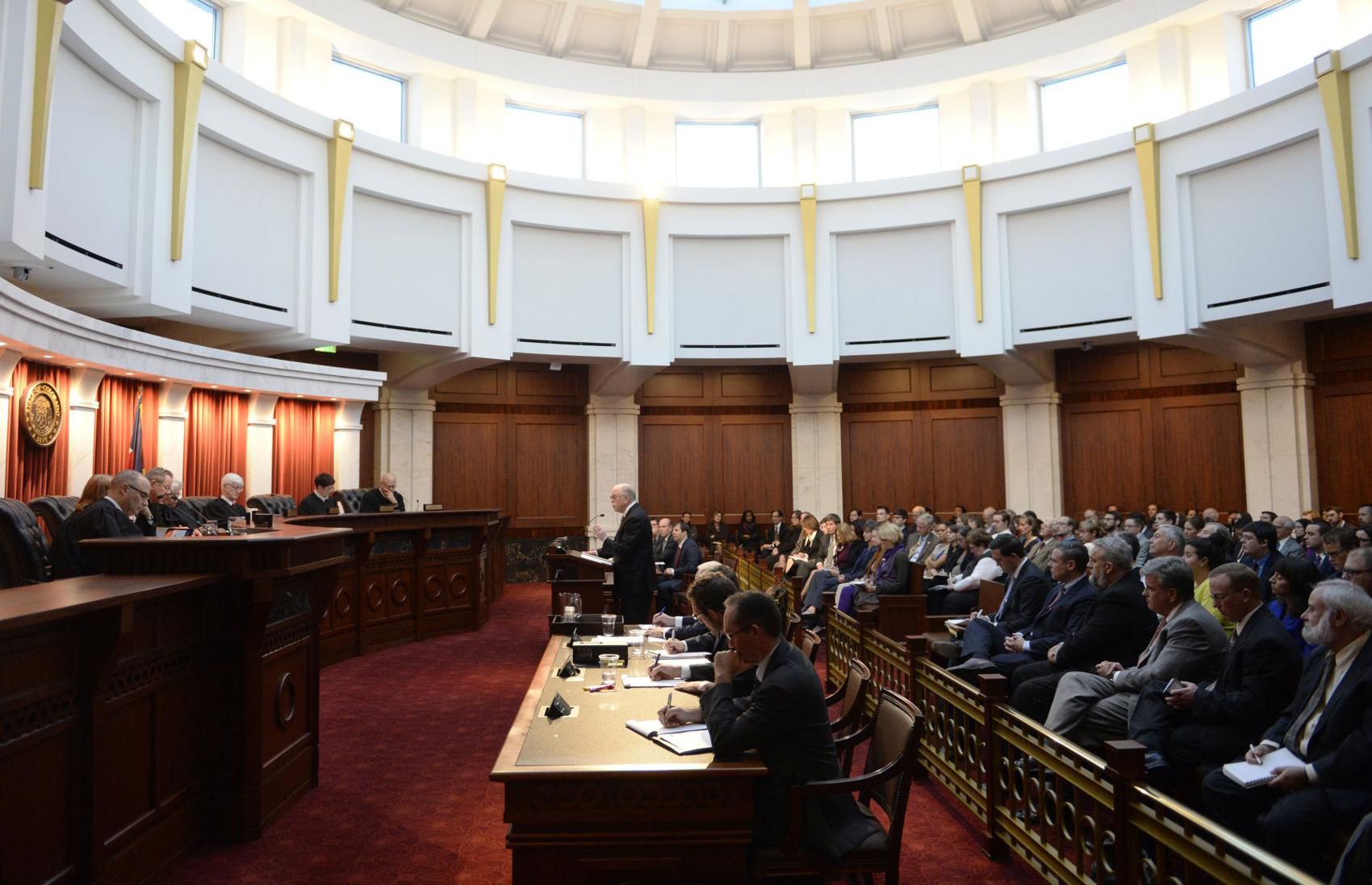
For the second time in little over a month, the Colorado Supreme Court split 6-1 in upholding a defendant’s convictions based on a jury verdict that seemed to logically contradict itself.
David Lindsey, a criminal defense attorney based in Englewood, called the court’s ruling “one of those decisions like they throw at you in the very first week of law school to try and train your brain not like how a normal person would think, but how a lawyer would think.”
A Logan County jury found Michael W. Struckmeyer guilty on two counts of child abuse arising from an incident in his home. Struckmeyer was babysitting a young child when he called 9-1-1 to report that she had fallen down stairs and lay unconscious, not breathing. Upon the child’s arrival at the hospital, personnel discovered she had a traumatic brain injury.
One doctor who treated the girl opined at trial that the cause of injury was physical abuse rather than accidental harm, given the severity of the damage.
However, Struckmeyer appealed his convictions, arguing that the first count of child abuse that was knowing or reckless was logically inconsistent with the second count of child abuse that was the result of criminal negligence. In Struckmeyer’s view, acting knowingly or recklessly required jurors to believe he was aware of a risk for bodily injury. Criminal negligence, on the other hand, entailed the lack of such awareness.
A panel of the Colorado Court of Appeals reversed Struckmeyer’s convictions in December 2018 and ordered a new trial. They agreed with the defendant that when an element of one crime negates another crime’s element, it is not possible to issue a guilty verdict for both. As such, Struckmeyer could not have been simultaneously aware and unaware of the risk to the child.
At the time, the judges relied on the decision from a separate case, People v. Rigsby, issued only a few weeks earlier. In that instance, another appellate panel tossed two seemingly contradictory convictions for a defendant accused of reckless or intentional assault, and assault arising from criminal negligence.
Despite the appeals court’s conclusion that it could not discern the intent of jurors given the outcome, the Colorado Supreme Court disagreed in finding no legal inconsistency.
“[E]ven if each of the guilty verdicts for second degree assault is logically inconsistent with the guilty verdict for third degree assault,” wrote Justice Carlos A. Samour, Jr. in the Sept. 14 opinion in the Rigsby case, “no legal inconsistency exists.”
Samour explained that acting with criminal negligence was actually an element of all crimes in which the defendant’s culpable mental state was a factor. It was not, as the defense had argued, a mutually exclusive element. While someone could potentially act solely with criminal negligence, but not knowingly or with intent, anyone who acted knowingly would also be committing criminal negligence.
Similarly, Samour wrote in an opinion issued on Monday that even if Struckmeyer’s convictions were logically inconsistent, they were legally consistent because the defendant’s reckless act necessarily included an element of criminal negligence.
Justice Richard L. Gabriel dissented, as he did in the Rigsby case, writing that he would order a new trial for Struckmeyer, finding both legal and logical inconsistency to the verdicts.
Lindsey, the criminal defense lawyer, believed the Supreme Court correctly decided the case on legal principle, but noted that such logically inconsistent verdicts would become problematic if the defendant received a sentence for each crime. The Sixth Amendment’s double jeopardy prohibition bars multiple sentences that arise from the same criminal offense. Lindsey said that the defendant instead receives a sentence for the more serious offense.
The ruling “essentially allows the prosecution to argue, ‘This conduct was intentional. But maybe it’s an accident. Maybe it’s negligence,'” he added. Lindsey explained that by allowing prosecutors to pursue both intentional conduct and criminal negligence charges, that advantage “gives the prosecution a lot of room to shift around depending on how the evidence might come in at the trial.”
The case is People v. Struckmeyer.


Feds order coal-fired Craig power plant to remain open
Scott Weiser
scott.weiser@gazette.com
Updated 5 hours ago
The Trump administration’s energy agency has ordered one of three generating units at a Colorado power plant to remain available for operation amid an impending shutdown of the station and its supplying coal mines. The move is one of the...
Appeals court shuts down path to challenge convictions if lawyer tells jury that defendant is guilty
Michael Karlik
michael.karlik@coloradopolitics.com
Updated 6 hours ago
Colorado’s second-highest court concluded on Wednesday that defendants cannot challenge whether the evidence was sufficient to sustain their convictions if their lawyer argues to the jury that it should find the defendant guilty. The U.S. Supreme Court has provided guidance...
Colorado legislature votes to make committee hearing livestreams permanent
Marianne Goodland
marianne.goodland@coloradopolitics.com
Updated 3 hours ago
The executive committee of the legislative council — the six top leaders of the House and Senate — voted 5-1 Wednesday to make permanent the video livestreaming of committee hearings, starting in the 2026 legislative session, which begins Jan. 14....
Here’s where House retirements stand as clock strikes midnight on 2025
Rachel Schilke, Washington Examiner
rachel.schilke.washington.examiner@gazetteedit.wpenginepowered.com
Updated 1 day ago
The House will return on Jan. 6, and with it, some 10% of lawmakers will start their final year in the lower chamber, either retiring or seeking higher office in the 2026 midterm elections. The lower chamber will get its...

Colorado senator, local officials push for new Colorado Springs federal courthouse
Michael Karlik
michael.karlik@coloradopolitics.com
Updated 1 day ago
Local officials and one of Colorado’s U.S. senators urged the judiciary earlier this year to explore placing a new federal courthouse and judge’s chambers in Colorado Springs, while the district court is cautioning that Congress must establish new judgeships before...
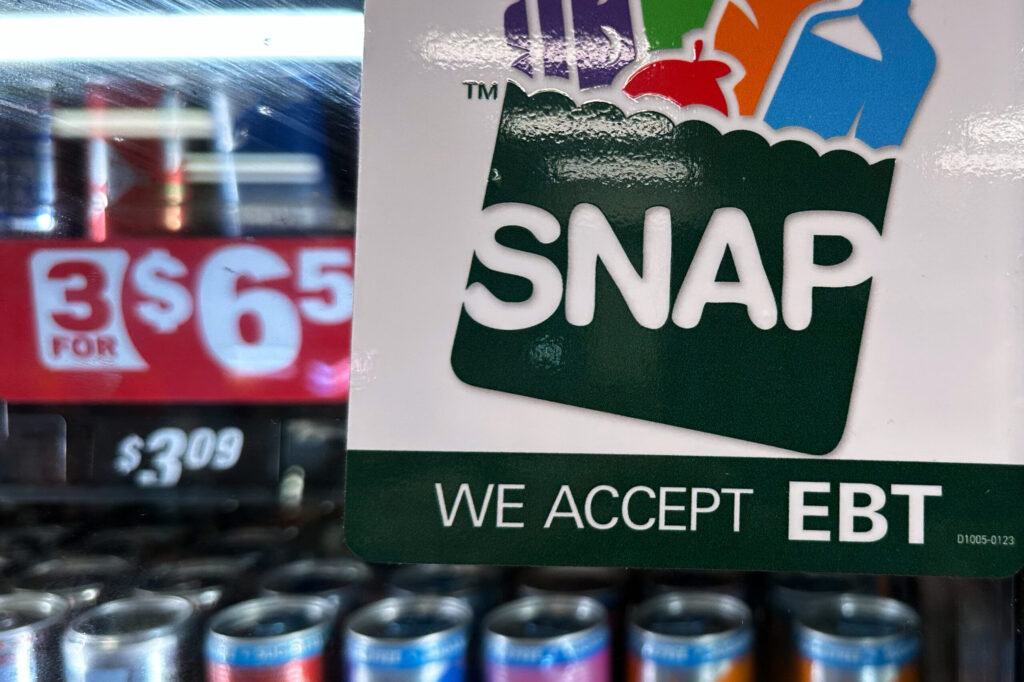
SNAP recipients in five states will be banned from using assistance for candy and soda, beginning 2026
David Zimmermann Washington Examiner
davidzimmermannwashingtonexaminer@wpstage.coloradopolitics.com
Updated 1 day ago
More than 1.4 million recipients of the Supplemental Nutrition Assistance Program across five states will be banned from using federal food assistance for candy and soda purchases, starting Thursday. Indiana, Iowa, Nebraska, Utah, and West Virginia are the first group...

Trump’s first year back in office: Four successes and four failures
NAOMI LIM Washington Examiner
naomi-lim-washington-examiner@coloradopolitics.com
Updated 1 day ago
President Donald Trump is closing a seismic year as the country’s commander in chief. Since the first day of his second administration, when he issued 26 executive orders, 12 presidential memos, and four proclamations, the most first-day actions of any...
Gov. Polis appoints Lindstedt to Colorado Senate District 25 after vacancy committee misses deadline
Marianne Goodland
marianne.goodland@coloradopolitics.com
Updated 1 day ago
Despite a similar vote by a Senate District 25 vacancy committee last week, it was up to Gov. Jared Polis on Tuesday to make sure the Senate seat was filled and ready for the 2026 session. That’s because the vacancy...

‘Rot in hell’: Trump post reignites feud with Colorado Gov. Jared Polis over Tina Peters
Thelma Grimes
thelma.grimes@coloradopolitics.com
Updated 1 day ago
Heading into the New Year, President Donald Trump said he would like Gov. Jared Polis and others in Colorado to “rot in hell.” The object of the president’s ire is Tina Peters, the former Mesa County clerk convicted of state...
US Rep. Lauren Boebert calls for override vote after Trump vetoes bipartisan Colorado water bill
Marianne Goodland
marianne.goodland@coloradopolitics.com
Updated 1 day ago
President Donald Trump issued the first veto of his second term Tuesday, blocking a long-awaited bipartisan effort to finish a southeastern Colorado water project that supporters say is critical to delivering clean drinking water to roughly 50,000 residents of the...
PREV
PREVIOUS

Q&A with Pete Piccolo | An advocate for bicyclists
FAST FACTS: Executive director of Bicycle Colorado since February 2018. The organization is the state’s leading advocate for bicycling. Has more bicycles than cars — 11 bikes, two motor vehicles Follows up his Sunday ride with homemade pizza Loves fishing but has not caught one in two years. “Thankfully, my kids, who are teenagers now, still […]

Report: Colorado vehicle registrations down 16% in 2020
The market for new vehicles in Colorado shrunk by more than 16% in the first nine months of 2020 compared to the same period last year. “While Colorado’s new vehicle registrations through September are in downhill territory, the percentage of decline has leveled off from a month ago, and Colorado’s numbers are better than the […]