

Firearm purchases approach record high in Colorado

Background checks for gun sales in Colorado in the first nine months of 2020 have exceeded the annual totals of 2017, 2018 and 2019, and are close to surpassing the previous high in 2013.
Through September, the Colorado Bureau of Investigation processed 373,036 background checks. Because there is no national database for recording sales of individual firearms, background checks are a proxy measure for weapons purchases. In all of 2013, there were almost 397,000 background checks, a threshold nearly matched in 2016 with more than 389,000 checks.
“Fear. It’s all about fear,” said Dave Heath, an instructor at Colorado Gun Classes, based in Parker. “Are the BLM going to come marching through my neighborhood? That’s their biggest fear right there.”
He explained that BLM, meaning the Black Lives Matter movement, also scared many people due to the subsequent violence that took place after — and separately from — many of the racial justice protests across the country this summer.
Firearm purchases “really accelerated with some of the protests, not even so much in Colorado as what they’re seeing in other cities,” said Kevin Holroyd, a National Rifle Association-certified instructor with Colorado Concealed Carry. “Our protests have been relatively benign so far. We haven’t seen some of the damage and the real looting and rioting.”
Both men described a confluence of events whose effect was to supercharge gun purchases this year: first came the pandemic, where uncertainty led to buying, and scarcity led to even more buying. (“It’s like the toilet paper fear,” said Heath, referring to the run on toilet paper in the early months of the pandemic, despite the product having no connection to the novel coronavirus.)
The COVID-19 pandemic drastically accelerated sales in the early months, to the point that wait times for background checks exceeded three days. Although average turnaround time has drifted down to 10 hours as of September, that is still an increase from the six minutes CBI reported in January.
Then came the protests, which led into the presidential campaign and fear-mongering about further unrest and infringement upon the right to bear arms. President Donald Trump as recently as Wednesday tweeted in all capital letters: “VOTE TRUMP. SAVE YOUR 2ND. AMENDMENT.”
It is not a coincidence that firearm purchases spike normally in presidential election years: scholarship has suggested that uncertainty around future gun safety laws is a motivator for people to acquire guns.
“Firearm background checks reached record highs at the start of the COVID-19 outbreak and have been shown to increase significantly during elections and following mass shootings,” wrote Bree Lang and Matthew Lang, associate professors at the University of California-Riverside, in a paper published in April.
Heath said that the fear this year from gun owners spans the political spectrum, be it from conservatives afraid of protesters or Democrats who are worried what will happen if Trump, as he has suggested, will not unequivocally accept the result of the election. The firearms instructor said his customers lately are similar to two nurses who called him in mid-March to say they just bought guns.
“Why did you buy your guns?” he asked them.
“Fear of the unknown,” they responded. “We don’t know what the pandemic lockdown means.” Heath agreed with the sentiment.
“So where do we put the bullets?” they continued.
“In the box, ladies. In the box,” Heath said emphatically. “Not until you come and see me do you take the bullets out of the box.”
The percentage of denials CBI has issued resulting from prospective purchasers’ ineligibility to own a gun is also elevated. Through September, 3.08% of background checks came back as denials, compared with 2.06% in 2019. Only in 2005 and earlier — in the first years after the establishment of the National Instant Criminal Background Check System — did denials exceed the percentage seen this year.
Holroyd, who has been an instructor for 20 years and is a former law enforcement officer, recalled lines around the corner of gun ranges when he took his students in 2013. Not only was that the year after President Barack Obama’s reelection and the Sandy Hook and Aurora theater massacres, but the General Assembly passed laws instituting universal background checks and banning large-capacity magazines.
He acknowledged that the legislature’s actions likely contributed to that year being the high-water mark for background checks and gun sales in Colorado.
“All of the reasoning is fallacious, in many ways,” he observed. “Why would you think that if I get my gun before the Democrats get in, they’re going to be any less able to take it away from me than after they get in? That doesn’t make logical sense.”
Unlike Heath, he is not teaching during the pandemic because he is worried about his health in close quarters with students. Nevertheless, Holroyd senses that people’s motivations in the current turbulent environment are largely about protecting themselves and their property.
“I’m getting the overwhelming feeling that’s what I’m seeing,” he said.
This story has been updated.


Iran strikes cargo ship in Strait of Hormuz, endangering Trump’s peace
Christian Datoc
christian-datoc@coloradopolitics.com
Updated 18 minutes ago
Iran attacked a cargo ship traveling through the Strait of Hormuz on Thursday, possibly upending President Donald Trump‘s diplomatic end to the war with Iran. A U.S. official confirmed to the Washington Examiner that the Islamic Revolutionary Guard Corps “struck...
Senate GOP tries to mend fences with Trump after heated lunch
David Sivak
david-sivak@coloradopolitics.com
Updated 21 minutes ago
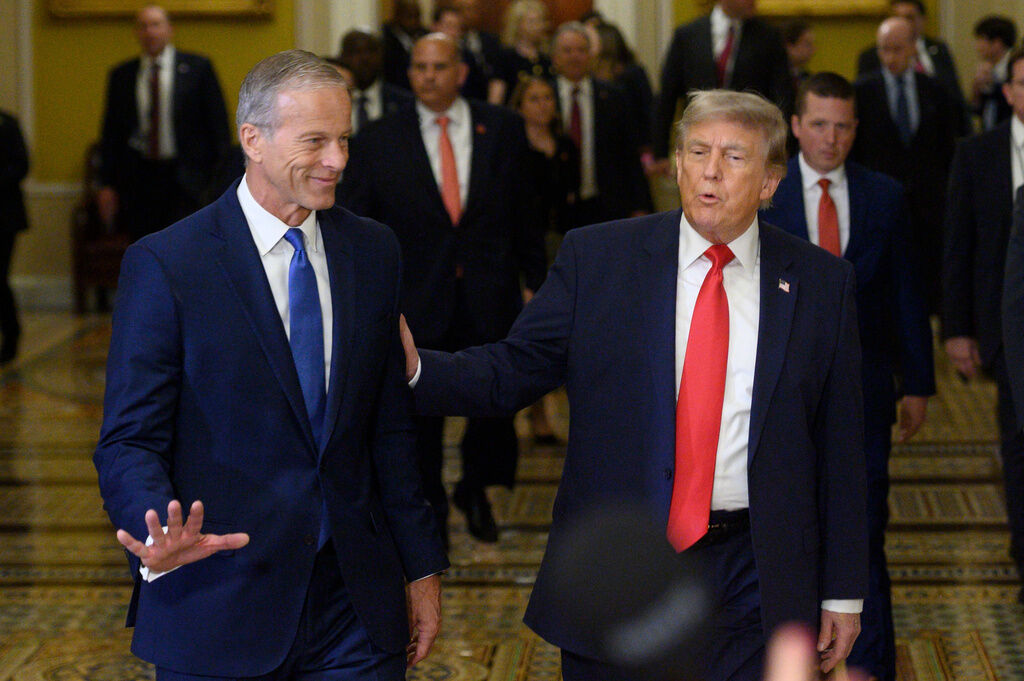
Senate Republicans are trying to turn the page on a heated lunch with President Donald Trump that brought weeks of tensions to a new high-water mark. In a symbolic gesture, Senate Republicans took another vote on the Iran war Wednesday...
Colorado justices discuss solution to confusion from prior criminal ruling
Michael Karlik
michael.karlik@coloradopolitics.com
Updated 46 minutes ago
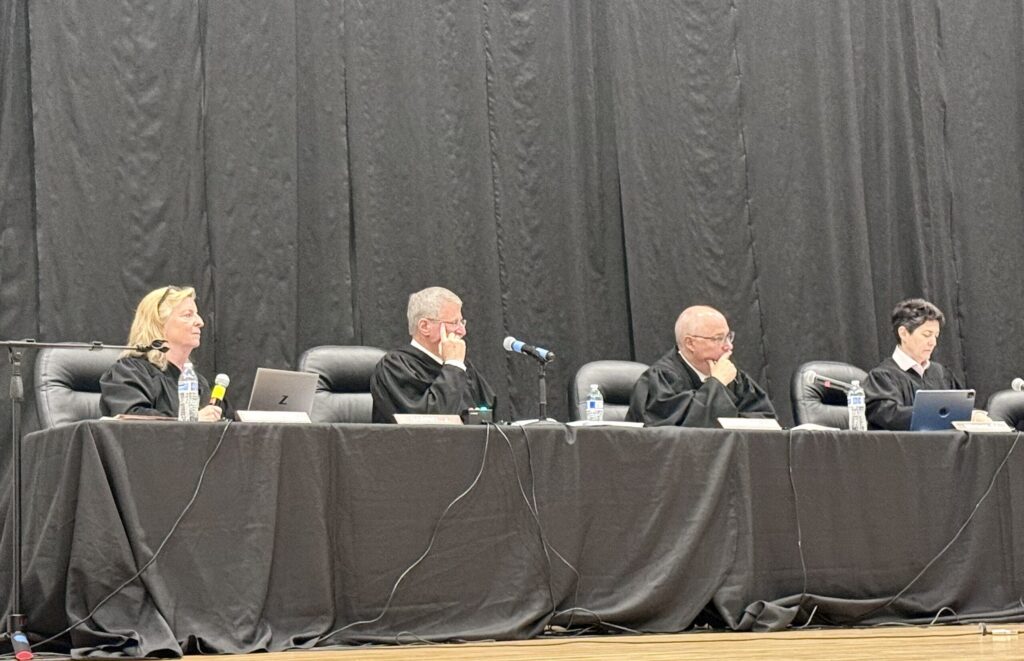
The Colorado Supreme Court pondered the fallout on Tuesday from its nearly six-year-old decision interpreting the state’s impaired driving laws, with the justices now addressing how defendants affected by the legal change must seek postconviction relief. In contrast to other...
Colorado to participate in Great American State Fair in Washington
Marissa Ventrelli
marissa.ventrelli@coloradopolitics.com
Updated 19 hours ago
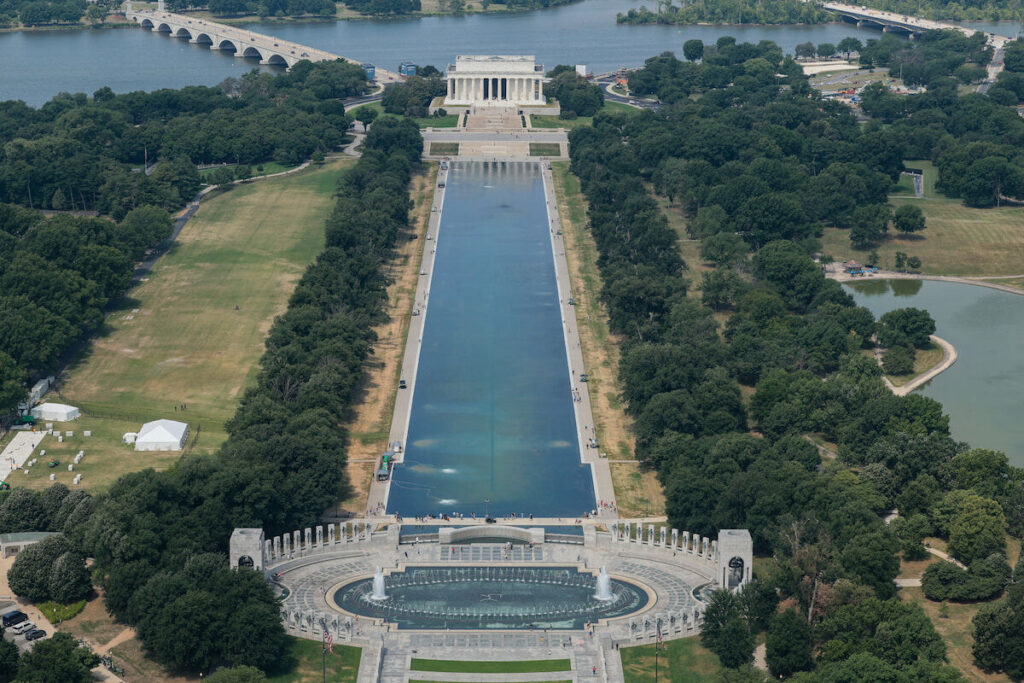
Visitors to Washington, D.C., for the country’s 250th anniversary will have the opportunity to learn about Colorado’s natural beauty and culture during the Great American State Fair, a World’s Fair-style event that opened Thursday at the National Mall. While all...
RTD to reconsider service priorities as cuts, budget deficit loom
Michael Braithwaite
michael.braithwaite@gazette.com
Updated 2 hours ago
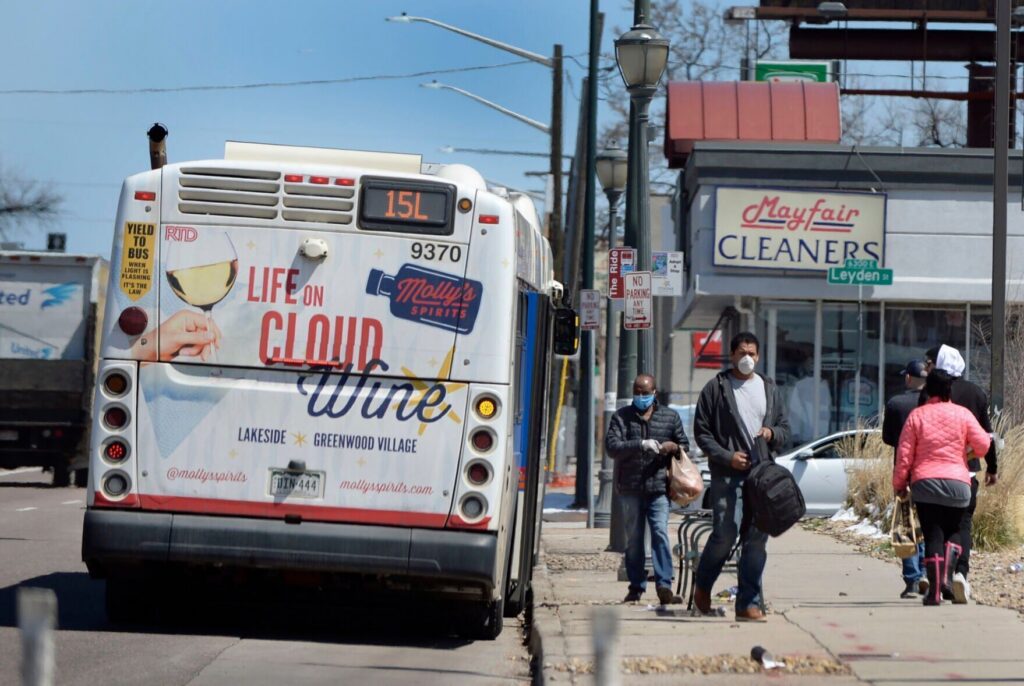
Should the Regional Transportation District aim to maximize ridership or system coverage? That question sat at the heart of the RTD Board of Directors’ first Comprehensive Operations Analysis briefing on Thursday afternoon. With the Denver transit agency facing a budget...

Mobolade, Colorado Springs leaders say election date lawsuit is attack on local voters
Brennen Kauffman
brennen.kauffman@gazette.com
Updated 36 minutes ago
Mayor Yemi Mobolade and other city leaders will fight to keep Colorado Springs elections in April in the face of a new lawsuit. Mobolade, the mayor’s Chief of Staff Wayne Williams and City Councilmember Roland Rainey addressed the lawsuit in...
Colorado health officials say federal budget adds pressure to already stressed system
Marissa Ventrelli
marissa.ventrelli@coloradopolitics.com
Updated 47 minutes ago
As the first anniversary of H.R. 1 approaches, Colorado Democrats and hospital executives say the law’s Medicaid reductions and eligibility rules are accelerating financial stress in a system where many facilities were already operating on the brink. Signed by President...

Phil Weiser leading Michael Bennet in Colorado’s Democratic gubernatorial primary, internal poll finds
Ernest Luning
ernest.luning@coloradopolitics.com
Updated 53 minutes ago
Attorney General Phil Weiser holds a lead over U.S. Sen. Michael Bennet among likely voters less than a week before ballots are due in Colorado’s Democratic gubernatorial primary, according to a new poll released Thursday by a group backing Weiser....
Colorado justices suggest father entitled to appeal of custody decision
Michael Karlik
michael.karlik@coloradopolitics.com
Updated 22 hours ago
Members of the Colorado Supreme Court signaled strongly on Tuesday that a father deserved some avenue for challenging a temporary child custody order that no lower court believed it could review due to the unusual circumstances of the case. Because...

Court snuffs out challenge to Denver’s flavored tobacco ban
Deborah Grigsby
deborah.smith@denvergazette.com
Updated 55 minutes ago
The smoke finally cleared in Denver’s battle over a citywide ban on flavored tobacco products when a Denver court dismissed a challenge from local vape shop owners seeking to declare the ordinance unconstitutional and block its enforcement. On Wednesday, Denver...
PREV
PREVIOUS

State Supreme Court hears arguments on whether legislature intended ‘volume discount on child pornography’
Colorado’s Supreme Court justices on Wednesday morning heard oral arguments about how exactly the General Assembly intended for people to be charged and sentenced for possessing child pornography. “It’s undisputed that a single item of sexually exploitative material is sufficient to support a conviction,” said William Kozeliski, representing the attorney general’s office. “The question in […]

Court upholds mandate for insurers to reimburse registration fees for totaled vehicles
Auto insurers must reimburse vehicle registration fees to policyholders in Colorado if their car is totaled, regardless of whether the state credits the owner independently, the Court of Appeals ruled on Thursday. Colorado law requires that insurance companies shall pay title fees, sales taxes and any other registration fees associated with a “total loss” of […]