

Colorado wildfires: Pine Gulch fire now second largest in state history; first containment of Grizzly Creek fire
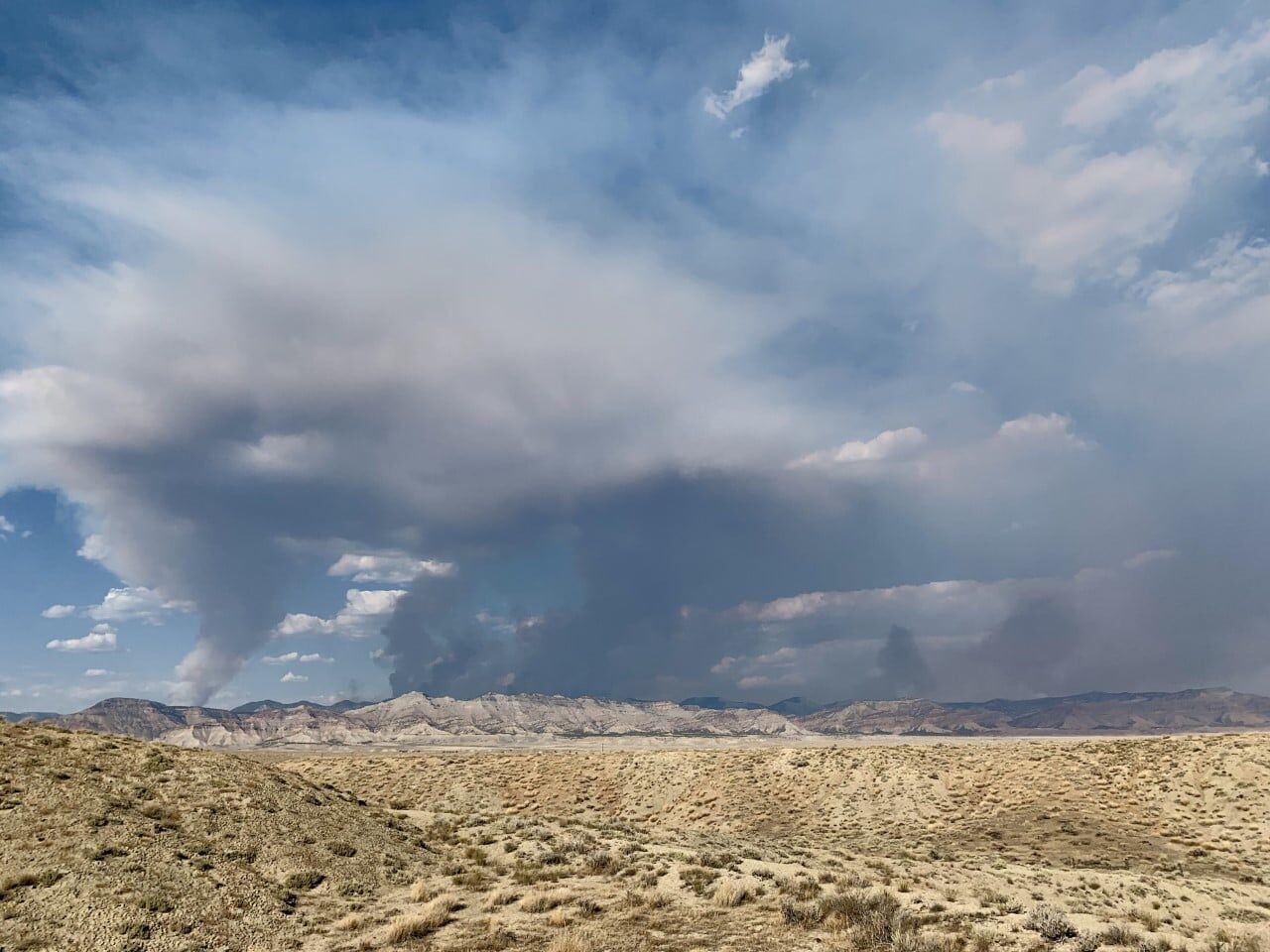
The Pine Gulch fire north of Grand Junction nearly doubled in size overnight for a second time, growing by almost 40,000 acres to become the second largest wildfire in state history.
The lightning-caused fire started July 31 and was at 125,252 acres Wednesday morning, according to the Rocky Mountain Area Coordination Center.
Its explosive growth places it behind only the 2002 Hayman fire, which burned 138,114 acres in Park, Teller, Douglas and Jefferson counties. Despite its size and ranking, the Pine Gulch fire has been far less destructive, burning in brushy, sparsely populated areas.
The Hayman fire, which was started by arson, caused six indirect fatalities, including five firefighters from Oregon who died in a traffic accident on their way to respond to the fire and a woman who suffered a fatal asthma attack from smoke inhalation.
Six hundred structures were lost — 133 residences, one commercial building, and 466 outbuildings — causing more than $42 million in housing losses. A total of 5,340 people were forced to evacuate.
What the Pine Gulch fire shares with the Hayman fire and three other major fires burning on the Western Slope, is its rapid, uncontrolled growth during extreme drought and weather, both attributed by many to climate change.
The fire grew more than 37,000 acres overnight as hot, dry, windy conditions persisted, said Larry Helmerick, with the coordination center.
Almost 900 firefighters on the ground and in the air are trying to increase containment which has held at 7% for more than a week.
Dried out pinyon, juniper, oak and sagebrush have been fueling the fire and no help is expected from the weather in the foreseeable future — excessive heat warnings have been issued for western Colorado with highs in triple digits predicted.
Grizzly Creek fire
Of the other major fires burning in Colorado, the Grizzly Creek fire east of Glenwood Springs has been the nation’s top firefighting priority because it has shut down Interstate 70 through Glenwood Canyon since it broke out Aug. 10.
On Wednesday, the fire was at 28,030 acres, with containment at 4%, the U.S. Forest Service said.
It was the first headway more than 800 firefighters assisted by 17 helicopters have been able to make in containing the blaze; previously containment had been at zero percent.
Roads and natural barriers helped firefighters in containing the fire, according to Mary Cernicek, spokeswoman for the Grizzly Creek fire. The fire’s pace also slowed in aspens, which Cernicek said burn slower than conifer trees.
But weather is still a concern for firefighters as dry lightning and strong winds are possible amid thunderstorms in the next few days. Thunderstorms pose significant danger because winds can quickly change the direction the fire is burning, she added.
Williams Fork fire
Burning in the Arapaho National Forest 15 miles southwest of Fraser, the Williams Fork fire was at 6,726 acres Wednesday with 3% containment, the Forest Service said.
Cameron Peak Fire
Northwest of Fort Collins, the Cameron Peak fire is at 15,738 acres and remains zero percent contained.
Winds from thunderstorms are expected to exacerbate the spread of its smoke and flames. Five-hundred firefighters are battling the blaze along with 10 helicopters. There are several road closures but no structures have been damaged.
Red Canyon fire
A fifth, much smaller fire broke out Wednesday afternoon south of Glenwood Springs and north of Carbondale, forcing some evacuations, according to the Carbondale & Rural Fire Protection District.
Initially reported at 20 acres, it had grown to about 30 or 40 acres later in the afternoon.


Federal judge formalizes injunction blocking USDA’s ‘pilot project’ for Colorado food assistance
Michael Karlik
michael.karlik@coloradopolitics.com
Updated 19 minutes ago
A federal judge formalized his order on Monday to prevent the U.S. Department of Agriculture from requiring Colorado to participate in a food assistance “pilot project,” finding that it violates the law, the U.S. Constitution, and “the bounds of reasoned...

Colorado justices speak about inner workings of court, analysis of appellate opinions | COURT CRAWL
Michael Karlik
michael.karlik@coloradopolitics.com
Updated 40 minutes ago
Welcome to Court Crawl, Colorado Politics’ roundup of news from the third branch of government. Members of the state Supreme Court provided an inside look at the workings of their institution, and a Colorado Politics analysis found that some appellate...
Appeals court finds no requirement for different judge to handle attorney-client conflict hearings
Michael Karlik
michael.karlik@coloradopolitics.com
Updated 2 hours ago
Colorado’s second-highest court rejected a defendant’s argument on Thursday that a judge improperly heard about a potential conflict between himself and his lawyer right before sentencing, and the man’s reaction could have “tainted” the sentencing decision. In September 2023, Anthony...
The influencers? Some Colorado appeals judges outpace colleagues in setting legal precedent
Michael Karlik
michael.karlik@coloradopolitics.com
Updated 1 hour ago
A handful of judges on Colorado’s second-highest court are producing substantially more precedent-setting opinions than their colleagues, which create binding interpretations of the law that reach beyond individual cases. The Court of Appeals issues approximately 1,700 opinions each year. A...

DeGette challenger Melat Kiros trounces 15-term Democratic incumbent in Denver delegate vote
Ernest Luning
ernest.luning@coloradopolitics.com
Updated 24 hours ago
The 28-year-old, first-time candidate challenging Democratic U.S. Rep. Diana DeGette in this year’s primary soundly defeated the 15-term incumbent in a delegate preference poll conducted Saturday at a county party assembly in Denver. Melat Kiros, the daughter of Ethiopian immigrants...

Army veterans Jessica Killin, Joe Reagan qualify for Democratic primary ballot in Colorado’s 5th CD
Ernest Luning
ernest.luning@coloradopolitics.com
Updated 21 hours ago
Democratic congressional candidates Jessica Killin and Joe Reagan secured spots Saturday in Colorado’s June primary to decide who will run against Republican U.S. Rep. Jeff Crank in a district that’s only ever sent GOP lawmakers to Congress. The two Democrats,...

Who has the power to declare war? | Cronin and Loevy
Tom Cronin Bob Loevy
tom-cronin-bob-loevy@coloradopolitics.com
Updated 2 days ago
Our constitutional framers boldly and ambitiously granted Congress the power to declare war yet granted the executive the responsibility, after war is declared, to supervise war as the commander-in-chief. That worked well until the Cold War began. The U.S. has been...
Latest death brings down wolves’ survival rate to 44% in Colorado
Marianne Goodland
marianne.goodland@coloradopolitics.com
Updated 2 days ago
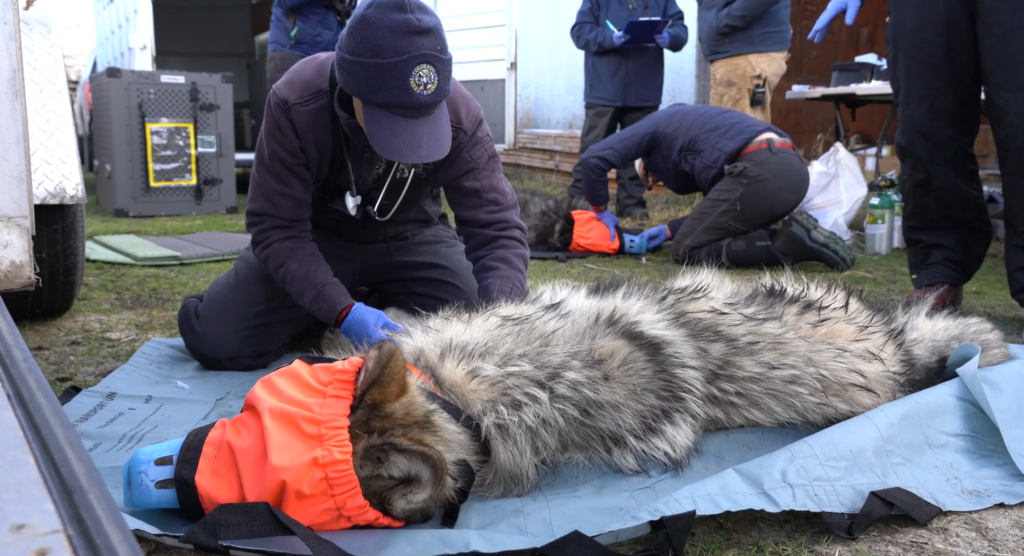
The female wolf of the mating pair for the King Mountain pack has died, bringing total fatalities to 14 out of the 25 animals reintroduced in Colorado. The wolf, identified as No. 2310, was among the 10 wolves brought to...

The delicate, ever-changing dance between politics and religion | SONDERMANN
By Eric Sondermann
by-eric-sondermann@coloradopolitics.com
Updated 2 days ago
The dance, really a marathon that brings to mind the classic movie “They Shoot Horses, Don’t They?”, has been going on as long as there have been governments and organized religion. That is to say that this delicate tango has...
Roasts, get yer roasts, here: Capitol M | Week of March 14, 2026
Marianne Goodland
marianne.goodland@coloradopolitics.com
Updated 5 days ago
The lighter side of the Capitol, especially in the past week Apparently, the pending and eventual switch to daylight stupid time has put people in some pretty funny moods. And thank goodness! On March 4, the Senate approved the appointments...
PREV
PREVIOUS

2 federal judges speak out against 'worsening' grants of police immunity
Two federal appeals judges slammed their colleagues on Wednesday for declining to review a decision granting immunity to a former Clear Creek County sheriff’s deputy who shot and paralyzed an unarmed motorist. “Regrettably, this case is one of many illustrating that the profound issues with qualified immunity are recurring and worsening,” wrote Judge Carlos F. […]

CDOT unveils memorial to pedestrian deaths
The Colorado Department of Transportation unveiled a memorial to the 76 pedestrians across the state who died in 2019, while debuting a series of billboards for a new “Left Behind” awareness campaign. “During the summer months more people are out walking so it’s important we all use extra caution and do our part to ensure […]