

Hanging Lake spared the worst after major blowup of Glenwood Canyon fire
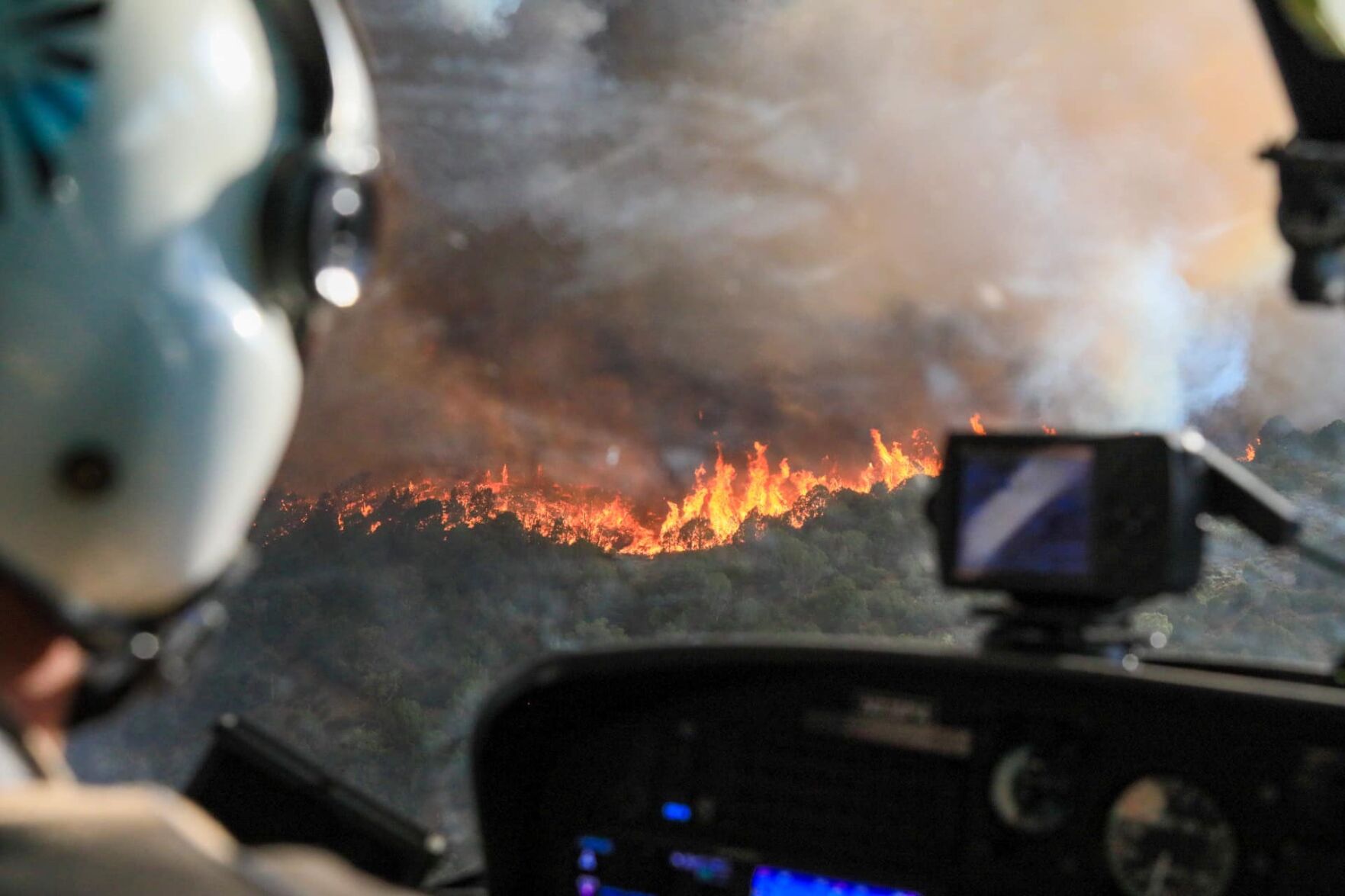
Hanging Lake, a treasured national landmark in Glenwood Canyon, appears to have been spared after a major blowup of the Grizzly Creek fire late Thursday, the U.S. Forest Service said.
Early Friday, firefighters had not been able to determine the extent of the damage on the ground because of flames and smoke from the fire, which has been burning out of control since Monday and has grown to 19,440 acres.
“We know the fire moved through that area,” the fire incident command team said in a statement Friday afternoon. “We are working with Forest (Service) officials to assess to what extent Hanging Lake was impacted.”
After a flyover later in the day, Scott Fitzwilliams, White River National Forest supervisor, said the flames had spared the vegetation on the lake cliffs and the wooden walkways.
“This afternoon, we flew over Hanging Lake to asses impacts from the Grizzly Creek fire,” White River National Forest posted on Twitter. “The immediate area around Hanging Lake, the boardwalk, the upper reaches of the trail did not burn.
“Other areas surrounding the lake burned intensely. Still some active fire in the area.”
Hanging Lake is one of the most popular outdoor destinations in Colorado, accessible by a steep, rocky trail about a mile from Interstate 70. Before the trail was closed by the fire, reservations were required to try to protect the lake and trail from overuse.
The Grizzly Creek fire is the top priority in the nation because it is has shut down I-70. The fire started in the median of I-70 near the Grizzly Creek recreation area about 1:30 p.m. Monday, the Glenwood Springs Post Independent reported. The cause of the fire hasn’t been determined.
Overnight Thursday, the Grizzly Creek fire, one of at least four wildfires burning on the Western Slope, grew from just over 6,000 acres to 13,441. It is zero percent contained.
Large wildfires have become more common across the West since the 1980s as the climate has changed. The higher temperatures and drier landscapes increase wildfire risk, help fires spread faster and make them harder to extinguish, according to the Center for Climate and Energy Solutions.
High heat, gusty winds and forests desiccated by severe drought have fueled the Pine Gulch fire, which has grown to 74,807 acres north of Grand Junction.
More than 700 firefighters backed by air attacks have made little headway against the fire, which has remained at 7% containment since Sunday.
The fire is the fifth largest in state history behind the High Park fire, Spring Creek fire, West Fork complex fire, and Hayman fire — the largest at 138,114 acres.
Only an abandoned structure has reportedly been burned, but some Garfield County residents have been forced to evacuate, the agency said.
Smoke from both fires settled along the Front Range creating a haze and prompting health officials to issue an advisory about poor air quality. The worst air quality was expected in the Denver metro area north to Fort Collins.
High ozone levels were also predicted to expand into Colorado Springs on Friday afternoon. The state health department advised people with heart or lung disease, older adults and young children to refrain from prolonged or heavy exercise Friday and Saturday.
The Cameron Peak fire, which broke out Thursday about 60 miles west of Fort Collins, grew quickly from 500 acres to 5,424 acres by Saturday morning, Forest Service officials said.
The fire had closed Colorado 14 from Rustic to Gould and prompted evacuations for surrounding areas.
On Friday, another fire broke out in Grand County and had grown to 1,300 acres in the evening, the Forest Service said.
The fire was burning in the Southern Williams Fork Valley on U.S. Forest Service land and prompted mandatory evacuations about 5 p.m., the Grand County Office of Emergency Management said on Facebook.
The fire was burning in beetle-killed trees and air support has been called in, the Forest Service said on Twitter.
The Gazette’s Mary Shinn, Leslie James and Joel Millman contributed to this report


DeGette challenger Melat Kiros trounces 15-term Democratic incumbent in Denver delegate vote
Ernest Luning
ernest.luning@coloradopolitics.com
Updated 11 hours ago
The 28-year-old, first-time candidate challenging Democratic U.S. Rep. Diana DeGette in this year’s primary soundly defeated the 15-term incumbent in a delegate preference poll conducted Saturday at a county party assembly in Denver. Melat Kiros, the daughter of Ethiopian immigrants...

Army veterans Jessica Killin, Joe Reagan qualify for Democratic primary ballot in Colorado’s 5th CD
Ernest Luning
ernest.luning@coloradopolitics.com
Updated 8 hours ago
Democratic congressional candidates Jessica Killin and Joe Reagan secured spots Saturday in Colorado’s June primary to decide who will run against Republican U.S. Rep. Jeff Crank in a district that’s only ever sent GOP lawmakers to Congress. The two Democrats,...

Are our overlords normalizing power outages? | Jon Caldara
Jon Caldara
jon-caldara@coloradopolitics.com
Updated 3 days ago
I’ve lived in Colorado since 1970. And you know what Colorado had back in 1970? High winds blowing down the Front Range. I moved to Boulder in 1984 and have been there ever since. And you know what Boulder has...

Who has the power to declare war? | Cronin and Loevy
Tom Cronin Bob Loevy
tom-cronin-bob-loevy@coloradopolitics.com
Updated 1 day ago
Our constitutional framers boldly and ambitiously granted Congress the power to declare war yet granted the executive the responsibility, after war is declared, to supervise war as the commander-in-chief. That worked well until the Cold War began. The U.S. has been...
Latest death brings down wolves’ survival rate to 44% in Colorado
Marianne Goodland
marianne.goodland@coloradopolitics.com
Updated 1 day ago
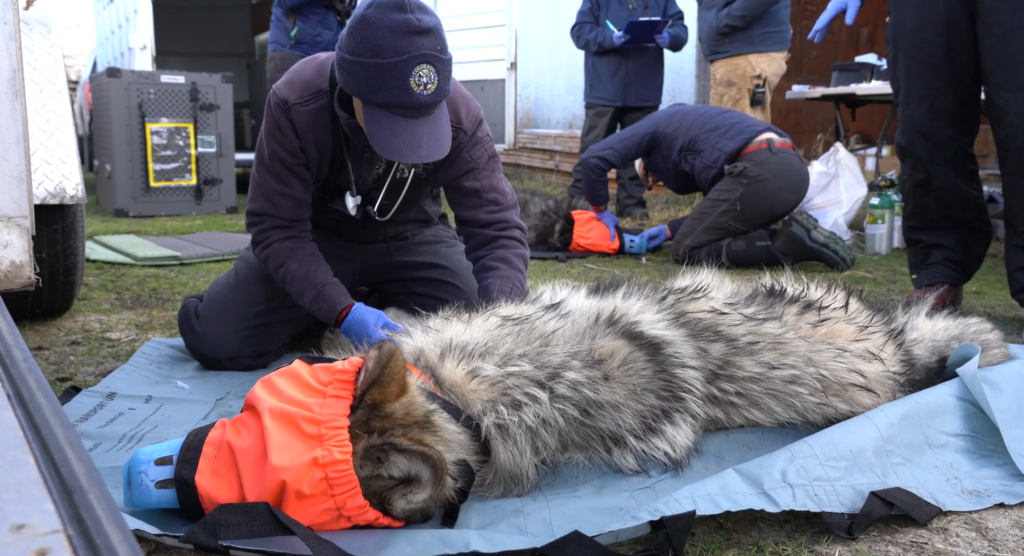
The female wolf of the mating pair for the King Mountain pack has died, bringing total fatalities to 14 out of the 25 animals reintroduced in Colorado. The wolf, identified as No. 2310, was among the 10 wolves brought to...

The delicate, ever-changing dance between politics and religion | SONDERMANN
By Eric Sondermann
by-eric-sondermann@coloradopolitics.com
Updated 1 day ago
The dance, really a marathon that brings to mind the classic movie “They Shoot Horses, Don’t They?”, has been going on as long as there have been governments and organized religion. That is to say that this delicate tango has...
Roasts, get yer roasts, here: Capitol M | Week of March 14, 2026
Marianne Goodland
marianne.goodland@coloradopolitics.com
Updated 5 days ago
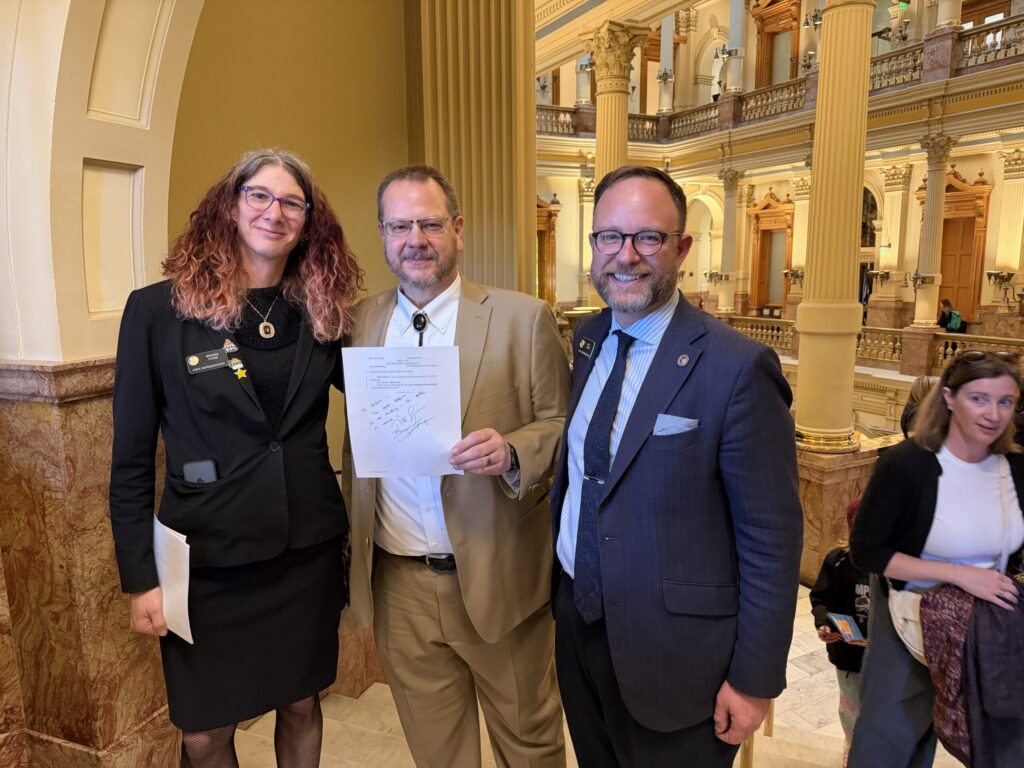
The lighter side of the Capitol, especially in the past week Apparently, the pending and eventual switch to daylight stupid time has put people in some pretty funny moods. And thank goodness! On March 4, the Senate approved the appointments...

Colorado Politics Calendar Mar. 16-22
Rachael Wright, Special to Colorado Politics
rachael.wright@coloradopolitics.com
Updated 4 days ago
CoPo’s weekly political calendar will help you find political and public-policy events throughout Colorado. It includes candidate and issue campaign events, public policy meetings, court hearings, state and local party conventions, assemblies, debates, rallies, parades, speaking engagements, traveling dignitary appearances,...
Polly Baca elected to DNC | A LOOK BACK
Rachael Wright, Special to Colorado Politics
rachael.wright@coloradopolitics.com
Updated 4 days ago
Forty-Five Years Ago This Week: After her loss to Republican U.S. Rep. Hank Brown the previous year in the race for the 4th Congressional District, state. Sen Polly Baca-Barragan, D-Thortnon, was elected as one of the three vice-chairs of the...

Boebert challenger Eileen Laubacher joins lawsuit aimed at blocking her from Democratic assembly
Ernest Luning
ernest.luning@coloradopolitics.com
Updated 2 days ago
A Denver District Court judge on Thursday permitted Democratic congressional candidate Eileen Laubacher to join a lawsuit filed by one of her primary opponents seeking to prevent Laubacher from participating in the party’s assembly process in a bid to qualify...