

Colorado unemployment fund expected to run out of money next week

The fund Colorado uses to pay unemployment benefits will run out of money next week, but the state will continue to pay benefits by borrowing from the federal government, state officials said Thursday.
The fund had only $50 million left Thursday and the state paid out $70.3 million last week, said Ryan Gedney, senior economist for the Colorado Department of Labor and Employment. The state’s Unemployment Insurance Trust Fund last ran out of money in 2010 during the Great Recession, but paid back $1 billion the state borrowed by 2012. The fund also ran out money in 1982 and borrowed $221 million to continue paying benefits that were repaid by 1985.
Colorado unemployment claims drop for third consecutive week
Cher Roybal Haavid, the department’s deputy director, said in an email she can’t forecast how much the state will borrow this time, which will “depend upon the contours of the pandemic and subsequent economic recovery. It is likely the amount borrowed will exceed that of the Great Recession.” Colorado businesses won’t immediately face higher unemployment insurance premiums to pay back the federal loan this time since Gov. Jared Polis signed legislation delaying such increases for two years.
Ten other states and the Virgin Islands also have run out of money to pay unemployment benefits and have borrowed $20 billion to continue paying benefits, mostly in California, New York and Texas. Two-thirds of the states had to borrow from the federal government during the Great Recession to continue paying benefits, Gedney said.
Colorado’s fund has been depleted by paying $1.53 billion in unemployment benefits since March 29. The state has paid an additional $3 billion in benefits funded by the federal government, including those to self-employed persons, independent contractors and “gig” workers; an extra $600 a week to persons receiving unemployment benefits (which expired last month); and an extra 13 weeks of benefits after eligibility would normally expire. The state also expects to soon begin paying for an additional 13 weeks of benefits because of its high unemployment rate (10.5% in June)
The fund will become insolvent even as first-time claims for unemployment benefits from payroll workers fell last week to the lowest level in nearly five months, the department reported. However, claims from self-employed and similar workers jumped for the second time in the past three weeks.
The department reported 6,187 claims from payroll workers during the week ending Aug. 8, down 13.3% from the previous week and the fewest since state restrictions to slow the pandemic’s spread forced many businesses to shut down in mid-March. However, the 9,048 pandemic claims filed by self-employed and similar workers were up 19.3% during the same period, pushing last week’s claims up 3.5% to 15,235. The agency has received 523,390 claims from payroll workers and 171,100 claims from self-employed and others for 694,490 claims since mid-March.
In the Colorado Springs area, first-time claims from payroll workers rose 7.9% to 1,093 in the week ending July 25, the highest weekly total in two months.
Claims from self-employed and other similar workers jumped 20% to 1,190 in the week ending Aug. 1, the highest weekly total since June 20. Claims filed by area residents since mid-March now total 72,481, or more than 20% of the labor force in February.
Nationally, the number of laid-off workers applying for unemployment aid fell below 1 million last week for the first time since the viral pandemic intensified five months ago, yet still remains at a high level, The Associated Press reported.


Colorado to get $615M from Meta child safety settlement
Thelma Grimes
thelma.grimes@coloradopolitics.com
Updated 5 hours ago
The parent company of Facebook and Instagram will pay hundreds of millions of dollars to Colorado, part of an $18 billion multistate deal, in which the company also agreed to adopt extensive child-safety changes to its operations. The settlement ended...

Colorado’s chief federal judge orders return of wrongfully deported man, second judge to explore ‘series’ of violations
Michael Karlik
michael.karlik@coloradopolitics.com
Updated 8 hours ago
Colorado’s chief federal judge took the extraordinary step of directing the government on Tuesday to do everything it can to return a man it deported in violation of his order. At the same time, Colorado’s chief magistrate judge has set...

Counties warn CPW that new comment limits sideline local governments
Marianne Goodland
marianne.goodland@coloradopolitics.com
Updated 6 hours ago
The September meeting of the Colorado Parks and Wildlife Commission will feature newly revised public‑comment rules — changes introduced by chair Jay Tutchton of Bent County, who announced them without first discussing the revisions publicly with the rest of the...

Controversial two-bag furbearer limit heads to CPW meeting under legal threat
Marianne Goodland
marianne.goodland@coloradopolitics.com
Updated 6 hours ago
Next week’s Colorado Parks and Wildlife Commission meeting in La Junta is likely to open under the cloud of threatened legal action. Safari Club International and the Sportsmen’s Alliance Foundation warned the commission this month that its July vote imposing...

Golden to pay $155,000 to fired city manager
Matt Kyle
matt.kyle@denvergazette.com
Updated 8 hours ago
The Golden City Council on Tuesday approved a roughly $155,000 severance payout to former city manager Scott Vargo, who was fired earlier this month following a “racist incident” at a city fire station. The payout is part of a separation...

Trump says the US doesn’t need Canada. America’s economy says otherwise.
The Associated Press
the-associated-press@coloradopolitics.com
Updated 9 hours ago
TORONTO (AP) — U.S. President Donald Trump says his country does not need Canada. But every day, roughly 4 million barrels of Canadian crude oil flow south, helping fuel American cars, trucks and airplanes and supply U.S. industry. And oil...
USPS ballot rule faces lawsuit from Colorado, other states
Thelma Grimes
thelma.grimes@coloradopolitics.com
Updated 7 hours ago
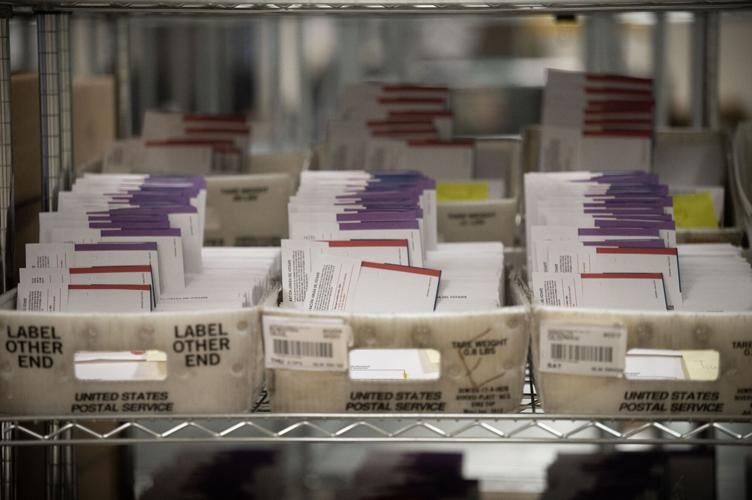
Colorado, along with 25 other states, filed a lawsuit against the U.S. Postal Service to challenge a new rule that seeks to restrict the mailing of ballots to American citizens in an eligible voters list. Colorado relies heavily on the...

FDA approves landmark pancreatic cancer drug that’s shown to improve survival
The Associated Press
the-associated-press@coloradopolitics.com
Updated 9 hours ago
WASHINGTON (AP) — The Food and Drug Administration on Wednesday approved a groundbreaking new drug for advanced pancreatic cancer, offering U.S. patients a more effective treatment against one of the deadliest types of cancer. FDA officials gave expedited approval to...

Trump defends pause on beef tariffs: Prices are ‘coming down very rapidly’
Naomi Lim
naomi-lim@coloradopolitics.com
Updated 11 hours ago
President Donald Trump defended his decision to pause tariffs on some beef imports, even as Republicans criticize the decision. “Prices are coming down very rapidly, and now beef is starting to come down,” Trump told The Glenn Beck Program on...
Denver murder, assault convictions reversed due to faulty jury instructions
Michael Karlik
michael.karlik@coloradopolitics.com
Updated 6 hours ago
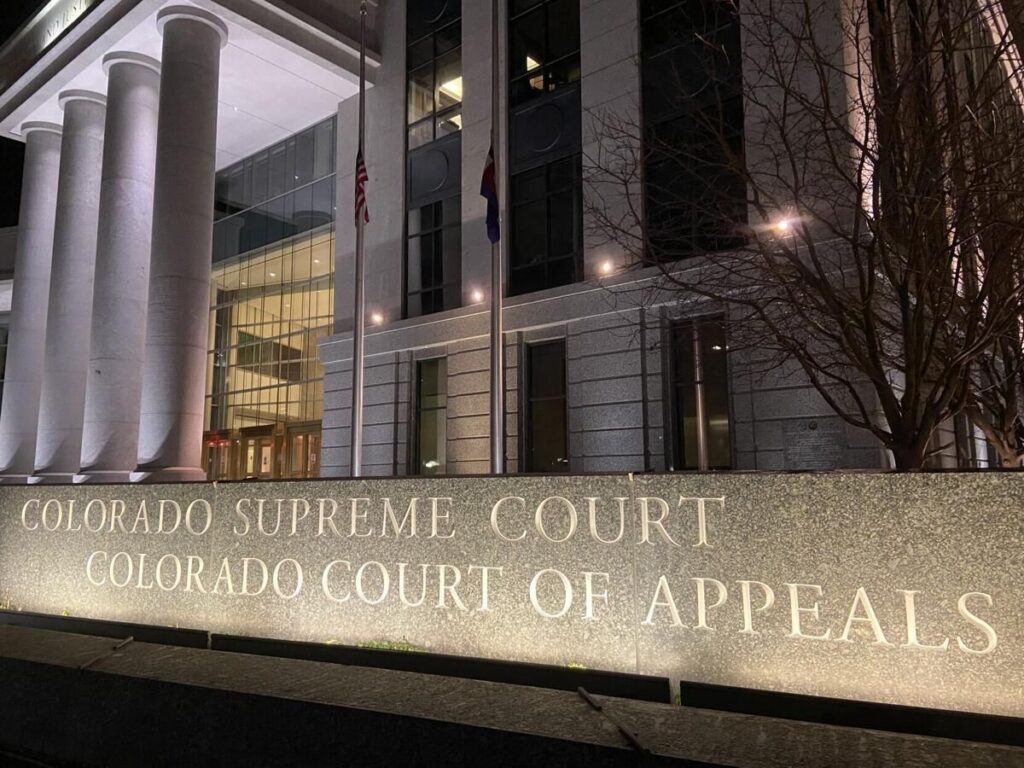
Colorado’s second-highest court reversed a defendant’s convictions for murder and assault last week after concluding a Denver judge incorrectly omitted key jury instructions that could have affected the verdict and sentencing. Stephen C. Swainson fatally stabbed Israel Casillas in downtown...
PREV
PREVIOUS

Gov. Jared Polis extends statewide mask order
As expected, Gov. Jared Polis on Friday extended a previous executive order mandating that all Coloradans wear face coverings for another 30 days, until September 13. Polis amended the executive order Friday to exempt from the order those conducting “life rites,” in addition to religious services. The executive order, D2020 164, marks 159 executive orders […]

Jurors hear from investigators in trial of man accused of killing Colo. Springs mayor's son-in-law
Jurors in the trial of a man charged with killing the son-in-law of Colorado Springs’ mayor and an Uber driver heard from law enforcement investigators on Friday, pushing closing arguments and jury deliberations into Monday. Jeffrey Sloan is accused of multiple crimes, including vehicular homicide, assault and leaving the scene of an accident after he […]