

EMS personnel face added challenges from COVID-19, protests and Fourth of July volume

The Fourth of July holiday is normally a busy day for paramedics and emergency medical service personnel.
For 2020, add in the number of people who are doing their own thing with fireworks, assistance for those who participate in protests when tear gas and other agents are deployed by police, and the workload — and risk — grows.
And then add in COVID-19, a shortage of PPE among EMS personnel, staff shortages and lagging revenues, and a busy Fourth could add to the challenges for Colorado’s 13,357 certified EMS personnel.
EMS personnel are the true first responders on COVID-19 and many other calls, for heart attacks, accidents of all kinds and other medical emergencies.
But COVID-19 has complicated the matter, according to officials who run EMS service providers in Aurora and on the Western Slope, as well as those on the front lines.
Tom Anderson, the head of AMR in Cañon City, put it this way in a May Facebook post for the statewide Emergency Medical Services Association of Colorado:
“The most difficult aspect of EMS care today is working in masks,” Anderson added. “Can your patient hear you? Can I hear the patient? And our patients are scared. They are scared we may have the virus.
“Our world has shut down because of this disease, and, as smart as we are we let it become this.”
Anderson said in his community everyone has “stepped up … . Someone is ALWAYS trying to help, making masks or just bringing treats to workers.”
The greatest danger, though, is “our lack of preparedness. There will have to be action to fix this problem: training and education, PPE standards, local plans. We have volunteer agencies that had no plans at all. Some must, and will, come out of this Nobody is exempt. We’ve been reminded of that and we must plan for this happening again.”
David Patterson is the managing director of Falck EMS, which provides ambulance services for the city of Aurora. He’s been in the business for a quarter century, as a paramedic and a firefighter before that.
“We stress the availability of personal protective equipment,” Patterson said. In some cases, shortages and higher costs — sometimes price-gouging — means they’re reusing equipment, such as N95 masks and plastic face shields and goggles. They’ve employed guidelines from the Centers for Disease Control and Prevention on how to safely reuse PPE, he said.
They’ve had their share of COVID-19 patients to transport, but the volume of calls has dropped off. What he said they’ve discovered is that people are dying at home, not of COVID-19, but of other causes, such as heart attacks, because they’re afraid of infection.
That means delaying care, sometimes with fatal results. Those who suffer heart attacks and strokes, when time is of the essence to save a life, are most at risk.
The calls they do get, as a result, are fewer but the patients are in much more dire need of service, Patterson explained.
Then add into it the paramedics’ own exposure to the virus. Some personnel have been quarantined because of exposure, he said.
All of this is adding to the stress levels that paramedics face, Patterson said. “The biggest problem” for some personnel is their worries that they’re taking the virus home to friends and family. “It’s a very high stress point and for their own health as well,” he said.
Alan Moreland, a volunteer paramedic in the Denver area*, put it this way in a Facebook post for EMS Services of Colorado on June 13:
“First shift as a volunteer paramedic and I’m more heartbroken than ever. These incredible people keep showing up for every shift doing the job at the risk to themselves, family, and friends but they keep showing up! Incredible! They were here before Covid-19 and hopefully god willing they will be here after. Commercials on TV and a honk of your horn when passing an EMS crew is nice but what the need is money. Money for proper PPE, money to keep staffing at current levels and a day off to gather their thoughts for just one day to hug their kids and to take a breath. I’m not sure if everyone knows the toll this is taking on EMS personnel (people).”
Patterson noted another element in how they deal with COVID-19 patients: medical protocols for treating respiratory distress have changed, and that means patients who would normally receive aerosol-based medication, such as breathing treatments, might see those treatments delayed due to concerns over COVID-19. The protocols now call for delaying those treatments or eliminating them all together.
That adds to the stress, too, for a paramedic who knows he/she has the tools to help someone in respiratory distress and can’t use them.
“It’s cumulative,” Patterson said. Patients are sicker, some calls come from people who may have it and haven’t been diagnosed. So paramedics have to assume patients could be asymptomatic carriers. “You have your guard up all the time and that’s a wear on the psyche, too.
“These are the people who run in when others run away,” Patterson said. They will “risk their own safety and well-being in the service of others.”
And with the lower volume of calls, it’s putting a hit on the revenues for these providers, many of whom operate under fee-for-service contracts. Volume is down, but the cost of readiness is the same, and supply costs, such as for PPE, have gone up.
That’s harming EMS providers in Colorado, Patterson said. He asked that the government, when it’s doling out pandemic-relief dollars, doesn’t forget about EMS providers. But so far, they’ve been forgotten.
Grand County EMS providers also are struggling. Their primary concerns include ensuring competitive salary and keeping their fleet up to date. But they’ve taken a $160,000 hit to the budget, which means among the changes, not allowing for overtime.
The revenue picture also keeps Scott Sholes of Durango up at night. He’s the president of Emergency Medical Services Association of Colorado. He’s also the chair of the Regional Emergency & Trauma Advisory Council, emergency service providers in the state’s southwest corner.
His district’s revenue situation is a bit different, as they get property tax revenues for the fire department, but fee-for-service is still the main source of revenue.
In the first four months of the year, revenue for RETAC dropped by $165,000. And as is the case with the Aurora providers, that’s largely due to a drop in volume of calls. People stayed home, got really sick and some died, Sholes said.
Those revenue problems are compounded by low reimbursement rates for Medicaid and Medicare, Sholes wrote in a May 31 op-ed for the Gazette.
“Across the state and the nation, we have seen EMS providers work hard to treat patients away from emergency rooms to prevent crowding and to minimize exposure to COVID. Yet perversely, Medicaid does not reimburse EMS providers when they treat patients at home.”
The General Assembly, in its recently concluded session, set aside CARES Act money for housing and food assistance, behavioral health, small business loans and utilities. But assistance to EMS providers was never on the table.
Gov. Jared Polis also left out EMS providers in how he spent $1.67 billion in CARES Act dollars. In his May 18 executive order, Polis doled out dollars to corrections, schools, higher ed, human services for increased caseloads, to the Department of Local Affairs for mortgage and rent assistance; and to help cover payroll for “public safety, public health, health care, human services, and similar employees whose services are substantially dedicated to mitigating or responding to the COVID-19 emergency.” That didn’t include EMS, according Chris Howes, whose Howes Group lobbies for the EMS association.
Howes said they’re still hoping to work with the governor on funding for EMS, noting that some providers are now facing layoffs from a 40% drop in revenues, largely due to the drop in volume in the number of trips an EMS makes to a hospital.
As summer has moved in, the volume of calls is starting to come back as people have gotten more comfortable with being transported to the hospital, Sholes told Colorado Politics.
Statewide, crisis standards of care for EMS providers allowed them to refuse transport to those who were potentially positive for the virus. In some situations, those patients received instructions on quarantining at home.
“We had to do our part to not overflow the receiving facilities while they prepare for a sudden wave of COVID-19 patients.”
Sholes pointed to another problem for paramedics: lack of PPE. “It’s been a real issue,” he said.
They planned for pandemics years ago, working with local health departments on PPE for a potential rough strain of the flu or even the Ebola virus. That’s served them well for N95 masks and gowns, at least early on.
But replenishing those supplies has not been easy. Their supply of N95 masks has been depleted, and while they’ve been able to get more through the state stockpile, some of their orders haven’t been filled.
Anderson, in Cañon City, said his inability to get PPE is one of his greatest fears. During EMS Week in May, Anderson said they had been lucky, with only 18 positive COVID-19 cases. But the lack of PPE is a problem. “Everyone knows someone without adequate PPE.,” he said.
Statewide, supplies have gone to place with the most critical need, Sholes said. Southwest Colorado hasn’t gone through a high “burn rate” that shows how quickly they use up their supplies. “But it didn’t make us any less nervous,” he said.
They did get CARES Act money, which was a huge help, he said. But he also worries about a second wave, signs of which are now starting to show up.
As to his paramedics, Sholes said he is incredibly impressed by their attitude and responsiveness to the pandemic. One told him “this is our new normal. We just do it.”
“They’ll do their part for the public,” Sholes said.
Correction: a previous version misidentified Denver Health.

Colorado lawmakers grapple with spending cuts amid $1 billion-plus deficit
Marianne Goodland
marianne.goodland@coloradopolitics.com
Updated 12 hours ago
The battle over Colorado’s budget for next year — which stalled in the House over a procedural maneuver — entered a more difficult phase on Thursday, when legislators grappled with hundreds of millions of dollars in proposed reductions to balance...
New rules for private judges in Colorado include discipline oversight, campaign contributions
David Migoya
david.migoya@gazette.com
Updated 15 hours ago
The Colorado Supreme Court recently determined the state’s private judges — retired jurists appointed to oversee civil cases that rarely get public scrutiny — can now make political contributions freely and without reserve, overruling a prohibition that had been in...
Colorado bill reshaping RTD board advances
Marissa Ventrelli
marissa.ventrelli@coloradopolitics.com
Updated 15 hours ago
A proposal to reshape the Regional Transportation District’s leadership easily cleared a committee vote Wednesday, advancing the bill sponsors say is needed to revive a transit system still struggling to regain riders and public trust. Critics have countered that, while...

Colorado Democrat John Hickenlooper pulls in nearly $1.4M in 1st quarter, heads into primary with $4M
Ernest Luning
ernest.luning@coloradopolitics.com
Updated 12 hours ago
U.S. Sen. John Hickenlooper’s campaign raised nearly $1.4 million in the first quarter of 2026 and plans to report more than $4 million on hand heading into Colorado’s June primary, the first-term Democrat’s campaign said Thursday. That brings Hickenlooper’s total...
Republican Ron Hanks plans ‘grassroots’ primary challenge to US Rep. Jeff Hurd in Colorado’s 3rd CD
Ernest Luning
ernest.luning@coloradopolitics.com
Updated 16 hours ago
Colorado Republican Ron Hanks, a former state lawmaker, plans to challenge first-term U.S. Rep. Jeff Hurd in the 3rd Congressional District primary by seeking a spot on the June ballot at the GOP’s district assembly in Pueblo on Friday, Colorado...
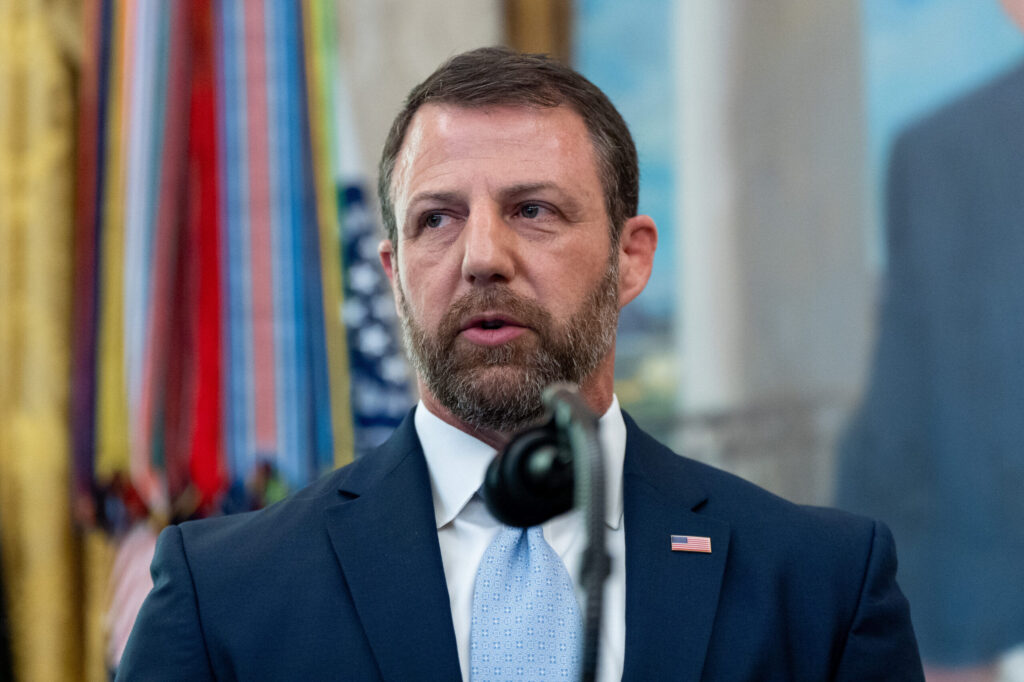
Five ways Mullin is already pushing DHS in a new direction
Anna Giaritelli Washington Examiner
anna-giaritelli-washington-examiner@coloradopolitics.com
Updated 19 hours ago
The Trump administration’s newest Cabinet secretary, Markwayne Mullin, has already begun to implement major changes across the Department of Homeland Security Mullin replaced President Donald Trump’s first DHS secretary, Kristi Noem, and was an unexpected pick to lead the department...
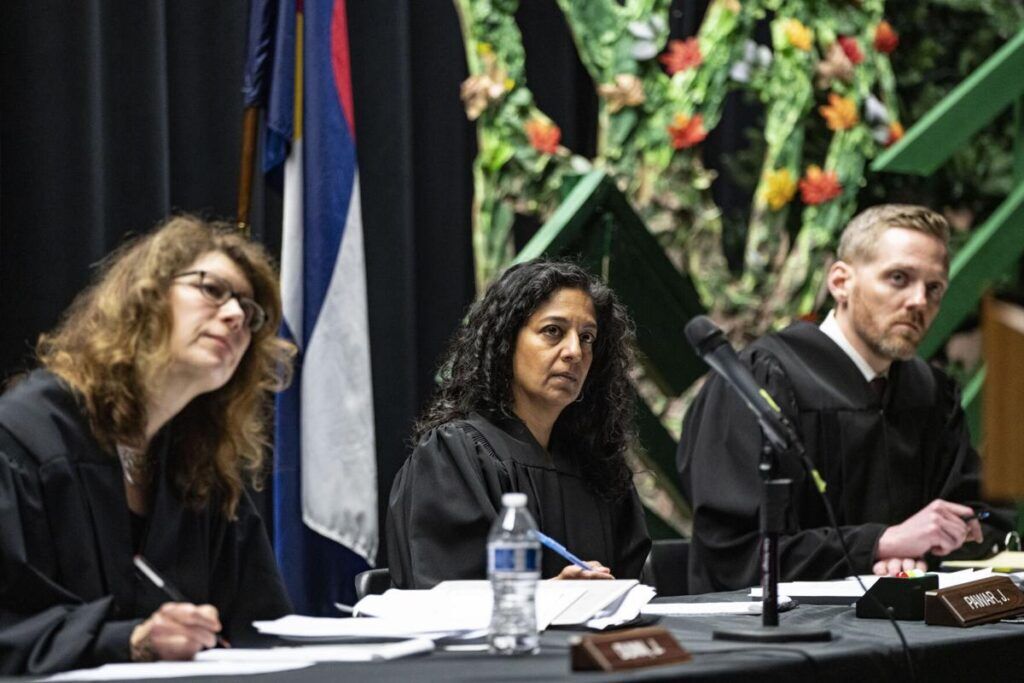
Appeals court finds Prowers County judge incorrectly analyzed firetruck collision lawsuit
Michael Karlik
michael.karlik@coloradopolitics.com
Updated 20 hours ago
Colorado’s second-highest court directed a Prowers County judge last month to take a second look at whether a firetruck operator and the county itself can be held liable for a collision with a motorist. Donald Williamson was driving through a...
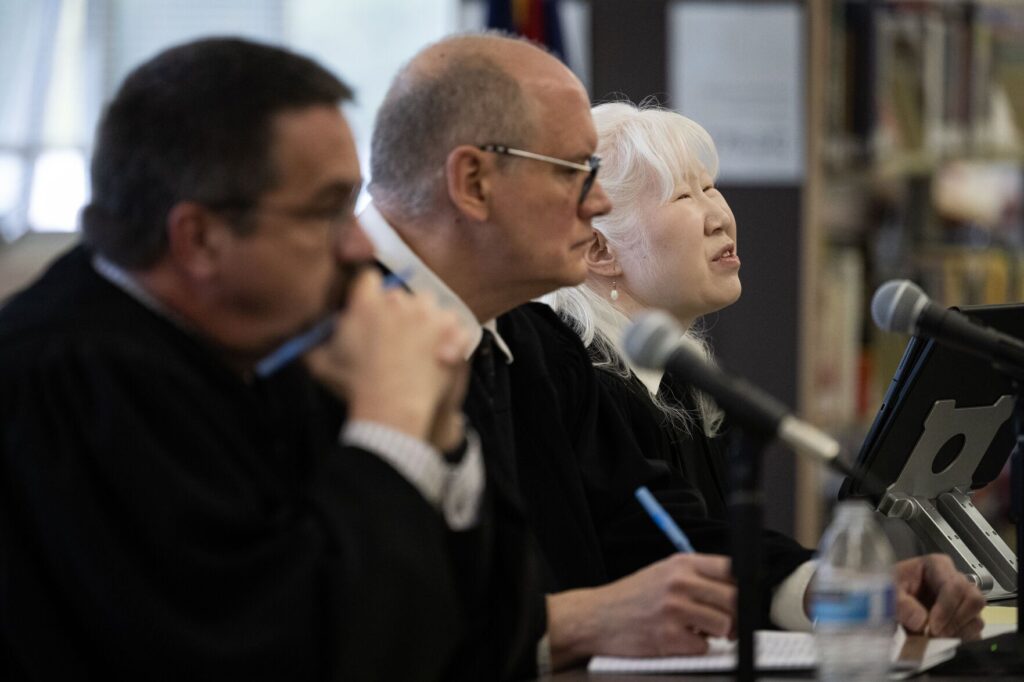
Appeals court reverses assault convictions after jury received no definition of ‘harm’
Michael Karlik
michael.karlik@coloradopolitics.com
Updated 21 hours ago
Colorado’s second-highest court reversed an Arapahoe County defendant’s assault convictions last week, concluding the trial judge neglected to define a key, ambiguous term for jurors. Police officers arrested David Cristobal Aragon at a house party for allegedly violating a restraining...
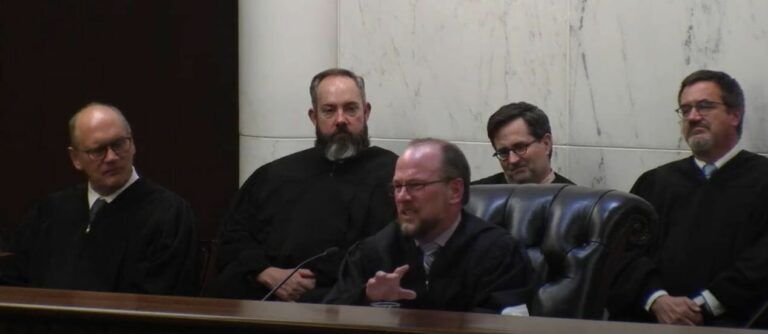
Colorado counties cannot challenge state law restricting immigration contracts, appeals court says
Michael Karlik
michael.karlik@coloradopolitics.com
Updated 17 hours ago
Colorado’s second-highest court ruled on Thursday that counties lack standing to challenge a 2023 state law that restricts their ability to contract with the federal government or private entities for immigration detention. A three-judge Court of Appeals panel agreed with...
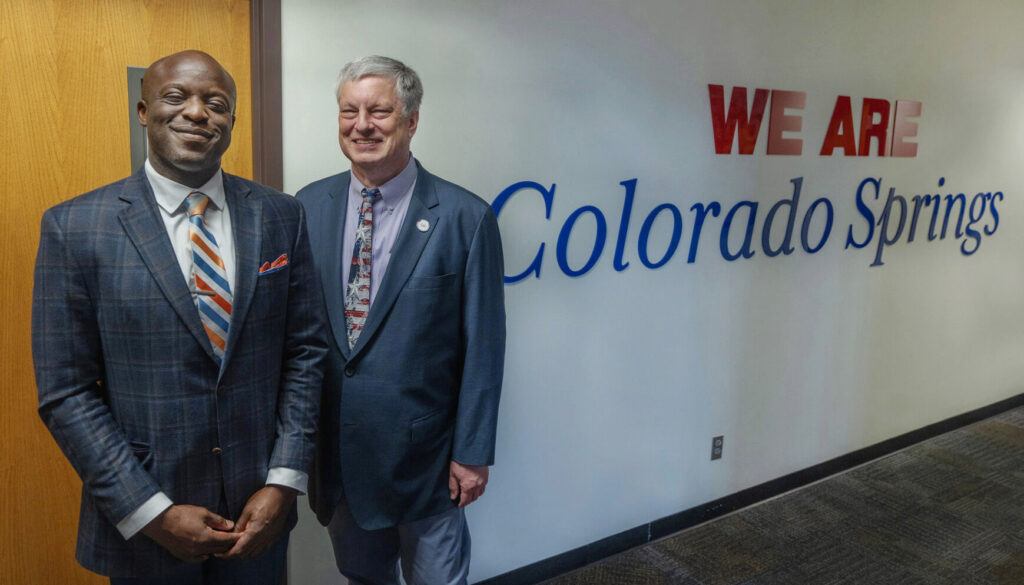
Wayne Williams joins city as Colorado Springs Mayor Mobolade’s new chief of staff
Brennen Kauffman
brennen-kauffman@coloradopolitics.com
Updated 18 hours ago
Wayne Williams will be the next chief of staff for Colorado Springs Mayor Yemi Mobolade, turning the two former election opponents into partners in city government. The two officially announced the hire Thursday, citing Williams’ decades of experience with city,...
PREV
PREVIOUS

Gardner, Bennet lead effort to ramp up COVID-19 testing
Colorado Sens. Cory Gardner, a Republican, and Michael Bennet, a Democrat, are leading the congressional effort to strengthen preparedness to detect and prevent outbreaks and avoid the economic blowout that comes with them. Gardner and Bennet are joined by Republican Sen. Mitt Romney of Utah and Democratic Sen Kyrsten Sinema of Arizona as sponsors of […]

INSIGHTS | Colorado's story on mail ballots informs the national conversation
Colorado isn’t the swing state it used to be, but the eyes of the nation are on us once again. First it was the mountains, then it was the Broncos, then the pot. Now it’s our mail ballots. Others envy us, especially at a time when voting in person could kill you with the coronavirus. […]