

Weiser-backed amendment included in federal policing bill
An amendment backed by Attorney General Phil Weiser and his counterparts nationwide to empower state attorneys general to investigate patterns and practices of law enforcement misconduct has made it into the policing reform bill that passed a U.S. House of Representatives committee on Wednesday.
“At a time when the federal government is failing to provide leadership on civil rights issues, states must step up to hold lawless law enforcement agencies and police officers accountable, particularly as communities demand greater transparency and accountability,” Weiser said.
In Colorado, the General Assembly granted Weiser that authority for investigating violations of state law in Senate Bill 217, the far-reaching accountability bill that passed in the wake of continued racial justice protests in Denver and worldwide. Federal law gives the U.S. Department of Justice the ability to investigate and resolve patterns of unconstitutional police practices.
A coalition of 18 attorneys general earlier this month reported that between 1994 and 2017, the department initiated 69 investigations for patterns or practices of misconduct, which resulted in 40 consent agreements. Since the Trump Administration took office in 2017, there have been zero.
U.S. Rep. Joe Neguse, a member of the House Judiciary Committee, spoke favorably about the amendment at the hearing. He and Colorado’s four other Democratic representatives are among the 225 co-sponsors of the Justice in Policing Act.
“I have therefore called for this critical authority to be provided to state attorneys general, so that justice may be served even when the U.S. attorney general is unwilling to act for political reasons,” Neguse said.
Among other features, the bill would provide grants for body-worn cameras, lowers the standard required to hold officers criminally accountable for their actions, and curtails the immunity that law enforcement receives as public employees.
The bill passed out of committee on a party-line vote of 24-14. U.S. Rep. Ken Buck, Colorado’s other lawmaker on the Judiciary Committee, voted no.


Colorado to get $615M from Meta child safety settlement
Thelma Grimes
thelma.grimes@coloradopolitics.com
Updated 59 minutes ago
The parent company of Facebook and Instagram will pay hundreds of millions of dollars to Colorado, part of an $18 billion multistate deal, in which the company also agreed to adopt extensive child-safety changes to its operations. The settlement ended...
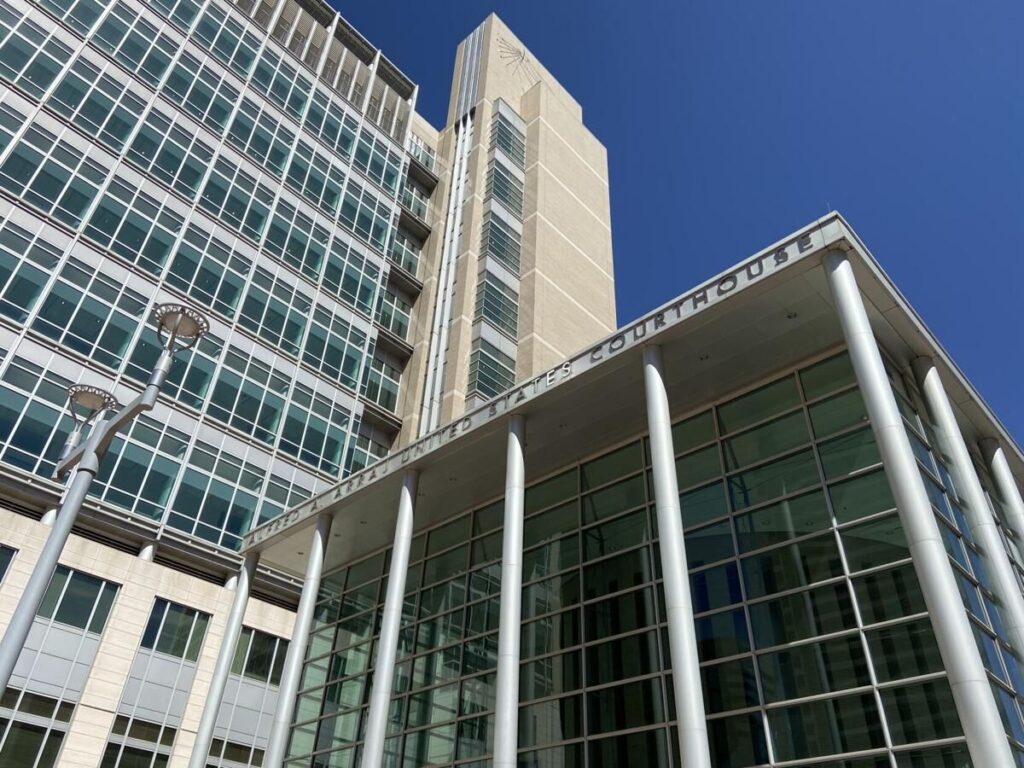
Colorado’s chief federal judge orders return of wrongfully deported man, second judge to explore ‘series’ of violations
Michael Karlik
michael.karlik@coloradopolitics.com
Updated 4 hours ago
Colorado’s chief federal judge took the extraordinary step of directing the government on Tuesday to do everything it can to return a man it deported in violation of his order. At the same time, Colorado’s chief magistrate judge has set...

Counties warn CPW that new comment limits sideline local governments
Marianne Goodland
marianne.goodland@coloradopolitics.com
Updated 2 hours ago
The September meeting of the Colorado Parks and Wildlife Commission will feature newly revised public‑comment rules — changes introduced by chair Jay Tutchton of Bent County, who announced them without first discussing the revisions publicly with the rest of the...

Controversial two-bag furbearer limit heads to CPW meeting under legal threat
Marianne Goodland
marianne.goodland@coloradopolitics.com
Updated 2 hours ago
Next week’s Colorado Parks and Wildlife Commission meeting in La Junta is likely to open under the cloud of threatened legal action. Safari Club International and the Sportsmen’s Alliance Foundation warned the commission this month that its July vote imposing...

Golden to pay $155,000 to fired city manager
Matt Kyle
matt.kyle@denvergazette.com
Updated 4 hours ago
The Golden City Council on Tuesday approved a roughly $155,000 severance payout to former city manager Scott Vargo, who was fired earlier this month following a “racist incident” at a city fire station. The payout is part of a separation...

Trump says the US doesn’t need Canada. America’s economy says otherwise.
The Associated Press
the-associated-press@coloradopolitics.com
Updated 5 hours ago
TORONTO (AP) — U.S. President Donald Trump says his country does not need Canada. But every day, roughly 4 million barrels of Canadian crude oil flow south, helping fuel American cars, trucks and airplanes and supply U.S. industry. And oil...
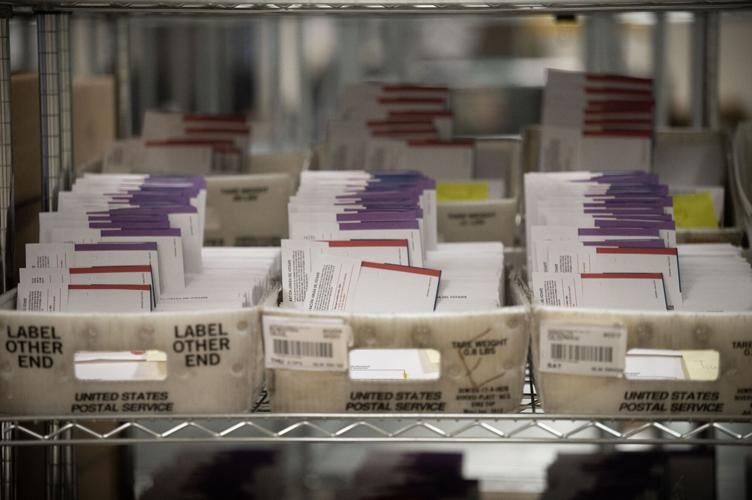
USPS ballot rule faces lawsuit from Colorado, other states
Thelma Grimes
thelma.grimes@coloradopolitics.com
Updated 3 hours ago
Colorado, along with 25 other states, filed a lawsuit against the U.S. Postal Service to challenge a new rule that seeks to restrict the mailing of ballots to American citizens in an eligible voters list. Colorado relies heavily on the...

FDA approves landmark pancreatic cancer drug that’s shown to improve survival
The Associated Press
the-associated-press@coloradopolitics.com
Updated 5 hours ago
WASHINGTON (AP) — The Food and Drug Administration on Wednesday approved a groundbreaking new drug for advanced pancreatic cancer, offering U.S. patients a more effective treatment against one of the deadliest types of cancer. FDA officials gave expedited approval to...

Trump defends pause on beef tariffs: Prices are ‘coming down very rapidly’
Naomi Lim
naomi-lim@coloradopolitics.com
Updated 7 hours ago
President Donald Trump defended his decision to pause tariffs on some beef imports, even as Republicans criticize the decision. “Prices are coming down very rapidly, and now beef is starting to come down,” Trump told The Glenn Beck Program on...
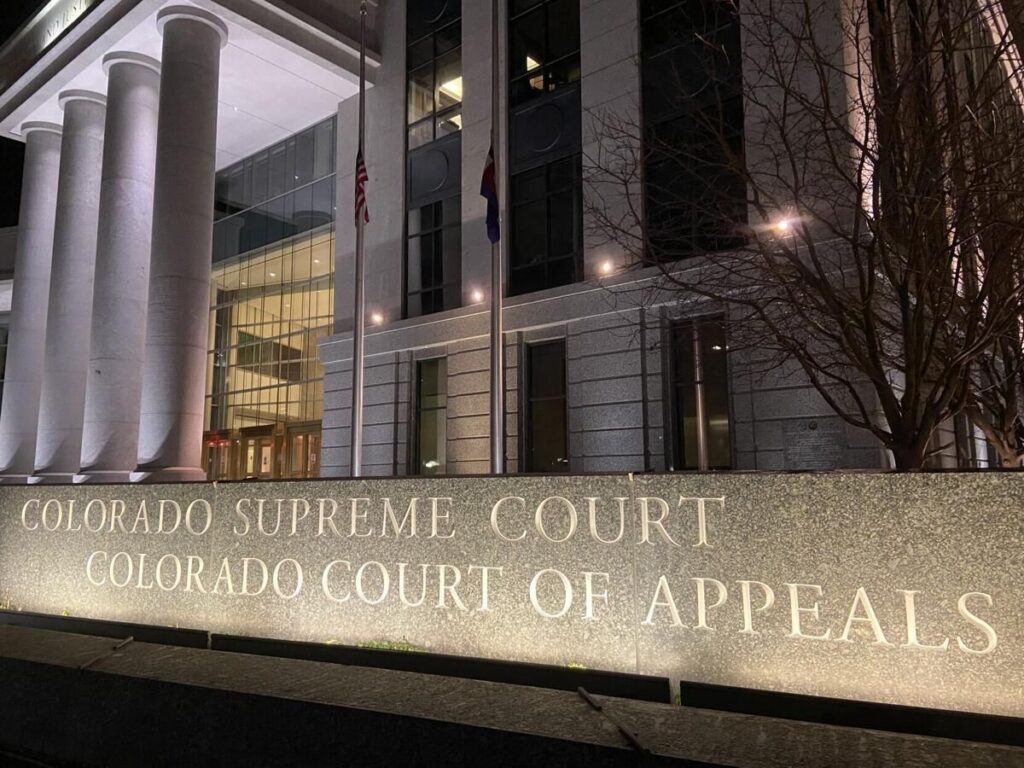
Denver murder, assault convictions reversed due to faulty jury instructions
Michael Karlik
michael.karlik@coloradopolitics.com
Updated 2 hours ago
Colorado’s second-highest court reversed a defendant’s convictions for murder and assault last week after concluding a Denver judge incorrectly omitted key jury instructions that could have affected the verdict and sentencing. Stephen C. Swainson fatally stabbed Israel Casillas in downtown...
PREV
PREVIOUS
Rep. Dave Williams returns fire after Colorado Trump campaign severs ties
State Rep. Dave Williams fired back Wednesday night at a top official with President Donald Trump’s Colorado campaign after the campaign cut ties with the El Paso County Republican. Williams, the liaison between the Trump campaign and GOP legislators until Wednesday afternoon, accused Trump’s state director of “pettiness” for removing him from the position after […]

PUC to open electric rates survey
The state’s Public Utilities Commission on Wednesday announced its intent to conduct a survey of utilities’ retail electric rates in compliance with 2019 legislation. Senate Bill 236 mandates that the PUC survey rates of public utilities, excluding cooperatives, and issue recommendations for how to reduce the electric rates in areas of the state that are “materially […]