

LEGISLATURE 2020 | Mental health advocates laud statehouse successes in trying times
Despite a global pandemic, economic hardships the nation hasn’t seen in generations and racial violence on the doorstep of the Capitol, Colorado lawmakers wedged aspects of mental health into a handful of critical pieces of legislation.
Mental Health Colorado on Thursday released its legislative report and scorecard on behavioral health and substance use.
You can read the scorecard by clicking here.
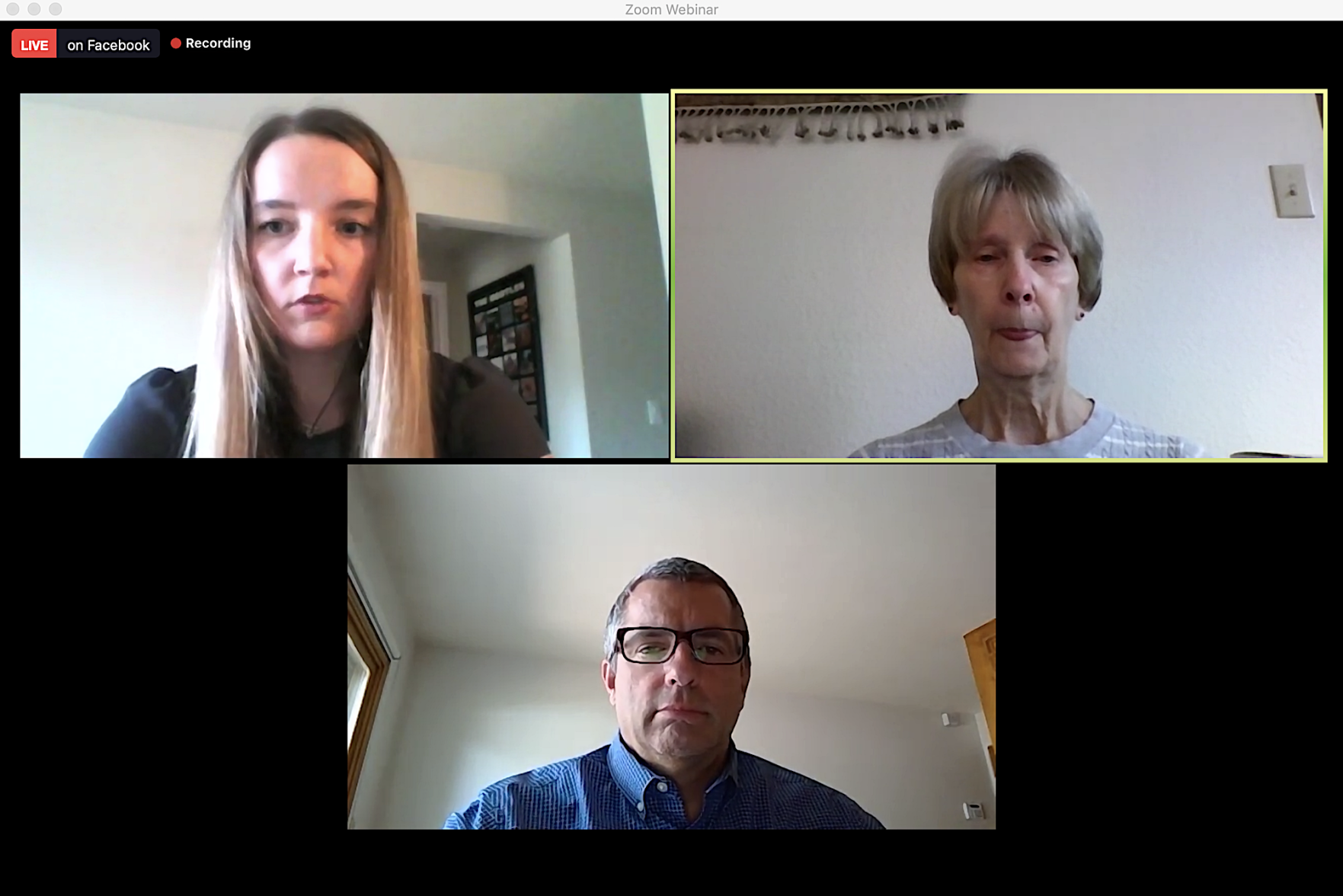
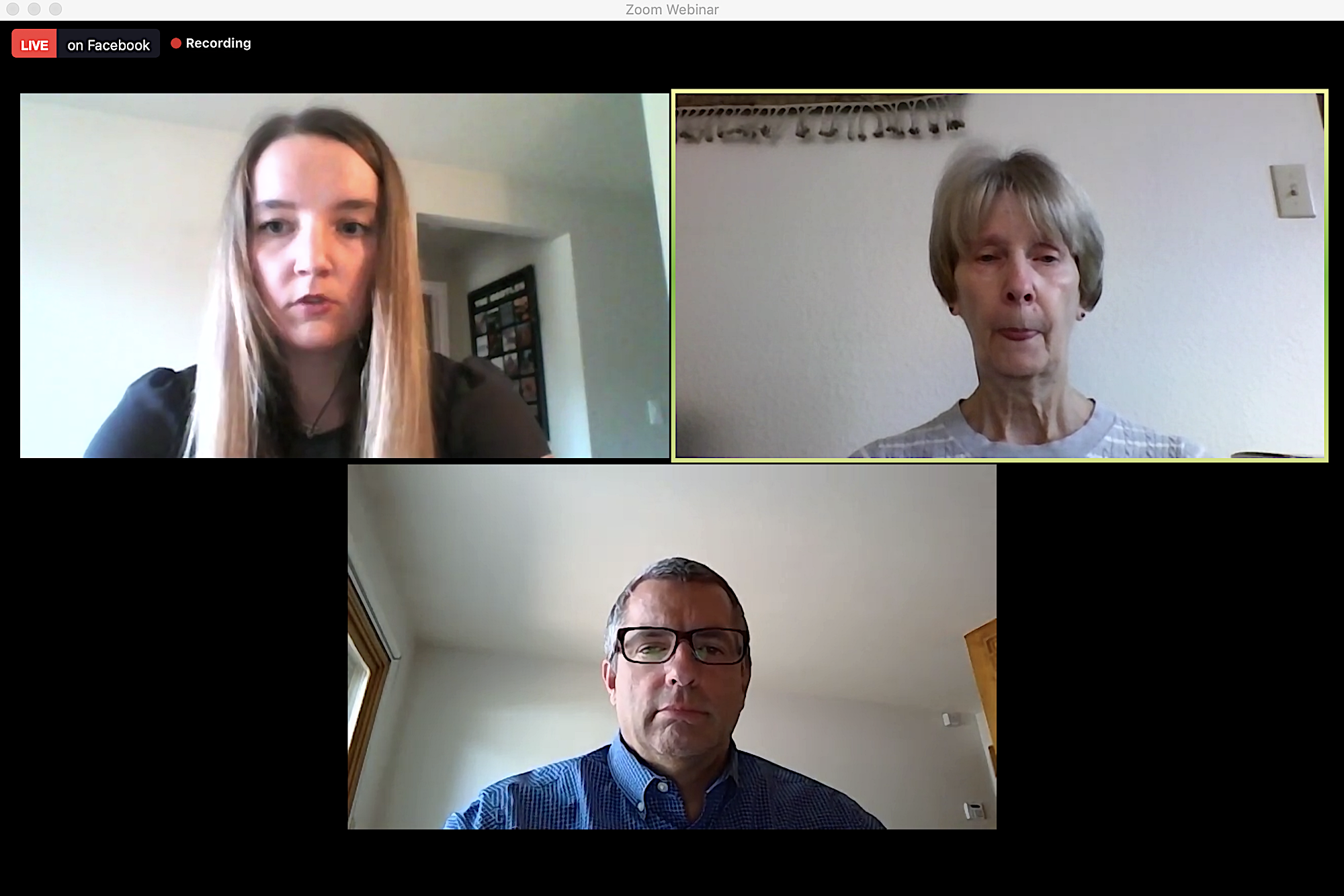
Reporters Thursday afternoon heard from Vincent Atchity, president and CEO of Mental Health Colorado, and Moe Keller, the organization’s director of advocacy and a former state senator.
“Mental health is not about some small number of people over there somewhere,” Atchity said Thursday. “It’s something as common to all of us as our physical health.”
Keller said there is more community emphasis than ever on mental health services.
When the session ended on Monday, Senate President Leroy Garcia, a Democrat from Pueblo, said not enough could be done this year on mental health, but he’s committed to keep the fight going for community services on mental health as one of his priorities.
“I think over the next five years or so we’re going to see a real transformation in how mental health services are provided,” said Keller. “I think they’ll be more efficient, I think they’ll be more person-centered, and I think they’ll be more available in the community.”
Most of the organization’s priority bills passed this session, but not without tweaks and turns to them, the mental health leaders said. While lawmakers hurriedly cut $3.3 billion, a quarter of the state’s operating funds, Mental Health Colorado noted federal pandemic relief money provided $15.2 million for mental health services this year.
Among the bills Mental Health Colorado called key:
Senate Bill 212: Making telehealth permanent.
The bill ensures the lifeline for a Medicaid program in the state and makes telehealth a service that can billed to insurers the same way as a regular service, and it took away with a requirement that the patient have a relationship with the provider for 12 months. “We have a lot of areas of the state, the rural areas, where people can’t access providers close to them,” Keller said.
Senate Bill 100: Death penalty repeal, as it relates to mental health.
The repeal happened before the pandemic, and Atchity called it an important achievement. “People with significant mental illness are overrepresented nationwide among the people on death row,” he said, “calling it a step toward equity.”
House Bill 1312: Teacher training on behavioral health.
The bill adds some mental health training in teacher education and prep for certification and recertification. The bill requires 10 out of the 90 credits a teacher gets every five years needs to be connected to mental health training. The bill was supported by the Colorado Education Association, and Keller said scores of teachers wanted to testify in support.
House Bill 1113: Safe2Tell expansion for behavioral health.
The Safe2Tell program started in 1999 after the Columbine High School massacre. The anonymous tip line to law enforcement is aimed at averting crime, but it has evolved to help students who are suicidal or has a friend in mental crisis. Now the program will direct calls related to mental health to the state’s crisis line, where trained professionals await. The phone number – 1-877-542-7233 – stays the same, but the legislation diverts the calls, as needed.
Senate Bill 205: Paid sick leave, including for mental health.
Atchity said the expansion of employer obligation to 48 hours allows for mental crises and still pay their bills. About 40% of Colorado’s workforce has no paid time off and face financial burdens to take time off for even a short sickness. “It’s a great step in the right direction for the mental health of our community,” he said, adding “A health society does not put its citizens in that kind of position.”
Senate Bill 217: Law Enforcement Integrity Act, as it related to mental health.
The bill was put together after the death of George Floyd in Minneapolis on May 25 to deter police misconduct and combat systemic racism. Atchity said the nation has a history of standing for human rights around the world, but doesn’t always honor that heritage. “As black people know best, and we all need to know, there has been this cognitive dissonance where those are out founding words and het the fact of the matter is we do not have equitable justice or liberty and justice for all,” Atchity said. “There has been a systemic element of racism that has created an imbalance.”
Equality is a behavioral health factor, Mental Health Colorado noted in the report:
“Given our heartfelt understanding that Black Lives Matter, it is important to note that a the bills we supported – reflecting our historical commitment to health equity – address or for disparities that have been disproportionately harmful to Colorado’s Black communities communities of color throughout the state’s history. Across the board, from maternal preventable justice-involvement to mortality rates, the consequences of systemic racism in population health data.”
Keller noted that only the death penalty repeal occurred before the pandemic shutdown, though several were in the works.
A bill that didn’t make it was a secure transport bill, House Bill 1284, allowing people in crisis to be delivered in a vehicle other than a police car or ambulance.
“That had great promise, but because it had a lot of money attached to it, it died,” Keller said of the $1.3 million over the first three years for staff, equipment and other program costs.
Mental Health Colorado is the state’s oldest and largest nonprofit advocacy organization to help with mental health and substance use needs in services and policies. This session, its representatives testified before House and Senate committees 44 times, according to the annual report.
This story was updated to correct Leroy Garcia’s hometown.

Colorado appeals court orders new sentencing for Tina Peters, upholds convictions
Michael Karlik
michael.karlik@coloradopolitics.com
Updated 21 minutes ago
Colorado’s second-highest court determined on Thursday that a trial judge improperly sentenced former Mesa County clerk Tina Peters based upon her exercise of protected speech, while at the same time upholding her convictions. The three-judge Court of Appeals panel also...

Analysis: Denver promised every school funding from $1B bond — but campuses later closed received far less
Nico Brambila
nico.brambila@denvergazette.com
Updated 1 hour ago
Denver voters overwhelmingly approved the largest bond measure in Denver Public Schools history on the promise every school — including charter campuses — would receive something. And they did. But the nearly $1 billion bond was not distributed evenly. Schools...

National conservation area growing by 4,000-plus acres in western Colorado
Seth Boster
seth-boster@coloradopolitics.com
Updated 2 hours ago
A formerly private, sweeping swath of western Colorado is growing a public, red rock wonderland. Spanning 4,000-plus acres, Escalante Ranch has been transferred to the Bureau of Land Management and incorporated into Dominguez-Escalante National Conservation Area, The Conservation Fund recently...
Judge rules that Colorado law makes it too hard for parties to bar unaffiliated voters from primaries
Ernest Luning
ernest.luning@coloradopolitics.com
Updated 8 minutes ago
A federal judge ruled in favor of the Colorado Republican Party late Tuesday, saying that a portion of the state law that allows unaffiliated voters to cast ballots in party primaries is unconstitutional because it imposes an unrealistic burden on...
10th Circuit upholds regulator’s methodology for Tri-State exit fees
Michael Karlik
michael.karlik@coloradopolitics.com
Updated 17 minutes ago
The Denver-based federal appeals court upheld a regulatory agency’s methodology for calculating the fee owed by entities seeking to withdraw from Tri-State Generation and Transmission Association last week. Tri-State is a Westminster-based cooperative that provides and transmits electricity to member...
Federal judge proposes sanctions against Mike Lindell’s lawyers for continued fake citations
Michael Karlik
michael.karlik@coloradopolitics.com
Updated 19 hours ago
A federal judge is once again pursuing sanctions against lawyers for MyPillow CEO Mike Lindell for continuing to cite to court cases that do not exist, likely based on the faulty output of artificial intelligence tools. Last year, a jury...

Front Range cities oppose Democratic proposal to permit lot‑splitting as a path to affordable housing
Marianne Goodland
marianne.goodland@coloradopolitics.com
Updated 19 hours ago
Colorado lawmakers are pressing ahead with a plan to let homeowners split their lots to make room for smaller, more affordable houses. The proposal has drawn sharp opposition from Aurora, Colorado Springs, Denver and other Front Range cities that argue...

Susan Blanco signals views on role of appellate courts in first opinion as Colorado justice
Michael Karlik
michael.karlik@coloradopolitics.com
Updated 23 hours ago
Justice Susan Blanco’s first solo opinion as a new member of the Colorado Supreme Court made clear her view of the guardrails that keep the state’s highest court tethered to the issues it is asked to decide. On Monday, the...

Hegseth features Fort Carson soldiers after returning from Middle East, gives warning on Iran war
Reuters
reuters@gazette.com
Updated 23 hours ago
Defense Secretary Pete Hegseth said on Tuesday the next few days in the war against Iran would be decisive and warned Tehran that the conflict would intensify if it did not make a deal. Hegseth also highlighted his trip to the Middle...

Denver Council narrowly approves deal with Axon
Deborah Grigsby
deborah.smith@denvergazette.com
Updated 1 day ago
After weeks of delay, the Denver City Council narrowly approved a one-year $150,000 contract with Axon for 50 automated license plate-reading cameras and the necessary system hardware, replacing the city’s former vendor, Flock. The 7-6 vote came during Tuesday’s regular...
PREV
PREVIOUS
Romanoff polling shows gap with Hickenlooper closing to 12 points in Democratic US Senate primary
Internal polling conducted by Democratic U.S. Senate candidate Andrew Romanoff’s campaign shows the former state House speaker closing the gap with former Colorado Gov. John Hickenlooper to within 12 percentage points with a dozen days to go before ballots are due in the June 30 primary. Romanoff trails Hickenlooper 51% to 39%, according to a […]

Campaign contribution not a reason to disqualify judge from case, Court of Appeals rules
A prominent attorney donated more than $200,000 against an Adams County judge’s retention election. But that did not mean the judge should have recused himself from a case involving the firm’s lawyers, the Colorado Court of Appeals ruled on Thursday. “[W]e conclude that the motion to disqualify did not, as a matter of law, allege […]