

State and local government associations push for more help for governments hit hard by coronavirus
The “Big Seven” of state and local government associations called on Congress Tuesday to immediately provide “robust, flexible relief” to state, territorial and local governments as part of an interim relief package for the COVID-19 pandemic.
The seven are the National Governors Association, Council of State Governments, National Conference of State Legislatures, National Association of Counties, National League of Cities, U.S. Conference of Mayors and the International City/County Management Association.
State, territorial and local governments are fighting this pandemic as partners to provide unique and non-duplicative services to protect public health and economic stability, despite significant losses of revenue as a result public of health measures requiring a pause on most economic activity, according to an NGA statement announcing the request.
“While the CARES Act allocated aid to states and local governments, governors and local leaders are in desperate need of additional assistance to protect the lives of citizens and re-open our economy. The CARES Act did not contain funding to offset the drastic state and local revenue shortfalls that state and local governments are experiencing across the country, nor did it provide any relief to local governments with populations under 500,000.” The groups noted that a full recovery from the crisis is dependent on “robust, flexible assistance” delivered directly to states, territories and local governments of all sizes.
The NGA is chaired by Republican Gov. Larry Hogan of Maryland, with Democratic Gov. Andrew Cuomo of New York as vice-chair.
On March 17, a revenue forecast produced by Colorado economists with the governor’s office and the legislative council warned of an $800 million drop in state revenues for fiscal year 2020-21. Since then, projections have increased that number to $2 billion to $3 billion.
According to an April 3 memo issued by the Joint Budget Committee, Colorado could receive about $2.24 billion from the Coronavirus Aid, Relief and Economic Security Act. However, that same memo said, “these funds cannot be used to address revenue losses but only unanticipated expenses due to COVID-19. State supplemental budgets are allowed to the extent they are for COVID-19 expenses.”
That money is expected to hit state and local government coffers on Friday.
About $1.23 billion, about 55%, is the minimum that would go to the state. The remainder, $1.01 billion (45%) is the maximum available to local and municipal governments with populations exceeding 500,000. That’s five counties, the JBC memo said: Adams (517,421), Arapahoe (656,590), Denver (727,211), El Paso (720,403), and Jefferson (582,881).
A more recent estimate from the Congressional Research Service on April 14 pegs the Colorado share at $2.233 billion, and said that six counties would qualify. The CRO does not list the counties, and the next two largest – Larimer and Douglas – both have populations well below 400,000.
According to the Grand Junction Daily Sentinel, counties are already tangling with Gov. Jared Polis over the money, claiming last week that he intended to take as much as $1.7 billion from the state’s share of the CARES Act for state spending. Their concerns prompted a letter from U.S. Rep. Scott Tipton, a Cortez Republican who once served in the General Assembly. “Rumors that you plan to use the entirety of the federal aid to balance the state’s budget, and neglect to distribute the funds to smaller county, tribal and municipal governments for which they are intended, are deeply troubling,” wrote Tipton.
Polis said in a Friday news conference that the legislature holds the power of the purse and would make those determinations.
But the JBC April 3 memo said that some of the CARES Act money coming to the state would not fall under the General Assembly’s appropriation powers and can be distributed as the governor sees fit. That includes $3 billion allocated directly to the nation’s governors to spend at their discretion for “emergency support grants to local educational agencies that the State educational agency deems have been most significantly impacted by coronavirus.”
There’s also a pot intended to go to higher education institutions, with Colorado’s share estimated at $43.9 million, and which the JBC staff said would not fall under the legislature’s appropriations authority.
In the meantime, Congress is continuing to look at a fourth stimulus package, although they won’t take up any proposals until at least May 4, since they are adjourned because of the coronavirus. Axios reported Sunday that a proposal being floated by Democratic Sen. Bob Menendez of New Jersey and Republican Sen. Bill Cassidy of Louisiana would put $500 billion into relief for local and state governments. That proposal was brought to them by the NGA, according to Bloomberg.
The proposal has three equal pots of money: one to be would be allocated to states and territories according to their percentage of U.S. population, with a minimum of $1.25 billion. Cities and counties with populations above 50,000 would also be eligible for aid, Bloomberg reported. The second and third pots would be allocated based on “a state’s share of the U.S. infection and loss of revenue funding resulting from shut-downs and stay-at-home orders.”


Gazette family of papers rakes in 64 awards at 2025 Colorado Press Association Better News Contest
Elizabeth Pond
elizabeth.pond@denvergazette.com
Updated 16 hours ago
The Gazette family of newspapers won 64 awards in the Colorado Press Association’s annual Better News Contest — a whopping 36 more than the three papers collectively won last year. Colorado Politics raked in 27, The Colorado Springs Gazette took...

What courageous citizenship really looks like | Vince Bzdek
Vince Bzdek
vince.bzdek@gazette.com
Updated 2 days ago
By Vince Bzdek What exactly is courage? Ernest Hemingway famously called it grace under pressure. Mark Twain wrote that “courage is resistance to fear, mastery of fear — not absence of fear.” C.S. Lewis refined that even more: “Courage is...
The coming election and mischief in the making | SONDERMANN
Eric Sondermann
eric-sondermann@coloradopolitics.com
Updated 5 days ago
America’s tribalism is such these days that we struggle to even agree on the basic rules. Elections have always been hotly contested. As the saying goes, “Politics ain’t beanbag.” The process has long involved elements of nastiness and underhanded conduct....
Colorado Politics Calendar Aug. 31-Sept. 6
Rachael Wright, Special to Colorado Politics
rachael.wright@coloradopolitics.com
Updated 5 days ago
CoPo’s weekly political calendar will help you find political and public-policy events throughout Colorado. It includes candidate and issue campaign events, public policy meetings, court hearings, state and local party conventions, assemblies, debates, rallies, parades, speaking engagements, traveling dignitary appearances,...

Tancredo in Running for Dept. of Ed. Position | A LOOK BACK
Rachael Wright, Special to Colorado Politics
rachael.wright@coloradopolitics.com
Updated 5 days ago
Forty-five years ago this week: “I know that my name has been placed before the Secretary of Education, and I know that I’m one of three or four being considered for the Department of Education’s Region 8,” said state Rep....
Colorado measure adding ID checks to mail-in voting qualifies for ballot
Marissa Ventrelli
marissa.ventrelli@coloradopolitics.com
Updated 3 days ago
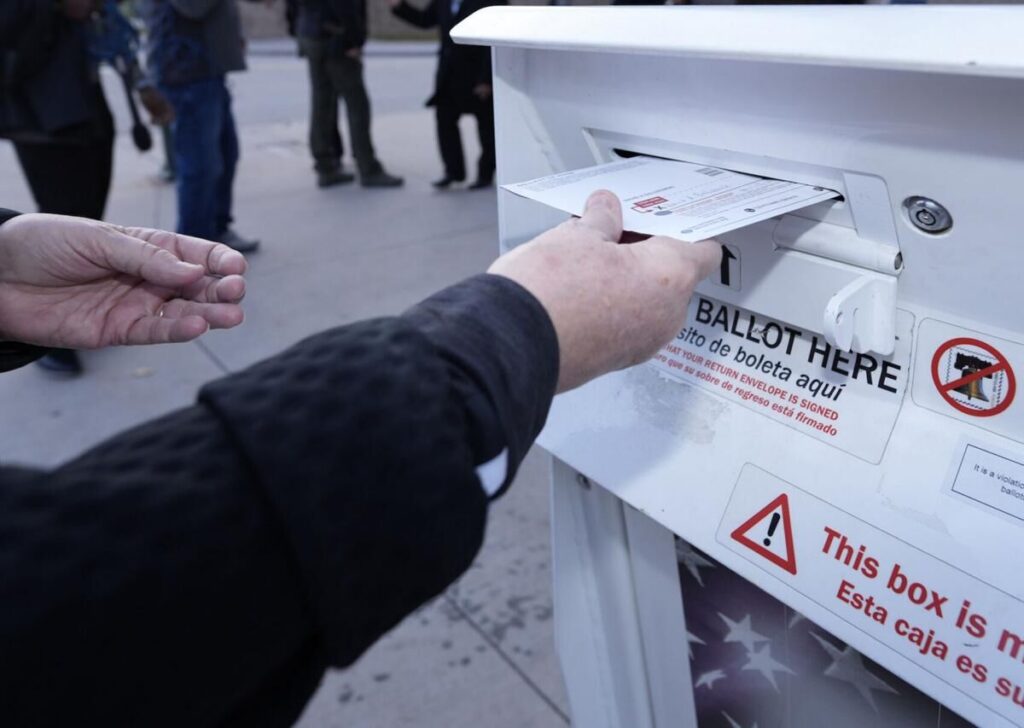
A ballot initiative that would require voters to include additional information on mail-in ballots has qualified for the November election, according to the Secretary of State’s Office. Backed by El Paso County Treasurer Chuck Broerman and former Deputy Secretary of...
Colorado election website error exposes personal data of confidential voters
Marissa Ventrelli
marissa.ventrelli@coloradopolitics.com
Updated 3 days ago
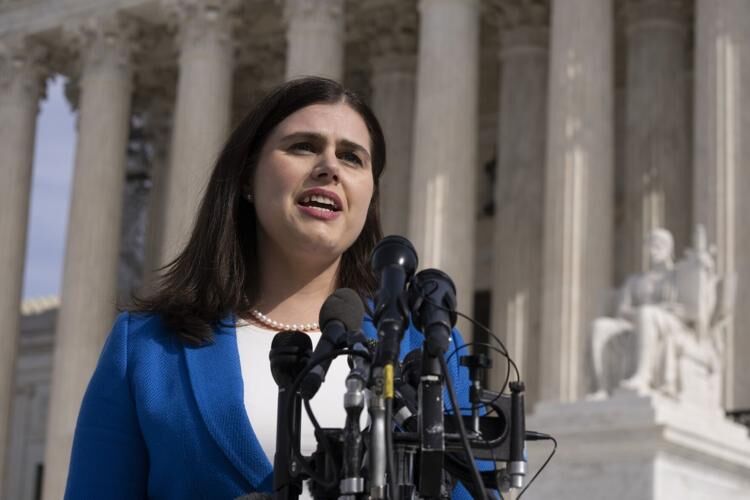
A system update accidentally lifted protections on confidential records in Colorado, exposing dozens of voters’ personal information, according to the Secretary of State’s Office. The limit that normally blocks access to confidential voter profiles was inadvertently disabled during an update...

PUC adds weekly comment after killing private talks
Scott Weiser
scott.weiser@gazette.com
Updated 3 days ago
The Colorado Public Utilities Commission will take public comment at the start of every commissioner’s weekly meeting beginning Sept. 9 as part of its new transparency mandate, the commission announced, expanding a slot previously limited to the second Wednesday of...
10th Circuit overturns framework for sentencing probation violators by 11-1
Michael Karlik
michael.karlik@coloradopolitics.com
Updated 2 days ago
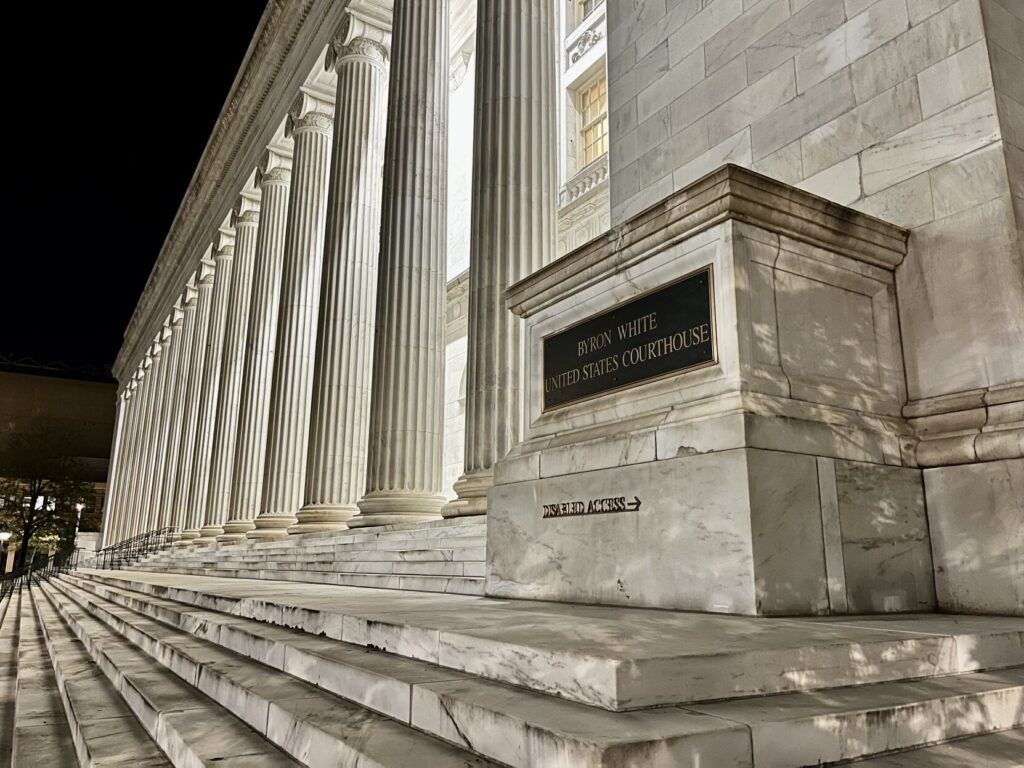
In a rare decision by all 12 of its full-time judges, the Denver-based federal appeals court ruled in a lopsided vote on Friday that one of its members created a sentencing process for probation violators that was out of step...

Federal judge dismisses excessive force lawsuit against Colorado Springs, officer
Michael Karlik
michael.karlik@coloradopolitics.com
Updated 2 days ago
A federal judge concluded last week that a Colorado Springs police officer could not be held liable for shooting a suspect three times after the man menaced two victims with a gun and fled the scene. Al’morion Germany was involved...
PREV
PREVIOUS

State ethics commission delays hearing on complaint against former Gov. John Hickenlooper into May
The Colorado Independent Ethics Commission has again postponed a hearing into the ethics complaint against former Gov. and U.S. Senate Democratic candidate John Hickenlooper. The commission was scheduled to hold the formal hearing on the complaint on April 28, but announced Tuesday it will be moved into May, date to be determined. An interim procedural […]

Denver’s Northside Sustainability Alliance launches ‘Takeout Tuesdays’ to support local restaurants
Nearly 300 north Denver residents and community partners have pledged to participate in “Takeout Tuesdays,” a new initiative to support local restaurants facing financial hardship in the midst of the coronavirus. The campaign, which promotes ordering out one to two times a week, was launched by the Northside Sustainability Alliance, a newly formed group promoting […]