

Denver considers ‘phased relaxation’ of stay-at-home orders, Mayor Hancock says
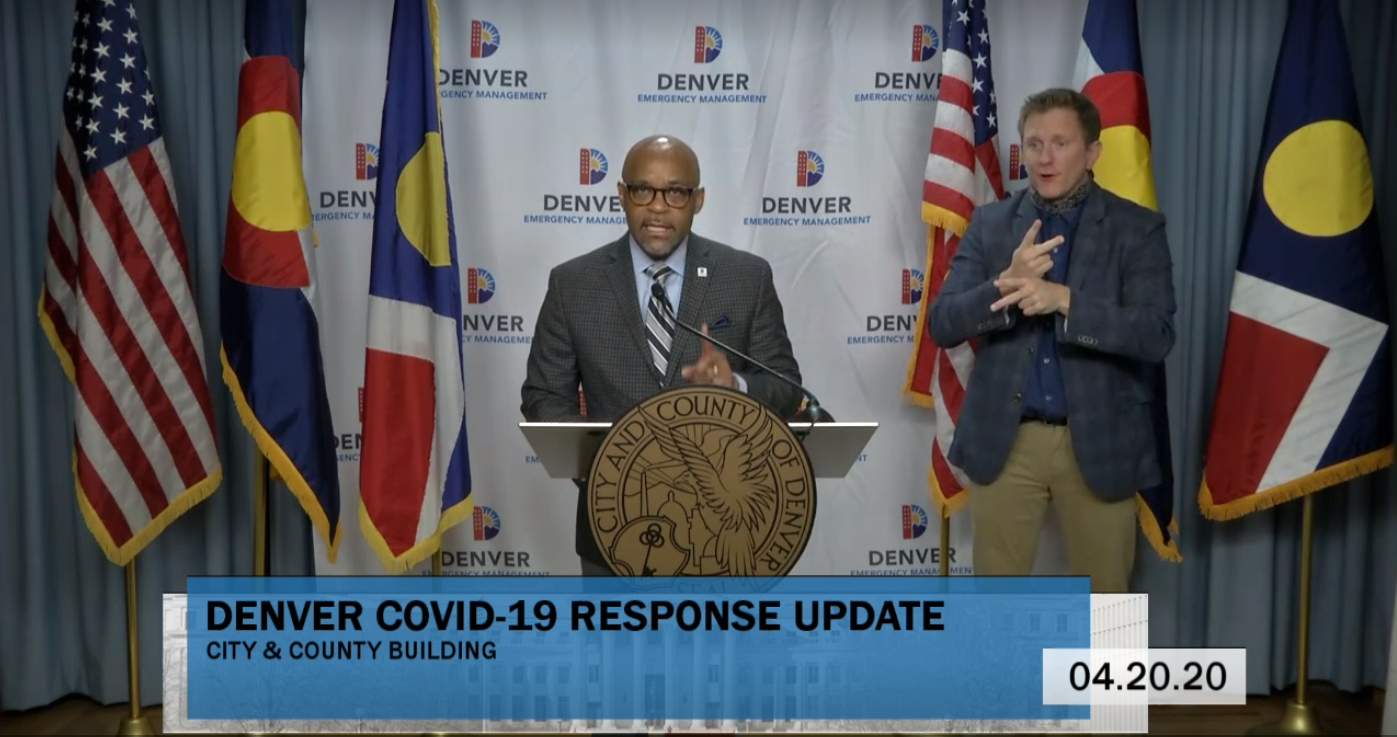
There could be light at the end of the COVID-19 tunnel, Denver Mayor Michael Hancock announced on Monday.
Because current health data is showing that the spread of the virus is slowing, signs Hancock called “very encouraging,” city leaders over the next seven to 10 days will be working closely with Gov. Jared Polis and state health officials to determine if and when the city can begin rolling out a “phased relaxation” of stay-at-home orders.
“Some of our biggest challenges are significantly increasing testing for COVID-19 and then testing for antibodies, as well as retraining and hiring staff for contact tracing,” he said. “Those are the top two criteria that we’ve talked about for weeks now in terms of how we can begin to loosen some of our orders here.”
Currently, the city only has capability to test a few hundred people every week, but that number needs to reach up to 2,000, said Bob McDonald, the executive director of Denver’s public health department.
“We have a ways to go before we reach that,” McDonald said during the Monday morning press conference.
Meanwhile, reopening the city won’t come with a flip of the switch, Hancock made clear.
Currently, the city is under a stay-at-home order until April 30 and a social distancing order that’s set to expire May 11, but Hancock said both could be extended.
“This will be a different summer for those of us here in Denver,” he said. “We should expect, as residents of this city, as visitors to Denver, that these orders will remain in place for the foreseeable future to keep everyone safe.”
What’s critical to the reopening plan, he said, is that it’s “nimble enough so that if, God forbid, we see a spike in cases, we’re able to quickly reinstitute our orders.”
Nearly 100 people in Denver have died from the virus, and more than 1,750 people have tested positive.
Fortunately, Hancock said, Denver’s hospitals “are doing a great job keeping up with demand,” and the number of virus-related hospitalizations appear to be slowing.
About 80% of all hospital beds are available, he said, and about a third of intensive care unit beds are open. Two-thirds of ventilators also are available for use.
“These are very encouraging signs that our efforts to stay at home and physically distance from one another are working,” he said.


What courageous citizenship really looks like | Vince Bzdek
Vince Bzdek
vince.bzdek@gazette.com
Updated 11 hours ago
By Vince Bzdek What exactly is courage? Ernest Hemingway famously called it grace under pressure. Mark Twain wrote that “courage is resistance to fear, mastery of fear — not absence of fear.” C.S. Lewis refined that even more: “Courage is...
The coming election and mischief in the making | SONDERMANN
Eric Sondermann
eric-sondermann@coloradopolitics.com
Updated 3 days ago
America’s tribalism is such these days that we struggle to even agree on the basic rules. Elections have always been hotly contested. As the saying goes, “Politics ain’t beanbag.” The process has long involved elements of nastiness and underhanded conduct....

Colorado Politics Calendar Aug. 31-Sept. 6
Rachael Wright, Special to Colorado Politics
rachael.wright@coloradopolitics.com
Updated 4 days ago
CoPo’s weekly political calendar will help you find political and public-policy events throughout Colorado. It includes candidate and issue campaign events, public policy meetings, court hearings, state and local party conventions, assemblies, debates, rallies, parades, speaking engagements, traveling dignitary appearances,...
Tancredo in Running for Dept. of Ed. Position | A LOOK BACK
Rachael Wright, Special to Colorado Politics
rachael.wright@coloradopolitics.com
Updated 4 days ago
Forty-five years ago this week: “I know that my name has been placed before the Secretary of Education, and I know that I’m one of three or four being considered for the Department of Education’s Region 8,” said state Rep....
Colorado measure adding ID checks to mail-in voting qualifies for ballot
Marissa Ventrelli
marissa.ventrelli@coloradopolitics.com
Updated 1 day ago
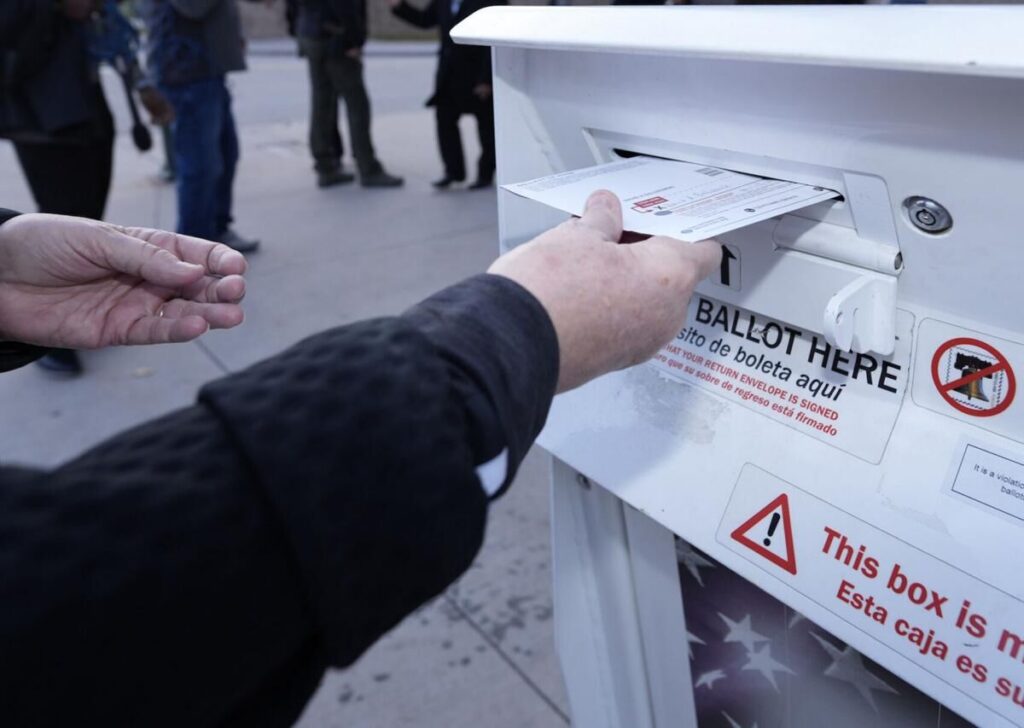
A ballot initiative that would require voters to include additional information on mail-in ballots has qualified for the November election, according to the Secretary of State’s Office. Backed by El Paso County Treasurer Chuck Broerman and former Deputy Secretary of...
Colorado election website error exposes personal data of confidential voters
Marissa Ventrelli
marissa.ventrelli@coloradopolitics.com
Updated 1 day ago
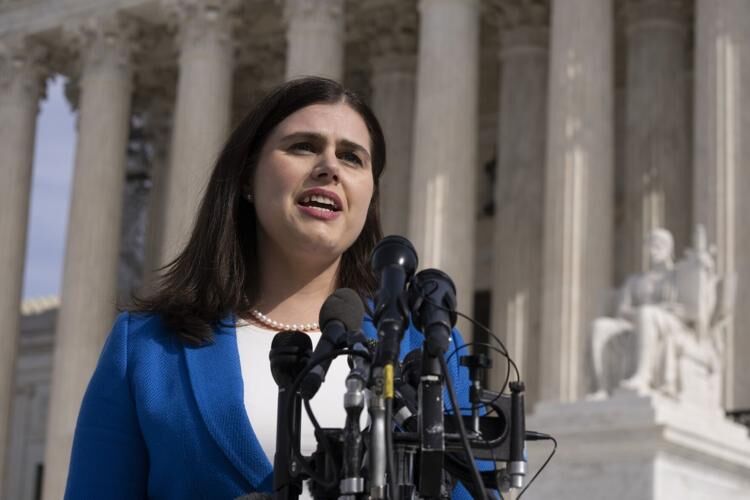
A system update accidentally lifted protections on confidential records in Colorado, exposing dozens of voters’ personal information, according to the Secretary of State’s Office. The limit that normally blocks access to confidential voter profiles was inadvertently disabled during an update...
PUC adds weekly comment after killing private talks
Scott Weiser
scott.weiser@gazette.com
Updated 1 day ago
The Colorado Public Utilities Commission will take public comment at the start of every commissioner’s weekly meeting beginning Sept. 9 as part of its new transparency mandate, the commission announced, expanding a slot previously limited to the second Wednesday of...
10th Circuit overturns framework for sentencing probation violators by 11-1
Michael Karlik
michael.karlik@coloradopolitics.com
Updated 10 hours ago
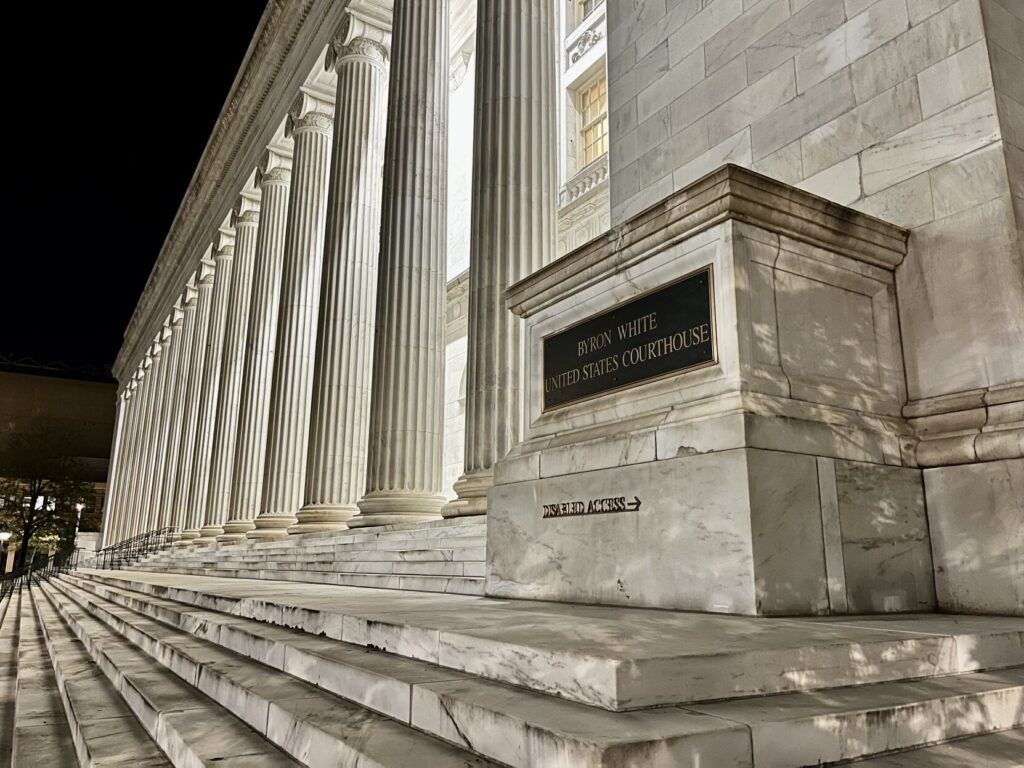
In a rare decision by all 12 of its full-time judges, the Denver-based federal appeals court ruled in a lopsided vote on Friday that one of its members created a sentencing process for probation violators that was out of step...
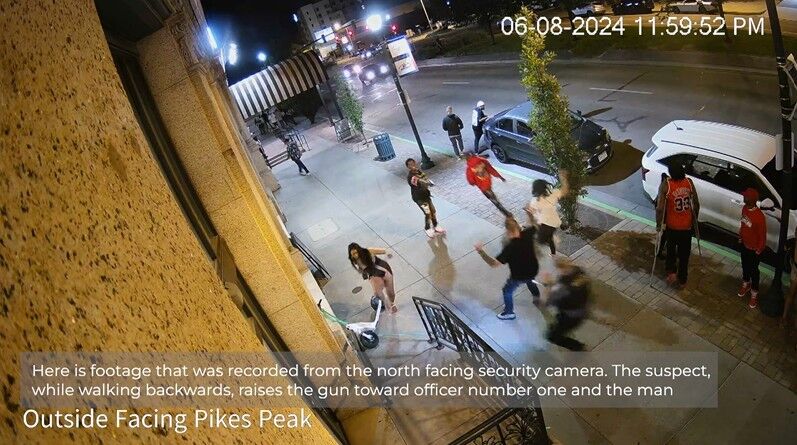
Federal judge dismisses excessive force lawsuit against Colorado Springs, officer
Michael Karlik
michael.karlik@coloradopolitics.com
Updated 15 hours ago
A federal judge concluded last week that a Colorado Springs police officer could not be held liable for shooting a suspect three times after the man menaced two victims with a gun and fled the scene. Al’morion Germany was involved...
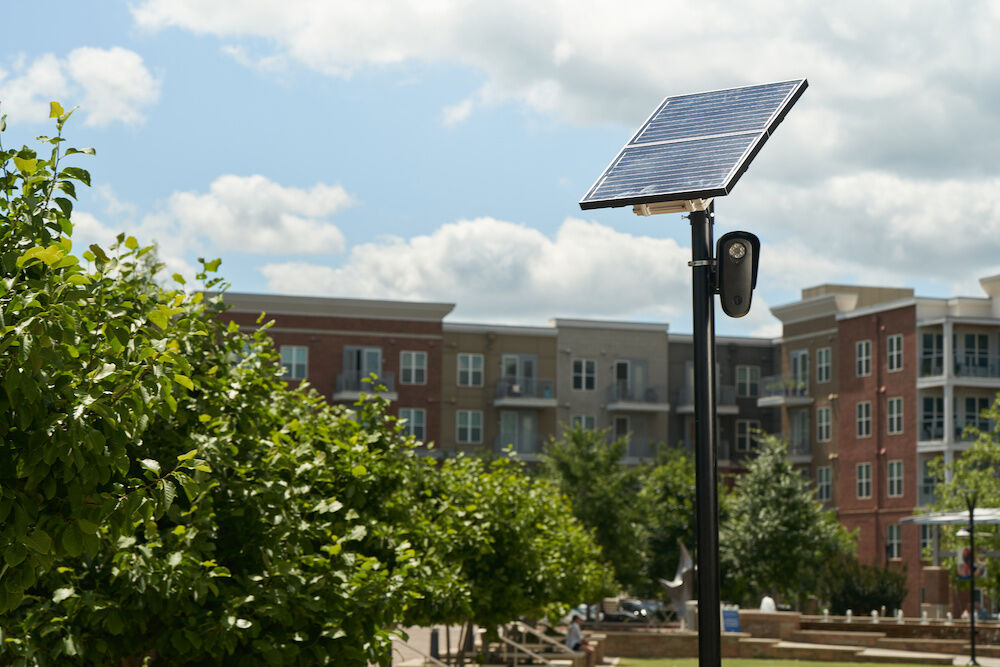
DeFlock started from one man’s curiosity — now Flock cameras are a midterm issue
Claire Carter
claire.carter@washingtonexaminer.com
Updated 1 day ago
Will Freeman wasn’t looking to start a national movement when he launched DeFlock after noticing Flock Safety’s automatic license plate readers along the side of the road. The software engineer was driving across the country in 2024 when the cameras...
PREV
PREVIOUS
All Colorado schools to remain closed for the rest of the academic year
Colorado schools will be closed for the rest of the school year, even as Gov. Jared Polis laid out a plan for a partial reopening of many non-essential businesses. The governor’s office announced the extended closure hours after Polis held a press conference describing a phased approach that would allow many non-essential retail businesses, manufacturing […]

Metro North-Adams County merger aims to navigate road to recovery
North metro Denver is lining up its ducks as it girds for a recovery from Colorado’s bout with COVID-19. Adams County Economic Development and the Metro North Chamber of Commerce announced Monday they have united into a single organization – the Adams County Regional Economic Partnership. “The blending of these two organizations … shows a […]