

Title Board greenlights proposals on preschool funding, changes to initiative procedures

Proposed ballot initiatives that would redirect tobacco tax revenue, create a right to “consumer choice” for natural gas, and clarify the economic impact of future citizen-initiated measures advanced one step closer to the November ballot during Wednesday’s Title Board meeting.
Board members set the title for Initiative 293, which would amend the constitution to divert most money from tobacco taxes and the settlement agreement with tobacco companies to fund a new preschool program. The amount shifted would be $123 million in 2021 and jump to $197 million the following year.
Shayne Madsen, an attorney for the proponents, said that when voters approved Amendment 35 in 2004 to raise tobacco taxes, the goal was “to fund and produce at the state level and local level cessation education and other programs to reduce the use of tobacco. And those programs are held harmless in our measure.”
She added that Initiative 293’s proponents are trying to adhere to the intent of Amendment 35 because since then, the revenues “have been used far and away in different ways than related to tobacco usage or cessation activities.” (Colorado Politics contributor Jon Caldara is one of the initiative’s designated representatives.)
As a result of the proposal, programs that would see their revenues cut include HIV and AIDS prevention, youth violence reduction, visiting nurse services to low-income mothers, and several others. Madsen said that “the legislature is free to reallocate as they see appropriate” to continue funding those efforts.
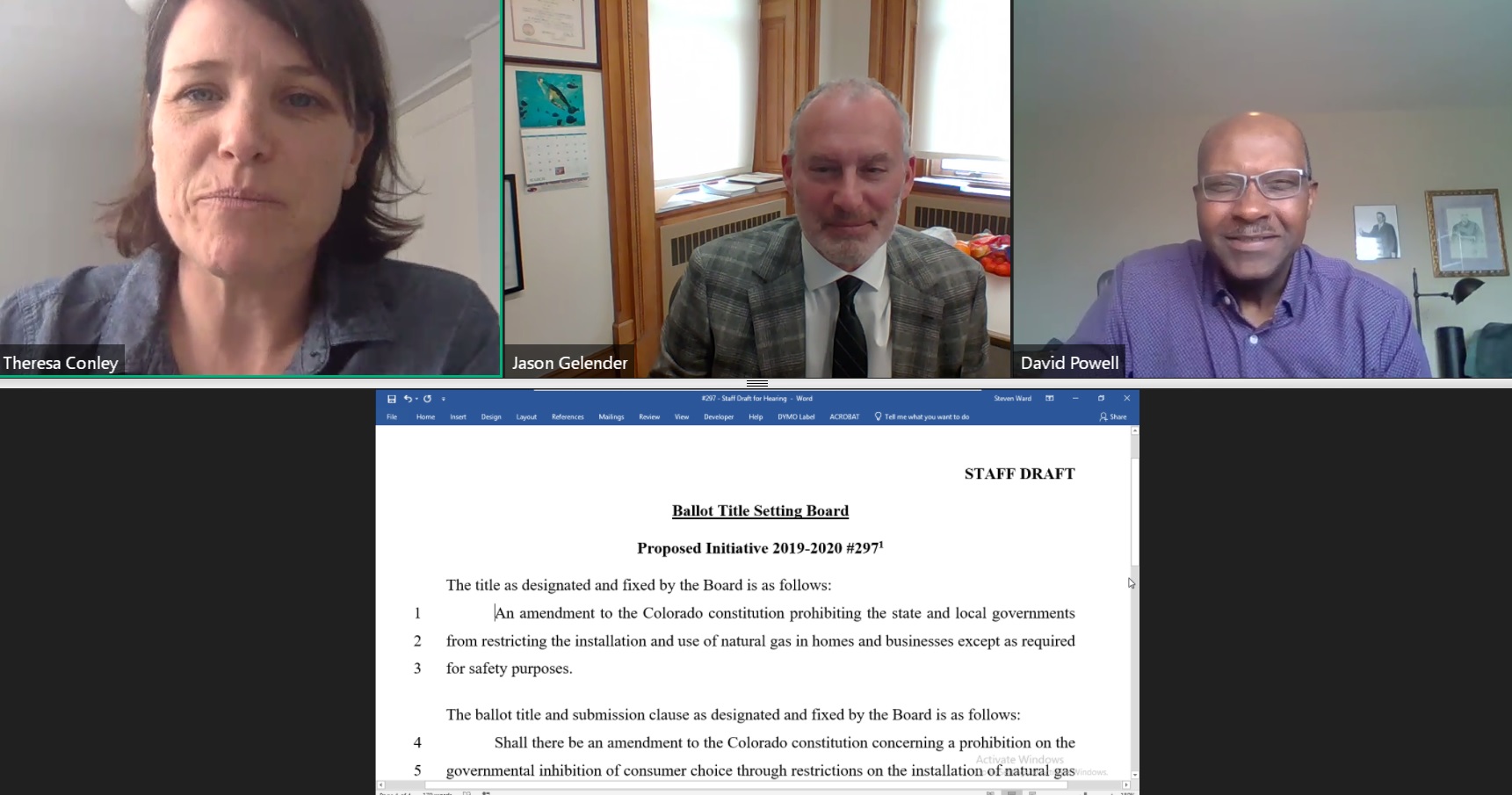
Board Chair Theresa Conley, a representative of Secretary of State Jena Griswold, was concerned about the reach of the measure’s reallocations. “It’s pulling a lot of money over. I don’t know whether those are underused, unutilized programs,” she said, “or if it’s a more significant change.”
The three-member board is charged with setting a title that voters will see on their ballots describing the initiative. Members must consider whether the initiative adheres to a single subject and, if so, approve a title that is brief but encompasses the central features of the proposal.
A pair of initiatives, 284 and 297, would prevent the state and local governments from inhibiting “consumer choice” to install natural gas in homes and businesses. Conley initially called the proposals “vague and overreaching,” and David Powell, the representative of Attorney General Phil Weiser, was unclear what inhibition of consumer choice meant.
Suzanne Staiert, the attorney for the proponents, said that regulations rooted in safety are not the target, but rather policies that deter homeowners and businesses from choosing natural gas.
“Let’s say it’s a higher permit fee, and the permit is $1,000 for natural gas but it’s only $50 for electricity,” she said. “As long as the fee ties back to the need, then it’s not a restriction. But if it’s a restriction or a prohibition because it’s natural gas and they’re trying to discourage natural gas, that’s what we are getting at.”
Staiert clarified that the proposals do not touch on the extraction industry itself. One version of the initiative is a statutory change, meaning that it would not override local governments’ home rule powers over land use and permitting. The other version, a constitutional amendment, would.
“It feels very sweeping,” Conley observed before voting to approve the title.
Staiert also represented the proponents for a second pair of measures, Initiatives 298 and 304, that would require voters to also see an economic impact analysis of initiatives preceding the title. If multiple parties submitted their own analyses about the effects on gross domestic product and employment, the state’s chief economist would summarize those into a single statement, indicating the scope of potential costs and benefits.
Conley was concerned that the summary would take up significant space on a voter’s ballot.
“Say you get five qualifying statements,” she said. “Sometimes these things, if you’re thinking about GDP, one statement could be several sentences….Just thinking about whether or not counties could be able to certify them and print them and what they could look like, I’m just a little surprised that the length of these ballots – it seems like it could be impacted.”
Staiert responded that the chief economist would have discretion to work with counties, and that the product would be a single statement expressing a range of impacts.
“We anticipate that it would be a fairly simple summary,” she added.
In other business, the Title Board advanced three measures that would require voter approval for enterprises, or government-owned businesses, that exceed certain revenue thresholds over an expressed time period. The proposals were virtually identically to three other initiatives previously given title.
Board members also set a title for Initiative 299, which mirrored a previously-approved initiative to create a right to ballot initiative in almost every division of state and local government. The prior measure, Initiative 245, is before the state Supreme Court following an objection that the title failed to inform voters of several key features.
“I understand you want to make this [title] simple, but this is a very sweeping measure,” Conley told Initiative 299’s proponents, an admonition that board members conveyed on each of the previous iterations of the measure.

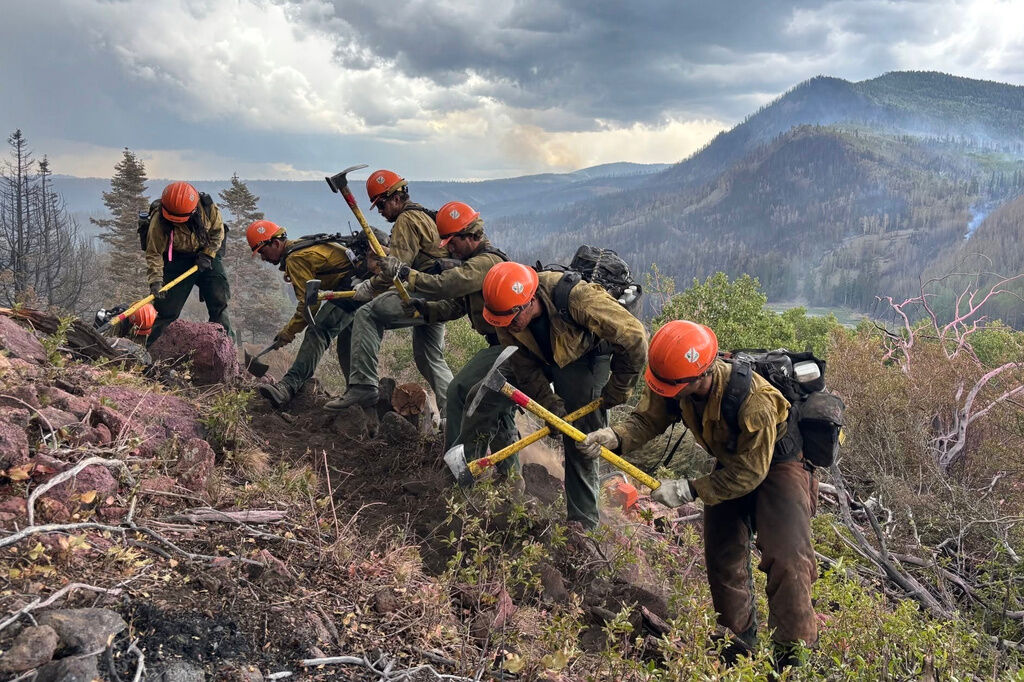
Colorado, Utah mourn after 3 firefighters killed in wildfires
Nicholas Fogleman
nicholas.fogleman@denvergazette.com
Updated 1 hour ago
Gov. Jared Polis on Sunday mourned the deaths of three firefighters killed while battling a wildfire on the Colorado-Utah border, calling the loss a tragedy for the state and the firefighting community. The firefighters died Saturday while responding to a...
Heat, wind and drought conditions spark wildfires across US West | OUT WEST ROUNDUP
Ernest Luning
ernest.luning@coloradopolitics.com
Updated 10 hours ago
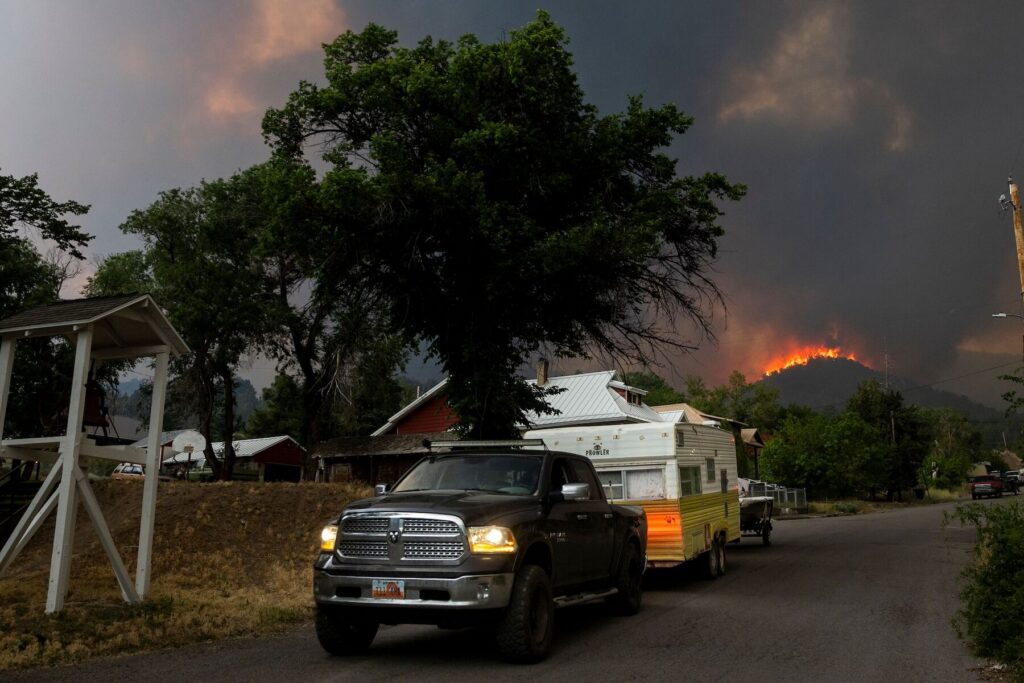
Heat, drought spark wildfires Extreme heat and dry, windy conditions fueled several wildfires in the West on June 21, including an uncontained blaze in Utah that forced the evacuation of a small town southwest of Salt Lake City. The Iron...
Crank challenger Jessica Killin signs on to new centrist Democratic group’s ‘Promise to America’
Ernest Luning
ernest.luning@coloradopolitics.com
Updated 7 hours ago
Jessica Killin, one of the Democrats running in Tuesday’s primary for the chance to challenge U.S. Rep. Jeff Crank in Colorado’s 5th Congressional District, joined with more than a dozen incumbent Democratic lawmakers and candidates this week signing on to...
Colorado Politics Calendar June 29-July 5
Rachael Wright, Special to Colorado Politics
rachael.wright@coloradopolitics.com
Updated 4 days ago
CoPo’s weekly political calendar will help you find political and public-policy events throughout Colorado. It includes candidate and issue campaign events, public policy meetings, court hearings, state and local party conventions, assemblies, debates, rallies, parades, speaking engagements, traveling dignitary appearances,...
Gov. Lamm’s GOP challenger gives insights into his campaign | A LOOK BACK
Rachael Wright, Special to Colorado Politics
rachael.wright@coloradopolitics.com
Updated 4 days ago
Forty-five years ago this week: “I see Gov. (Richard) Lamm is fairly popular in general,” said gubernatorial candidate and state Sen. Bill Hughes, R-Colorado Springs. “ … And he’ll be hard to beat.” Hughes was on a whirlwind campaign trail...
Giving credit to Polis where credit is due | SONDERMANN
Eric Sondermann
eric-sondermann@coloradopolitics.com
Updated 4 days ago
It is an understatement to suggest that Gov. Jared Polis has had a tough couple of months. The bloom was already off the rose and Coloradans were paying far more attention to the choice of his replacement than they were...

Bennet, Hickenlooper to vote against Trump’s 10th Circuit nominee from Colorado
Michael Karlik
michael.karlik@coloradopolitics.com
Updated 1 day ago
Colorado’s two Democratic senators will not vote to confirm President Donald Trump’s nominee to a vacancy on the Denver-based federal appeals court. Trump has selected U.S. District Court Chief Judge Daniel D. Domenico, who he appointed as a federal trial...
Who’s spending in Colorado to get your vote?
Marianne Goodland
marianne.goodland@coloradopolitics.com
Updated 1 day ago
Groups that raise unlimited amounts of money have spent about $20 million in May and June to try and influence Colorado voters’ choices in the upcoming June 30 primaries. By law, these groups cannot coordinate with the candidates they support....

U.S. government declines to oppose multiple challenges to immigration detention in Colorado
Michael Karlik
michael.karlik@coloradopolitics.com
Updated 2 days ago
Multiple federal judges in Colorado granted petitions from people challenging the lawfulness of their immigration detention this week after the government took the unusual step of declining to submit arguments in opposition. Colorado’s federal trial court is facing a flood of...
Tina Peters tells supporters to ‘stand up and fight back’ at Castle Rock event
Marissa Ventrelli
marissa.ventrelli@coloradopolitics.com
Updated 2 days ago
Tina Peters, the former Mesa County clerk recently released from prison, warned supporters that what happened to her could happen to them, too, if they did not “stand up and fight back” at an event at the Douglas County Fairgrounds....
PREV
PREVIOUS

King Soopers to provide $2 per hour "hero bonus"
King Soopers will pay employees in its grocery stores, pharmacies, call centers and supply chain an extra $2 per hour for the time they worked between March 29 and April 18, deemed a “hero bonus.” “Our associates have displayed the true actions of a hero, working tirelessly on the front lines to ensure everyone has […]

Trinidad man settles with city over ADA lawsuit
Following the U.S. Supreme Court’s decision to let a lower court ruling stand, Stephen Hamer announced that he has reached a settlement with the city of Trinidad in a years-long legal battle over the accessibility of sidewalks to those with disabilities. “I am thrilled that Trinidad has committed to a long-term plan to modify its […]