

State Supreme Court affirms judges’ discretion over competency requests
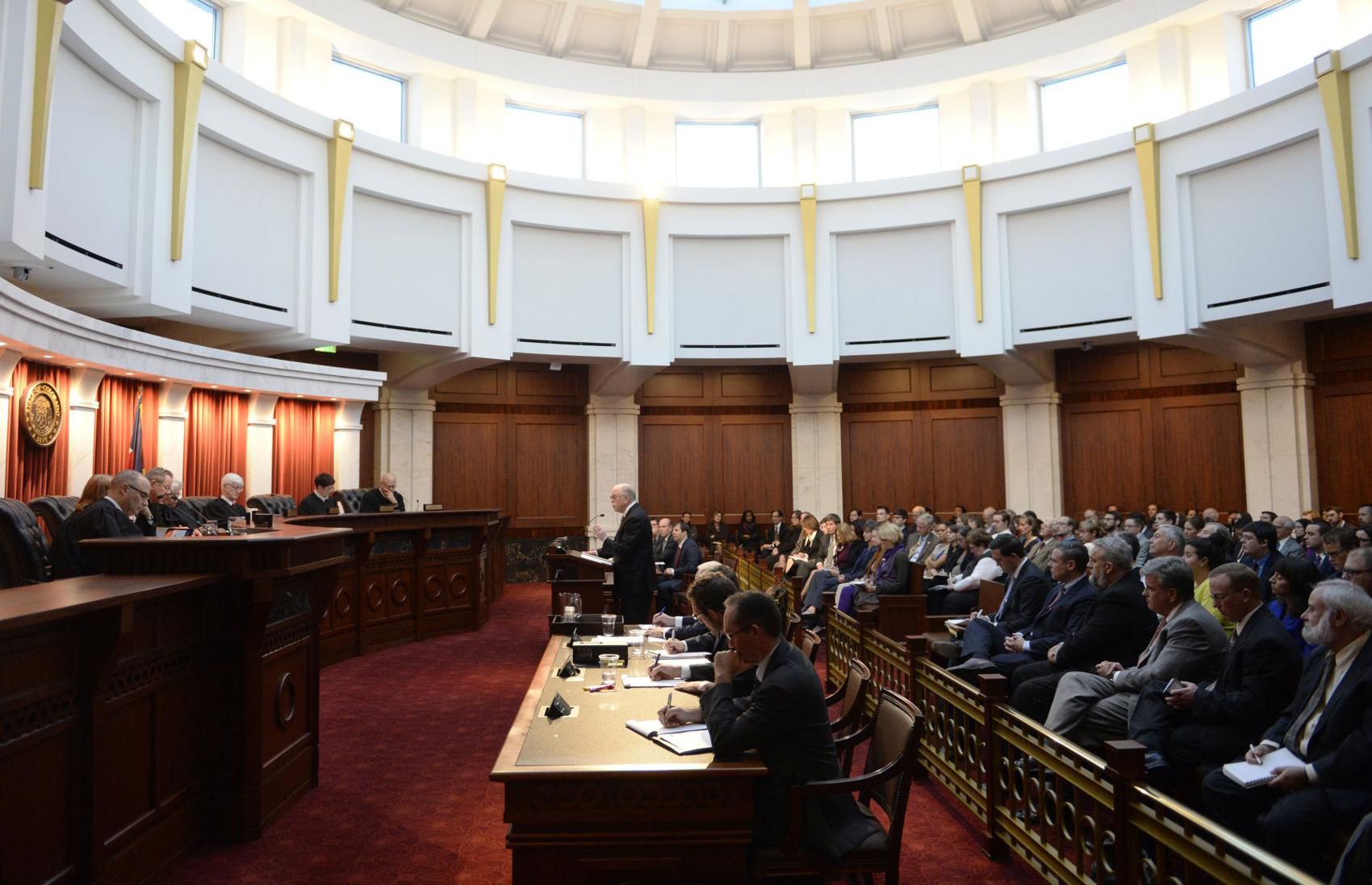
In a 4-3 decision, the Colorado Supreme Court on Monday upheld the denial of a competency hearing in a criminal case plagued by difficult relationships between the defendant and his attorneys.
William Arthur Lindsey defrauded investors of approximately $3 million over 13 months, and received a 2012 indictment for securities fraud and theft. It took three years for Lindsey to stand trial after a series of procedural delays and substitutions in his defense counsel.
Lindsey’s fourth and most recent attorney, David G. Tyler, filed a motion to withdraw due to “irreconcilable differences” with his client. Namely, he said Lindsey had not cooperated with him and had not provided necessary payments or information. Lindsey countered that his lawyer failed to work diligently on the case. The judge denied Tyler’s request.
Shortly before trial, Tyler filed a motion alleging Lindsey was not competent to proceed, raising many of the same concerns as in his withdrawal motion. While Lindsey initially objected to the filing before the judge, after a brief recess in the courtroom he returned and said he agreed with his lawyer.
The judge weighed all relevant factors and concluded that there was no good-faith doubt that Lindsey was “able to act and speak rationally,” and had “a reasonable degree of rational understanding in order to assist in the defense in this case.” The real issue, the judge observed, was lack of cooperation, rather than lack of competency.
Midway through the trial, the defense again attempted to halt proceedings and have Lindsey undergo a competency evaluation. The judge denied the motion and a jury subsequently found Linsey guilty. The Colorado Court of Appeals vacated the conviction after finding that the district judge should have ordered a competency evaluation.
Justice Carlos A. Samour, Jr., writing for the Supreme Court’s majority, found that the actual competency motion was “barren of specific facts supporting a good-faith doubt regarding Lindsey’s competency.” The court listed off numerous ways in which Lindsey failed to cooperate with his lawyer. Transcripts showed that Lindsey “had no difficulty understanding the proceedings, disputing Tyler’s assertions, or communicating his concerns about Tyler’s services.”
Samour concluded that if Lindsey’s argument prevailed, any lawyer with a difficult client could request a competency hearing and put trial courts’ proceedings in turmoil. The majority felt that courts have the discretion to authorize competency hearings, and allowing any such motion to proceed automatically could create a backlog that disadvantages legitimate needs for evaluation.
Justice Melissa Hart, dissenting on behalf of herself and Justices Monica M. Márquez and Richard L. Gabriel, believed that Tyler’s competency motion was proper, and the trial judge did not need to make a ruling on good-faith grounds.
“Confronted with the plain language of this statutory scheme, I do not believe it is appropriate to add a requirement – the judge’s determination that the motion to determine competency was made in good faith – that the legislature did not actually write into the law,” she argued.
The case is The People of the State of Colorado v. William Arthur Lindsey.


Judge rules that Colorado law makes it too hard for parties to bar unaffiliated voters from primaries
Ernest Luning
ernest.luning@coloradopolitics.com
Updated 13 hours ago
A federal judge ruled in favor of the Colorado Republican Party late Tuesday, saying that a portion of the state law that allows unaffiliated voters to cast ballots in party primaries is unconstitutional because it imposes an unrealistic burden on...

10th Circuit upholds regulator’s methodology for Tri-State exit fees
Michael Karlik
michael.karlik@coloradopolitics.com
Updated 15 hours ago
The Denver-based federal appeals court upheld a regulatory agency’s methodology for calculating the fee owed by entities seeking to withdraw from Tri-State Generation and Transmission Association last week. Tri-State is a Westminster-based cooperative that provides and transmits electricity to member...
Federal judge proposes sanctions against Mike Lindell’s lawyers for continued fake citations
Michael Karlik
michael.karlik@coloradopolitics.com
Updated 16 hours ago
A federal judge is once again pursuing sanctions against lawyers for MyPillow CEO Mike Lindell for continuing to cite to court cases that do not exist, likely based on the faulty output of artificial intelligence tools. Last year, a jury...

Front Range cities oppose Democratic proposal to permit lot‑splitting as a path to affordable housing
Marianne Goodland
marianne.goodland@coloradopolitics.com
Updated 16 hours ago
Colorado lawmakers are pressing ahead with a plan to let homeowners split their lots to make room for smaller, more affordable houses. The proposal has drawn sharp opposition from Aurora, Colorado Springs, Denver and other Front Range cities that argue...

Susan Blanco signals views on role of appellate courts in first opinion as Colorado justice
Michael Karlik
michael.karlik@coloradopolitics.com
Updated 20 hours ago
Justice Susan Blanco’s first solo opinion as a new member of the Colorado Supreme Court made clear her view of the guardrails that keep the state’s highest court tethered to the issues it is asked to decide. On Monday, the...

Hegseth features Fort Carson soldiers after returning from Middle East, gives warning on Iran war
Reuters
reuters@gazette.com
Updated 20 hours ago
Defense Secretary Pete Hegseth said on Tuesday the next few days in the war against Iran would be decisive and warned Tehran that the conflict would intensify if it did not make a deal. Hegseth also highlighted his trip to the Middle...

Denver Council narrowly approves deal with Axon
Deborah Grigsby
deborah.smith@denvergazette.com
Updated 24 hours ago
After weeks of delay, the Denver City Council narrowly approved a one-year $150,000 contract with Axon for 50 automated license plate-reading cameras and the necessary system hardware, replacing the city’s former vendor, Flock. The 7-6 vote came during Tuesday’s regular...

Colorado leaders weigh next steps after Supreme Court rejects state ban on ‘conversion therapy’
Marissa Ventrelli
marissa.ventrelli@coloradopolitics.com
Updated 2 days ago
Colorado leaders said they are weighing next steps after the U.S. Supreme Court on Tuesday rejected the state’s ban on “conversion therapy” for children, as critics and supporters cheered or lambasted the ruling. The court’s near-unanimous decision called the Colorado...

Aurora homeless shelter opened too early, CEO says, as mold and plumbing issues emerge
Kyla Pearce
kyla.pearce@gazette.com
Updated 24 hours ago
Aurora’s largest homeless services project launched “way too early,” its CEO told city leaders Tuesday, saying the rushed opening left residents living amid mold, plumbing failures, and other issues inside the former hotel. During Tuesday’s Housing, Neighborhood Services and Redevelopment...

Gov. Polis declares April ‘dig safely month’ to mark 40th anniversary of Colorado 811
Scott Weiser
scott.weiser@gazette.com
Updated 23 hours ago
Gov. Jared Polis declared April 2026 as “Dig Safely Month” in Colorado, an annual observance that this year highlights the 40th anniversary of Colorado 811, the state’s One-Call Notification System. “Before everyone starts their warm weather projects around the house,...
PREV
PREVIOUS
Denver restaurants, bars ordered closed except for delivery, carry-out
In an effort to curb the spread of the new coronavirus, Denver Mayor Michael Hancock on Monday ordered the closure of all restaurants and bars across the city, beginning at 8 a.m. Tuesday and in effect until May 11. Denver residents, however, will still be able to order food through delivery, carry-out and drive-thru services. […]

Bennet co-sponsors bill offering worker protections in case of COVID-19 quarantine
U.S. Sen. Michael Bennet was among the senators on Monday who introduced a bill to protect workers quarantined as a result of the COVID-19 coronavirus from retaliation or discrimination. “Colorado follows the legal doctrine of ’employment-at-will’ which means that, with the exception of anti-discrimination and anti-retaliation laws and contracts to the contrary, employers can fire […]