

Gov. Jared Polis follows up verbal state of emergency order with details contained in written order
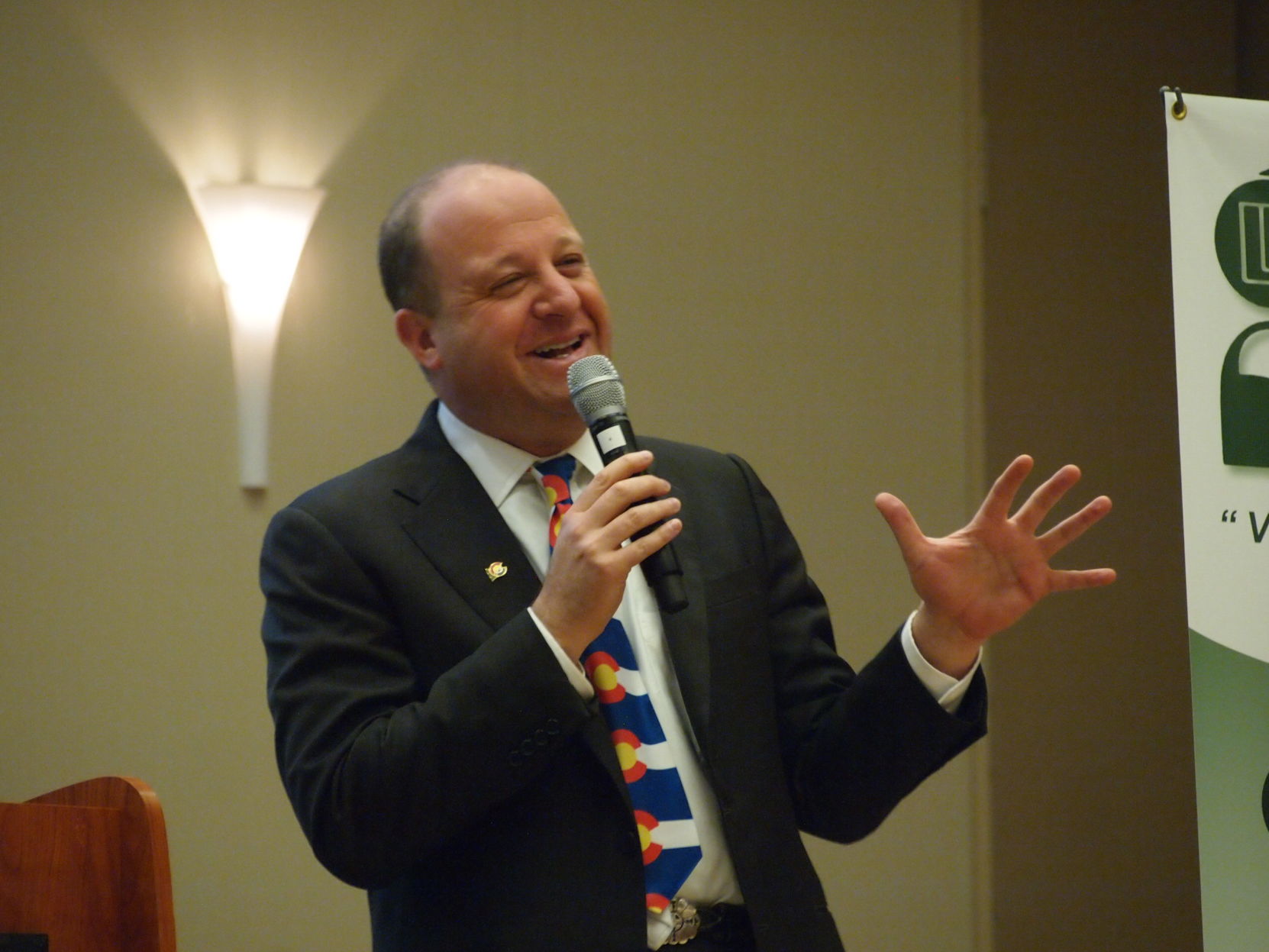
Gov. Jared Polis, after several days of requests from state lawmakers, has issued a written executive order that details the state of emergency that he verbally ordered on Tuesday.
Executive Order D2020-003 notes that the governor activated the National Guard on March 10 to provide “planning, logistics, personnel and facilities” to the state. He also tapped $4 million from the state’s disaster emergency fund for COVID-19 responses.
The order also contains previously-announced measures, such as allowing those over 65 years old to renew driver’s licenses online; ordering the Department of Labor and Employment to conduct emergency rulemaking to ensure that workers in certain industries can receive paid sick leave for up to four days if they are being tested for COVID-19, and orders around paid sick leave for permanent and temporary state employees.
The written order also directs the labor department to identify “additional supports and wage replacement such as access to emergency unemployment assistance,” for those who don’t have access to paid leave.
“These steps are especially important for those who work with vulnerable populations like older Coloradans and those with underlying health issues. When those workers lack access to paid sick leave, it poses a great risk to our ability to protect the public,” Polis said in a statement Thursday.
The industries covered under the labor rulemaking are leisure and hospitality, food services, child care, education at all levels, home health care, operating a nursing home, or operating a community living facility.
The written executive order is dated March 11 and runs out after 30 days, although Polis issued the verbal order on March 10, which is noted in the written document. The governor can extend the executive order if need be.
Gov. Jared Polis’ written executive order on the state of emergency.
Members of the Executive Committee of the Legislative Council, the six top legislative leaders from both parties and in both chambers, while acknowledging that the verbal order was legitimate, asked the governor’s legal counsel on Tuesday for a written order.
Sharon Eubanks, director of the Office of Legislative Legal Services, pointed out during Tuesday’s meeting that then-Gov. John Hickenlooper had issued 121 disaster emergency orders, although none for public health, and all had been in writing. That Polis had not put his Tuesday declaration into writing, she called “unusual.”
She also said that this type of emergency seems to require more notification, given that the General Assembly has the authority to revoke a declaration.

Home rule has protected Colorado cities for over 125 years | Cronin and Loevy
Tom Cronin Bob Loevy
tom-cronin-bob-loevy@coloradopolitics.com
Updated 7 minutes ago
Colorado is currently gripped by a political struggle between the governor plus the legislature in Denver and populous home-rule city governments, mainly on the Front Range, such as Colorado Springs. In the past few years, the legislature has been passing bills that applied to city government policies, which...

Colorado Politics calendar Apr. 13-19
Rachael Wright, Special to Colorado Politics
rachael.wright@coloradopolitics.com
Updated 3 days ago
CoPo’s weekly political calendar will help you find political and public-policy events throughout Colorado. It includes candidate and issue campaign events, public policy meetings, court hearings, state and local party conventions, assemblies, debates, rallies, parades, speaking engagements, traveling dignitary appearances,...
Minority Leader Peña argues against oil and gas bill | A LOOK BACK
Rachael Wright, Special to Colorado Politics
rachael.wright@coloradopolitics.com
Updated 3 days ago
Forty-Five Years Ago This Week: “The Colorado House of Representatives had just given its final approval to House Bill 81-1152, which created $9 million in tax relief to oil and gas companies. But this came “at the expense of local...

A longshot, upset bid and a few quick takes | SONDERMANN
By Eric Sondermann
by-eric-sondermann@coloradopolitics.com
Updated 2 days ago
It is hard to keep up these days. The flow of news often seems overwhelming. Let’s focus today on an unusual congressional race before moving on to a few quick, supplementary observations. Since its creation 54 years ago, Congressional District...
An “-“ends tribute in a week full of “odds” | Capitol M | Week of April 11, 2026
Marianne Goodland
marianne.goodland@coloradopolitics.com
Updated 2 days ago
The lighter side of the Capitol, usually… The decision to read the budget bill — the long bill, which spans 661 pages this year — put a damper on the House’s already less‑than‑festive mood. So Capitol M decided to catch...
What you need to know about the Colorado legislature reading a 661-page bill aloud
Marianne Goodland
marianne.goodland@coloradopolitics.com
Updated 4 hours ago
A rarely used procedural move by a Republican legislator has thrown the Colorado House into an extended slowdown, after she invoked her right to have a nearly 700-page state budget bill read aloud in full. Once Rep. Brandi Bradley, R‑Roxborough...
Literal reading of budget bill complicates Colorado legislators’ plans for GOP assembly
Marianne Goodland
marianne.goodland@coloradopolitics.com
Updated 6 hours ago
Republican Rep. Brandi Bradley’s decision to force the full reading of the state budget — called the “long bill” for its obvious length — has not only slowed House business to a crawl but also disrupted her colleagues’ plans for...
10th Circuit provides guidance on police searches of cloud-based data
Michael Karlik
michael.karlik@coloradopolitics.com
Updated 23 hours ago
The Denver-based federal appeals court provided guidance to law enforcement agencies on Monday for ensuring that searches of cloud-based accounts comply with the Fourth Amendment’s requirements. A three-judge panel of the U.S. Court of Appeals for the 10th Circuit noted...

Inflation jumped to 3.3% in March as Iran war drove up oil prices
Zach Halaschak, Washington Examiner
zach.halaschak.washington.examiner@gazetteedit.wpenginepowered.com
Updated 1 day ago
Inflation spiked in March, rising nine-tenths of a percentage point to 3.3% on the year, as towering energy prices drove up the headline number. The Bureau of Labor Statistics reported the update to the consumer price index on Friday. The...
Colorado GOP votes down bid to ask court to prevent unaffiliated voters from voting in June primary
Ernest Luning
ernest.luning@coloradopolitics.com
Updated 22 hours ago
Members of the Colorado Republican Party’s executive committee rejected a proposal Thursday night to seek an emergency injunction in federal court to prevent unaffiliated voters from participating in the state’s upcoming June primary election. The proposed motion, backed by Colorado...
PREV
PREVIOUS

INSIGHTS | What we spend on roads is overly complicated
Shoshana Lew is winning over critics, but she’s getting a lot of opportunities. The Colorado highway director came west from Rhode Island last year. Mainly, Lew wasn’t saddled with Colorado baggage, the kind in the transportation industry that could fill a Greyhound bus. Gov. Jared Polis likes to point out that Colorado voters have tanked […]

Bennet among senators asking DeVos for coronavirus plans
U.S. Sen. Michael Bennet on Tuesday signed on to a letter with 32 other members of the Democratic caucus asking U.S. Secretary of Education Betsy DeVos to outline the contingency plans her department will make with school districts and colleges in case widespread shutdowns occur in the name of preventing the spread of COVID-19 coronavirus. […]