

TRAIL MIX | Echoes of 1992 in our hit-or-miss primary picks
Colorado voters are casting ballots in the state’s first presidential primary in 20 years this week, after voters decided in 2016 to revive primaries instead of sticking with precinct caucuses to express their preferences for the next occupant of the White House.
The state’s Republican primary doesn’t hold any suspense, with the wildly popular President Donald Trump facing only nominal opposition, but on the Democratic side, at least five of the eight major candidates are vying to make their mark, according to a poll released less than a week before ballots were due.
It remains to be seen, however, whether Colorado’s vote will have a big impact or register much at all on the outcome of the Democratic primary.
With the state’s primary falling on Super Tuesday this year – sharing the date with 14 other states and territories, including six states with delegate counts that outweigh Colorado’s – it’s easy to imagine Colorado’s results getting drowned out by the sheer volume generated by the primaries in California and Texas, which between them will produce nearly 10 times as many pledged delegates to the Democratic National Convention as Colorado.
A few of the trailing candidates are looking to some of the smaller states for breakout moments, with Amy Klobuchar hoping for a win on her home turf in Minnesota and Joe Biden looking to Alabama to certify his strength in a state with a large African American electorate.
It doesn’t help that Colorado has a history of making oddball picks in presidential caucuses and primaries – as often as not anointing the also-rans, sometimes not long before the candidates preferred by Colorado’s voters ended their campaigns, sometimes helping Colorado’s picks dig in for sustained battles.
That’s what happened in the last presidential cycle, when Colorado Democrats turned out in enormous numbers in 2016 to support Bernie Sanders, handing him a win over eventual nominee Hillary Clinton by a 20-point margin.
Sanders maintained his advantage with Colorado’s delegates through counties, congressional districts and the state convention.
That same night, Colorado’s Republicans went all in for Ted Cruz, spurning Donald Trump, the other GOP candidate who had been on a roll in early states.
It was impossible to say who won the 2016 GOP caucuses, however, because state Republicans had decided not to conduct an official straw poll and instead elected delegates to higher conventions, at counties, congressional districts and the state convention. The better-organized Cruz supporters made sure they came out on top by the time all the delegates to the Republican National Convention were elected, prompting Trump to attack Colorado’s process as “rigged.”
As often, over the decades, the state has affirmed the eventual nominees, like when Colorado Democrats overwhelmed caucus locations for the unlikely upstart Barack Obama in 2008, handing Hillary Clinton her first unexpected loss in the state’s caucuses.
The state’s Democrats went with John Kerry in the 2004 caucuses and tapped Al Gore in the 2000 primary, though by the time Colorado’s caucuses rolled around, his main competition, Bill Bradley, had faded. In 1996, Bill Clinton was running without serious opposition and easily prevailed in Colorado’s primary.
It’s been 16 years since Colorado Republicans have gone with the eventual nominee in the party’s caucuses. Prior to Cruz sweeping the delegation in 2016, Colorado gave Rick Santorum a rare win in 2012, the year Mitt Romney won the nomination, and supported Romney in 2008, the year John McCain topped the ticket.
Before that, the state’s GOP, like the Democrats, went with the winners – George W. Bush in the 2004 caucuses and the 2000 primary, Bob Dole in the 1996 primary.
The closest parallel to the 2020 primary could be Colorado’s first presidential primary, in 1992, when the state found itself in a key spot in the calendar and had the ability to anoint a Democratic nominee in a crowded field.
That year, a Republican incumbent was seeking a second term, and a sprawling cast of Democrats were jostling for the chance to keep that from happening.
Unlike Trump, whose approval ratings have held uncannily steady in a narrow band between a low of about 37% and a high of about 44%, President George H.W. Bush’s approval ratings were all over the map during his first term, though they only fell below 50% a couple months before Colorado’s primary. During the first three years of his term, starting in 1989, Bush’s approval bounced around from the 60s to the 80s, rising as high as 89% in early March 1991 in the wake of victory in the Persian Gulf War.
Bush won the Colorado primary, though not without feisty challenger Patrick Buchanan taking around a third of the vote in what turned out to be an early sign that Bush the elder might not be headed for an easy re-election.
With the economy on the skids, Bush’s popularity took a slide starting in 1992, falling below 50% for the first time at the beginning of the year, eventually hitting a low of 29% right after Bill Clinton was nominated that summer.
Into that environment five major Democratic candidates had thrown their hats – former Sen. Paul Tsongas of Massachusetts, Sen. Tom Harkin of Iowa, former Gov. Jerry Brown of California, Gov. Bill Clinton of Arkansas and Sen. Bob Kerrey of Nebraska. A dozen other Democrats had considered running but decided against it, most prominently Gov. Mario Cuomo of New York, who appeared to be the presumptive front-runner for most of the previous year.
In 1992, Colorado was among the first clump of early states voting in a primary after the Iowa caucuses and the New Hampshire primary, on March 3, along with Georgia and Maryland. Idaho, Minnesota, Utah and Washington were also holding caucuses that day, on what came to be called Mini Super Tuesday, a week before proper Super Tuesday when 11 states, including delegate-rich Texas, Florida and Massachusetts, were to cast their votes.
After holding caucuses for decades, Colorado modernized its presidential selection process at the insistent urging of state Sen. Mike Bird, a Colorado Springs Republican and Colorado College economics professor, according to Colorado political gurus and Bird’s fellow CC professors Tom Cronin and Bob Loevy, who write a weekly column for The Gazette.
Back then, nearly all the votes were cast on Election Day, and for a few weeks Colorado was as close as it could get to the center of the political universe.
There was no clear front-runner among the Democrats, since neither Iowa nor New Hampshire had been decisive, with Harkins winning his home state and Tsongas winning the neighboring state that might as well have been his home, in mostly uncontested contests. Heading into the elections in Colorado and the other states, the main development had been Clinton’s unexpectedly strong finish in New Hampshire after the first of many scandals threatened to derail his campaign, granting him the “Comeback Kid” nickname that would come to define his political career.
Colorado’s primary turned into a tight contest between Clinton, Tsongas and Brown, with all the trappings of a neck-and-neck-and-neck race to the finish – daily tracking polls that plotted the candidates’ fortunes, the airwaves flooded with ads, mostly from the well-heeled Tsongas campaign, the Clintons pressing the flesh all over the Denver metro area, and Brown pitching his vision of living in harmony with the environment mostly at college campuses.
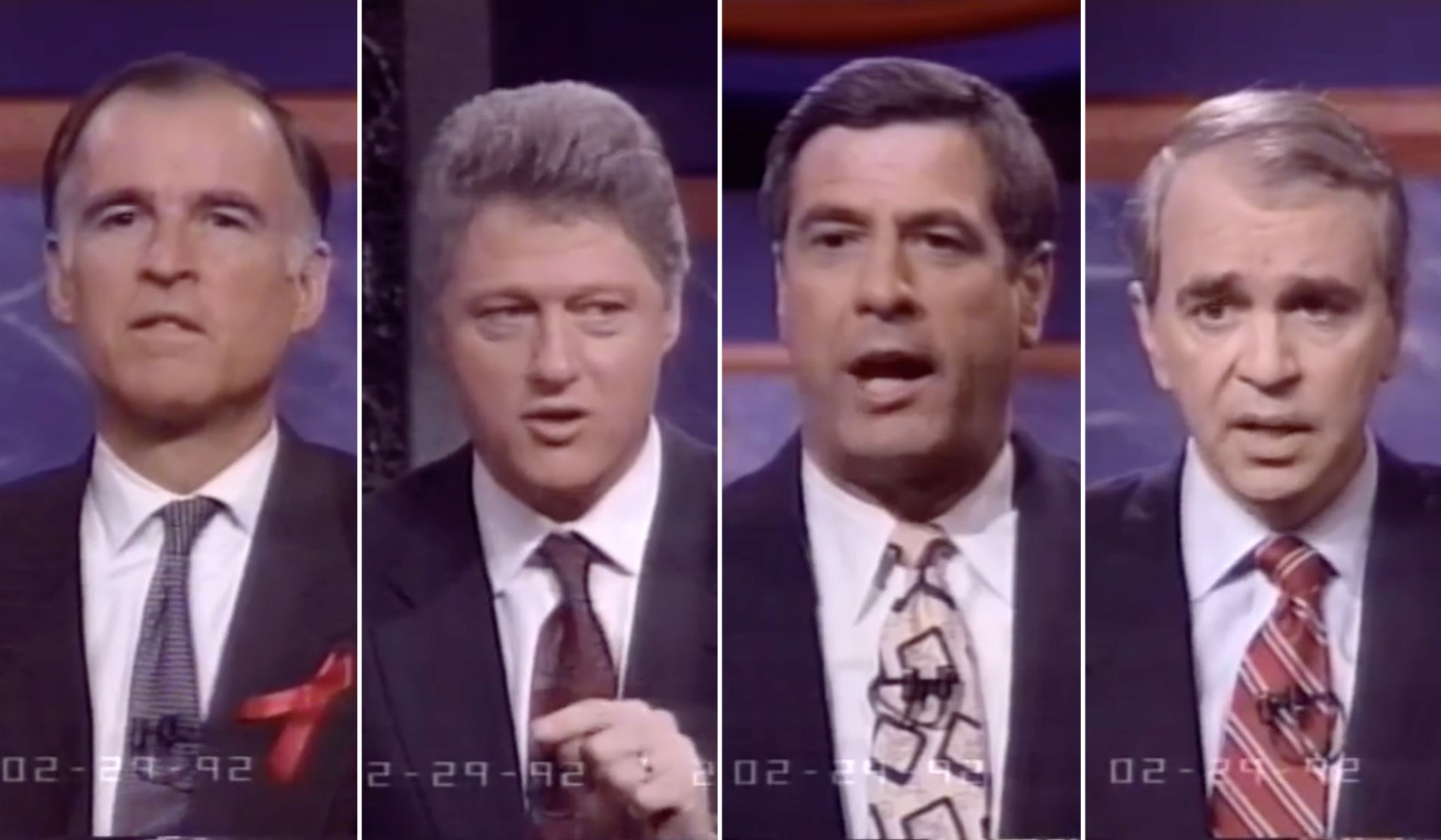
The main event was a televised debate sponsored by KUSA-TV and the Rocky Mountain News on Saturday, Feb. 29, when the five Democrats sparred for 90 minutes under the calm moderation of KUSA anchor Ed Sardella. A rotating panel of questioners, including Rocky Mountain News editor Jay Ambrose, the Rocky’s editorial page editor Vince Carroll and KUSA reporter Jennifer Romm, kept the candidates on their toes.
When the dust had settled and the votes were counted, Brown surged from third place in the daily tracking polls to a narrow win, with 29% of the vote to Clinton’s 27% and Tsongas’ 26%. That same night, Clinton won in Georgia and Tsongas won in Maryland, leaving the race muddled until the next week, when a string of wins by Clinton across the South began to solidify his path to the nomination.


Fentanyl sentencing, tax overhauls and transgender‑related issues anchor Colorado’s 14 ballot measures
Marissa Ventrelli
marissa.ventrelli@coloradopolitics.com
Updated 3 hours ago
Fourteen statewide ballot measures await Colorado voters this November, offering a mix of criminal justice crackdowns, tax overhauls, and constitutional tweaks that ensure no one will accuse the ballot of being boring this year. Colorado’s 14 statewide ballot measures match...
House adopts Republican U.S. Rep. Jeff Crank’s resolution condemning socialism, mostly along party lines
Ernest Luning
ernest.luning@coloradopolitics.com
Updated 1 day ago
The U.S. House on Tuesday approved a resolution sponsored by U.S. Rep. Jeff Crank to condemn socialism in a largely party-line vote that the Colorado Republican characterized as a chance for lawmakers to “stand firm” against an ideology making inroads...
Capped or graduated income tax rate? Colorado voters to decide
Marianne Goodland
marianne.goodland@coloradopolitics.com
Updated 1 day ago
The proposal to create income tax tiers — which would replace Colorado’s flat rate — has been certified for the November general election ballot, setting the stage for a major showdown between two competing forces seeking to define the parameters of...
Colorado redistricting limits measure heads to November ballot
Marissa Ventrelli
marissa.ventrelli@coloradopolitics.com
Updated 3 days ago
A proposed constitutional amendment that would prohibit Colorado’s congressional maps from being redrawn outside of election cycles has qualified for the November ballot, according to the Secretary of State’s Office. Under Initiative No. 256, redistricting changes for the 2028 election...
Colorado state House Democratic candidate arrested in Texas for public intoxication
Marianne Goodland
marianne.goodland@coloradopolitics.com
Updated 3 days ago
A Democrat from Lone Tree who is running for a House seat was arrested in Texas in May on charges of public intoxication and resisting arrest. Christian Schilder, the Democrat, is challenging Rep. Brandi Bradley, the Republican incumbent, in the...
Initiative asks Colorado voters to approve 8th-grade reading standard for ballot measures
Marissa Ventrelli
marissa.ventrelli@coloradopolitics.com
Updated 3 days ago
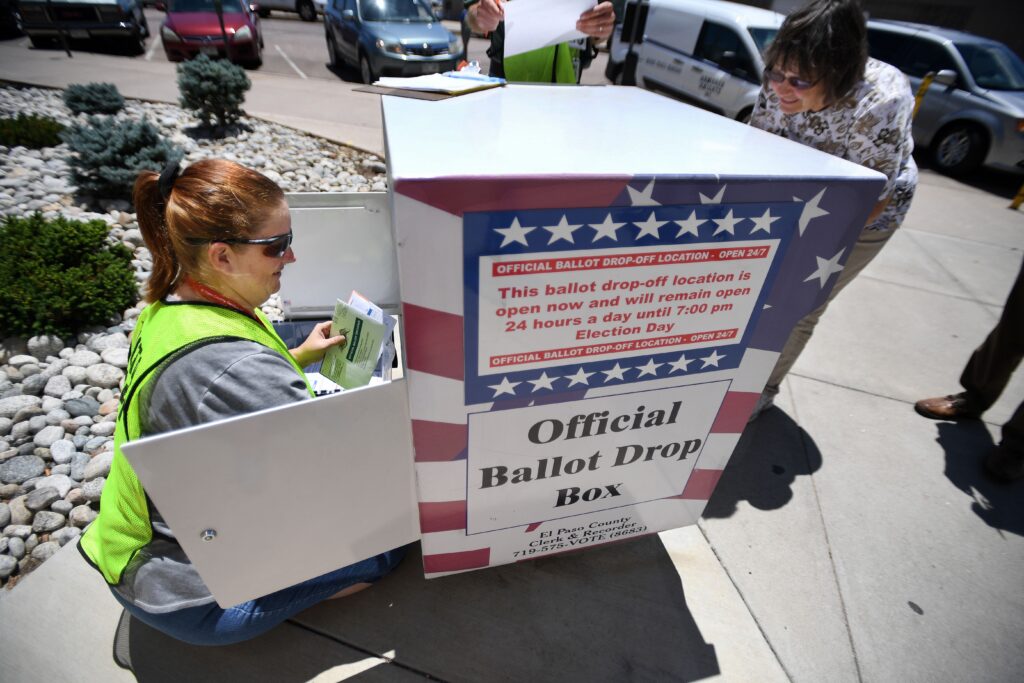
A ballot initiative that would require all ballot measures to be written at no higher than an eighth-grade reading level has qualified for the November ballot, according to the Colorado Secretary of State’s Office. The measure, backed by the group...
Colorado measure adding ID checks to mail-in voting qualifies for ballot
Marissa Ventrelli
marissa.ventrelli@coloradopolitics.com
Updated 6 days ago
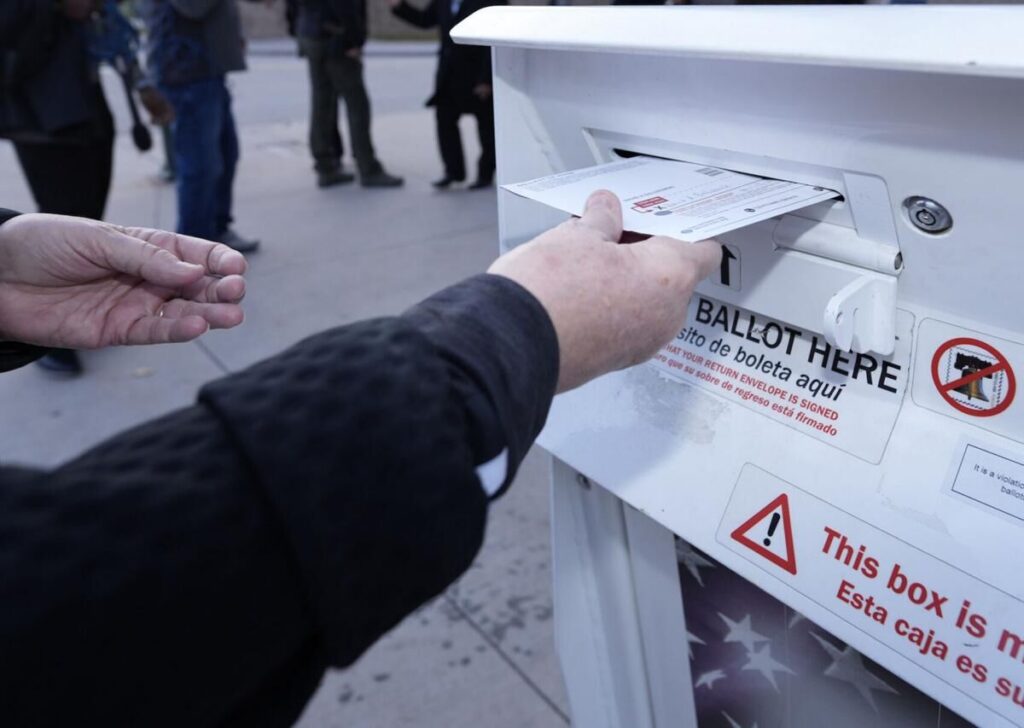
A ballot initiative that would require voters to include additional information on mail-in ballots has qualified for the November election, according to the Secretary of State’s Office. Backed by El Paso County Treasurer Chuck Broerman and former Deputy Secretary of...
Colorado election website error exposes personal data of confidential voters
Marissa Ventrelli
marissa.ventrelli@coloradopolitics.com
Updated 6 days ago
A system update accidentally lifted protections on confidential records in Colorado, exposing dozens of voters’ personal information, according to the Secretary of State’s Office. The limit that normally blocks access to confidential voter profiles was inadvertently disabled during an update...
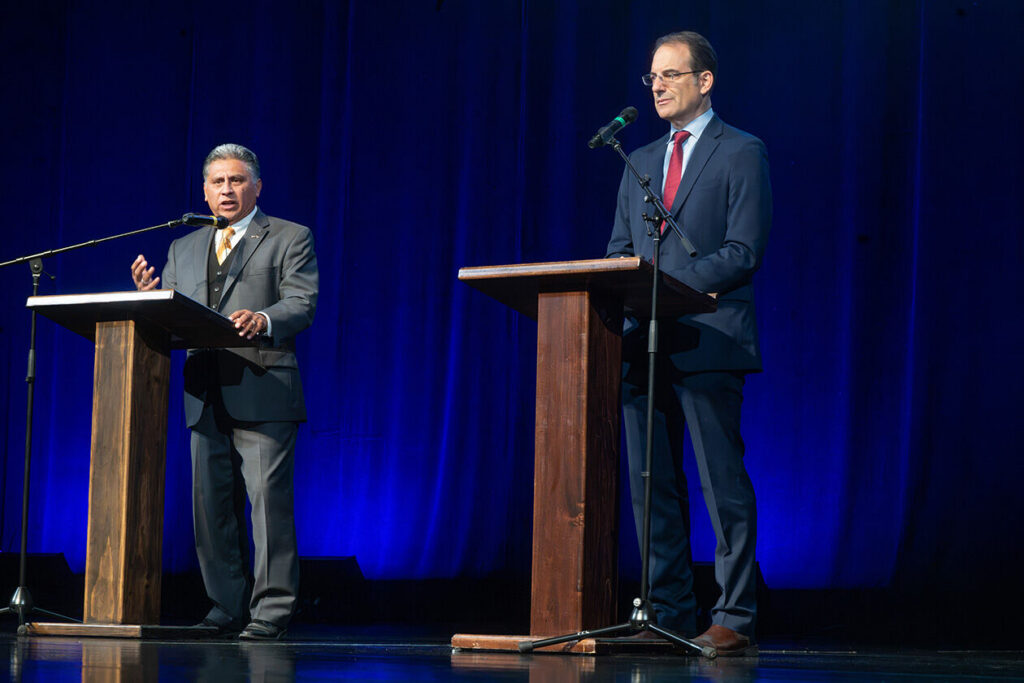
Gubernatorial candidates Phil Weiser, Greg Lopez spar, as Marx skips debate
Deborah Grigsby
deborah.smith@denvergazette.com
Updated 6 days ago
Two of the candidates for Colorado governor squared off in a televised debate on Thursday night, when Attorney General Phil Weiser, the Democratic nominee, and former U.S. Rep. Greg Lopez, an unaffiliated candidate, delved into issues of affordability, data center...
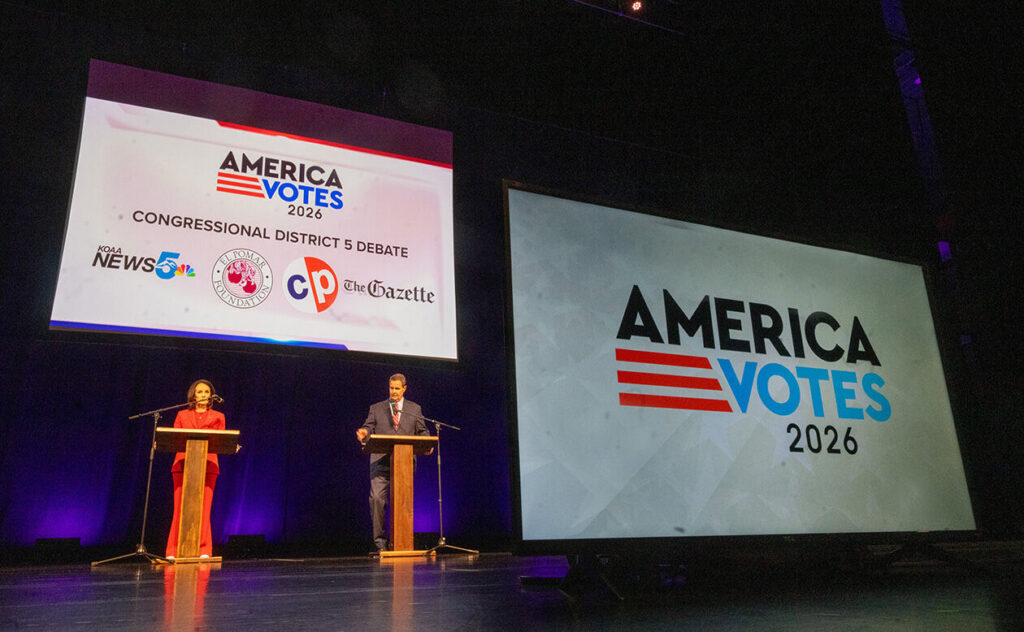
Troops, taxes, war dominate Colorado’s 5th CD debate between Jeff Crank, Jessica Killin
Deborah Grigsby
deborah.smith@denvergazette.com
Updated 6 days ago
Republican U.S. Rep. Jeff Crank and Democratic challenger Jessica Killin on Thursday night clashed over the war in Iran, the federal budget and healthcare when they took the stage in Colorado Springs for a sold-out debate in the race to...
PREV
PREVIOUS
Traveling circus ban headed to the state House, after party-line Senate vote
A bill to keep animals out of traveling circuses – unless it’s in a rodeo, stock show, wildlife sanctuary or other educational event – is on its way to the state House after the Senate passed it on a party line vote this week. Senate Bill 125 is called the Traveling Exotic Animal Safety Protection Act. […]

USDA to delay key provisions of hemp rule
The U.S. Department of Agriculture announced on Thursday that it will delay the implementation of certain provisions of its new hemp-growing regulations, pointing to hindrances that the requirements could pose to the relatively new industry. “USDA is exercising its enforcement discretion to adopt a temporary policy of non-enforcement for producers,” the department wrote. The non-enforcement […]