

Denver’s efforts to curb marijuana use among teens may be working, survey shows

A new survey found that fewer teenagers in Denver are getting high, thanks in part to a city-led campaign to discourage underage use of marijuana.
Of more than 530 Denver teenagers between ages 13 and 17, the survey found that, among youth aware of the High Costs campaign, 81% of them said the campaign dissuaded them from consuming cannabis, compared with 75% the previous year.
The High Costs campaign strays away from scare tactics and instead focuses on providing facts to promote “accurate peer-to-peer conversations” among teens.
“The verdict is in that scare tactics are not successful with youth,” Denver Excise and Licenses Executive Director Ashley Kilroy said in a statement. “Providing them facts about marijuana is the most effective youth education and prevention approach.”
The survey, conducted by the Colorado-based data analytics group Insights Lab, found that the number of teenage males who are not current marijuana users jumped from 73% in 2018 to 82% last year.
However, the number of young females who aren’t current cannabis consumers decreased from 90% in 2018 to 87% last year.
Nevertheless, campaign spokesman Eric Escudero said in November, “I can say with a lot of confidence that this is one, if not the most, successful public education campaigns in the history of Denver.”
Denver’s Excise and Licenses department works to deliver accurate information around pot policies and marijuana’s health effects where kids already are: on their cell phones and computers. The High Costs campaign, which first rolled out in December 2017, is advertised on mobile gaming apps, YouTube, social media music-streaming platforms, such as Pandora, and more.
The 2020 budget for Denver’s marijuana education and prevention fund is $1.6 million. That money comes from the retail marijuana special sales tax, which sets aside more than $30 million in 2020 for such issues as affordable housing, public health, regulation, enforcement and education.
The High Costs campaign represents 28% of the $1.6 million budget. The largest chunk of those funds, at 47%, goes to the Office of Children’s Affairs, whose primary focus is youth prevention.
“After Denver became the first major city in America with legalized retail marijuana, many other cities and states turned to us to learn how we successfully regulated marijuana,” Kilroy said. “Hopefully, our continued success educating youth to wait until they are of legal age to consume can also serve as an example for other communities across the U.S.”


Colorado to get $615M from Meta child safety settlement
Thelma Grimes
thelma.grimes@coloradopolitics.com
Updated 10 hours ago
The parent company of Facebook and Instagram will pay hundreds of millions of dollars to Colorado, part of an $18 billion multistate deal, in which the company also agreed to adopt extensive child-safety changes to its operations. The settlement ended...

Colorado’s chief federal judge orders return of wrongfully deported man, second judge to explore ‘series’ of violations
Michael Karlik
michael.karlik@coloradopolitics.com
Updated 13 hours ago
Colorado’s chief federal judge took the extraordinary step of directing the government on Tuesday to do everything it can to return a man it deported in violation of his order. At the same time, Colorado’s chief magistrate judge has set...

Counties warn CPW that new comment limits sideline local governments
Marianne Goodland
marianne.goodland@coloradopolitics.com
Updated 11 hours ago
The September meeting of the Colorado Parks and Wildlife Commission will feature newly revised public‑comment rules — changes introduced by chair Jay Tutchton of Bent County, who announced them without first discussing the revisions publicly with the rest of the...

Controversial two-bag furbearer limit heads to CPW meeting under legal threat
Marianne Goodland
marianne.goodland@coloradopolitics.com
Updated 11 hours ago
Next week’s Colorado Parks and Wildlife Commission meeting in La Junta is likely to open under the cloud of threatened legal action. Safari Club International and the Sportsmen’s Alliance Foundation warned the commission this month that its July vote imposing...

Golden to pay $155,000 to fired city manager
Matt Kyle
matt.kyle@denvergazette.com
Updated 12 hours ago
The Golden City Council on Tuesday approved a roughly $155,000 severance payout to former city manager Scott Vargo, who was fired earlier this month following a “racist incident” at a city fire station. The payout is part of a separation...

Trump says the US doesn’t need Canada. America’s economy says otherwise.
The Associated Press
the-associated-press@coloradopolitics.com
Updated 14 hours ago
TORONTO (AP) — U.S. President Donald Trump says his country does not need Canada. But every day, roughly 4 million barrels of Canadian crude oil flow south, helping fuel American cars, trucks and airplanes and supply U.S. industry. And oil...

USPS ballot rule faces lawsuit from Colorado, other states
Thelma Grimes
thelma.grimes@coloradopolitics.com
Updated 12 hours ago
Colorado, along with 25 other states, filed a lawsuit against the U.S. Postal Service to challenge a new rule that seeks to restrict the mailing of ballots to American citizens in an eligible voters list. Colorado relies heavily on the...

FDA approves landmark pancreatic cancer drug that’s shown to improve survival
The Associated Press
the-associated-press@coloradopolitics.com
Updated 14 hours ago
WASHINGTON (AP) — The Food and Drug Administration on Wednesday approved a groundbreaking new drug for advanced pancreatic cancer, offering U.S. patients a more effective treatment against one of the deadliest types of cancer. FDA officials gave expedited approval to...

Trump defends pause on beef tariffs: Prices are ‘coming down very rapidly’
Naomi Lim
naomi-lim@coloradopolitics.com
Updated 16 hours ago
President Donald Trump defended his decision to pause tariffs on some beef imports, even as Republicans criticize the decision. “Prices are coming down very rapidly, and now beef is starting to come down,” Trump told The Glenn Beck Program on...
Denver murder, assault convictions reversed due to faulty jury instructions
Michael Karlik
michael.karlik@coloradopolitics.com
Updated 11 hours ago
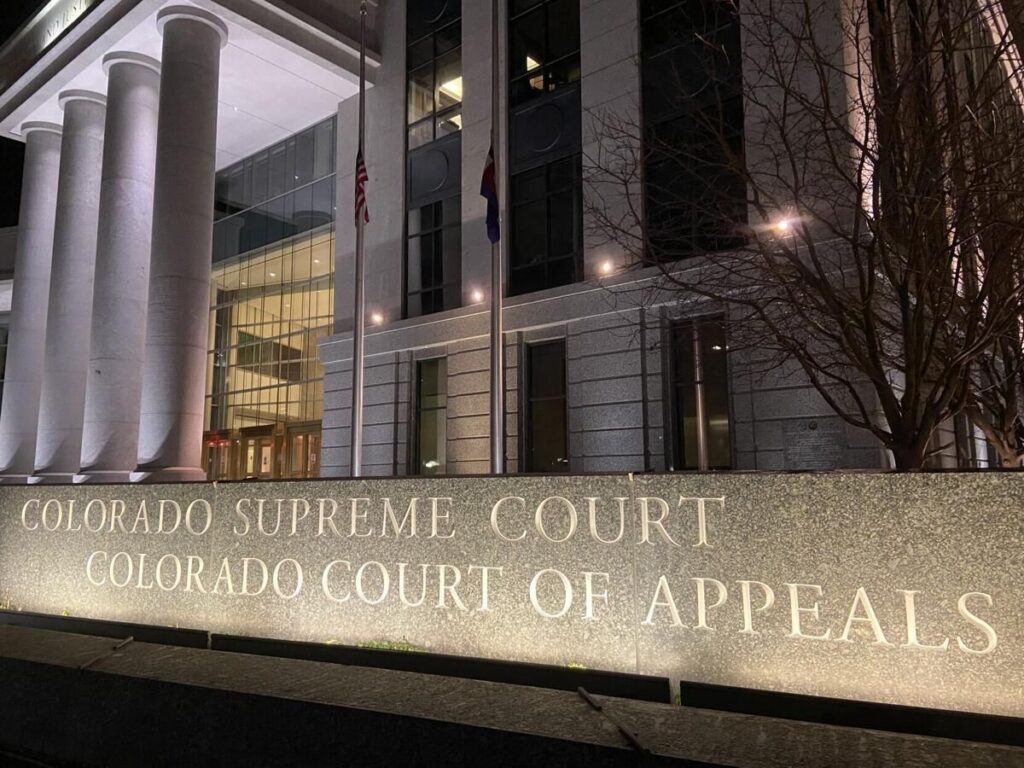
Colorado’s second-highest court reversed a defendant’s convictions for murder and assault last week after concluding a Denver judge incorrectly omitted key jury instructions that could have affected the verdict and sentencing. Stephen C. Swainson fatally stabbed Israel Casillas in downtown...
PREV
PREVIOUS

Two House lawmakers explain their death penalty votes
On one side of the issue: Rep. Rod Bockenfeld, R-Adams County, represents the district where the last murder that earned an inmate an execution in Colorado took place. Bockenfeld was the only member of the House Republican caucus who did not speak during the two days of debate on repealing Colorado’s death penalty, as contained […]

Tipton challenger Lauren Boebert says she'll 'stand up to all the left-wing lunatics' in new TV ad
Describing herself as an ally of President Donald Trump, Republican congressional candidate Lauren Boebert is launching the first TV ad in her primary challenge against U.S. Rep. Scott Tipton, who co-chairs Trump’s re-election campaign in Colorado. “I want you to send me to Congress to help President Trump build the wall, drain the swamp and stand […]