

THE PODIUM | Heralded ‘campaign finance reform’ backfired big on Colorado

Beware the unintended consequences of good intentions. Case study No. 1: campaign finance reform.
In 2004, my boss, Gov. Bill Owens, stopped by on my last day to wish me well on my campaign for the state House. He asked me how the recent passage of campaign finance reform, via Amendment 27 to the Colorado Constitution, impacted my campaign?
“Oh, it’s not so bad,” I said, “I don’t really know anyone who can give me $400, so a $400 limit is not really impacting me.” The Governor, a prolific fundraiser, chuckled at my 29-year old naiveté. The joke was indeed on me when the “Gang of Four” liberal zillionaires (Pat Stryker, Tim Gill, Rutt Bridges and Jared Polis) targeted my House race that fall. I scraped together about $40,000 – less than each “Gang” member individually contributed to the campaign against me. I won that race, barely, but lost two years later in a race so expensive the New York Times noted it in a front-page article.
The presidential election year of 2004 marked the first campaign season following the passage of Amendment 27 and it’s federal big brother, the McCain-Feingold Act. Compared to 2000, campaign donations in Colorado went down, right? Actually, they increased by 75 percent, from $21 million to $35 million (https://www.opensecrets.org/states/summary.php?state=CO&cycle=2004). In 2016, Colorado donors spent a combined $75 million. (It’s actually worse than that. Campaign finance watchdogs cannot possibly track funding to the 501c groups that serve as partisan infrastructure but exist outside of traditional campaign laws).
If campaign finance reform proponents intended to limit contributions and make them more transparent, they failed so spectacularly they should admit that a repeal is better than the monster they created. But the consequences on our political process are far worse than simply a flood of television ads. Campaign finance reform is directly responsible for our deteriorating political climate in three ways:
- Weak political parties invite stronger factions. When political parties cannot fund basic functions like canvassing and advocacy, they lean on interest groups with targeted agendas and bottomless bank accounts. That debt is expected to be paid in full during the next legislative session.
- Legislative leaders consolidate power, killing bipartisanship. Legislators might raise thousands of dollars, but legislative leaders are expected to raise millions. The dollars are so significant that committee chairmen and rank-and-file members have almost no choice but to fall in line. No aisle-crossing allowed, the stakes are too high.
- Existential threats become a fundraising tool. What motivates a million dollar donor? The demise of their value system, or perhaps the defeat of the other side’s value system. Don’t mistake this point to be cynical: existential threats to a liberal or conservative donor’s worldview truly are on the rise. For instance, when a candidate threatens to destroy an industry, that presents a real threat to the targeted industry, and a huge opportunity to activists who want to see it happen. Not only does the money swell – so does the rhetoric, in a self-fueling cycle that eventually ends in defeat, exhaustion and shattered norms.
The solution lies far beyond the purview of campaign finance rules, to reforming the size and scope of government itself.
The notorious 1920s thief Willie Sutton was asked why he robbed banks. “Because that’s where the money is,” he answered. Today, our government hosts the coveted vault. Campaign finance reform is a fool’s errand when government’s power is greater than ever. Subsidies, regulations, taxes and laws deeply impact every aspect of our lives.
Only reducing the power and presence of government in our daily lives can lower the political thermostat and restore our national sanity. Otherwise, the stakes are so high that no-one can afford to lose.
Matt Knoedler is a former state legislator, lobbyist and political adviser. He is co-founder and CEO of CaucusRoom.com, an online community for conservatives to gather, encourage and mobilize locally.


Thank God for Wyoming — the un-Colorado | Jon Caldara
Jon Caldara
jon-caldara@coloradopolitics.com
Updated 15 hours ago
Years ago, I interviewed a Canadian health-care broker whose job was helping his countrymen escape their own failing system. When their “free” health care turned into “free to wait until you die,” he’d save his clients by routing them to...
It’s time to let unaffiliated voters caucus | Vince Bzdek
Vince Bzdek
vince.bzdek@gazette.com
Updated 18 hours ago
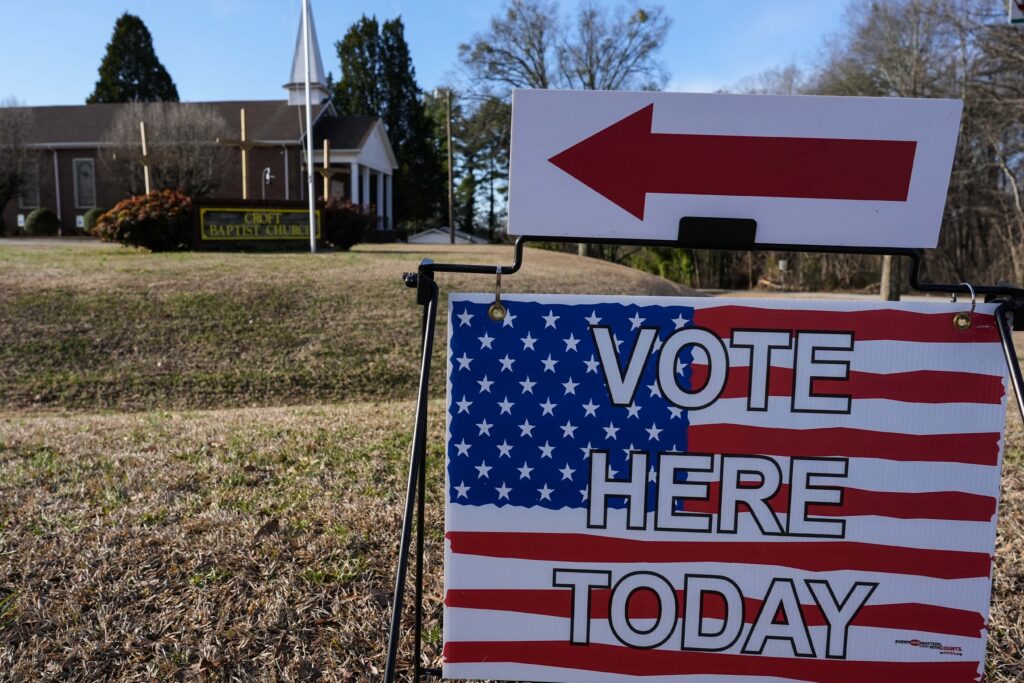
There’s no getting around it: Colorado’s 3,000 county caucuses, which just wrapped up recently, left half the electorate out in the cold. Since unaffiliated voters now make up 51% of all Colorado voters, a majority of Colorado electors are barred...
A Mile High, again: Capitol M | Week of March 21, 2026
Marianne Goodland
marianne.goodland@coloradopolitics.com
Updated 4 days ago
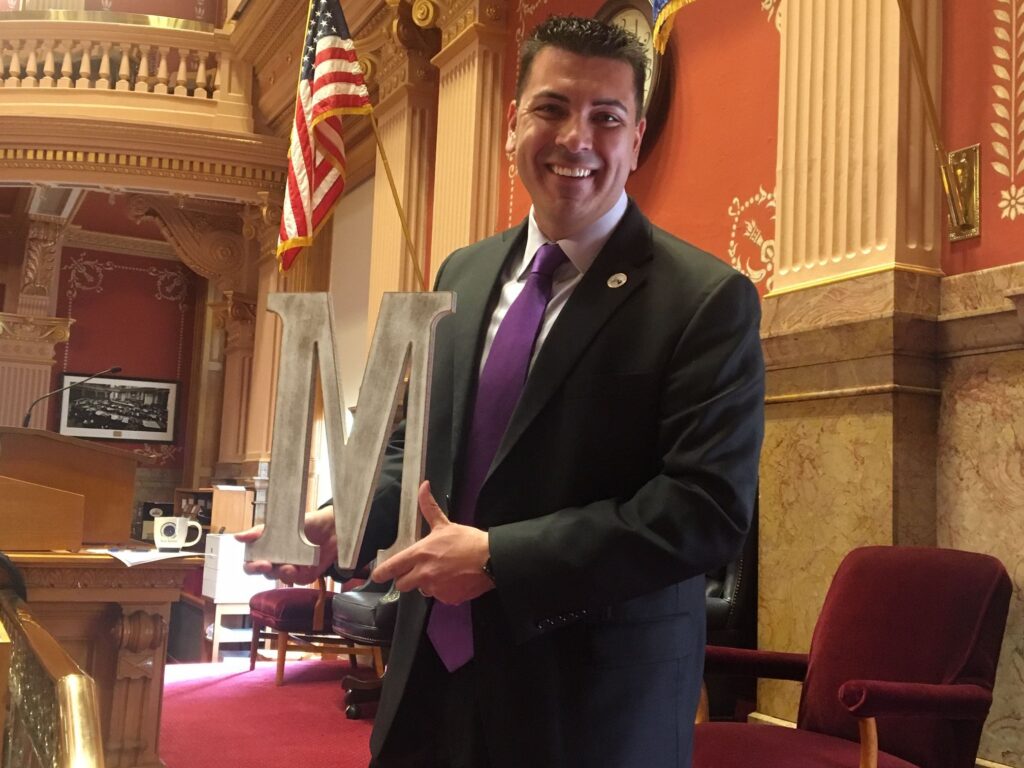
The lighter side of the Capitol, usually…. Local Journalism Day, except they forgot their very own local journalists. The state Senate on Thursday, March 19, passed a resolution recognizing Local Journalism Day. Everyone voted for it, which is good, because...

The insular bubble of caucuses and assemblies | SONDERMANN
Eric Sondermann
eric-sondermann@coloradopolitics.com
Updated 3 days ago
Nearly 30 years ago, then-Federal Reserve Chairman Alan Greenspan coined the term “irrational exuberance” to describe the overheated stock market. That descriptive phrase could also apply to much of the political realm. The hype in politics often grossly exceeds the...
Set appropriate state guidelines for critical surveillance technology | OPINION
Colorado Politics
colorado-politics@coloradopolitics.com
Updated 2 days ago
I admit it: I’m worried. I’m hearing a lot about surveillance in the public arena. I hear cameras are capturing my car’s license plate wherever I drive, my face as I go in and out of stores and health facilities,...
Puppy trafficking bill promotes inhumane breeding | OPINION
Colorado Politics
colorado-politics@coloradopolitics.com
Updated 2 days ago
By Patti Strand When Justice Thurgood Marshall wrote “The Constitution does not prohibit legislatures from enacting stupid laws,” he wasn’t wrong. He was referring to a political process sometimes ill-equipped to deal with complex issues that require subject-matter knowledge and a...
Penny wise but foolish by pounds | Paula Noonan
Paula Noonan
paula-noonan@coloradopolitics.com
Updated 3 days ago
Leadership of Colorado’s General Assembly introduced the Fiscal Year 2026-2027 Legislative Appropriation bill, HB26-1333, at $75.72 million. That will be the budget to run the state legislature next year. About $74 million comes out of the general fund and the...

Proposed evictions bill fails to improve housing stability while threatening higher rents | OPINION
Colorado Politics
colorado-politics@coloradopolitics.com
Updated 3 days ago
No landlord wants to evict a tenant for non-payment of rent. That is true for large housing providers, small “mom-and-pop” owners and nonprofit housing rental providers alike. Evictions are financially and emotionally costly for everyone involved. But when rent goes unpaid, eviction...

Prevention works — invest in conflict prevention with wolves | FEEDBACK
Colorado Politics
colorado-politics@coloradopolitics.com
Updated 3 days ago
The recent reporting on Colorado’s wolf depredation payouts exceeding $700,000 highlights a critical problem with the current approach to wolf recovery: current mainstream systems focus on compensation and ineffective reactive non-lethals. These systems are not designed to prevent conflict but attempts...
Colorado’s clean-energy future must be affordable for older adults | PODIUM
Colorado Politics
colorado-politics@coloradopolitics.com
Updated 3 days ago
By Jason DeaBueno Last winter, one of the older adults we serve at Silver Key shared something that has stayed with me. She begun turning her heat down at night — not because she wanted to, but because she was...
PREV
PREVIOUS

OPINION: For the sake of attainable housing, don't roll back reforms on construction liability
Herb Atchison Though we each represent unique cities with their own character, tradition and amenities, there are two points on which we all agree. First, Colorado is simply the best place to live, work and raise a family. Second, in order to maintain our high quality of life, we have to provide attainable housing. Just […]

NOONAN | Is it the Dems who've gone radical? (Hint: Check out the GOP's bills)
Paula Noonan GOP leaders and pundits have roasted Democratic legislators for their progressive agenda at the statehouse since last year. Republicans have put up their agenda to appeal to voters in the general election. It’s an eye opener. Here’s some context about who voting Coloradans are. Between the end of November and the end of […]