

State Supreme Court decides in sheriff’s deputy’s embezzlement, misconduct case

The Colorado Supreme Court on Tuesday decided that a sheriff’s deputy did not embezzle public property by purchasing seized firearms in the department’s possession, but that he did commit official misconduct.
William Steven Berry was a Lake County sheriff’s deputy in 2013 when he responded to a domestic violence incident in a home. The department confiscated four firearms and stored them in an evidence locker at the sheriff’s office. After the case reached a resolution, the district attorney instructed the department to “release or destroy” the weapons.
The owner of the firearms was an undocumented immigrant who was deported after the domestic violence case. Therefore, returning the weapons to him was not possible. The other party to the case was also undocumented, and departmental policy forbade the release of firearms in that circumstance.
When Berry saw the victim, he asked her if he could buy the four guns for $500 in lieu of the department destroying them. When she inquired if it was legal, Berry responded, “I am a representative of the law. If I come to you with this offer, it is because I can do it, because it is legal.” They completed the transaction and, while it is unclear how Berry got ahold of the guns, he gained possession. Berry gave one gun away, tried to sell a second, and kept two.
For his actions, a jury convicted him of embezzlement of public property and first-degree official misconduct.
“We conclude that because the firearms were not public property, Berry’s actions did not violate the statutory prohibition against embezzlement of public property,” wrote Justice Melissa Hart in the opinion.
Pointing out that there is no definition of “public property” in the statute relating to embezzlement, Hart concluded that it constitutes “something owned by the city, town, or state.” She wrote that the sheriff’s office possessed, but did not own the property. Because its owner was a private individual, Berry did not embezzle public property.
To the question of whether Berry committed misconduct by using his official position to arrange for sale of the firearms, the court decided that he could only obtain the weapons by virtue of his public office.
“We conclude,” wrote Hart, “that the prohibition on official misconduct should be broadly construed to include circumstances, like those here, in which an official uses the opportunities presented by his or her office to engage in improper conduct.”
Justice Carlos A. Samour Jr. dissented in part, believing that the court’s majority had defined public property too narrowly. Consequently, he asked how a government entity was supposed to prove that it “owns” property.
“Must the state have title or some other form of official ownership paperwork? What if it’s property the state owns, but as to which no title or ownership paperwork exists or can be obtained?” he asked. “What if it’s something leased by the state? What if it’s something for which the state is currently making payments? … Does the state actually own any money when it holds such money in trust for taxpayers or when it has been directed by the legislature to spend that money in a particular fashion or for the benefit of specific entities or individuals?”
Samour mentioned the hypothetical example of two public employees, one of whom uses a city-owned truck to run personal errands while the other uses a city-leased vehicle for the same purpose.
“Under the majority’s rationale, the former employee can be charged with embezzlement, but the latter employee cannot,” he said.
The case is The People of the State of Colorado v. William Steven Berry.



Colorado justices agree to review insurance question that has divided federal judges
Michael Karlik
michael.karlik@coloradopolitics.com
Updated 7 hours ago
The Colorado Supreme Court granted a federal judge’s request on Friday to address an issue that has produced conflicting answers in policyholders’ lawsuits against insurance companies over unpaid benefits. “Parties (and judges) regularly spend undue time and money fighting in...

Farmworker overtime bill advances after lengthy debate in Colorado Senate
Marianne Goodland
marianne.goodland@coloradopolitics.com
Updated 8 hours ago
The Colorado Senate on Tuesday narrowly advanced a bill to raise the overtime threshold for agricultural workers, defeating more than a dozen amendments from its leading opponent aimed at rewriting the measure. As introduced, Senate Bill 121 would raise the threshold for...
Colorado Agriculture Day: A feast for the ears, eyes and stomachs
Marianne Goodland
marianne.goodland@coloradopolitics.com
Updated 6 hours ago
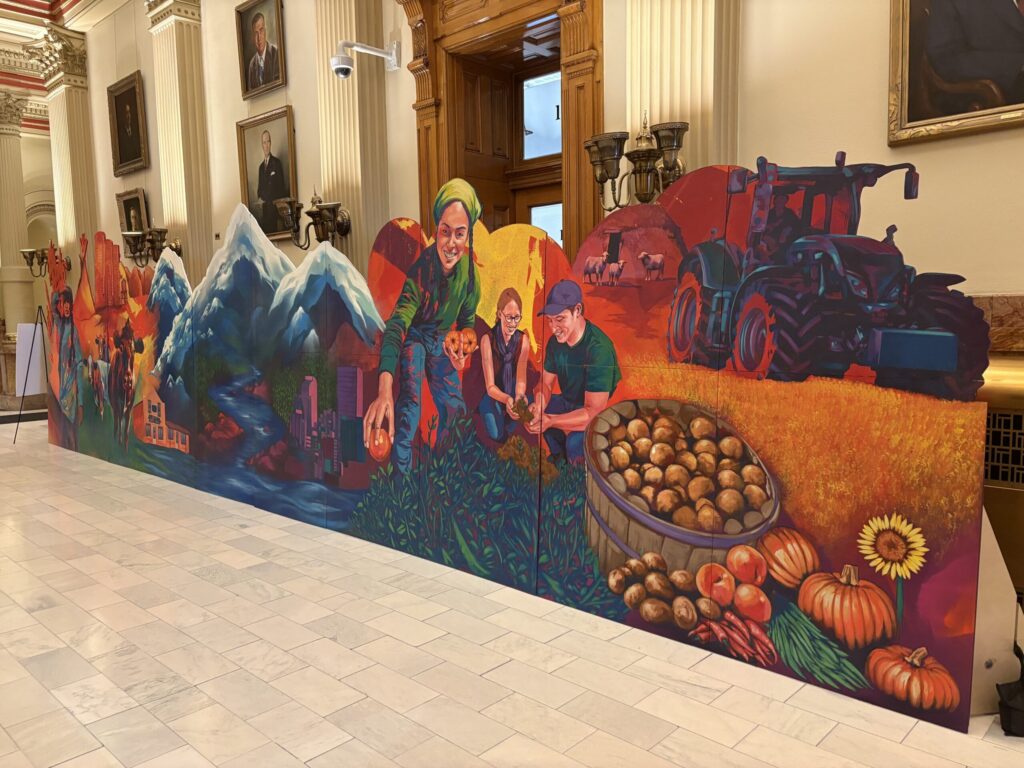
Gov. Jared Polis, legislators and friends of agriculture gathered at the state Capitol on Tuesday to celebrate Colorado Agriculture Day. The annual recognition of the contributions of Colorado farmers, ranchers and agribusiness drew hundreds to the Capitol’s west foyer, where...

Pueblo man held in Afghanistan for more than a year released, Taliban says
The Associated Press
the-associated-press@coloradopolitics.com
Updated 6 hours ago
KABUL, Afghanistan — Afghanistan’s Taliban authorities on Tuesday released American academic Dennis Coyle after holding him for over a year, with the foreign ministry saying the release came on the occasion of Eid al-Fitr, the Muslim holiday that marks the end of the...

Mortgage rates rise in defiance of Trump’s $200 billion push, hurting GOP on affordability
Zach Halaschak, Washington Examiner
zach.halaschak.washington.examiner@gazetteedit.wpenginepowered.com
Updated 10 hours ago
After months of a gradual decline, mortgage rates are trending back up because of the war with Iran, defying President Donald Trump’s efforts to lower them and undercutting Republicans on the key issue of affordability. As of Monday, the average rate on a 30-year...
Federal judge dismisses background screeners’ challenge to Colorado law
Michael Karlik
michael.karlik@coloradopolitics.com
Updated 11 hours ago
A federal judge dismissed a challenge on Friday to a portion of Colorado law that prohibits certain information from being included in consumer reports, in what seemed to be a conflict with federal law. Congress originally enacted the Fair Credit...
Wildlife agency asks for $450,000 to bring more wolves to Colorado
Marianne Goodland
marianne.goodland@coloradopolitics.com
Updated 4 hours ago
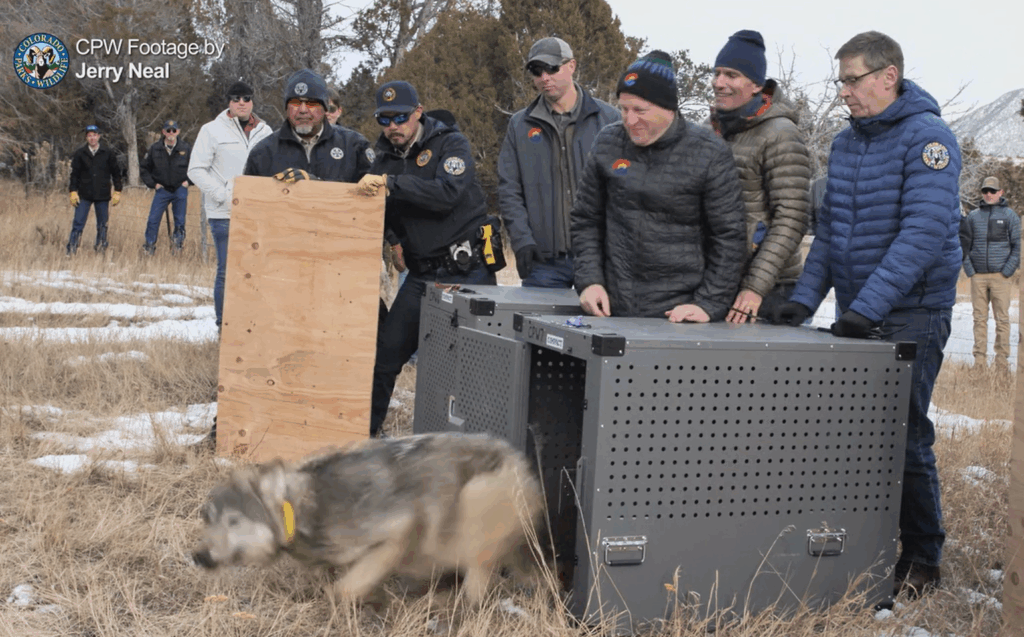
The panel of legislators charged with crafting the budget on Monday rejected a proposal that proponents said would increase transparency around how much Colorado Parks and Wildlife spends to bring additional wolves into the state. At the same time, the...
Hickenlooper primary challenger Julie Gonzales endorsed by national progressive group Indivisible
Ernest Luning
ernest.luning@coloradopolitics.com
Updated 5 hours ago
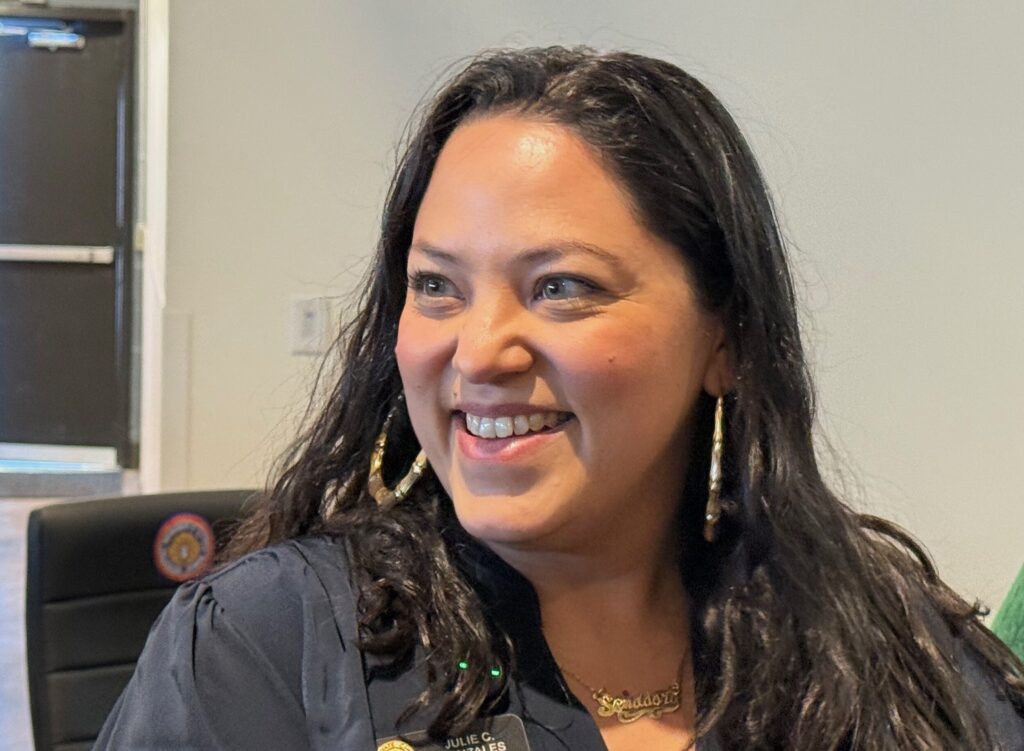
State Sen. Julie Gonzales’ bid to challenge U.S. Sen. John Hickenlooper in Colorado’s Democratic primary got a boost Tuesday from Indivisible when the national arm of the progressive grassroots group endorsed the Denver lawmaker. The national group’s endorsement comes less...

10th Circuit rejects ‘penalty’ for children of naturalized citizens seeking visas
Michael Karlik
michael.karlik@coloradopolitics.com
Updated 5 hours ago
The Denver-based federal appeals court joined three of its peers earlier this month and determined the child of a newly naturalized U.S. citizen is not moved to a longer visa line as a result of his parent gaining citizenship, and...
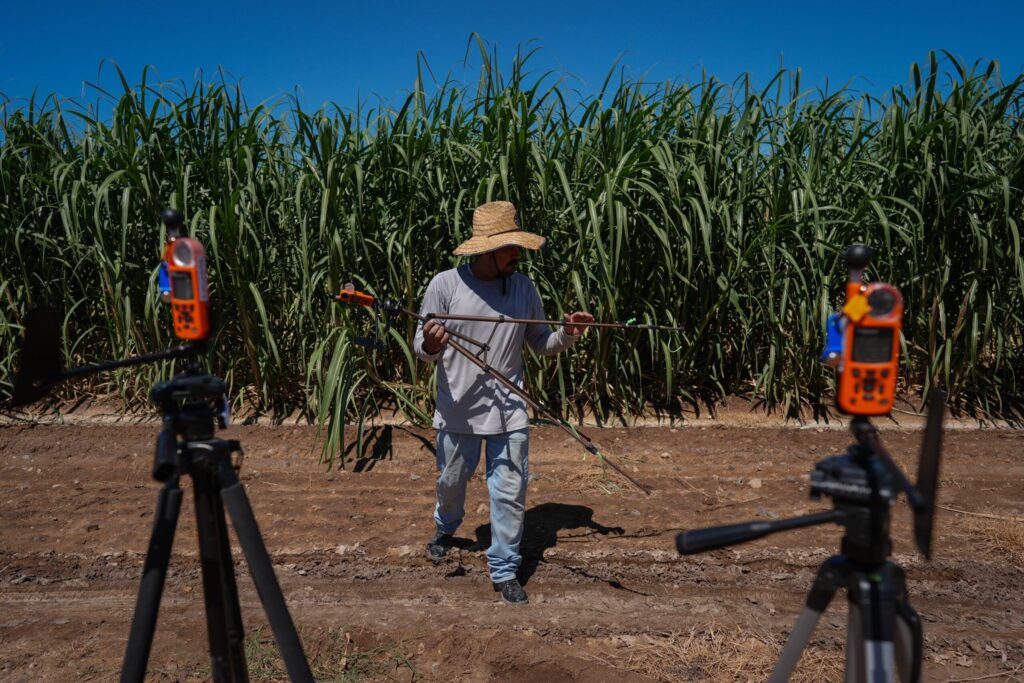
Colorado lawmakers mull renaming César Chávez Day to Farm Workers Day
Marianne Goodland
marianne.goodland@coloradopolitics.com
Updated 14 hours ago
A Colorado House committee has voted to rename the March 31 state holiday from César Chávez Day to Farm Workers Day, following a national shift prompted by sexual abuse allegations against the labor leader. The State, Civic, Veterans, and Military...
PREV
PREVIOUS

Denver charities receive $753,069 from 'giving machine' donations
On Feb. 13, six Denver charities that work globally and locally received $753,069 in total from the city’s experiment with “giving machines.” A project of the Church of Jesus Christ of Latter-day Saints, the giving machines feature various items available for donors to fund, similar to a vending machine. With the money, charities can then […]

State House sends renaming of Columbus Day to Senate
After a two-day delay, the Colorado House on Wednesday approved a bill renaming Columbus Day, the second Monday in October, to one honoring St. Francis Xavier Cabrini, an Italian-born American who lived in Colorado 100 years ago. House Bill 1031 passed on a 37-to-26 vote, garnering “yes” votes from all but two members of the […]