

HOPES FOR 2020 | Jason E. Glass: A school super’s plea: Revise funding; reassess testing
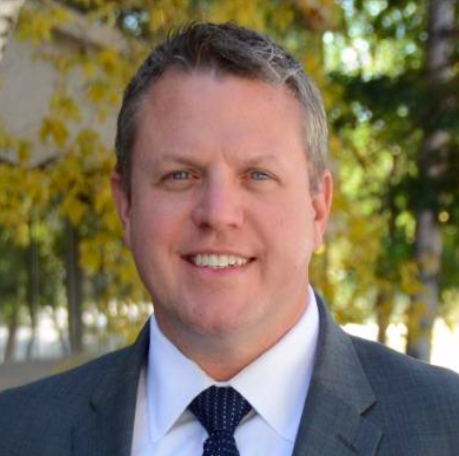

The Colorado legislature is a powerful force when it comes to education as the body makes critical determinations on funding and policy. I have three wishes for the legislature to consider this upcoming session. Rather than putting forth the kinds of wishes one might choose if you were in possession of Aladdin’s lamp, I’ll stick to wishes that have a reasonable probability of coming true.
The first wish relates to school finance. Even with the limitations on available revenues set forth in the TABOR Amendment, the legislature (and both Governors Hickenlooper and Polis) have made progress in reducing (but not eliminating) the “Budget Stabilization” (or B.S.) factor that is now part of the school finance formula. The B.S. factor (formerly known as the “negative factor”) was created during the Great Recession as a mechanism to allow the legislature to balance the state budget. It works by adding funding to schools at the top of the ledger (in accordance with Amendment 23), and then sucking it back out further down the page. The Colorado Supreme Court ruled the mechanism constitutional in 2015.
According to Colorado Legislative Council, the B.S. factor reached its high point in fiscal year 2012-2013, topping out at $1.01 billion. Since that year, the legislature has chipped away at the B.S. factor, and it now stands at $572.4 million in the current year’s budget.
Some legislators have grown weary of working on the B.S. factor every year, trying to re-arrange the School Finance Act to make it go away in a sort of fiscal shell-game, or to just remove references to the factor completely.
I wish for the legislature to continue working on reducing (and eventually eliminating) the B.S. factor. The present number of $572.4 million represents how far Colorado’s schools are still below pre-recession funding levels, not even accounting for inflation. To put that number in perspective, if school funding were increased to completely eliminate the B.S. factor, it would provide enough funding to put over 8,000 more teachers in Colorado classrooms (at present average salary levels).
My second wish also relates to school finance. The legislature will be considering two important changes to school funding this year. First, they are looking at a redesign of the state’s 1994 School Finance Act. Second they are considering changes to how local property taxes are calculated in an effort toward greater equity between communities as different and diverse as Aspen, Alamosa and Arvada — addressing the problem that some communities contribute much more in supporting education in Colorado than others.
Both of these proposed structural changes to how school funding works in Colorado are important and address real and valid problems, and they will create significant challenges.
Redesigning the School Finance Act is likely to create winners and losers as we restructure to move funds from one district to another. Mill levy equalization will create a tax impact in those communities that have been underfunding their contributions to education. Both school districts and anyone interested in their property taxes are going to be paying attention to what the proposed structural changes mean for them and then aligning for or against these proposals according to self-interest.
My wish is that the legislature carefully consider the arguments and points from all sides and for a thoughtful and gradual implementation toward a better framework. While some districts will benefit from a redesigned school finance formula, others will be very concerned about how they will have to lay off staff and reduce services to their students and community — a bitter pill to swallow given Colorado’s already relatively low national standing when it comes to school funding. And on the mill levy equalization front, we should all support equity in tax rates and should move towards uniform mill levies to support school finance. Having said that, efforts to achieve mill levy equalization should be gradual so no particular community is overly impacted too quickly.
My final wish relates to the state’s system of testing and accountability. I credit the Colorado legislature for taking a hard look at the state’s testing system in 2015, following the recommendations of a state task force, and finding a middle ground between education reformers and anti-testing advocates on the number of state tests students are required to take annually.
I wish for the legislature to follow a similar process in looking at the state’s accountability system. Familiar battle lines have been drawn among those seeking to create greater test-based pressure on schools through moving the goalposts (performance targets) further back for schools versus those who feel the current test-based accountability system is a rigged system to blame and shame our schools and educators, especially those serving our most challenged students.
I encourage Colorado legislators to create another broad-based state task force to evaluate the present system of accountability. This group would recommend meaningful changes that would preserve accountability for results but that would also do a better job recognizing that students come to school in different places in their learning. The task force would also consider and recommend other measures that could be included in the state’s accountability system, beyond standardized tests, recognizing that the skills our students need in their future are far more complex and important than what is presently measured on our state assessments.
These three wishes are attainable for our legislature in the upcoming 2020 legislative session — and I have high hopes for the New Year.
Jason E. Glass is superintendent and chief learner of Jeffco Public Schools, Colorado’s second-largest school district. He has previously served as the superintendent of Eagle County Schools and as Iowa’s director of education.
Colorado Politics Must-Reads:

Mum on his own replacement, Bennet disrespects voters | Dick Wadhams
Dick Wadhams
dick-wadhams@coloradopolitics.com
Updated 2 days ago
U.S. Sen. Michael Bennet is playing an arrogant game of hide-and-seek with Colorado voters as he seeks to abandon his Senate seat to become governor. Bennet insists that if he is elected governor in November, he will wait until he...

What kind of energy independence did we pay for? | Miller Hudson
Miller Hudson
miller-hudson@coloradopolitics.com
Updated 2 days ago
It was during the summer of 1972 AT&T published an internal solicitation for installation and repair supervisors with “inner-city” experience to transfer to Mountain Bell. The catch was an applicant’s readiness to work 10 hours a day, six days a...

Those who cannot live without wild things | Rachel Gabel
Rachel Gabel
rachel-gabel@coloradopolitics.com
Updated 2 days ago
Aldo Leopold wrote in his Sand County Almanac, “There are some who can live without wild things and some who cannot.” The collection of essays first published in 1949 was accepted by a publishing house after a steady stream of...

Thank God for Wyoming — the un-Colorado | Jon Caldara
Jon Caldara
jon-caldara@coloradopolitics.com
Updated 2 days ago
Years ago, I interviewed a Canadian health-care broker whose job was helping his countrymen escape their own failing system. When their “free” health care turned into “free to wait until you die,” he’d save his clients by routing them to...

With new medical school set to open, Feinstein will step down as UNC president
Hap Fry, Special to The Gazette
hap-fry@gazette.com
Updated 15 hours ago
GREELEY • Dr. Andrew “Andy” Feinstein, the charismatic president of the University of Northern Colorado, has announced that he will step down from his leadership role just on the cusp of what is perhaps his signature accomplishment being realized. He’ll...
It’s time to let unaffiliated voters caucus | Vince Bzdek
Vince Bzdek
vince.bzdek@gazette.com
Updated 2 days ago
There’s no getting around it: Colorado’s 3,000 county caucuses, which just wrapped up recently, left half the electorate out in the cold. Since unaffiliated voters now make up 51% of all Colorado voters, a majority of Colorado electors are barred...
The insular bubble of caucuses and assemblies | SONDERMANN
Eric Sondermann
eric-sondermann@coloradopolitics.com
Updated 4 days ago
Nearly 30 years ago, then-Federal Reserve Chairman Alan Greenspan coined the term “irrational exuberance” to describe the overheated stock market. That descriptive phrase could also apply to much of the political realm. The hype in politics often grossly exceeds the...
Colorado Politics Calendar Mar. 23-29
Rachael Wright, Special to Colorado Politics
rachael.wright@coloradopolitics.com
Updated 4 days ago
CoPo’s weekly political calendar will help you find political and public-policy events throughout Colorado. It includes candidate and issue campaign events, public policy meetings, court hearings, state and local party conventions, assemblies, debates, rallies, parades, speaking engagements, traveling dignitary appearances,...
A Mile High, again: Capitol M | Week of March 21, 2026
Marianne Goodland
marianne.goodland@coloradopolitics.com
Updated 4 days ago
The lighter side of the Capitol, usually…. Local Journalism Day, except they forgot their very own local journalists. The state Senate on Thursday, March 19, passed a resolution recognizing Local Journalism Day. Everyone voted for it, which is good, because...
Governor warns energy development both a boon and a risk to Colorado | A LOOK BACK
Rachael Wright, Special to Colorado Politics
rachael.wright@coloradopolitics.com
Updated 5 days ago
Forty-Five Years Ago This Week: “The real opportunity and the dangers before us are both real,” said Gov. Dick Lamm in his January state of the state address before the Colorado General Assembly. Lamm argued that energy development would continue...