

LYNN BARTELS | Election 2019: The procrastination vote
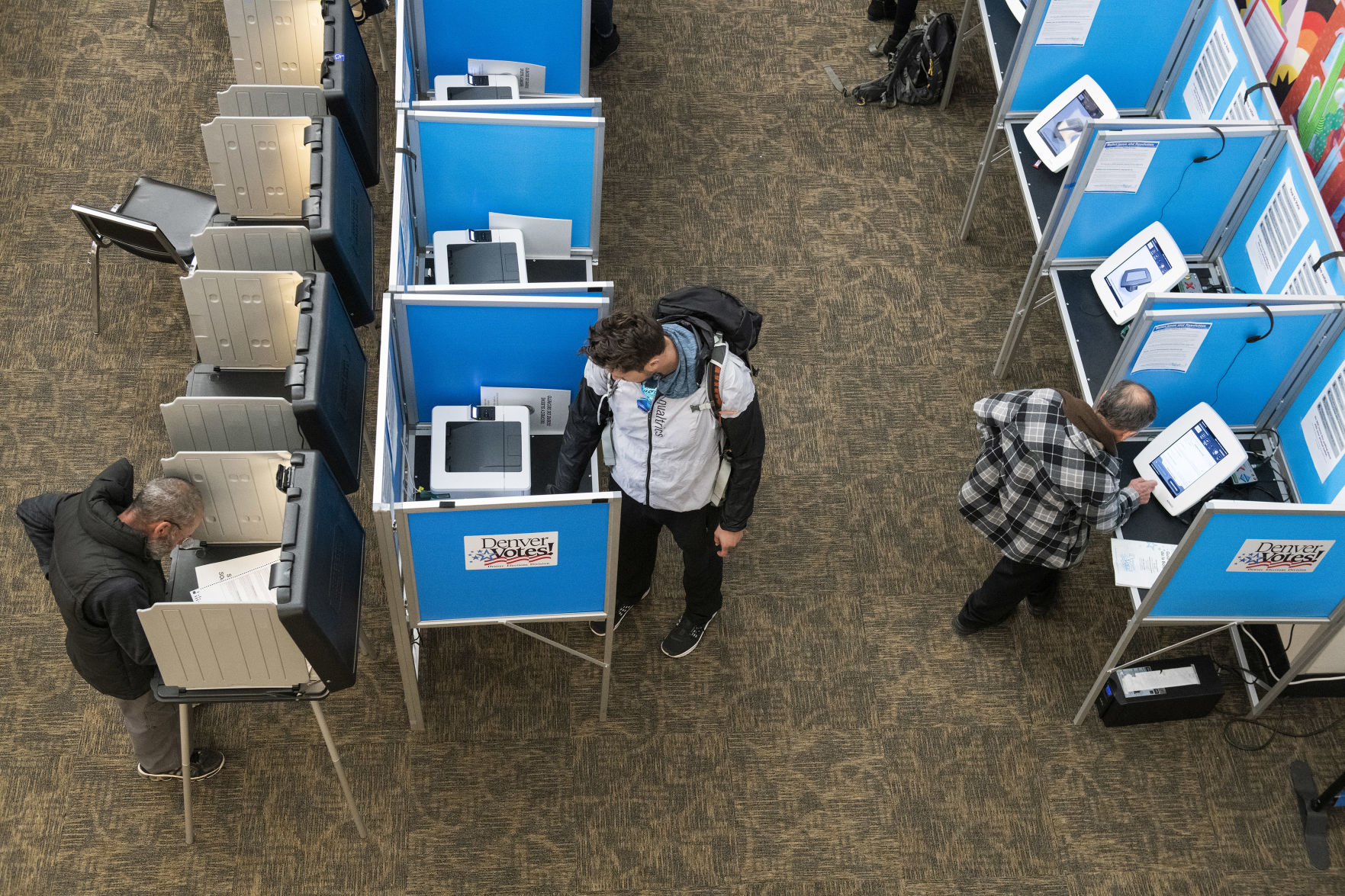
I failed to heed my own advice this election and waited to vote until Election Day.
One, I misplaced my ballot.
And two, Proposition CC stumped me.
Losing my ballot somewhere in my small one-bedroom condo was frustrating but not a problem. Colorado law allows residents to walk into a polling center and request a new paper ballot or vote on a computer all the way until 7 p.m. on Election Day.
That’s what I did – in a police substation at Interstate 25 and University Boulevard. More on that later.
The bigger problem for me was Proposition CC, which the Democratic-controlled Colorado Legislature put on the ballot.
The Denver Post offered the simplest explanation of the measure: “Do Colorado voters want to give up possible future tax refunds to provide more money to K-12 education, higher education and transportation? Or do they want somewhere between $20 and $248 back in their pockets over the next couple of years?”
Of course, this is all tied to Douglas Bruce’s Taxpayer’s Bill of Rights that voters passed in 1992. Among its many provisions: Voters get to decide on tax increases. Money collected above a certain amount by government is returned to eligible taxpayers.
TABOR is a complex measure, difficult to understand, and that’s not just because my math skills are so poor that I got a 13 in math on my ACT, and once had to call the Independence Institute’s Jon Caldara to figure out whether I had figured out a set of percentages correctly.
Teams of government officials, attorneys and judges have spent the past 27 years trying to understand TABOR, often with conflicting results. Here’s what I do know after covering the Legislature for a number of sessions: I don’t like TABOR.
“Run government like a business,” pro-TABOR folks regularly exhort.
“The rest of us have to live within our budget,” is another pro-TABOR rallying cry.
No business would operate the way TABOR forces government to operate, and government is not a business.
Let’s put it another way. Tough times hit. The spouse gets laid off. The old clunker gets repaired instead of being replaced, even though that means higher mechanic bills down the road. The windows that let in cold air in the winter and hot air in the summer can’t be replaced just yet.
Better times return, along with a new job. The couple’s lives improve, but TABOR won’t let them make all the fixes they need because of an arbitrary cap.
Normally Prop CC would have been an easy “yes” vote for me, but these aren’t normal times. One year ago voters turned out and turned down Republicans in record numbers – the first statewide sweep of constitutional offices since 1936.
Democrats were itching to make big changes when the 2019 legislative session began.
They introduced an oil-and-gas regulation bill at 5 p.m. on a Friday and had it scheduled for committee by Tuesday.
They proposed a family-leave bill that ended up turned into a study because of the price tag.
And they presented a sweeping, costly and questionable elections “omnibus” bill that was so not ready for prime time that trying to fix it took some 100 amendments – more than for the state budget.
Disclosure: The Colorado County Clerks Association hired me in the spring to handle communications on that bill. I knew from working at the Colorado Secretary of State’s Office and talking to clerks statewide on a regular basis that some of the provisions in that bill were unnecessary and unworkable.
It was a chest-beater – a look-at-me proposal so supporters could boast “I enhanced democracy in Colorado!”
One provision outlawed the use of police or sheriff’s offices as polling centers during general elections because bill supporters claimed that makes people of color feel uneasy. Of course, in rural Colorado the polling centers are often located in the clerk’s office in the courthouse, where the sheriff’s operations often set up shop.
Rep. Terri Carver made an impassioned argument against the ban because in her district the Fountain police station is popular with voters.
I called Alton Dillard, the affable and efficient spokesman for Denver Elections, and asked if they were still using Denver’s District 3 police station at I-25 and University as a voting station. I was going that way on Election Day and figured I could stop off and vote in person.
Yes, he said, it’s a very popular voting center. The bill allows counties to ask the secretary of state for an exemption to the no-police provision, which seems like such a cumbersome step.
I felt terrible for waiting to vote until Election Day. I learned when working for the secretary of state that the volume of voters that day in bigger jurisdictions such as Denver can be overwhelming. It’s tough to tabulate all the mail ballots right away, and that can make for a long night or several days to get results in close races.
Paul Lopez, who won the Denver clerk and recorder’s race in a squeaker in June, waited to put his mail ballot in the 24-hour drop box outside Barnum Recreation Center until 15 minutes before the polls closed. He wanted to see how long before his ballot got tabulated.
Lopez lives in one of Denver’s minority neighborhoods where voters are more likely to show up on Election Day instead of turning in mail ballots soon after they receive them. One of his goals is to increase participation in those areas, such as far northeast Denver and along Federal Boulevard and other parts of southeast Denver.
“People of color, we go in person, we go as a family, we dress up,” he said. “It’s very much a social action.”
The only way this is a family affair for me is my sister calling me the night before an election to ask who she and her husband should vote for. And even then I give her grief for not turning their ballots in earlier.
But this year I waited because I didn’t decide until the afternoon before the election how I was going to vote on Proposition CC. Was it the right solution for the problem that is TABOR? And if it passed would Democrats under the Gold Dome be even more brazen than this session?
Of course, that meant I continued to get automated calls from Republicans telling me what to do. Former Gov. Bill Owens and Amy Oliver Cooke from the Independence Institute told me to vote “no.”
I made my own call, to Owens’ former budget director, Henry Sobanet, one of the most trusted guys to ever work in government.
I heard him out and made my decision, but not surprisingly, I voted in the minority. Proposition CC failed by 10 percentage points.
Lynn Bartels can be reached at againlynn@gmail.com



Gov. Lamm challenges Congress to stop ‘decontrol’ of natural gas | A LOOK BACK
Rachael Wright, Special to Colorado Politics
rachael.wright@coloradopolitics.com
Updated 2 days ago
Forty-Five Years Ago This Week: In a memo to Colorado’s congressional delegation, Gov. Dick Lamm urged them to vote against the phased pricing deregulation provisions in the Natural Gas Policy Act, a measure introduced in Congress in 1978 and still...
Colorado justices accept appeals on Netflix taxation, children pursuing neglect cases
Michael Karlik
michael.karlik@coloradopolitics.com
Updated 13 hours ago
The Colorado Supreme Court announced on Monday that it will decide whether Netflix subscriptions are subject to the state’s sales tax as “tangible personal property.” At least three of the court’s seven members must agree to hear an appeal. The...
Proposal outlines $300M deal separating Pinnacol from Colorado state government
Marianne Goodland
marianne.goodland@coloradopolitics.com
Updated 13 hours ago
Colorado lawmakers are weighing a proposal that would allow Pinnacol Assurance to sever its remaining ties to the state in exchange for a $300 million payment, a long‑debated shift that supporters say could stabilize the insurer’s future and help plug...
Bill requiring employers to grant unpaid leave to Colorado lawmakers heads to governor’s desk
Marissa Ventrelli
marissa.ventrelli@coloradopolitics.com
Updated 12 hours ago
Colorado lawmakers are one step away from securing guaranteed unpaid leave from their day jobs during the legislative session after the House narrowly approved the proposal Thursday. Senate Bill 087 would require businesses to allow employees who are members of...
Redistricting fight escalates as Colorado Title Board clears competing ballot proposals
Marianne Goodland
marianne.goodland@coloradopolitics.com
Updated 13 hours ago
Colorado’s title board on Wednesday gave final approval to multiple ballot measures related to congressional redistricting, setting up a series of proposals that could alter how the state draws its U.S. House districts for the 2028 and 2030 elections. The...

Trump downplays major reform bill and says housing is ‘all about interest rates’
Zach Halaschak, Washington Examiner
zach.halaschak.washington.examiner@gazetteedit.wpenginepowered.com
Updated 15 hours ago
President Donald Trump downplayed the bipartisan housing legislation that many congressional allies hope will ease the affordability worries plaguing voters, saying instead in an exclusive Washington Examiner interview that housing is “all about interest rates.” Trump said on a phone call Thursday morning...

Colorado lawmakers propose deep cuts to close $1.2B budget gap
Marianne Goodland
marianne.goodland@coloradopolitics.com
Updated 12 hours ago
The panel of Colorado legislators in charge of crafting next year’s budget has finalized the 2026–27 spending plan built on deep cuts and one‑time cash transfers in an attempt to close a shortfall of more than $1.2 billion. The plan...

Denver judge denies Gov. Polis request to dismiss ICE-related records case
Marianne Goodland
marianne.goodland@coloradopolitics.com
Updated 16 hours ago
A year after blocking the release of state records to federal immigration agents, a Denver judge has now denied Gov. Jared Polis’ effort to end the lawsuit at the center of the dispute. The lawsuit filed against the governor in...
10th Circuit grants rare all-judges’ review of Colorado banking regulation
Michael Karlik
michael.karlik@coloradopolitics.com
Updated 17 hours ago
The Denver-based federal appeals court announced on Thursday that it will hold a rare all-judges review of a recent decision that permits Colorado to require out-of-state banks to abide by the state’s maximum interest rates when they lend to in-state...
Colorado appeals court orders new sentencing for Tina Peters, upholds convictions
Michael Karlik
michael.karlik@coloradopolitics.com
Updated 12 hours ago
Colorado’s second-highest court determined on Thursday that a trial judge improperly sentenced former Mesa County clerk Tina Peters based upon her exercise of protected speech, while at the same time upholding her convictions. The three-judge Court of Appeals panel also...
PREV
PREVIOUS

Republican congressional candidate Steve House announces endorsements by veterans, state lawmakers
Republican congressional candidate Steve House marked Veterans Day by announcing he’s been endorsed by five Coloradans with records of military service and four Republican state lawmakers with more tenuous connections to veterans. The endorsements listed in a release issued Monday by House’s campaign include an oral surgeon who serves in the Army National Guard, a […]

Will Aurora Central’s small improvements be enough to fend off more drastic state measures?
Two years of making small improvements, even without producing dramatic results, could be enough to enable Aurora Central High School to fend off deeper involvement of state officials this week. The high school, trying to meet a state deadline for improvement, must show why it deserves more time to boost student achievement. The school wrote […]