

THE PODIUM | Colorado’s salaried employees are overworked, shortchanged

Imagine working a long, grueling 12-hour day without a single break. Or realizing that the promotion you just received to become a salaried employee means your employer can work you for much longer hours without paying you overtime. Or working so many hours a week on a salary that your hourly wage works out to less than the minimum wage.
These difficult situations are a reality for countless workers across the state. That’s why we are calling on policy makers to review Colorado’s Wage Order to institute a statewide salary threshold and bring Colorado in line with the needs of today’s workforce.
Oct. 25 was Colorado Free Time Day, marking the point in the year when salaried employees, most of whom are working an average of 49 hours per week, have put in a year’s worth of 40-hour work weeks. From this point on, compared to hourly workers that receive well-deserved overtime pay, they are working for free the rest of the year.
Colorado currently follows federal overtime standards, so if you are a salaried employee that makes more than $23,660 a year, your employer does not have to pay you overtime. This means even if a worker is putting in far more than 40 hours a week, their employer is not required to pay them the overtime they earned. A recently released Trump Administration rule will bring this up to $35,568 on Jan. 1. This is still inadequate and actually helps fewer workers than the overtime regulation proposed by the Obama administration in 2016.
In 1975 under federal law, 62 percent of workers were eligible for overtime pay when they worked more than 40 hours in a week. Fast-forward to today, and less than 8 percent of workers receive overtime pay that they should earn. This policy negatively impacts countless workers and families in Colorado and disproportionately affects women, Latino workers and mothers.
I have spoken with workers who were forced to leave a salaried positio – and the benefits and advancement that often come with them – to go back to an hourly position just to make ends meet. I have heard from other employees that they were laid off from their jobs because they were unable to commit to a 50- or 60-hour work week without overtime pay.
Time is money and the current wage order allows employers to take both from their employees. We need to raise the overtime salary cap so that it’s in line with Colorado’s economy and cost of living, and so that more Coloradans are protected from working longer hours for less money. Studies show that raising the overtime salary threshold to a little over $60,000 would positively benefit more than 390,000 workers in our state.
A strong workforce is critical to our future prosperity, and Colorado’s workers continue to be required to work long hours without being paid the overtime they earned, which is impacting their health, well-being and productivity. Other states have implemented policies to fix the erosion of overtime protections over the past few decades.
Colorado working families deserve the same respect for their time and hard work. As the Colorado Department of Labor and Employment is updating the state’s Wage Order, all working people should take this opportunity to weigh in. It’s time to ensure all Coloradans can earn a good life and build a better, more prosperous future for us all.
Dennis Dougherty is executive director of the Colorado AFL-CIO.


Mum on his own replacement, Bennet disrespects voters | Dick Wadhams
Dick Wadhams
dick-wadhams@coloradopolitics.com
Updated 2 days ago
U.S. Sen. Michael Bennet is playing an arrogant game of hide-and-seek with Colorado voters as he seeks to abandon his Senate seat to become governor. Bennet insists that if he is elected governor in November, he will wait until he...
What kind of energy independence did we pay for? | Miller Hudson
Miller Hudson
miller-hudson@coloradopolitics.com
Updated 2 days ago
It was during the summer of 1972 AT&T published an internal solicitation for installation and repair supervisors with “inner-city” experience to transfer to Mountain Bell. The catch was an applicant’s readiness to work 10 hours a day, six days a...

Those who cannot live without wild things | Rachel Gabel
Rachel Gabel
rachel-gabel@coloradopolitics.com
Updated 2 days ago
Aldo Leopold wrote in his Sand County Almanac, “There are some who can live without wild things and some who cannot.” The collection of essays first published in 1949 was accepted by a publishing house after a steady stream of...

Thank God for Wyoming — the un-Colorado | Jon Caldara
Jon Caldara
jon-caldara@coloradopolitics.com
Updated 2 days ago
Years ago, I interviewed a Canadian health-care broker whose job was helping his countrymen escape their own failing system. When their “free” health care turned into “free to wait until you die,” he’d save his clients by routing them to...

It’s time to let unaffiliated voters caucus | Vince Bzdek
Vince Bzdek
vince.bzdek@gazette.com
Updated 2 days ago
There’s no getting around it: Colorado’s 3,000 county caucuses, which just wrapped up recently, left half the electorate out in the cold. Since unaffiliated voters now make up 51% of all Colorado voters, a majority of Colorado electors are barred...
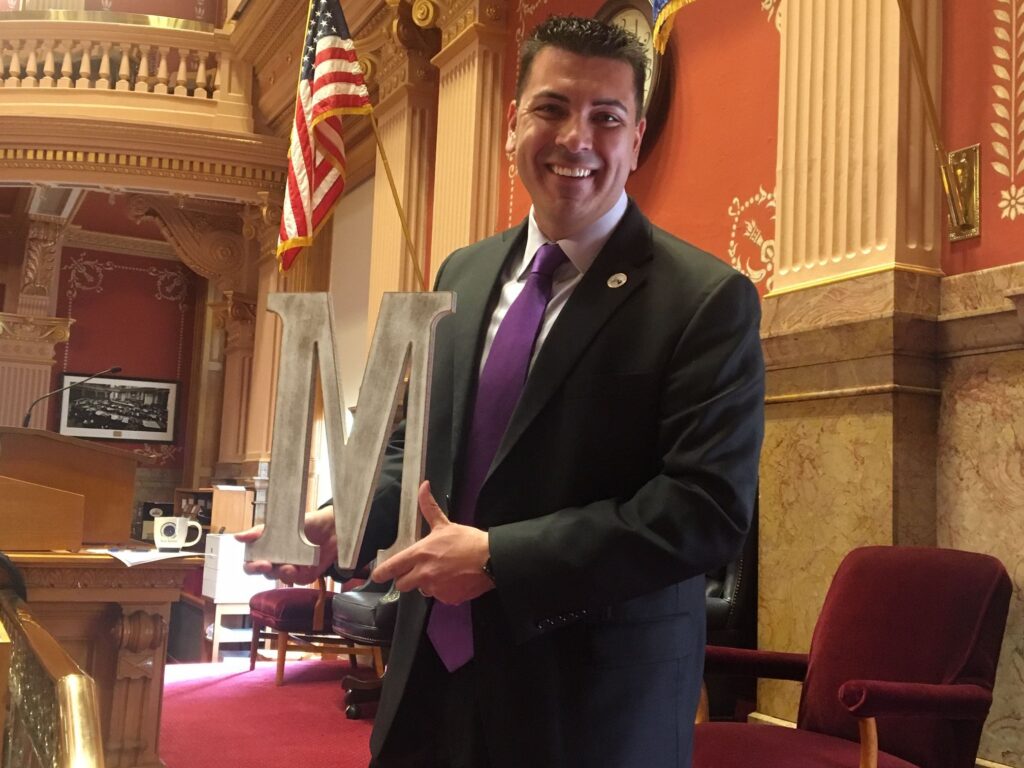
A Mile High, again: Capitol M | Week of March 21, 2026
Marianne Goodland
marianne.goodland@coloradopolitics.com
Updated 5 days ago
The lighter side of the Capitol, usually…. Local Journalism Day, except they forgot their very own local journalists. The state Senate on Thursday, March 19, passed a resolution recognizing Local Journalism Day. Everyone voted for it, which is good, because...

The insular bubble of caucuses and assemblies | SONDERMANN
Eric Sondermann
eric-sondermann@coloradopolitics.com
Updated 4 days ago
Nearly 30 years ago, then-Federal Reserve Chairman Alan Greenspan coined the term “irrational exuberance” to describe the overheated stock market. That descriptive phrase could also apply to much of the political realm. The hype in politics often grossly exceeds the...
Set appropriate state guidelines for critical surveillance technology | OPINION
Colorado Politics
colorado-politics@coloradopolitics.com
Updated 3 days ago
I admit it: I’m worried. I’m hearing a lot about surveillance in the public arena. I hear cameras are capturing my car’s license plate wherever I drive, my face as I go in and out of stores and health facilities,...

Puppy trafficking bill promotes inhumane breeding | OPINION
Colorado Politics
colorado-politics@coloradopolitics.com
Updated 3 days ago
By Patti Strand When Justice Thurgood Marshall wrote “The Constitution does not prohibit legislatures from enacting stupid laws,” he wasn’t wrong. He was referring to a political process sometimes ill-equipped to deal with complex issues that require subject-matter knowledge and a...
Penny wise but foolish by pounds | Paula Noonan
Paula Noonan
paula-noonan@coloradopolitics.com
Updated 4 days ago
Leadership of Colorado’s General Assembly introduced the Fiscal Year 2026-2027 Legislative Appropriation bill, HB26-1333, at $75.72 million. That will be the budget to run the state legislature next year. About $74 million comes out of the general fund and the...
PREV
PREVIOUS

BIDLACK | Consult many sources to divine the truth — in politics as in life
Hal Bidlack I like to think that I’m a reasonably forward thinker when it comes to technology. I rather like gizmos and gadgets, and I often find new technologies exciting and intriguing. That said, I do worry that we lose more than we should when it comes to news and information, when we rely only […]

SONDERMANN | In 2020 election, shades of '72. And '80. And '88 ...
Eric Sondermann The incomparable Mark Twain is credited with the astute observation, “History doesn’t repeat itself but it often rhymes.” Even though there is no evidence that he ever actually uttered the words. As we look to the 2020 presidential election exactly one year out, history is on the minds of many. But the question […]