

Colorado subject of ‘BlacKkKlansman’ thrilled by Oscar nominations
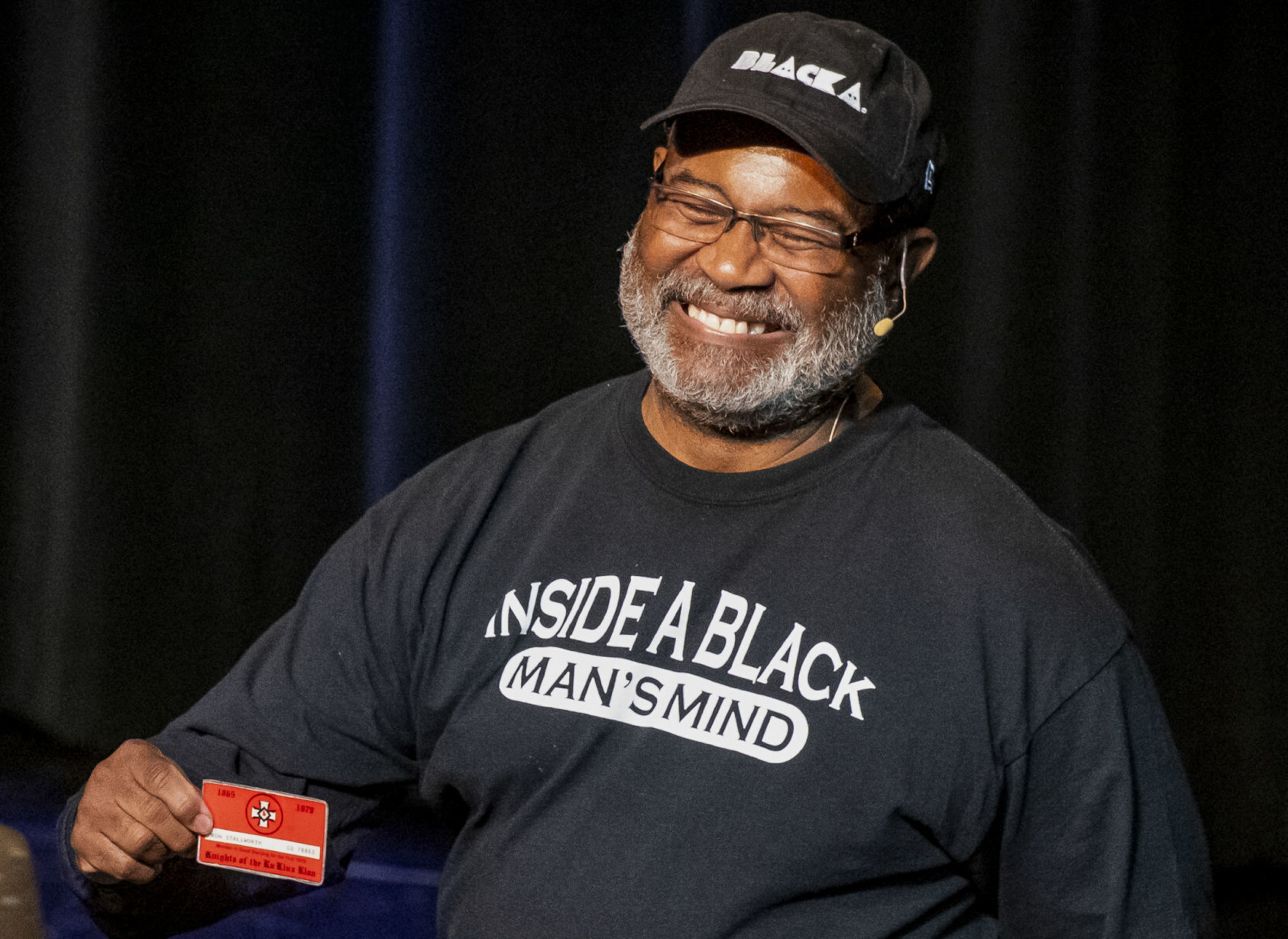
In continuing his promotional tour around the country, Ron Stallworth on Tuesday landed in Iowa, where the snow and gray skies could do nothing to dampen his mood.
“If you saw the smile on my face, it would blind you,” he said.
Stallworth, Colorado Springs’ first black police detective, is the real-life subject of “BlacKkKlansman,” which on Tuesday nabbed six Academy Award nominations, including one for best picture.
> RELATED: Dick Cheney: Give that man an Oscar …
Spike Lee is up for best director, and the movie also earned a nod for best adapted screenplay, based on Stallworth’s 2014 memoir, “Black Klansman: Race, Hate, and the Undercover Investigation of a Lifetime.”
Now living in his native El Paso, Texas, Stallworth is planning to be in Hollywood’s Dolby Theatre for the 91st Oscars on Feb. 24.
> RELATED: ‘Black Klansman’ author Stallworth speaks to capacity crowd in Springs
“Mainly, it’s a validation of my story,” he said. “An acknowledgement that what I experienced was a valuable moment in time that hopefully people are benefiting from.”
John David Washington plays Stallworth, who in 1978 went undercover to infiltrate the local Ku Klux Klan. The mission was alongside a white partner, played by Adam Driver, whose performance netted him a best supporting actor nomination. (Stallworth refers to his former partner as Chuck in the book; in the movie he’s called Flip Zimmerman.)
> RELATED: New Spike Lee movie ‘BlacKkKlansman’ is based on Colorado case
Stallworth communicated with the Klan over the phone, while Chuck represented him in face-to-face meetings.
Stallworth’s bold investigation included calls with Klan leader David Duke, who signed the certificate of KKK membership that Stallworth keeps today. He also still carries the red ID card marking him “in Good Standing for the Year 1979.”
The humor of those conversations with Duke – the “Grand Wizard” compliments Stallworth for his “Aryan” voice – was not lost on Lee, whose depictions of lower-ranked knights also garner uncomfortable laughs.
But “BlacKkKlansman” has a serious purpose. It’s loud and clear at the end with stark reminders of Charlottesville’s Unite the Right rally, which happened a year prior to the date the movie opened in theaters.
“[H]atred has never gone away,” Stallworth writes in the latest edition of his book, “but has been reinvigorated in the dark corners of the internet, Twitter trolls, alt-right publications, and a nativist president in Trump.”
He has spread that message while touring the country the past year.
“You have to stand up to racism and to hatred and to people like the KKK and others in white supremacy,” he said from Iowa, where he was presenting at the state’s two major universities. “You have to stand up to them, you can’t be afraid of them. And when they rear their ugly head, you have to do everything to stamp them out, instead of giving them a wink or a nod like Trump does.”
In a previous interview with The Gazette, Stallworth spoke at length about his mother, a single parent who “raised me to not take any crap from anyone who called me a n—–.” This led to three fights growing up in El Paso, he recalled. By the time he moved to the Springs in 1972, joining the police force as a cadet, he considered himself “a nonconformist at heart.”
He still considers himself that. He’s still the same, he insisted, unchanged by the movie’s success.
“I don’t consider myself a celebrity,” he said. “I’ve been labeled a hero by some, and I definitely, definitely don’t consider myself a hero. I was just a cop who had a job to do.”


From Pope Francis to Charlie Kirk, many deaths in 2025 had a wide impact
The Associated Press
the-associated-press@coloradopolitics.com
Updated 3 hours ago
The death of Pope Francis brought change to the Catholic Church, which counts 1.4 billion adherents and is now led — for the first time — by an American pope. The fatal shooting of conservative activist Charlie Kirk as he...

Democrats and Republicans tied on economy heading into 2026, survey finds
Rachel Schilke, Washington Examiner
rachel.schilke.washington.examiner@gazetteedit.wpenginepowered.com
Updated 13 hours ago
Voter confidence in Democrats and Republicans regarding the handling of the economy is evenly split, according to recent polling, highlighting the challenge both parties face on a central matter ahead of the 2026 midterm elections. A survey released on Thursday...

Advance Colorado initiative allowing law enforcement cooperation with ICE clears 200,000 signatures
Marissa Ventrelli
marissa.ventrelli@coloradopolitics.com
Updated 12 hours ago
A petition supporting a proposed 2026 ballot measure that would allow law enforcement to cooperate with federal immigration officers has received more than 200,000 signatures, according to Advance Colorado. If passed, Initiative 95 would allow Colorado law enforcement to report...

Trump sets his sights on peace progress in the new year with Netanyahu and Zelensky meetings
David Zimmermann Washington Examiner
davidzimmermannwashingtonexaminer@wpstage.coloradopolitics.com
Updated 12 hours ago
In the days leading up to the new year, President Donald Trump is reportedly preparing to meet with Israeli Prime Minister Benjamin Netanyahu and Ukrainian President Volodymyr Zelensky again to discuss peaceful resolutions to the foreign nations’ respective conflicts. The...
$3 million penalty upheld against for-profit college following half-decade of appeals
Michael Karlik
michael.karlik@coloradopolitics.com
Updated 8 hours ago
Colorado’s second-highest court upheld a $3 million penalty against a defunct for-profit college on Wednesday, agreeing the state had proven multiple violations of its consumer protection law. The Court of Appeals’ decision against CollegeAmerica followed a trial judge’s order in...

Colorado ski areas suffer, nobody has measured over 70 inches of total snowfall for winter 2025-26
Jonathan Ingraham
jonathan.ingraham@denvergazette.com
Updated 14 hours ago
Big changes coming as 10-15 inches of snow possible from incoming weekend storm, second snow event could double figure to start 2026 No Colorado ski area or resort has surpassed 70 inches of reported or estimated total snowfall amounts for...
Appeals court decides violations of child custody orders may be prosecuted per child
Michael Karlik
michael.karlik@coloradopolitics.com
Updated 1 day ago
Colorado’s second-highest court concluded for the first time on Wednesday that a defendant may be charged with violating a child custody order based on the number of children affected, not the number of orders violated. Mesa County jurors convicted Tiffany...

Douglas County judge violated defendant’s right to counsel at sentencing, appeals court finds
Michael Karlik
michael.karlik@coloradopolitics.com
Updated 1 day ago
A Douglas County judge violated a defendant’s constitutional right to the counsel of her choice by refusing to postpone sentencing until her lawyer returned to the country, Colorado’s second-highest court concluded on Wednesday. In early 2023, Lyndie J. Felsher received...

New year, higher wages for Denver hourly and tipped workers
Deborah Grigsby
deborah.smith@denvergazette.com
Updated 8 hours ago
Some Denver workers will be starting the new year with a pay raise as the city’s minimum wage rises to $19.29, up from $18.81. For tipped food and beverage workers, the minimum wage will jump from $15.79 to $16.27 per...

Businesses face losses after Xcel power shutoffs
Sage Kelley
sage.kelley@denvergazette.com
Updated 15 hours ago
Restaurants west of Denver are still coming to grips with product losses and future revenue concerns after power shutoffs last week by Xcel Energy, which cited high winds as the rationale for the decision. “It’s like living in a third-world...
PREV
PREVIOUS

Sen. Court tries a 3rd time to ban holding cellphone while driving
State Sen. Lois Court is on a mission. For the past three years, the Denver Democrat has led an effort at the state Capitol to get Colorado motorists to pay more attention to their driving than to their cellphones. She struck paydirt in 2017, persuading the General Assembly to green light a bill boosting the […]

Colorado Springs puts high-dollar settlements in public spotlight
Lawmakers and open-government advocates commended the Colorado Springs City Council for passing laws Tuesday to bring high-dollar lawsuit settlements out of closed-door meetings and into the public spotlight. The council unanimously approved three ordinances on the topic, but city attorneys said they have been following the practices outlined in them since August. The laws come […]