

Senator suggests possible end of USOC’s tax-exempt status

A senator floated the idea of revoking the U.S. Olympic Committee’s tax-exempt status if it fails to effectively combat the sex-abuse problem in Olympic sports.
At a hearing Wednesday, Sen. Richard Blumenthal, D-Connecticut, said the USOC’s tax-exempt status and antitrust exemption could be at risk when Congress revisits the law that governs the federation.
The USOC is headquartered in Colorado Springs.
Blumenthal also suggested the position of athlete advocate and inspector general be added to the USOC. The federation has an athletes’ ombudsman position and recently revealed plans to give athletes more-accessible avenues to report abuse and other wrongdoing.
Leaders of four Olympic sports federations – figure skating, bobsled, weightlifting and swimming – appeared in front of a Senate subcommittee in the latest in a series of hearings to discuss their response to the sex-abuse crisis.
Blumenthal suggested Congress would make revisions in the Ted Stevens Olympic and Amateur Sports Act to “make sure the USOC is held to a higher standard of accountability.”
The USOC does not receive government funding and is a nonprofit, which makes it exempt from taxes. Judges also have ruled that the Ted Stevens Act has given the USOC antitrust immunity. Revoking the USOC’s tax-exempt status could potentially take a huge chunk out of an operation that brought in $336 million during the last Olympic year (2016) and uses much of that to provide assistance to athletes, either directly or through sports federations that train them.
As part of her first address to the U.S. Olympic family, new USOC CEO Sarah Hirshland said last month that athletes needed to be better represented in the decision-making process in Olympic sports.
Blumenthal grasped on that idea and asked the sports leaders if they’d be willing to increase athlete representation on boards and committees to 50 percent or more; the general standard is about 20 percent. But he was met with resistance.
“It comes down to the competence of the board,” said USA Bobsled and Skeleton CEO Darrin Steele. “A competing athlete is looking at four-year increments, and it’s difficult to think about long-term strategy when you’re actually in midst of the competition.”
US Figure Skating president Anne Cammett agreed.
“Part of what you have to look at is the learning and life experiences that come with developing from a young person to an adult,” she said. “I think you need a good balance of life experience and knowledge.”
Cammett piggybacked on Blumenthal’s calls for change, saying the U.S. Center for SafeSport, established to investigate abuse cases in Olympic sports, needs more funding and would also benefit from subpoena power to conduct its investigations.


Primary rival sues to prevent Democrat Eileen Laubacher from going through assembly in Colorado’s 4th CD
Ernest Luning
ernest.luning@coloradopolitics.com
Updated 10 hours ago
Democratic congressional candidate Trish Calvarese on Monday asked a judge to prevent one of her primary rivals, Eileen Laubacher, from participating in the caucus and assembly process to seek the nomination to challenge Republican U.S. Rep. Lauren Boebert in Colorado’s...
Colorado lawmakers tackle legislation on sexual assault
Jenny Deam
jenny-deam@coloradopolitics.com
Updated 10 hours ago
A panel of Colorado lawmakers on Monday unanimously approved a bill that supporters say will offer protections and support to victims of domestic violence, stalking, sex trafficking and sexual assault, including mandatory training for law enforcement on trauma. The measure,...
Colorado Supreme Court clarifies restraining order violations can always support burglary charge
Michael Karlik
michael.karlik@coloradopolitics.com
Updated 13 hours ago
The Colorado Supreme Court’s majority ruled on Monday that a violation of a restraining order can also serve as a basis for finding a defendant guilty of burglary. Under state law, a person commits second-degree burglary by unlawfully entering or...

Big week ahead for major legislation to address housing affordability woes
Zach Halaschak, Washington Examiner
zach.halaschak.washington.examiner@gazetteedit.wpenginepowered.com
Updated 15 hours ago
The Senate is pushing ahead with a bipartisan bill to improve housing affordability, teeing up a critical week for housing on Capitol Hill and raising major questions about what provisions will be included. Senate Majority Leader John Thune (R-SD) filed cloture on legislation from the...

Macron goes nuclear with increases to French warhead arsenal
Timothy Nerozzi, Washington Examiner
timothy.nerozzi.washington.examiner@gazetteedit.wpenginepowered.com
Updated 15 hours ago
French President Emmanuel Macron is channeling the atomic spirit of his predecessor Charles de Gaulle with orders for the French military to “increase the number of nuclear warheads” in the nation’s arsenal. Macron announced the seismic shift in France’s defensive...

Who has been killed so far during US-Israel mission in Iran?
David Zimmermann and Keely Bastow, Washington Examiner
david.zimmermann.and.keely.bastow.washington.examiner@gazetteedit.wpenginepowered.com
Updated 15 hours ago
There have been numerous casualties on all sides since the joint U.S.-Israel strikes against Iran commenced over the weekend, with more lives expected to be lost as the campaign continues. The Islamic regime’s leadership is currently bearing the brunt of...
Colorado Senate swears in Adrienne Benavidez after district vacancy win
Marianne Goodland
marianne.goodland@coloradopolitics.com
Updated 15 hours ago
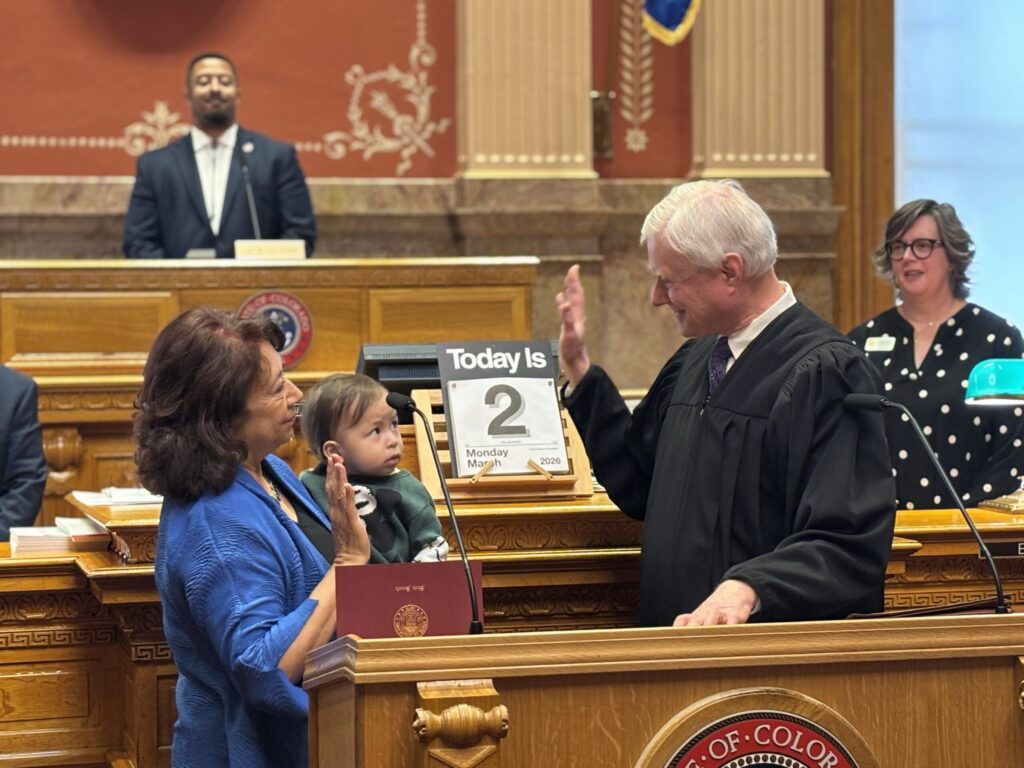
Sen. Adrienne Benavidez, a Democrat from Adams County, was sworn in Monday to the Colorado Senate, just four days after winning a vacancy election in District 21. She was sworn in by Colorado Court of Appeals Justice Lino S. Lipinsky...

10th Circuit judge creates vacancy, district court gets new chief judge | COURT CRAWL
Michael Karlik
michael.karlik@coloradopolitics.com
Updated 17 hours ago
Welcome to Court Crawl, Colorado Politics’ roundup of news from the third branch of government. A longtime member of the Denver-based federal appeals court will give the president a vacancy to fill, plus Colorado’s federal trial court will see a...

Denver mayor says his commute time tripled following ‘road diet’ change
Mark Samuelson Special to The Denver Gazette
mark.samuelson@denvergazette.com
Updated 15 hours ago
Mayor Mike Johnston is pushing back sharply against the claim by Denver councilmembers and bike activists that the city succumbed to lobbying pressure in revising a “road diet” plan for East Alameda Avenue, while noting that his own commute time...

Rural legislators, Colorado farmers defeat pollinator bill backed by Gov. Polis
Marianne Goodland
marianne.goodland@coloradopolitics.com
Updated 16 hours ago
A proposal to limit the use of neonicotinoid-coated crop seeds collapsed in the Senate Agriculture and Natural Resources Committee last week, as rural lawmakers, including two Democrats, joined Republicans to reject what they called an expensive, impractical mandate on farmers....
PREV
PREVIOUS

Colorado's U.S. attorney: State's marijuana laws are too loose
By Kathleen Foody, Associated Press Colorado’s system for regulating marijuana has too many loopholes that disguise illegal activity and jeopardize public safety, the U.S. attorney for Colorado said Wednesday, detailing his motivation for boosting scrutiny in the first state to broadly allow cannabis sales. U.S. Attorney Bob Troyer said he is particularly concerned with how […]

OUT WEST ROUNDUP | Mushrooms could help clean toxic groundwater in New Mexico
Mushrooms could help clean toxic groundwater SANTA FE – Water conservationists and a Native American women’s advocacy group believe they’ve found a potential solution to a massive, decades-old underground plume of toxic chromium that likely has spread from property owned by Los Alamos National Laboratory to San Ildefonso Pueblo land. The key ingredient? Mushrooms. They […]