

The Colorado Springs Gazette: How to waste $68.7 million
Much of a $68.7 million windfall will benefit only 0.2 percent of the state’s population.
The 0.2 percenters are Coloradans fortunate enough to own electric cars.
The money represents Colorado’s portion of a settlement Volkswagen made with the federal government for equipping cars with “defeat devices” intended to cheat federal emissions tests. The government allocated money to each state based on its number of registered “illegal” Volkswagens.
The money must be used to mitigate pollution, and the EPA suggested “replacing older city transit buses” or installing “charging infrastructure” for electric cars, or buying more efficient locomotives for freight yards. Colorado plans to install charging stations and fund a handful of electric buses in cities with mass transit.
A Sept. 3 Gazette editorial suggested using the money to help widen highways, instead. It suggested Colorado pitch the EPA on road projects because of the substantial reduction in harmful emissions that results from reducing traffic congestion. The article cited credible studies that prove the environmental benefits of unclogging traffic.
“Throughout the Denver Metro area, idling is responsible for an estimated 40,000 tons of harmful air pollution a year and 400,000 tons of CO2 emissions. This results in over 40 million gallons of fuel wasted while idling, costing area residences and businesses over $100 million dollars a year,” states a report by Engines Off! – a collaborative effort of federal, state and local governments working to improve air quality.
Instead of projects to spread the wealth, and clean the air, the money will benefit a special interest.
Of about 1.8 million registered vehicles in Colorado, only 11,238 are electric. Owners make up 0.2 percent of Colorado’s population, while their cars amount to 0.6 percent of traffic on the roads.
Of the state’s electric car owners, 19 percent live in Boulder County – a wealthy enclave that contains only 5.6 percent of Colorado’s population.
El Paso County contains 12 percent of Colorado’s population, and about 0.17 percent of the state’s electric cars.
Low-end electric cars, such as the Smart electric, are approaching $30,000. A Tesla ranges from $94,00 to $140,000. Each buyer receives a $7,500 federal tax subsidy and a $5,000 state subsidy, with or without perks the Volkswagen settlement will fund.
Though we respect mass transit riders, they make up about 2 percent of El Paso County’s population. The percentage only goes down outside the state’s major population centers. That 2 percent or less won’t get more buses – just a few electric replacements.
Electric vehicles might catch on among the masses, at which time the market will respond with charging stations, service facilities and whatever else the owners of these machines require. For now, they are highly subsidized novelty for high-end consumers.
To spend $68.7 million to advance electric vehicles, the expenditure should buy a meaningful reduction in pollution before technology advances or turns in a different direction. Unfortunately, it cannot.
Fossil fuels generate nearly 80 percent of Colorado’s electricity. As such, charging a car burns gas or coal and sends emissions through smoke stacks. That won’t change appreciably for decades.
The Volkswagen settlement provides a welcome windfall for a fortunate few. For everyone else, it is Monopoly money.

Appeals court clarifies framework for parents’ First Amendment rights in child-naming disputes
Michael Karlik
michael.karlik@coloradopolitics.com
Updated 15 hours ago
Colorado’s second-highest court overturned a Jefferson County judge’s order last week in a long-running dispute about whether two ex-spouses must call their child by his first name or middle name outside the home. In doing so, a three-judge Court of...
10th Circuit judges recap do’s and don’ts for lawyers
Michael Karlik
michael.karlik@coloradopolitics.com
Updated 17 hours ago
Two members of the Denver-based federal appeals court spoke to attorneys on Monday about how to present cases effectively, and when it is helpful for outside entities to weigh in on pending appeals. Judges Robert E. Bacharach of Oklahoma and...
Trump administration awards rural health ‘transformation’ grants to all 50 states
Christian Datoc, Washington Examiner
christian.datoc.washington.examiner@gazetteedit.wpenginepowered.com
Updated 21 hours ago
The Trump administration announced hundreds of millions of dollars in new healthcare grants for all 50 states on Monday as part of a program launched by President Donald Trump’s One Big Beautiful Bill Act over the summer. The law allocated...
Divided appeals court overturns defendant’s $350,000 restitution obligation
Michael Karlik
michael.karlik@coloradopolitics.com
Updated 17 hours ago
Colorado’s second-highest court overturned a defendant’s obligation to pay nearly $350,000 in crime victim restitution last week because an Arapahoe County judge issued the restitution order beyond the legal deadline. The divided decision of a three-judge Court of Appeals panel...
Health insurers drift leftward in campaign donations even as they seek to sway GOP
Robert Schmad, Washington Examiner
robert.schmad.washington.examiner@gazetteedit.wpenginepowered.com
Updated 22 hours ago
Insurance lobbyists are working hard on Capitol Hill in an attempt to sway centrist Republicans into their camp as party leadership expresses strong skepticism toward extending enhanced Obamacare subsidies. As these lobbyists take meetings with GOP staffers and members, however,...
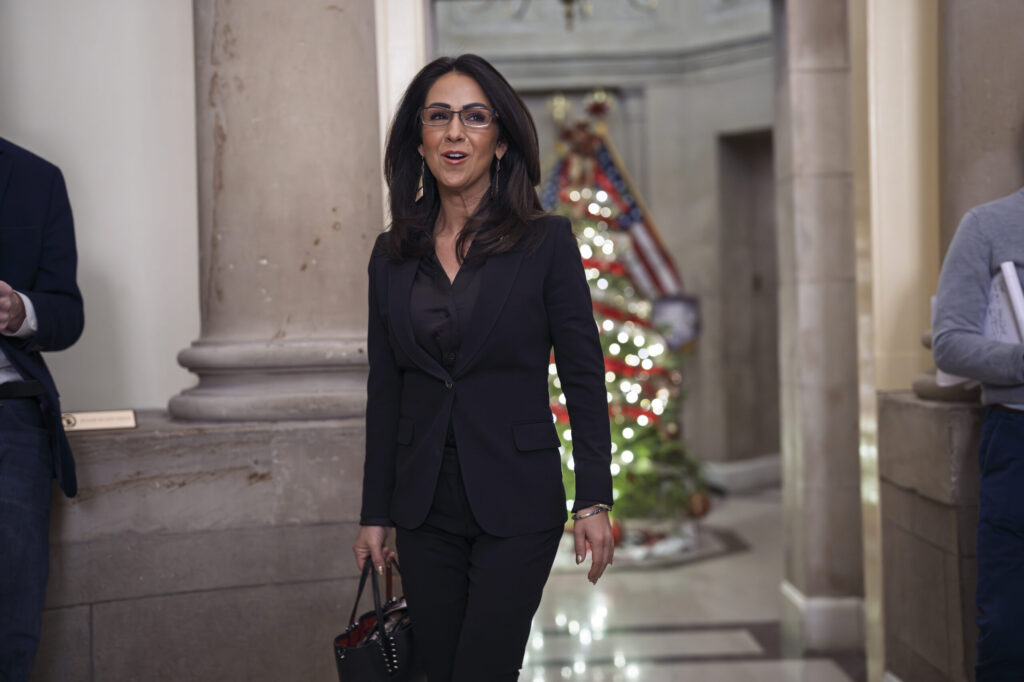
U.S. Rep. Lauren Boebert: On representing Colorado, working with Trump and releasing the Epstein files
Thelma Grimes
thelma.grimes@coloradopolitics.com
Updated 12 hours ago
For years, U.S. Rep. Lauren Boebert’s name has become a shorthand for controversy in her home state and in the nation’s capital. Recently, the outspoken Colorado Republican has drawn rare praise from some of her fiercest critics, particularly after breaking...

New jaguar spotted in Arizona points to progress in endangered species’ recovery | OUT WEST ROUNDUP
The Associated Press
the-associated-press@coloradopolitics.com
Updated 7 days ago
ARIZONA New jaguar spotted in wild The spots gave it away. Just like a human fingerprint, the rosette pattern on each jaguar is unique so researchers knew they had a new animal on their hands after reviewing images captured by...
8 exemplars to guide us into the new year | SONDERMANN
Eric Sondermann
eric-sondermann@coloradopolitics.com
Updated 6 days ago
It started as a one-off in my first year of writing this regular column. To ring in the new year back in the eventful year of 2020, I offered a shoutout to eight Coloradans who served as models of how...
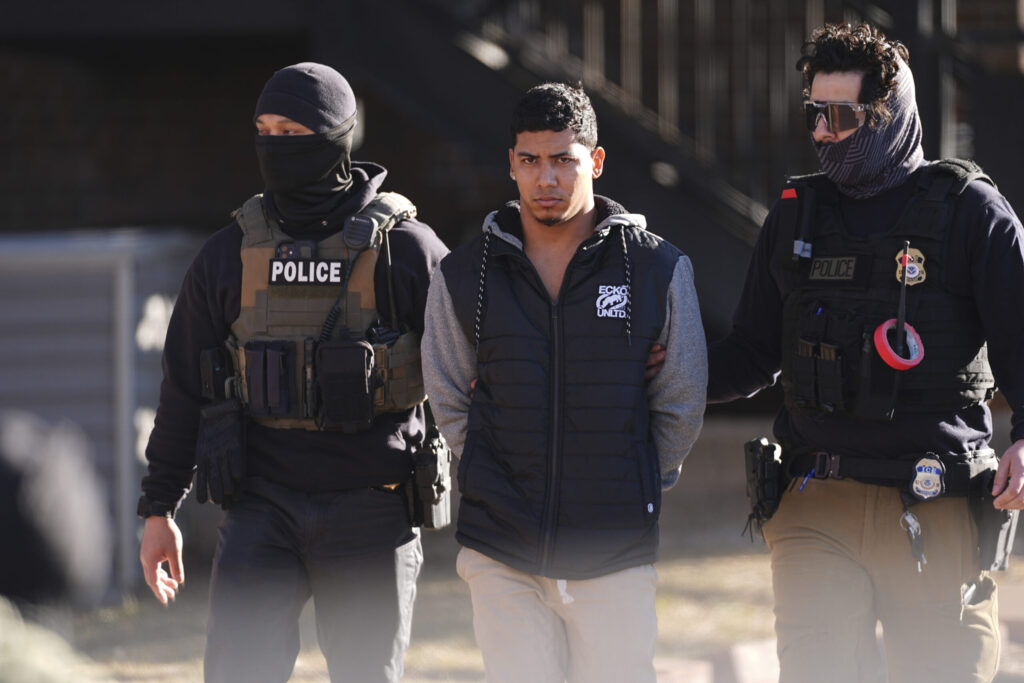
Raids, pushback and TdA indictments defined Denver’s immigration story in 2025
Nico Brambila
nico.brambila@denvergazette.com
Updated 3 days ago
The Trump administration’s push for a large-scale, deportation effort — built around campaign warnings about Tren de Aragua, the Venezuelan prison gang that established a foothold in Colorado — collided with the realities on the ground in Denver, where raids...
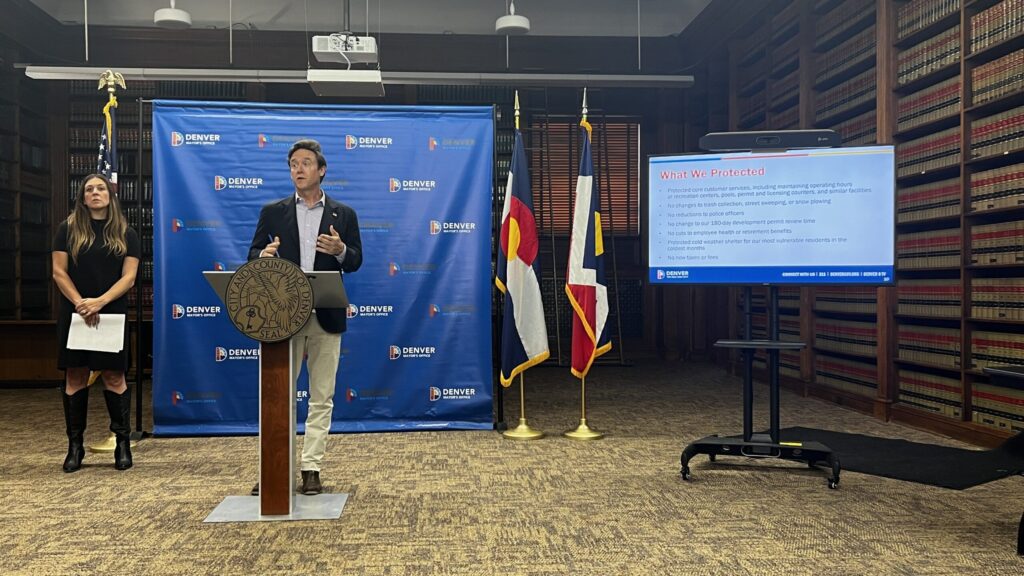
Denver’s budget deficit shaped 2025 news coverage
Deborah Grigsby
deborah.smith@denvergazette.com
Updated 3 days ago
It was a year of big goals on a tight budget for the Mile High City, where Mayor Mike Johnston’s announcement of a $200 million city budget deficit dominated the news coverage. Facing a $50 million gap in its 2025...
PREV
PREVIOUS

PHOTOS: Colorado Politics hosts party to celebrate launch of legislative session
More than 150 politicos of all stripes packed the historic Carriage House at the Governor’s Residence at Boettcher Mansion in Denver Wednesday night for a session-opening shindig thrown by Colorado Politics. Republicans rubbed shoulders with Democrats, toasting the young political news website and the nearly 120-year-old publication it incorporated last year. Vince Bzdek, editor of […]
The Pueblo Chieftain: Who watches the watchdog?
When the state’s voters passed a constitutional amendment creating the Colorado Independent Ethics Commission in 2006, the last thing they expected was for the ethics panel to declare itself above the Colorado Open Records Act. But that is what the commission proposes – making its operations less transparent and thus more secretive. We join the […]