

Guaranteed jail time for Colorado drunk drivers has Pueblo sheriff worried
A new sentencing that ensures the most habitual drunk drivers in Colorado get jail time and treatment might be good for public safety, but at least one Colorado sheriff said it’s an unfair financial burden dumped on him by the state.
A fourth drunk-driving charge now ensures spends at least 90 days to 180 in jail or at least 120 of work release, with no eligibility for time off, according to the law that took effect Aug. 9.
Pueblo County Sheriff Kirk Taylor “has a genuine beef with the state,” the Pueblo Chieftain’s editorial page reported last week.
He’s tough on crime but thinks the legislature pulled a fast one by sentencing serial offenders to county jail instead of the state Department of Corrections, where lawmakers are in charge of paying the extra room and board at the hard-time Hilton.
“The problem with the bill, in my opinion, is the fact that they’re not sentenced to DOC, they’re sentenced to county jails,” Taylor said. “Even though the numbers are not going to be substantial, we’re going to see jails have an uptick in sentenced inmates.
“We believe in the fact that if you get four DUIs, you ought to do some time. We think it should be in the prisons. It’s another way the state is circumventing their responsibility and putting it on locals.”
He said his jail is already overcrowded.
But Taylor didn’t get support from his fellow sheriffs and didn’t cast a vote to oppose it when the bill was before the legislature last spring.
“It was a struggle for the sheriffs,” said Peg Ackerman, the lobbyist for the County Sheriffs of Colorado. “But their concern about the public safety that these repeat DUI offenders raise caused them to vote unanimously to support this bill.”
Colorado first passed its felony driving under the influence law in 2015 to beef up sentencing. But an odd loophole resulted. In Colorado a second DUI offense requires 10 days in jail or alternative sentence, a third requires 60 days, but a fourth or subsequent offense could qualify for probation.
Since the law took effect two years ago, the state has had 734 felony DUIs of four or more offenses. Of those, 56 got probation, the bill’s sponsor, Rep. Mike Foote, D-Lafayette, told the House Judiciary Committee in April.
The bill closed what he called a “fourth DUI discount.”
“That’s not rational sentencing,” said Foote, a deputy Boulder County district attorney who is a legislative advocate for appropriate sentencing.
The bipartisan House Bill 1288 passed the state House 65-0 and the Senate 34-0.
The state, by the by, could be putting itself into position for a windfall.
By passing the law, Colorado could become eligible for $12 million a year in federal transportation dollars aimed at highway safety, legislative analysts noted. The money would go to the Colorado Department of Transportation for “safety projects” in communities most prone for DUI arrests.
The legislature does extensive research on bills, usually, but House Bill 1288’s “fiscal note” has figuratively a question mark on how much local governments might have to pay for the state to get tougher on those driving under the influence.
“This bill increases costs for county jails,” the analysis states. “The cost to house an offender in a county jail varies from about $53 to $114 per day. It is assumed that the impact of this bill will vary by jurisdiction where convictions occur and the length of the jail term imposed. The precise impact to any individual jurisdiction has not been estimated.”
The Colorado chapter of Mothers Against Drunk Driving, however, said county jails are better options to help break the drunk-driving cycle. The new law also requires a tougher level II alcohol and drug driving program or other treatment, at the defendant’s expense.
“Having all our felony DUI offenders starting out in county jail is going to help them get better treatment,” said Franz Lanzer, MADD’s state director. “… With jail there are going to be treatment options that wouldn’t be available in DOC, so this kind of mandatory minimum is different than something we’d be talking about with DOC.”
A new sentencing law that ensures the most habitual drunk drivers in Colorado get jail time and treatment might be good for public safety, but at least one Colorado sheriff said it’s an unfair financial burden dumped on him by the state.A fourth drunk-driving charge now lands an offender in jail for at least 90 to 180 days, or a minimum of 120 days of work release with no eligibility for time off, according to the law that took effect Aug. 9.Pueblo County Sheriff Kirk Taylor “has a genuine beef with the state,” the Pueblo Chieftain’s editorial page reported last week.He’s tough on crime but thinks the legislature pulled at least a small fast one by sentencing serial offenders to county jail instead of the state Department of Corrections, where lawmakers are in charge of paying the extra room and board at the hard-time Hilton.”The problem with the bill, in my opinion, is the fact that they’re not sentenced to DOC, they’re sentenced to county jails,” Taylor said. “Even though the numbers are not going to be substantial, we’re going to see jails have an uptick in sentenced inmates.”We believe in the fact that if you get four DUIs, you ought to do some time. We think it should be in the prisons. It’s another way the state is circumventing their responsibility and putting it on locals.”He said his jail is already overcrowded.But Taylor didn’t get any support from his fellow sheriffs and didn’t cast a vote in opposition with his association when the bill was before the legislature last spring.”It was a struggle for the sheriffs,” said Peg Ackerman, the lobbyist for the County Sheriffs of Colorado. “But their concern about the public safety that these repeat DUI offenders raise caused them to vote unanimously to support this bill.”Colorado first passed its felony driving under the influence law in 2015 to beef up sentencing. But an odd loophole resulted. In Colorado a second DUI offense requires 10 days in jail or alternative sentence, a third requires 60 days, but a fourth


Colorado’s chief federal judge orders return of wrongfully deported man, second judge to explore ‘series’ of violations
Michael Karlik
michael.karlik@coloradopolitics.com
Updated 22 minutes ago
Colorado’s chief federal judge took the extraordinary step of directing the government on Tuesday to do everything it can to return a man it deported in violation of his order. At the same time, Colorado’s chief magistrate judge has set...

Counties warn CPW that new comment limits sideline local governments
Marianne Goodland
marianne.goodland@coloradopolitics.com
Updated 33 minutes ago
The September meeting of the Colorado Parks and Wildlife Commission will feature newly revised public‑comment rules — changes introduced by chair Jay Tutchton of Bent County, who announced them without first discussing the revisions publicly with the rest of the...

Controversial two-bag furbearer limit heads to CPW meeting under legal threat
Marianne Goodland
marianne.goodland@coloradopolitics.com
Updated 13 minutes ago
Next week’s Colorado Parks and Wildlife Commission meeting in La Junta is likely to open under the cloud of threatened legal action. Safari Club International and the Sportsmen’s Alliance Foundation warned the commission this month that its July vote imposing...

Golden to pay $155,000 to fired city manager
Matt Kyle
matt.kyle@denvergazette.com
Updated 4 minutes ago
The Golden City Council on Tuesday approved a roughly $155,000 severance payout to former city manager Scott Vargo, who was fired earlier this month following a “racist incident” at a city fire station. The payout is part of a separation...

Trump says the US doesn’t need Canada. America’s economy says otherwise.
The Associated Press
the-associated-press@coloradopolitics.com
Updated 1 hour ago
TORONTO (AP) — U.S. President Donald Trump says his country does not need Canada. But every day, roughly 4 million barrels of Canadian crude oil flow south, helping fuel American cars, trucks and airplanes and supply U.S. industry. And oil...
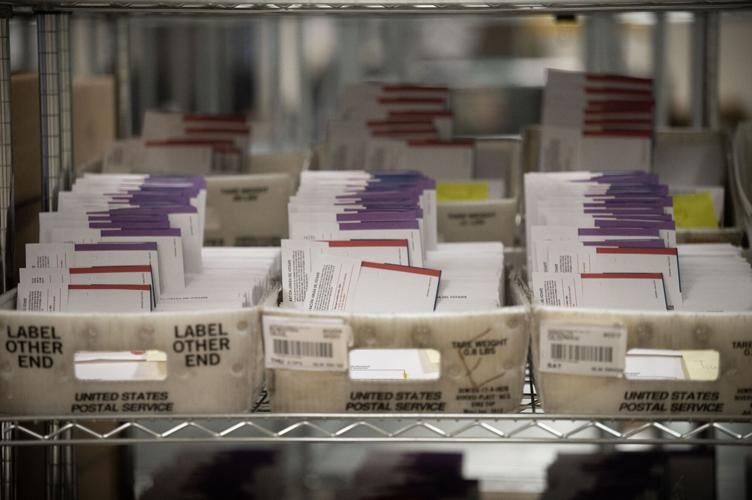
USPS ballot rule faces lawsuit from Colorado, other states
Thelma Grimes
thelma.grimes@coloradopolitics.com
Updated 3 hours ago
Colorado, along with 25 other states, filed a lawsuit against the U.S. Postal Service to challenge a new rule that seeks to restrict the mailing of ballots to American citizens in an eligible voters list. Colorado relies heavily on the...

FDA approves landmark pancreatic cancer drug that’s shown to improve survival
The Associated Press
the-associated-press@coloradopolitics.com
Updated 1 hour ago
WASHINGTON (AP) — The Food and Drug Administration on Wednesday approved a groundbreaking new drug for advanced pancreatic cancer, offering U.S. patients a more effective treatment against one of the deadliest types of cancer. FDA officials gave expedited approval to...
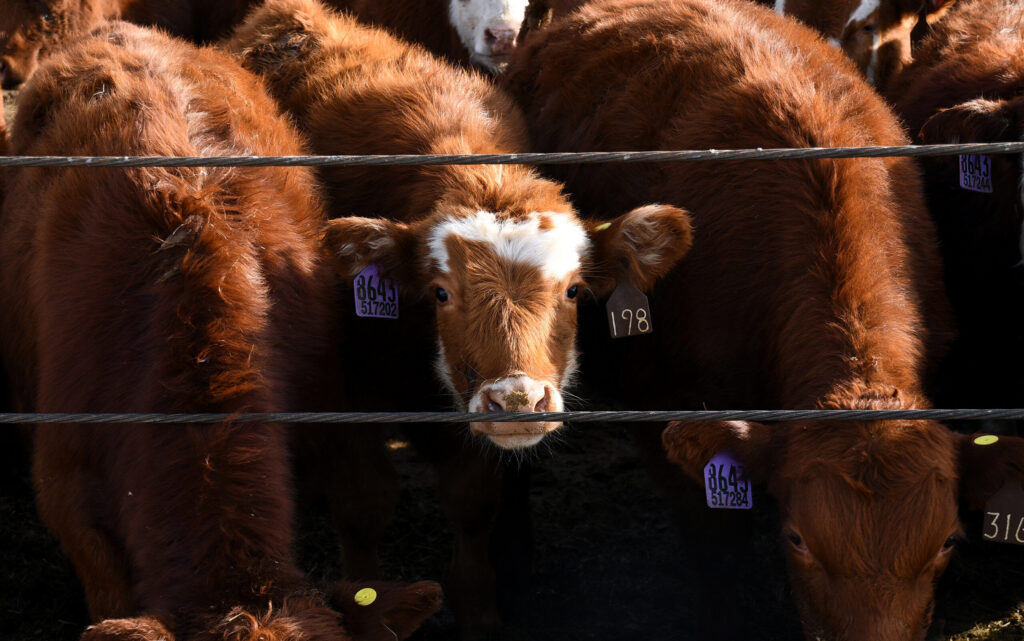
Trump defends pause on beef tariffs: Prices are ‘coming down very rapidly’
Naomi Lim
naomi-lim@coloradopolitics.com
Updated 4 hours ago
President Donald Trump defended his decision to pause tariffs on some beef imports, even as Republicans criticize the decision. “Prices are coming down very rapidly, and now beef is starting to come down,” Trump told The Glenn Beck Program on...
Denver murder, assault convictions reversed due to faulty jury instructions
Michael Karlik
michael.karlik@coloradopolitics.com
Updated 4 hours ago
Colorado’s second-highest court reversed a defendant’s convictions for murder and assault last week after concluding a Denver judge incorrectly omitted key jury instructions that could have affected the verdict and sentencing. Stephen C. Swainson fatally stabbed Israel Casillas in downtown...

This is how much Colorado will receive from massive Meta child safety settlement
Thelma Grimes
thelma.grimes@coloradopolitics.com
Updated 14 minutes ago
As part of a sweeping multistate agreement, Meta Platforms, Inc. — the parent company of Facebook and Instagram — has agreed to pay more than $17 billion and adopt extensive child-safety changes to its operations. Colorado Attorney General Phil Weiser...