

El Paso County could chip away at I-25’s Gap, as locals hit go on funding
By chipping away at The Gap, El Paso County voters could do something that some state legislators encourage and others dread: siphon off support for a statewide transportation plan by spending their money locally.
The Pikes Peak Rural Transportation Authority board last week approved a ballot question to ask voters if it’s OK to set aside $10 million to help pay to widen a 2-mile stretch of Interstate 25 in El Paso County. The seed money is part of a larger effort to widen the interstate from Monument to Castle Rock, a 17-mile stretch known as The Gap.
I-25 narrows to two lanes in each direction between the two reasonably well-off communities, causing traffic jams and collisions. The state Department of Transportation says it doesn’t have the money in its current budget, and state lawmakers haven’t figured out a way to get them enough. Statewide, CDOT needs $20 billion over the next 20 years just to keep up with growth, the agency contends.
CDOT has estimated the Gap will cost $290 million and $600 million. Colorado leaders have even appealed to the White House for help, calling the Gap a critical transportation corridor.
If voters allow it, the PPRTA would put up $10 billion for roughly a 2-mile stretch in El Paso County, if other money joins it. Where that money comes from, nobody knows.
President Trump has promised a $1 trillion national infrastructure investment, but it remains to be seen if he can pass it and how much, if any, would go to Colorado’s overburdened interstates. The result of getting that money, however, could mean toll roads.
The Gap is one of the three main arguments for voters and lawmakers to find money to address the state’s critical transportation needs. As symbolic projects go, the Gap joins I-25 from Denver to Fort Collins and the Interstate 70 mountain corridor as the chief selling points to statewide voters.
Legislators in the last session discussed a sales tax to pay back a $3.5 billion loan for projects statewide, including the Gap. Three Republicans on the Senate Finance Committee, including Colorado Springs’ Owen Hill, didn’t like the tax increase and voted down the bipartisan House Bill 1242.
Colorado Springs leaders were skeptical of raising the state sales tax, since cities rely on sales taxes. Hiking the state sales tax would make it more difficult for local governments to pay for local projects in the future. The Colorado Springs Chamber and Economic Development Corp. preferred lawmakers look instead at the state gas tax, which hasn’t been raised since 1991.
Democratic House Speaker Crisanta Duran of Denver warned before the session started that if lawmakers didn’t pass a statewide plan, then communities such as El Paso County that can afford to pay for local needs won’t later support state money for communities that can’t.
El Paso County is proving she’s right.
Proponents of the El Paso County plan hope putting up local money will spur financial support from other local governments and make the project more attractive for federal and state dollars.
“Taking this to the voters shows consensus and solidarity and support,” said Jim Godfrey, chairman of the PPRTA Citizen Advisory Committee, which unanimously favored adding the issue to the ballot. “It would be hard for the state to ignore if we put money up against it.”
Senate Majority Leader Chris Holbert, a Republican from Douglas County, told Colorado Politics in June that communities should work on such local options, because statewide solutions are slow and elusive.
El Paso County voters might have the chance to approve another source of funding for the project, as well.
The County Commission is weighing options for what to do with about $15 million in excess tax revenue. Colorado’s Taxpayer’s Bill of Rights, or TABOR, limits annual growth of some local government tax revenue and requires the surplus be returned to taxpayers or used for voter-approved purposes.
El Paso County Commissioner Mark Waller hopes another ballot question will ask voters if some of the county’s revenue surplus – he’s pushing for $7.5 million – should go toward the I-25 widening. Commissioners have until Sept 8 to add issues to the ballot and finalize language.
The I-25 Gap Coalition, made up of state officials and local leaders from communities along the roughly 17-mile two-lane stretch of road, met for the first time in June to explore options to speed the widening.
“This is a huge step forward to get this on the ballot,” said Waller, vice chairman of the PPRTA board of directors and a former state House minority leader. “In order for us to be able to really make the case to the state and the federal government, it needs to be a collaborative effort.”
State and local leaders have so far been unsuccessful in identifying other sources of funding for the Gap, which state transportation officials say could be finished by 2021 if the money is available. Two federally-required environmental planning studies, paid for by money originally earmarked for the C-470 Express Lane, are currently under way, said Colorado Department of Transportation spokesman Bob Wilson.
CDOT hopes to find some contributors by the end of the year, Wilson said. Federal grants or state funds are two possibilities. In May, Gov. John Hickenlooper signed into law Senate Bill 267, a bipartisan omnibus bill aimed much more at helping rural hospitals and rural transportation than clogged interstates.
By monkeying around with how an assessment on hospital bed occupancy and selling and leasing back government buildings, the legislature thinks it can generate more than $1.8 billion for transportation over the next 20 years. But 25 percent off the top goes to rural counties and another 10 percent to transit. The rest of the money hasn’t been attached to specific projects yet. The Gap won’t get much in the next few years against many competitors for a divvied-out share.
Editor’s Note: This story was updated to correct that Chris Holbert is the Senate majority leader not the house leader.


Michael Dougherty is literally running for attorney general in Colorado Democrat’s 1st TV ad
Ernest Luning
ernest.luning@coloradopolitics.com
Updated 2 hours ago
Democratic attorney general candidate Michael Dougherty, the Boulder County district attorney, runs laps around the judicial complex in Denver that houses the office he’s seeking in a TV ad released Friday that includes a subtle dig at one of his...
Group aims to add right to hunt and fish to Colorado Constitution
Marissa Ventrelli
marissa.ventrelli@coloradopolitics.com
Updated 50 minutes ago
A group is seeking to make Colorado the 25th state in the nation with an established constitutional right to hunting and fishing through a proposed ballot initiative. Backed by the International Order of T. Roosevelt, a group dedicated to preserving...
Colorado Politics Calendar June 15-21
Rachael Wright, Special to Colorado Politics
rachael.wright@coloradopolitics.com
Updated 3 days ago
CoPo’s weekly political calendar helps you find political and public policy events throughout Colorado. It includes candidate and issue campaign events, public policy meetings, court hearings, state and local party conventions, assemblies, debates, rallies, parades, speaking engagements, traveling dignitary appearances,...

A primary brings out primal instincts | SONDERMANN
Eric Sondermann
eric-sondermann@coloradopolitics.com
Updated 2 days ago
There are no Stanley Cup finals or NBA title showdowns involving local teams this June. In their place, we are inundated with primary election campaign ads. Coloradans can be excused for missing the diversion and alternate programming. But life can...
Dem-GOP tension dominates 1,000-bill legislative session | A LOOK BACK
Rachael Wright, Special to Colorado Politics
rachael.wright@coloradopolitics.com
Updated 2 days ago
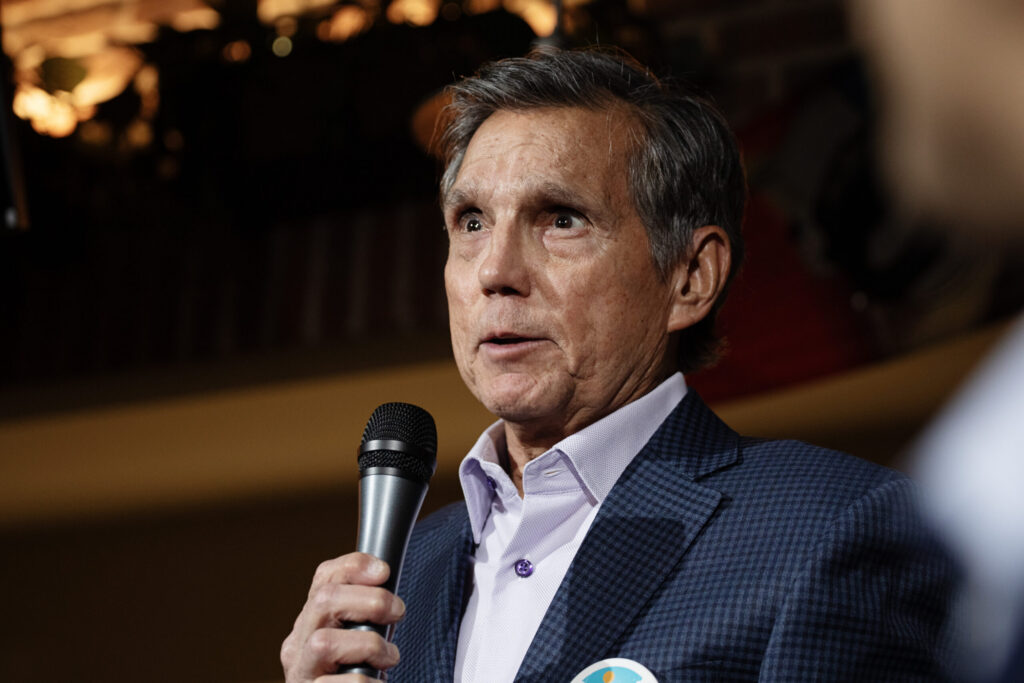
Forty-Five Years Ago This Week: “I can honestly say that until now, we got along well with the governor’s office,” said House Minority Leader Federico Peña, D-Denver. “We visited frequently with the staff. And you didn’t see certain legislators speaking...
Hickenlooper lands endorsements from Elizabeth Warren, Ministerial Alliance in US Senate primary
Ernest Luning
ernest.luning@coloradopolitics.com
Updated 22 hours ago
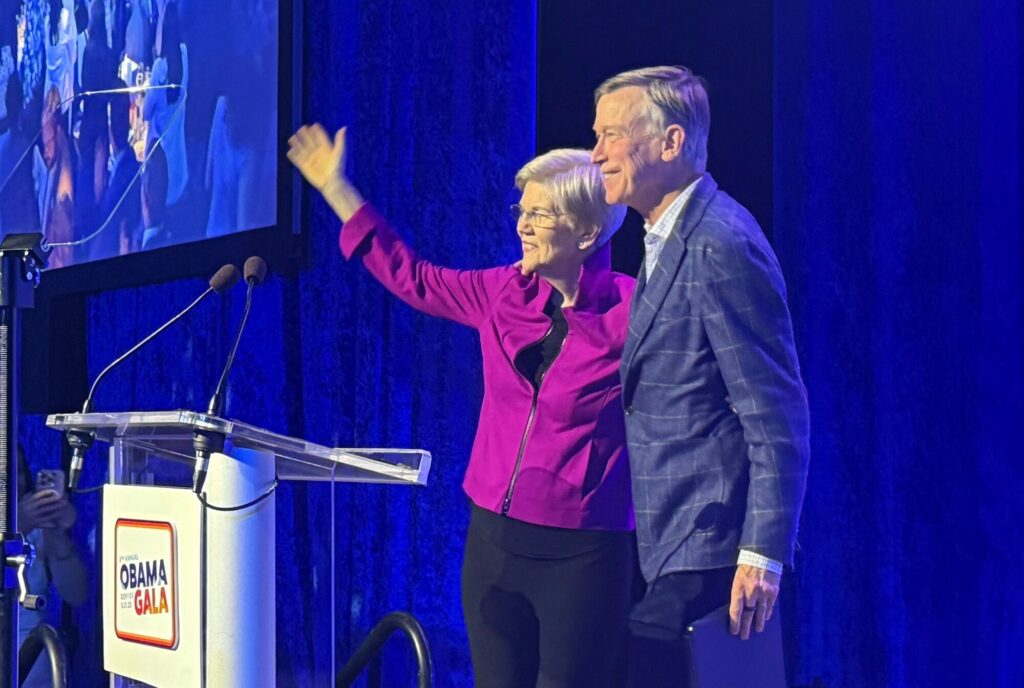
U.S. Sen. John Hickenlooper won endorsements this week from a progressive Democratic colleague and a coalition of metro-area African American faith leaders as voting began in Colorado’s primary election. U.S. Sen. Elizabeth Warren of Massachusetts and the Greater Metro Denver...
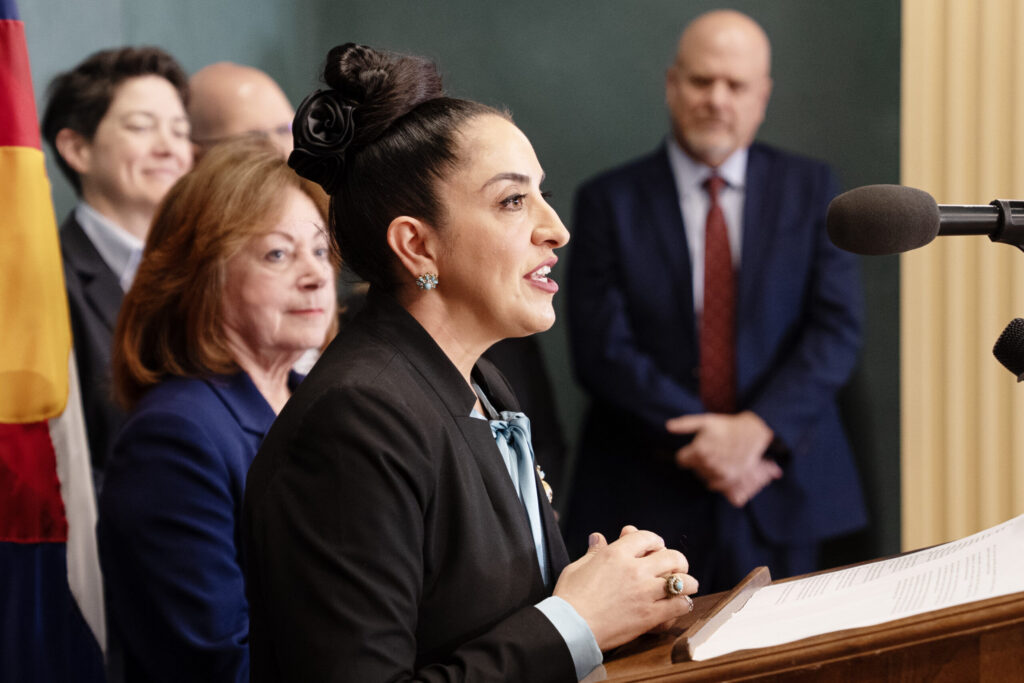
Colorado justices say insurers may access policyholders’ medical info in denied-benefits litigation
Michael Karlik
michael.karlik@coloradopolitics.com
Updated 23 hours ago
The Colorado Supreme Court declined on Monday to expand its narrow prohibition on insurance companies accessing policyholders’ medical information, clarifying that a dispute over an insurer’s bad-faith decision to deny benefits is the only situation where a company is limited...

House District 14: Businesswoman, consultant square off in GOP primary
Mary Shinn
mary-shinn@coloradopolitics.com
Updated 1 day ago
Firearms training company owner Ava Flanell will face Troy Vanderhule, the chief fundraising officer for Dobson Philanthropic, in the June 30 Republican primary for state House District 14, an area in northern Colorado Springs. Flanell was appointed to the seat...
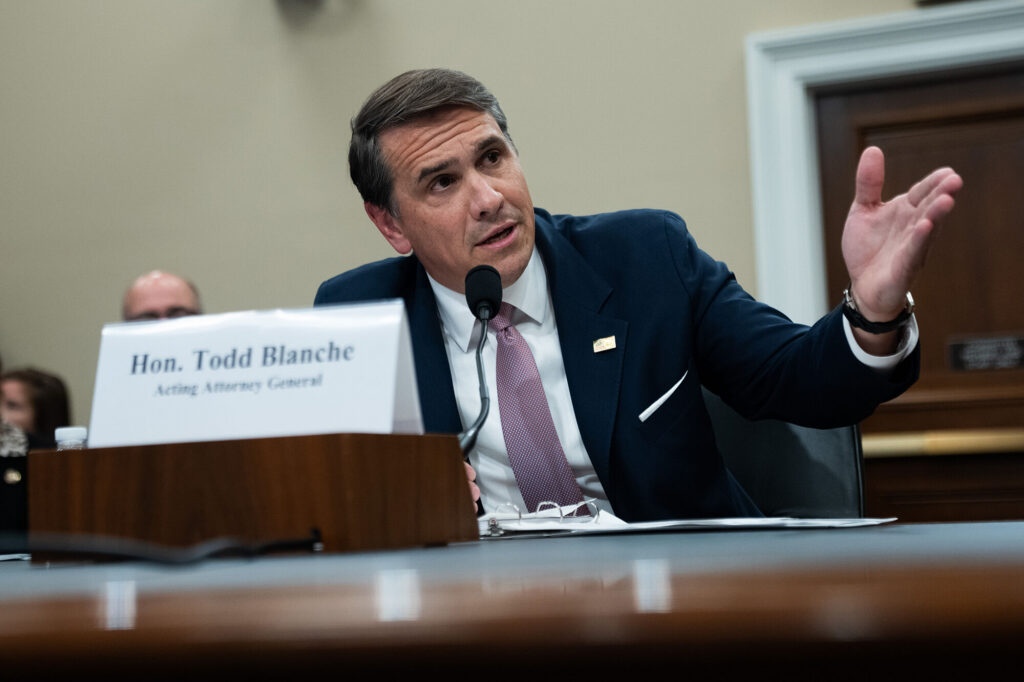
Federal judge wants Todd Blanche to swear in writing anti-weaponization fund won’t be revived
Jack Birle, Washington Examiner
jack.birle.washington.examiner@gazetteedit.wpenginepowered.com
Updated 23 hours ago
A federal judge maintained a block on the Department of Justice’s $1.776 billion anti-weaponization fund Friday, despite the DOJ claiming they have abandoned the planned fund aimed at compensating allies of President Donald Trump and others who say they were politically targeted by...
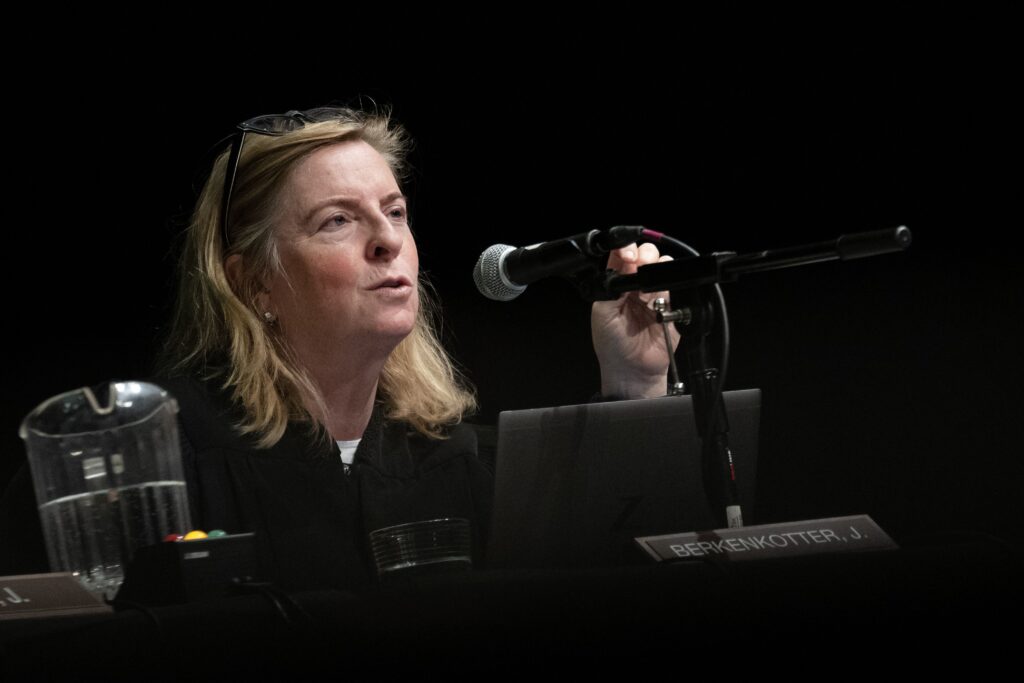
Colorado Supreme Court declines to loosen requirements for insurance company defendants
Michael Karlik
michael.karlik@coloradopolitics.com
Updated 18 hours ago
The Colorado Supreme Court declined last week to reconsider its longstanding expectations for insurance company defendants, and agreed that an insurer failed to properly raise its defenses against a policyholder’s breach-of-contract lawsuit. When an insured driver has an accident with...