

Forced arbitration with banks isn’t dead yet, but Colorado consumer watchdogs say let it die
Republican leaders in the U.S. House and Senate Thursday set in motion a plan to force people possibly wronged by banks into arbitration and keep them out of courtrooms, just like in the old days before this month.
Let’s back up a few steps. In 2010 Congress passed the Dodd-Frank Wall Street Reform and Consumer Protection Act in response to the economic collapse that had shady dealings at its core. That law created the Consumer Financial Protection Bureau and gave the agency the power to ban or limit forced arbitration clauses in consumer financial deals, after a study.
The CFPB has since finished two studies and this month issued a rule this saying arbitration clauses can no longer be used to block class-action suits. The most familiar example of the kinds of deals the new rule would address is Wells Fargo. The banking giant has admitted to opening potentially millions of sham accounts in customers’ names to collect fees. But it has avoided class-action lawsuits via forced arbitration.
California, as a state, is looking at crackdowns.
Thursday, Republicans in the House and Senate moved to keep the mandatory arbitration shield in place by undoing the new rule.
“This is a good rule that protects consumers,” Rich Jones, the policy director at Denver’s Bell Policy Center, which takes on these kinds of fights, told Colorado Politics Thursday. “And the actions by Congress help Wall Street banks at the expense of middle-class Americans.”
Jones wrote about the new rule on his blog just last Monday.
“Bottom line, the ability to join class-action lawsuits makes it possible for consumers to challenge widespread misconduct by financial firms that otherwise would be too expensive to pursue in individual arbitration claims,” he said Thursday.
Worth noting, the bureau’s creation was the work of Sen. Elizabeth Warren of Massachusetts, who very well may be the front-runner as the Democrat to take on President Trump in 2020. And it’s no secret Trump has the consumer watchdog agency in his sights. The conservative Washington Times alleges its Trump’s angle to undo Dodd-Frank.
Denver-based CoPIRG held a party Wednesday to celebrate the Consumer Financial Protection Bureau’s sixth birthday and kick off its political defense, including door-to-door campaigning. CoPirg points out the the U.S. House last month passed the Financial Choice Act to roll back many of Dodd-Frank’s regulations, with Colorado’s delegation voting along party lines. The bill is pending in the narrowly divided Senate.
“The CFPB is doing a great job standing up for the little guy against Wall Street banks, payday lenders, student loan companies, and debt collectors,” said Danny Katz, the group’s director said. “We need Sens. (Michael) Bennet and (Cory) Gardner to stand with the CFPB too and stop proposals to weaken the consumer watchdog.”
While consumer groups have fought for the right to sue for years, the banking industry is waging a political war against it, claiming only lawyers on both sides with really benefit.
Bureau director Richard Cordray spoke about arbitration abuse in a bureau hearing in Denver in October 2015.
“Companies use this clause, in particular, to block class-action lawsuits,” he said in Denver. “They thus provide themselves with a free pass from being held accountable by their customers. That free pass is secured by making sure their customers cannot group together to seek relief for wrongdoing. Many violations of consumer financial law involve relatively small amounts of money for the individual victim.
“Group claims often are the only effective way consumers can pursue meaningful relief for harms that can add up to large amounts of money for financial providers.”
Cordray, a former state attorney general, is expected to run in the Democratic primary for governor in Ohio next year.
Thursday Senate Banking Committee Chairman Mike Crapo of Idaho and House Financial Services Committee Chairman Jeb Hensarling of Texas said they would invoke the Congressional Review Act, which allows Congress to use a simple majority to repeal an agency’s rule within 60 legislative days after its implemented.
“The rule is based on a flawed study that leading scholars have criticized as biased and inadequate, noting that it could leave consumers worse off by removing access to an important dispute resolution tool,’ Crapo said in a statement. “By ignoring requests from Congress to reexamine the rule and develop alternatives between the status quo and effectively eliminating arbitration, the CFPB has once again proven a lack of accountability. Given the problems with the study and the bureau’s failure to address significant concerns, it is not only appropriate but incumbent on Congress to vote to overturn this rule.”
Twenty-four of the Senate’s 52 Republicans co-sponsored the call for a review, but Gardner was not among them.
He also didn’t join more than 50 other congressional Republicans who sent a letter to the bureau last month complaining about the study that led to the arbitration rollback. The letter cited “a fatally flawed process that produced a fatally flawed study.” The lawmakers called on the bureau to re-open the study.
In April, however, with no mention of arbitration’s fate, Gardner sent a letter to Cordray complaining that the agency’s regulatory meddling was hurting rural communities’ ability to get loans.
“I am concerned existing rules and regulations are having the unintended consequence of inhibiting rural access to capital, and the continued downturn of commodity prices could make this worse,” Gardner wrote. “With much of the agriculture industry in Colorado and throughout the nation facing a downturn, it is important that farmers and ranchers have access to financing to maintain operations through this difficult time.”
In his Jones’ analysis of the new rule, he looked at CFPB’s 2015 study and observed:
Forced arbitration clauses appear in all kinds of contracts and affect millions of Americans. For example, 99 percent of payday loans, 92 percent of prepaid cards and 85 percent of private student loans studied had these clauses.
In 2010 and 2011, only 9 percent of consumers who brought claims under forced arbitration obtained relief, recovering an average of 12 cents per dollar claimed.
During the same period, 93 percent of companies obtained relief in forced arbitration, recovering an average of 98 cents per dollar claimed.
Only 25 consumers with claims of less than $1,000 pursued arbitration each year. By contrast, class action lawsuits returned $2.2 billion in cash relief to 34 million Americans from 2008 to 2012, after paying off attorneys’ fees and court costs.
No evidence was found that forced arbitration clauses lead to lower prices for consumers, it just means higher profit margins for banks and other financial firms.

Colorado lawmakers move to curb eminent domain powers after Xcel dispute
Marissa Ventrelli
marissa.ventrelli@coloradopolitics.com
Updated 4 hours ago
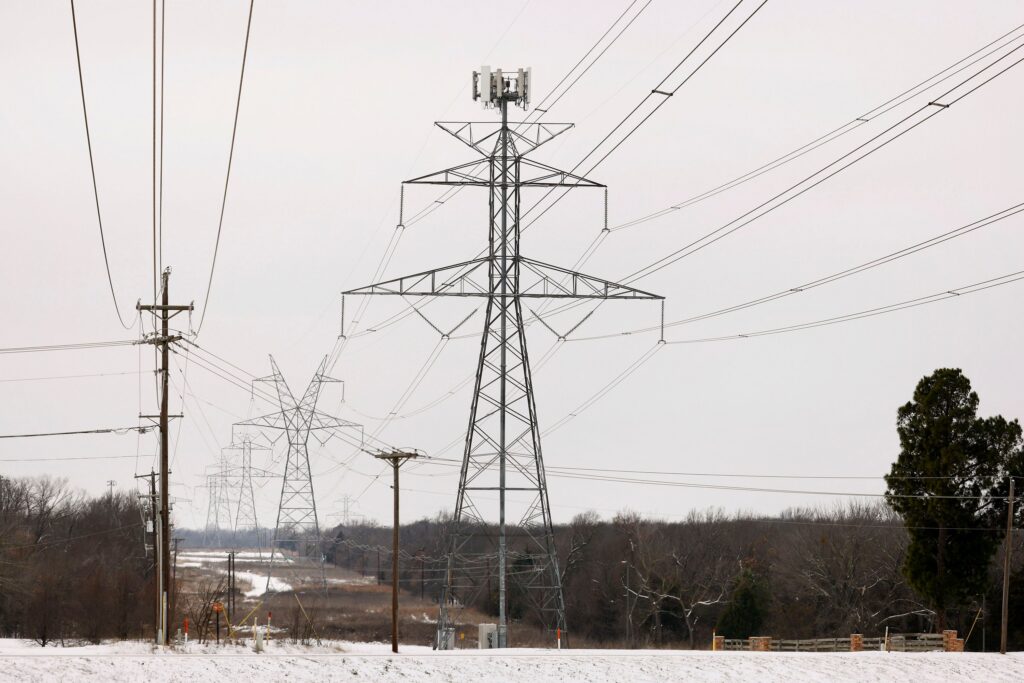
After months of backlash over Xcel Energy’s use of eminent domain in eastern Colorado, lawmakers representing Elbert and El Paso counties are advancing legislation that would bar utilities from initiating property takings until they’ve secured state approval and all required...

As parents claim some AI chatbots encourage teen suicide, Colorado legislators eye regulation
Marissa Ventrelli
marissa.ventrelli@coloradopolitics.com
Updated 1 hour ago
Juliana Peralta of Thornton was a vibrant, happy kid, said her mom, Cynthia Montoya. Then, in the final months of 2023, Cynthia began to notice a change in her 13-year-old daughter. Peralta had become more withdrawn and was on her...

Trump to attend dignified transfer of six US service members killed by Iran
Christian Datoc, Washington Examiner
christian.datoc.washington.examiner@gazetteedit.wpenginepowered.com
Updated 3 hours ago
President Donald Trump will attend the soon-to-be-held dignified transfer of six American service members killed so far by Iran in Operation Epic Fury. White House press secretary Karoline Leavitt made the announcement during her Wednesday press briefing. “These heroes represent...

Judge declines to block potential Boebert challenger from going through assembly process in Colorado’s 4th CD
Ernest Luning
ernest.luning@coloradopolitics.com
Updated 5 hours ago
Congressional candidate Eileen Laubacher, one of the Democrats seeking to challenge Republican U.S. Rep. Lauren Boebert, can participate in the party’s caucuses and assemblies pending a court hearing later this month, a Denver judge ruled Tuesday in response to a...
Sanctuary cities declined 17,864 requests to hold illegal immigrants for ICE in 2025: Noem
Anna Giaritelli Washington Examiner
anna-giaritelli-washington-examiner@coloradopolitics.com
Updated 6 hours ago
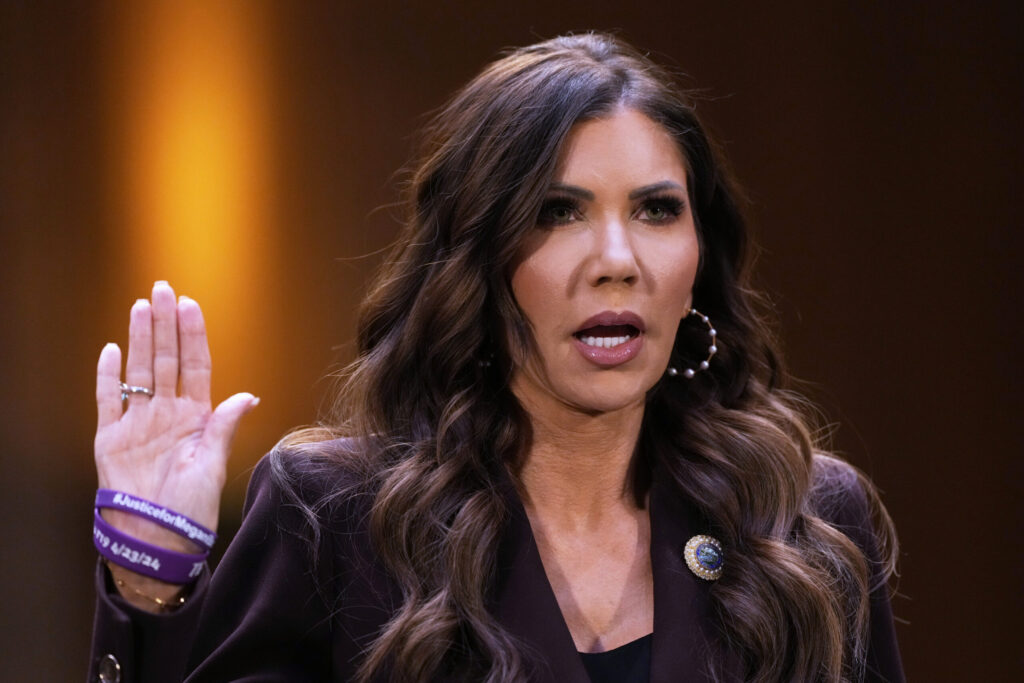
Sanctuary cities and counties declined to turn over 17,864 illegal immigrants in police custody to Immigration and Customs Enforcement in 2025, according to the Department of Homeland Security. Homeland Security Secretary Kristi Noem testified before the House Judiciary Committee on...

Federal judge dismisses malicious prosecution claim against former Denver prosecutor
Michael Karlik
michael.karlik@coloradopolitics.com
Updated 6 hours ago
A federal judge concluded on Monday that a former Denver prosecutor could not be sued for allegedly causing the arrests of two plaintiffs after they failed to appear for trial on the scheduled date, even though the trial had been...

Judicial discipline commission reports increased transparency, increased submissions
Michael Karlik
michael.karlik@coloradopolitics.com
Updated 7 hours ago
The Colorado Commission on Judicial Discipline received 473 misconduct complaints about judges in 2025, which was nearly 29% higher than in 2024 and substantially greater than any time in the past decade. However, only 31 complaints were referred to the commission...
Colorado Gov. Jared Polis ignites fierce debate after raising clemency questions in Tina Peters case
Marianne Goodland
marianne.goodland@coloradopolitics.com
Updated 3 minutes ago
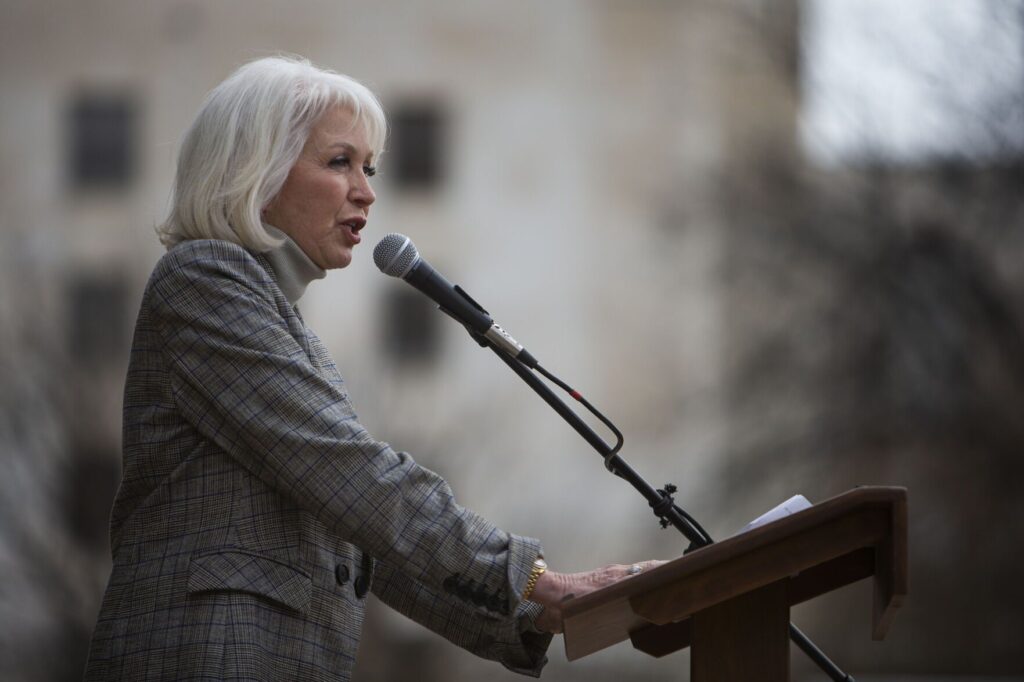
Gov. Jared Polis ignited a political firestorm Tuesday night after weighing in on the prison sentences of two former Colorado officials — a Democrat and a Republican — convicted of attempting to influence a public servant. The comments quickly fueled...

Colorado Supreme Court signals intervention in dispute over treatment for trans children
Michael Karlik
michael.karlik@coloradopolitics.com
Updated 1 day ago
The Colorado Supreme Court ordered Children’s Hospital Colorado on Tuesday to explain why it should not direct the organization to resume providing certain types of services to transgender children in compliance with the state’s non-discrimination law. Last month, a Denver...
Trump faces first domestic test on Iran conflict with Senate war powers vote
Ramsey Touchberry, Washington Examiner
ramsey.touchberry.washington.examiner@gazetteedit.wpenginepowered.com
Updated 1 day ago
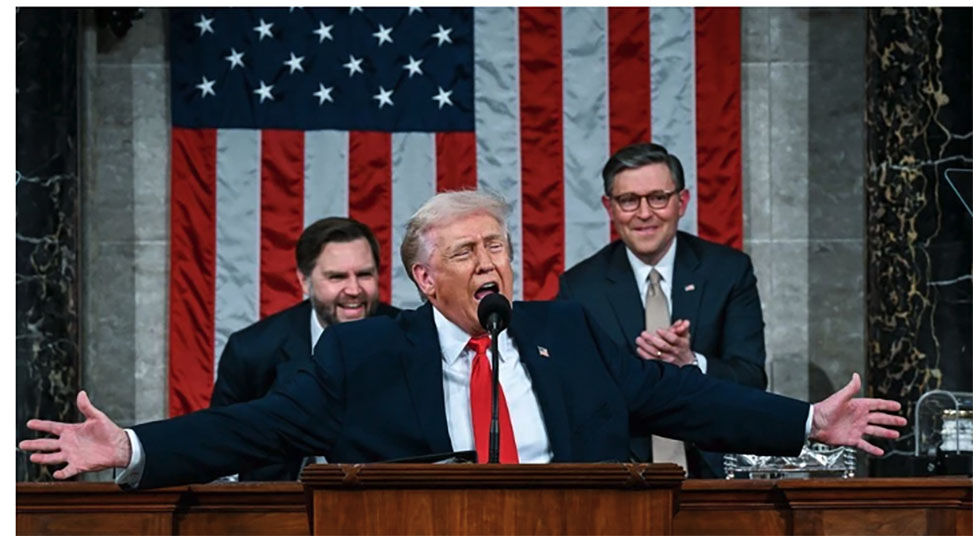
Administration officials are scrambling to sell members of Congress on President Donald Trump’s military operations in Iran ahead of bipartisan attempts to limit his war powers in the Middle East without approval from lawmakers. The Senate and House are set...