

INSIGHTS | A predatory economy is dining on America’s upward mobility
Over sandwiches and iced tea with two smart guys, the Bell Policy Center’s Rich Jones and his boss, Scott Wasserman, I asked why things always seem harder on the working man, while the rich get richer.
That’s not just me saying it. In May, the University of Michigan’s Panel Study on Income Dynamics released a report that said the richest 5 percent of Americans saw their incomes rise by an average of 5.8 percent from 2012 to 2014. The median U.S. household income rose by exactly half that, 2.9 percent, “which doesn’t even keep up with inflation,” researches noted.
The left-leaning Bell Policy think tank has put up a good fight against predatory lenders, but now they wonder if it’s just an obvious symptom of a predatory economy, a system that in many different ways gorges on the money of those who can least afford to pay. People with no wealth inevitably need loans, laden with hidden fees and mandated insurance that gnaw deeper into their pockets.
“You can’t pick yourself up by the bootstraps if your feet are chained to the floor,” Scott said. “Debt is preventing Americans from moving up, and our increasingly predatory economy makes that possible.”
Colorado lawmakers were heralded in 2010 for capping payday loan rates at 45 percent. Rates had been north of 300 percent. Bail bonds in Colorado are capped at 15 percent, so it’s easier get of jail than it is to get out of debt.
Predatory lending works this way: You’re dead broke and desperate, so you borrow some money from a payday lender at a much-higher-than-the-banks’ interest rate. Folks who are desperate enough to turn to a payday lender aren’t usually people with ready cash, so many fall farther behind as the interest and penalties mount and the cycle of debt spins into a tornado.
But, beyond the interest rate, that sounds like most credit cards that banks are eager to give to those most likely to run up bills and pay the high interest.
The loan industry and its political allies have a defensible response: Don’t borrow what you can’t afford to repay, and thank goodness for lenders willing to serve the desperate, albeit at a price that reflects risk.
Human nature is part of it, too. Debt is a bridge for the have-nots, and the ultimate weakness is giving our children the best we can. Sending our kids to college seems as much a necessity as food, clothing and an iPhone.
What does that look like around the kitchen table? The average cost for college tuition in Colorado last year was $11,858. The average cost of food for one adult and three children in Denver last year was $10,601.
The conservative Millennial Policy Center noted in a white paper in May that the price of tuition has marched upward in step with the availability of loans and grants. That’s a win-win for banks and colleges, but it left the average graduate from a Colorado university with nearly $26,000 in debt last year, and 53 percent were in hock for their higher learning.
Healthcare takes a big bite out of Joe Lunchbucket’s upward mobility, too.
An emergency room basically works like a grocery store where you go in and the clerks decide what to put in your cart – trust them, you need it – and when you get to the check-out they charge you prices beyond your control. (“Sorry, sir, these potatoes are out-of-network. You’ll have to pay for your French fries out of pocket.”)
Obamacare, many hoped, would address unaffordable healthcare, but it hasn’t. People now have insurance the government forces them to buy, but it’s too darn expensive both in premiums and deductibles.
If Congress strips away insurance and Medicaid for the working poor, their economic pit only deepens, perhaps into an abyss, Rich and Scott agreed.
Health Insurance companies saw their profits rise 80 percent under President Obama, the conservative Weekly Standard reported in October, and The New York Times reported in March that managed care insurance companies saw stock gains of 300 percent since 2010, compared to 135.6 percent for the overall market.
Property insurers are getting richer while the working man pays, as well. Despite covering $7.3 billion in catastrophic losses in the first three months of 2017, the worst quarter since 1994, they still turned in $7.7 billion in profit.
Remember that afternoon hail storm that hit Denver on May 8?
I shell out about $132 a month for homeowner’s insurance, more than I pay for electricity. But by the time my insurer applied deductibles, depreciation and dodges that would make the mob leg-breaker blush, my policy is paying about $4,000 for hail damage. I’m eating almost $5,000.
That’s not even an outrage. It’s just how our economy works.
I’m reminded of Frank Sobotka, the union leader on the Baltimore docks on the HBO show “The Wire.” He was trying to get the legislature to back a grain pier than would mean jobs for stevedores. He played politics with money he got from smugglers.
“You know what the trouble is, Brucey?” Sobotka told his lobbyist when the jig was up. “We used to make (stuff) in this country, build (stuff).
“Now we just put our hand in the next guy’s pocket.”


Federal judge formalizes injunction blocking USDA’s ‘pilot project’ for Colorado food assistance
Michael Karlik
michael.karlik@coloradopolitics.com
Updated 2 hours ago
A federal judge formalized his order on Monday to prevent the U.S. Department of Agriculture from requiring Colorado to participate in a food assistance “pilot project,” finding that it violates the law, the U.S. Constitution, and “the bounds of reasoned...

Colorado justices speak about inner workings of court, analysis of appellate opinions | COURT CRAWL
Michael Karlik
michael.karlik@coloradopolitics.com
Updated 2 hours ago
Welcome to Court Crawl, Colorado Politics’ roundup of news from the third branch of government. Members of the state Supreme Court provided an inside look at the workings of their institution, and a Colorado Politics analysis found that some appellate...

Appeals court finds no requirement for different judge to handle attorney-client conflict hearings
Michael Karlik
michael.karlik@coloradopolitics.com
Updated 3 hours ago
Colorado’s second-highest court rejected a defendant’s argument on Thursday that a judge improperly heard about a potential conflict between himself and his lawyer right before sentencing, and the man’s reaction could have “tainted” the sentencing decision. In September 2023, Anthony...
The influencers? Some Colorado appeals judges outpace colleagues in setting legal precedent
Michael Karlik
michael.karlik@coloradopolitics.com
Updated 3 hours ago
A handful of judges on Colorado’s second-highest court are producing substantially more precedent-setting opinions than their colleagues, which create binding interpretations of the law that reach beyond individual cases. The Court of Appeals issues approximately 1,700 opinions each year. A...

DeGette challenger Melat Kiros trounces 15-term Democratic incumbent in Denver delegate vote
Ernest Luning
ernest.luning@coloradopolitics.com
Updated 1 day ago
The 28-year-old, first-time candidate challenging Democratic U.S. Rep. Diana DeGette in this year’s primary soundly defeated the 15-term incumbent in a delegate preference poll conducted Saturday at a county party assembly in Denver. Melat Kiros, the daughter of Ethiopian immigrants...

Army veterans Jessica Killin, Joe Reagan qualify for Democratic primary ballot in Colorado’s 5th CD
Ernest Luning
ernest.luning@coloradopolitics.com
Updated 22 hours ago
Democratic congressional candidates Jessica Killin and Joe Reagan secured spots Saturday in Colorado’s June primary to decide who will run against Republican U.S. Rep. Jeff Crank in a district that’s only ever sent GOP lawmakers to Congress. The two Democrats,...

Who has the power to declare war? | Cronin and Loevy
Tom Cronin Bob Loevy
tom-cronin-bob-loevy@coloradopolitics.com
Updated 2 days ago
Our constitutional framers boldly and ambitiously granted Congress the power to declare war yet granted the executive the responsibility, after war is declared, to supervise war as the commander-in-chief. That worked well until the Cold War began. The U.S. has been...
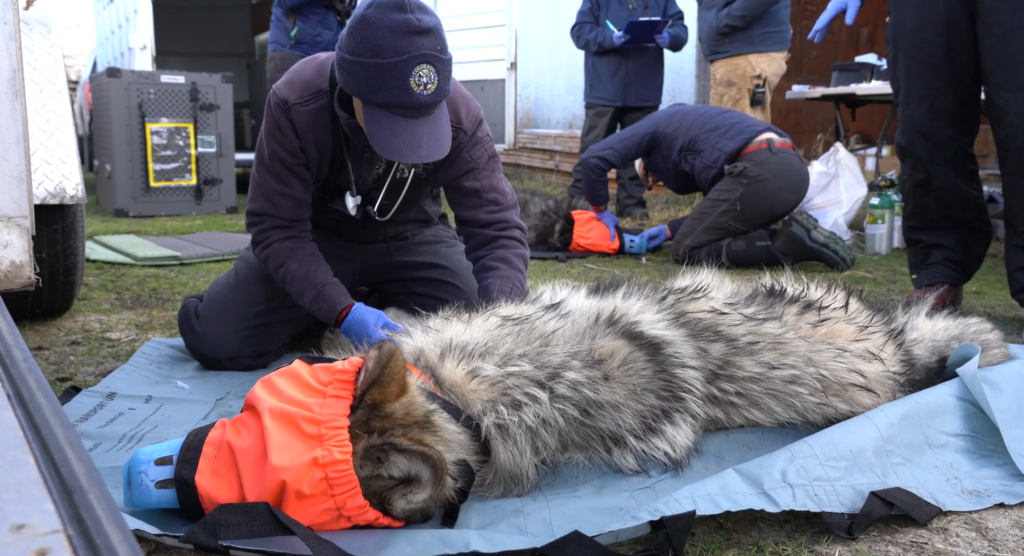
Latest death brings down wolves’ survival rate to 44% in Colorado
Marianne Goodland
marianne.goodland@coloradopolitics.com
Updated 2 days ago
The female wolf of the mating pair for the King Mountain pack has died, bringing total fatalities to 14 out of the 25 animals reintroduced in Colorado. The wolf, identified as No. 2310, was among the 10 wolves brought to...

The delicate, ever-changing dance between politics and religion | SONDERMANN
By Eric Sondermann
by-eric-sondermann@coloradopolitics.com
Updated 2 days ago
The dance, really a marathon that brings to mind the classic movie “They Shoot Horses, Don’t They?”, has been going on as long as there have been governments and organized religion. That is to say that this delicate tango has...
Roasts, get yer roasts, here: Capitol M | Week of March 14, 2026
Marianne Goodland
marianne.goodland@coloradopolitics.com
Updated 5 days ago
The lighter side of the Capitol, especially in the past week Apparently, the pending and eventual switch to daylight stupid time has put people in some pretty funny moods. And thank goodness! On March 4, the Senate approved the appointments...