

Once seen as endangered, incumbent Sen. Michael Bennet wins handily against El Paso County’s Darryl Glenn
Incumbent U.S. Sen. Michael Bennet of Denver, once seen as vulnerable in his bid for re-election, defeated Republican candidate Darryl Glenn, the El Paso county commissioner, by a comfortable margin Tuesday night.
Glenn was winning his home county 147,055 to 89,526, but lost to Bennet in Denver County 139,262 to 39,062, according to returns from the Secretary of State’s Office.
Bennet also took wins in bellwethers Jefferson County, 136,407 to 115,136, and Larimer County, 77,484 to 68,674. The Associated Press called the race at 8:58 p.m., describing the Democrat as coasting.
Bennet took the stage in Denver for a victory speech at about 9:15 p.m.
“We took care of business here in Colorado tonight,” said the normally low-key senator.
He congratulated Glenn. “I look forward to working together on behalf of Colorado,” he said.
Bennet vowed to work with Republicans and Democrats who are elected Tuesday to represent Colorado.
“People across Colorado understand there is something fundamentally wrong with our national politics and how we’re governing our country,” the senator said. “They are right, and it has to change.
“Here in Colorado we reject dysfunction as normal, partisan gridlock is acceptable, that Democrats and Republicans and independents can’t work together.”
Republicans saw Bennet as vulnerable a year ago, but top-name candidates in the party, including U.S. Rep. Mike Coffman of Aurora and Arapahoe County District Attorney George Brauchler, decided not to jump in.
Glenn won a tumultuous five-way primary in June, promising to stay true to his far-right beliefs throughout the general election campaign. Bennet hammered Glenn for the challenger’s remarks during the GOP primary in which he said he would not compromise with Democrats but would instead lead them. Glenn stated emphatically that he was unlikely to work across the aisle.
Bennet has prided himself on his bipartisanship during his six years in the Senate. He was a member of the Gang of Eight senators, four Republican and four Democrat, who passed an comprehensive immigration reform package out of the Senate in 2013 only to see it mired in partisanship in the House.
Bennet was first appointed to the U.S. Senate in 2009 by then Gov. Bill Ritter, when Sen. Ken Salazar was named to President Obama’s Cabinet as secretary of the interior. He beat then-Weld County District Attorney Ken Buck in 2010, 48.1 percent to 46.4.
Buck won a seat in the U.S. House when Republican Cory Gardner chose to run for U.S. Senate against incumbent Democrat Mark Udall in 2014, Gardner won with 48.2 percent of the vote to Udall’s 46.3 percent.
Glenn’s grass-roots campaign struggled to compete, and he only faced Bennet twice in debate. He went after the Democrat for his votes for the Iran nuclear deal and the Affordable Care Act and his support for clean energy regulations that threaten to put the state’s coal miners out of work.
Bennet stressed his work with Gardner on an “all-of-the-above” energy policy, defended the Iran deal and insisted the health care overhaul could be fixed to make premiums affordable. He campaigned on his willingness to work with Republicans in Washington on such issues as funding for Zika virus research.
Glenn called for the repeal of the health care program, an end to the “war on coal” and cuts in entitlement spending. On education and the economy, he argued that states best know how to fund schools and create jobs. He opposed amnesty for immigrants in the country without legal permission.
Bennet’s fundraising prowess provided an early advantage against Glenn, who has never held statewide office and wasn’t backed by the Republican National Senatorial Committee.
__
The Associated Press contributed to this report.

Trump administration seeks to roll back protections for imperiled species | OUT WEST ROUNDUP
The Associated Press
the-associated-press@coloradopolitics.com
Updated 3 days ago
MONTANA Endangered species rollback sought BILLINGS — President Donald Trump’s administration moved on Nov. 19 to roll back protections for imperiled species and the places they live, reviving a suite of changes to Endangered Species Act regulations from the Republican’s...
Clash of the titans: Democratic race for governor pits two candidates similar in focus, but very different in style | Vince Bzdek
Vince Bzdek
vince.bzdek@gazette.com
Updated 10 hours ago
By Vince Bzdek The race for governor is shaping up to be a clash of Democratic titans, U.S. Sen. Michael Bennet and Attorney General Phil Weiser. They are two of Colorado’s highest profile politicians with deep track records who...

Calendar Dec. 8-14
Rachael Wright
rachael.wright@coloradopolitics.com
Updated 4 days ago
CoPo’s weekly political calendar will help you find political and public-policy events throughout Colorado. It includes candidate and issue campaign events, public policy meetings, court hearings, state and local party conventions, assemblies, debates, rallies, parades, speaking engagements, traveling dignitary appearances,...
GOP chair candidates circle Benson, statehouse candidate alleges SOS voter fraud | A LOOK BACK
Rachael Wright
rachael.wright@coloradopolitics.com
Updated 4 days ago
Thirty-Five Years Ago This Week: Although Colorado Republican Party Chairman Bruce Benson had told one of his predecessors that he hadn’t yet made up his mind as to whether he’d run for a third term, party insiders had already begun...
Dear Abby: A better answer to your question | SONDERMANN
Eric Sondermann
eric-sondermann@coloradopolitics.com
Updated 2 days ago
It was the beginning of October. I had been invited to speak to a class on political journalism at Colorado College, my old alma mater. The class was taught by none other than Vince Bzdek, the editor-in-chief of this paper...
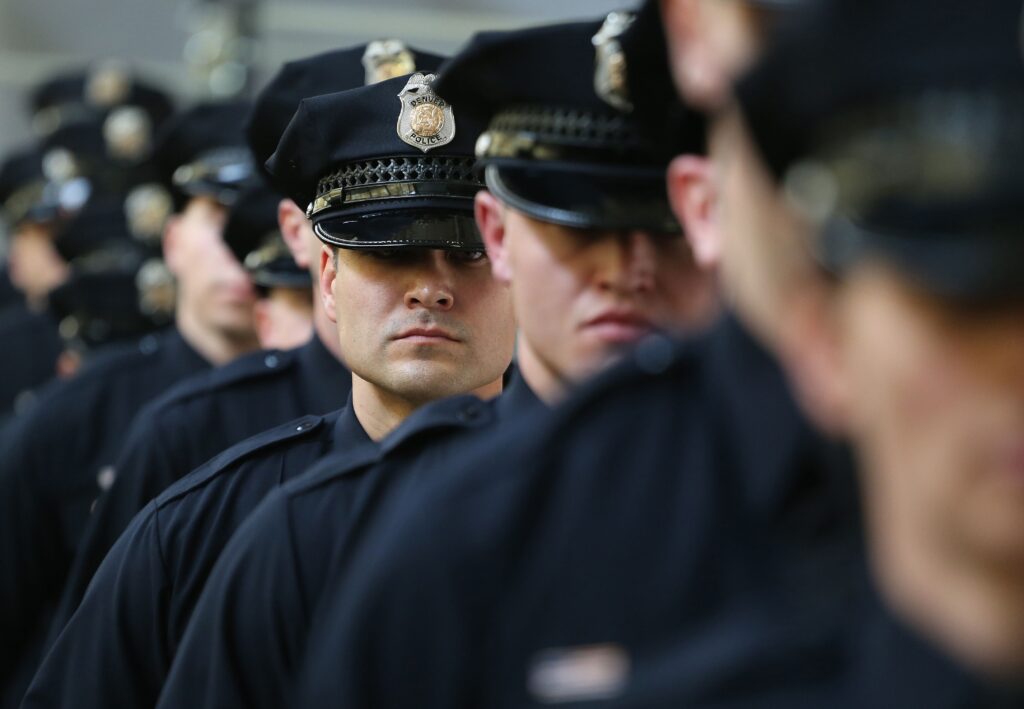
Federal judge declines to order Denver to let police critic apply for review board
Michael Karlik
michael.karlik@coloradopolitics.com
Updated 7 hours ago
A federal judge declined on Friday to order that Denver permit a longtime police critic to apply to join the board tasked with reviewing officers’ use of force. Regan Benson sought to become one of the two community members on...
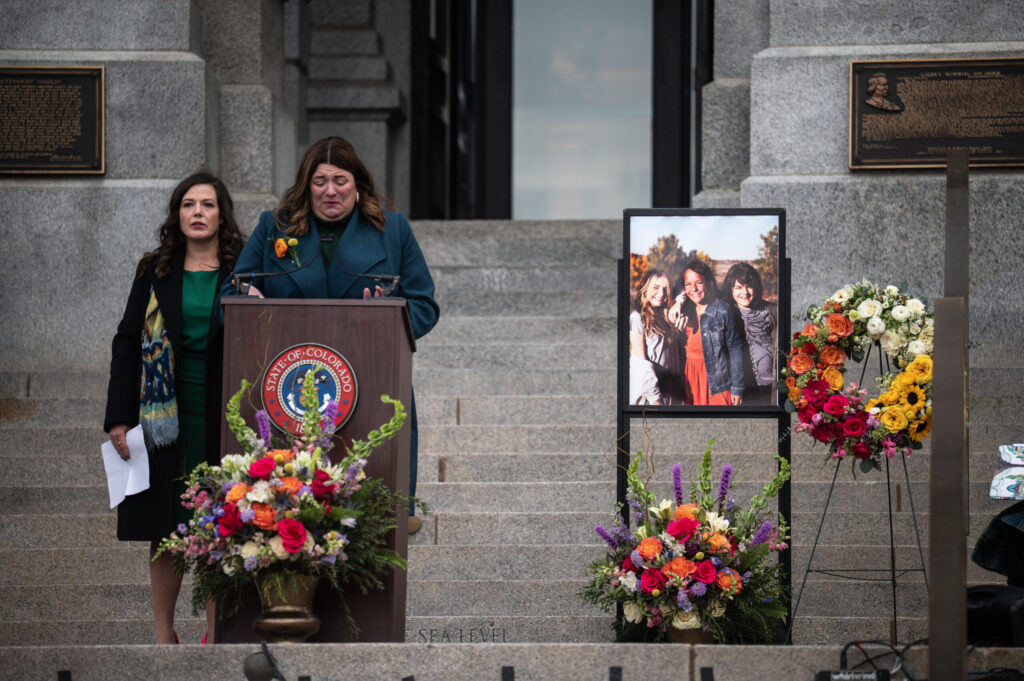
Flags lowered, colors raised: Colorado leaders and friends celebrate Sen. Faith Winter’s life
Marianne Goodland
marianne.goodland@coloradopolitics.com
Updated 2 days ago
It was the colors that stood out as hundreds braved the cold on Friday to celebrate the life of Sen. Faith Winter, who died in a two-car crash on Nov. 26. Flags at the state Capitol flew at half-staff at...
Colorado Supreme Court to hear case on ballot measure disclosure requirements
Marissa Ventrelli
marissa.ventrelli@coloradopolitics.com
Updated 2 days ago
The Colorado Supreme Court has agreed to hear a case challenging whether the state can require ballot measure committees to disclose the names of their registered agents in election communications. The case stems from a complaint filed during the 2020...
Divided 10th Circuit orders pretrial release of defendant facing drug charges
Michael Karlik
michael.karlik@coloradopolitics.com
Updated 2 days ago
The Denver-based federal appeals court overturned a judge’s order keeping a defendant in custody pending trial on Friday, ruling 2-1 that she was entitled to release under the law. Erika Esmeralda Garcia stands accused of two charges related to the...
Trump finally gets his peace prize as FIFA hands him inaugural award at World Cup draw
Christian Datoc and Mabinty Quarshie, Washington Examiner
christian.datoc.and.mabinty.quarshie.washington.examiner@gazetteedit.wpenginepowered.com
Updated 2 days ago
President Donald Trump has long said he is unbothered by being snubbed for a Nobel Peace Prize. However, that did not stop his friend and FIFA President Gianni Infantino from handing him an award and a medal on Friday, seemingly created just...