

? Political uncertainty roils small businesses
According to Visa’s chief economist, Hillary Clinton will win the presidency in the Nov. 8 general election, bringing with her several economic, regulatory and tax concerns for small businesses. Wayne Best explained this and other concepts to Denver-area small-business owners at a dinner presentation Wednesday, Oct. 26, at the University of Denver.
Best is a member of the World Economic Forum’s Global Strategic Foresight Community and produces Visa’s business and economic insights reports.
Best said a presidential election prediction model developed by Visa and Moody’s Analytics found Democratic candidate Clinton winning in Electoral College votes by a 332-206 count over Republican candidate Donald Trump. In the Electoral College system, the candidate who wins the most votes in enough states with at least 270 electoral votes wins the election.
“We’ve been doing this model since 1980 and so far, it’s been 100 percent correct,” Best said.
The model factors are the health of state economies, party affiliation and political realities in each state. In the 2012 presidential election, the model accurately predicted the outcome in all states and hit the Electoral College tally on the nose.
Researchers also looked at the economic policies, tax plans and related positions taken by the two candidates, Best added, and found issues and concerns with both.
“We had to go mostly by what they’ve said, because otherwise you haven’t heard a lot” about the details of either candidate’s economic plans, Best said.
As a result, Best listed fewer jobs and higher unemployment under a Trump administration, among other factors. Under a Clinton administration, Best said the country would see a near-term economic stimulus due to an infusion of federal funds in capital projects and a higher federal minimum wage, along with other factors.
Best also presented Denver-specific economic numbers, many previously identified in a city that has recovered from the Great Recession faster than the national average. For example, steady employment growth had helped lift retail sales, while Denver’s 4 percent unemployment rate remains consistent with the regional average and above the national average. Population growth two times the national average has been partly triggered by the creation of 30,000 higher-wage jobs in 2015, led by professional and business services, education and health care, leisure and hospitality and trade.
“So you’ve got employment that is well beyond the pre-recession numbers, and those people are spending money seen in the retail sales levels,” Best said.
However, a strong housing demand has created severe pressure on affordability across the region, and a tight labor market contributes to above-average wage gains.
After the presentation, Best told The Colorado Statesman that despite Denver’s healthy economic numbers, it would not be immune to any negative reaction to the next president’s economic steps.
Small businesses worried
William Dunkelberg, chief economist for the National Federation of Independent Business, presented graphs and information gathered from an annual survey of small and independent business members.
Dunkelberg has been NFIB’s chief economist since 1971, and for 43 of those years has produced a monthly Small Business Economic Trends report, which is read by Washington administration officials, Congressional leaders, the Federal Reserve and all state governments.
Dunkelberg noted the recovery from the Great Recession has been slower than others, such as the 1983-89 downturn.
“The main reason cited by our members is more government intervention so small businesses are not seeing as much bang for their buck,” he said.
Dunkelberg pointed out the recovery from the 83-89 recession created 689,000 jobs, while the Great Recession had led to just 438,000 jobs.
“It could have done better, but it’s not clear how much better,” he said. “On one hand, it’s good that the recovery didn’t go too fast so growth can continue. It’s not exciting, but it’s better than a downturn.”
Amendments another concern for small businesses
In a follow-up forum moderated by Denver Business Journal editor-in-chief Neil Westergaard, Dunkelberg said his message to the new president would be to reform the tax code so small businesses can invest capital and increase spending.
“Then I’d say go after health care costs and the (U.S. Environmental Protection Agency) regulations,” Dunkelberg added.
He also doubted Amendment 69, the ColoradoCare statewide single payer health care program on the Nov. 8 ballot, would succeed if passed.
“Single payer programs never work,” Dunkelberg said. “You have another case of the government setting all the rules from a big office building and that never seems to work well for us. You’ll end up with low quality care that’s overly expensive.”
Likewise, Amendment 70, which would gradually raise Colorado’s minimum wage to $12 an hour, is “a myth when it comes to raising income, wages and spending.”
“That money has to either come out of the business owners’ pocket or they charge higher prices,” Dunkelberg said. “I think it’s been proven to be a terrible idea that probably hurts the poor much more than it helps them. But it sounds good and voters always seem to vote for it.”


Colorado legislators eye changes to credit card ‘swipe fees’
Marianne Goodland
marianne.goodland@coloradopolitics.com
Updated 58 minutes ago
Colorado legislators are proposing to eliminate “swipe fees” on sales taxes, a move that proponents say would save businesses tens of thousands of dollars a year but which will likely revive counter-arguments that those fees help create a stable and...

Colorado declares measles outbreak after third case linked to Broomfield school
Nico Brambila
nico.brambila@denvergazette.com
Updated 2 hours ago
An unvaccinated Adams County child who tested positive for measles is tied to a case from Broomfield High School last month, leading state health officials to declare an outbreak. Colorado has four measles cases to date, amid a national outbreak....

Federal audit finds $77.8M in improper Medicaid payments for Colorado autism therapy
Nico Brambila
nico.brambila@denvergazette.com
Updated 2 hours ago
Colorado’s Medicaid payments for a therapeutic program for individuals with autism increased 172% in four years, prompting a federal audit by the Office of the Inspector General. Auditors found Colorado made $77.8 million in improper Medicaid payments for Applied Behavior...

Denver police chief on mask ban, mayor’s orders: ‘What enforcement looks like, I’m not exactly sure’
Deborah Grigsby
deborah.smith@denvergazette.com
Updated 15 hours ago
Denver bans wearing of face masks by law enforcers, use of city property to stage immigration operations As Denver takes steps to restrict federal agents conducting immigration enforcement in the Mile High City, its police chief said he is unclear...

Colorado lawmakers move to curb eminent domain powers after Xcel dispute
Marissa Ventrelli
marissa.ventrelli@coloradopolitics.com
Updated 21 hours ago
After months of backlash over Xcel Energy’s use of eminent domain in eastern Colorado, lawmakers representing Elbert and El Paso counties are advancing legislation that would bar utilities from initiating property takings until they’ve secured state approval and all required...

As parents claim some AI chatbots encourage teen suicide, Colorado legislators eye regulation
Marissa Ventrelli
marissa.ventrelli@coloradopolitics.com
Updated 17 hours ago
Juliana Peralta of Thornton was a vibrant, happy kid, said her mom, Cynthia Montoya. Then, in the final months of 2023, Cynthia began to notice a change in her 13-year-old daughter. Peralta had become more withdrawn and was on her...
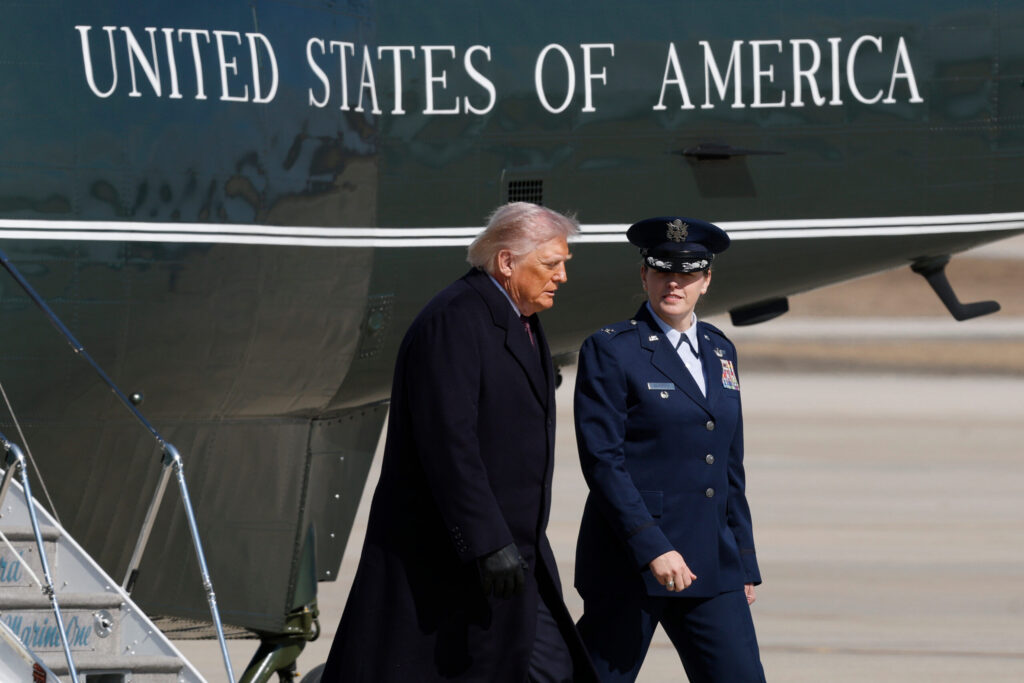
Trump to attend dignified transfer of six US service members killed by Iran
Christian Datoc, Washington Examiner
christian.datoc.washington.examiner@gazetteedit.wpenginepowered.com
Updated 19 hours ago
President Donald Trump will attend the soon-to-be-held dignified transfer of six American service members killed so far by Iran in Operation Epic Fury. White House press secretary Karoline Leavitt made the announcement during her Wednesday press briefing. “These heroes represent...

Judge declines to block potential Boebert challenger from going through assembly process in Colorado’s 4th CD
Ernest Luning
ernest.luning@coloradopolitics.com
Updated 21 hours ago
Congressional candidate Eileen Laubacher, one of the Democrats seeking to challenge Republican U.S. Rep. Lauren Boebert, can participate in the party’s caucuses and assemblies pending a court hearing later this month, a Denver judge ruled Tuesday in response to a...
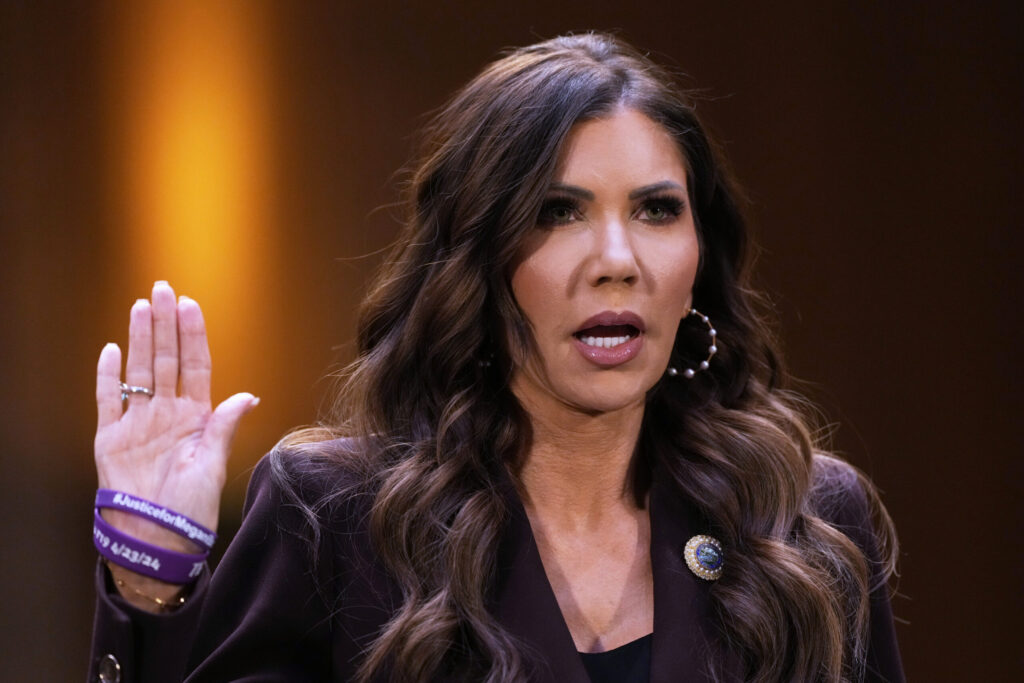
Sanctuary cities declined 17,864 requests to hold illegal immigrants for ICE in 2025: Noem
Anna Giaritelli Washington Examiner
anna-giaritelli-washington-examiner@coloradopolitics.com
Updated 5 hours ago
Sanctuary cities and counties declined to turn over 17,864 illegal immigrants in police custody to Immigration and Customs Enforcement in 2025, according to the Department of Homeland Security. Homeland Security Secretary Kristi Noem testified before the House Judiciary Committee on...

Federal judge dismisses malicious prosecution claim against former Denver prosecutor
Michael Karlik
michael.karlik@coloradopolitics.com
Updated 22 hours ago
A federal judge concluded on Monday that a former Denver prosecutor could not be sued for allegedly causing the arrests of two plaintiffs after they failed to appear for trial on the scheduled date, even though the trial had been...