

Looking for path forward, 9-1-1 task force dives into sea of options
Colorado’s 9-1-1 task force convened last Wednesday at the Capitol to take its first official steps in a larger effort to update policy guiding the state’s emergency phone service, which is experiencing increasing outages as technology, business models and infrastructure struggle to keep pace in the digital era.
As fast became clear at the meeting, the members have a long way to go and little time to get there. The task force is scheduled to deliver recommendations to lawmakers at the end of January on how best to proceed.
Members of the task force peppered witnesses with questions even as they digested basic lay-of-the-land material. Witnesses discussed how authorities elsewhere in the country oversee 9-1-1 services and the steps being taken to ramp up reliability and establish best practices. They also discussed what municipal, county, state and regional authorities are spending on their efforts and how they’re raising the funds to pay the bills.
But, as witnesses conceded, the information they found in many cases might well be incomplete or outdated or provisional. Just collecting solid data on 9-1-1 services and regulatory regimes presented a challenge that underlined the state of flux coast to coast.
Task force members looking for a solid roadmap were presented instead with a smorgasbord of approaches that have not been fully tested.
In Illinois there is no comprehensive plan to bring so-called next generation 9-1-1 services to the state – services that reliably pinpoint caller locations, weather cable cuts and network crashes through redundancies and can universally field text and internet messages. But 13 of Illinois’s southern counties have banded together to update regional services. The Arkansas-Texas Council of Governments similarly is launching satellite-enabled service that will cover 10 counties in the two states.
Task force Chair Sen. Mark Scheffel, R-Sedalia, asked Office of Legislative Legal Services Senior Attorney Jennifer Berman if she saw any trends in the national data she had collected.
“Are there any broad themes, certain things that are working?” he asked.
“It’s hard to speak to that,” Berman said. “There are statewide efforts … There is also perhaps a trend of grassroots efforts,” she added.
Approaches to oversight and funding are similarly varied. Some states regulate 9-1-1 through a utilities commission, as Colorado has done for landline technology. Elsewhere, state bodies only review 9-1-1 funding programs. Washington state pays for service through its general fund, which is rare. As Berman explained, most states fund 9-1-1 through surcharges on telecommunication company consumers – even though few states perform audits to make sure the money collected by companies from consumers for 9-1-1 services is actually used to pay for those services.
Colorado lawmakers in the spring created the task force after deadlocking on a bill pushed by industry to prevent the state’s public utility commission from regulating mobile phone and internet-based 9-1-1 services, which now make up the lion’s share of emergency calls. Industry argued that regulating that kind of newer traffic fell to the Federal Communications Commission.
But the FCC reported that it welcomed state-based efforts, so that discussion seems to be tabled. Task force members now seem motivated by mounting evidence that action is overdue.
Service outages and network crashes have been rising since 2010 in Colorado. The state this year is on track to see the most outages ever.
The average 9-1-1 outage in Colorado lasts ten hours, according to the state’s Public Utility Commission. Some 3,000 residents paid for 1.6 million phone minutes so far this year during which they could not have contacted 9-1-1.
Those numbers were compiled in mid-August. Winter is coming.
“As a physician, my concern is that we make sure everyone in the state gets access to 9-1-1, because even a five-minute delay is critical,” said task force member Sen. Irene Aguilar, D-Denver, in her opening remarks.
House Speaker Dickey Lee Hullinghorst, task force co-chair, argued the committee had the opportunity to set a productive tone that would serve to smooth the path for legislation in the fall. She was hinting at the intense lobbying on all sides that typically characterizes telecommunication proposals at the Capitol.
“We need a lot of information and facts that we hope this committee can provide in an objective way to legislators,” she said.
Scheffel made a point to note that the task force intended to work in partnership with industry. “We’re at a crossroad,” he said, celebrating the spirit of entrepreneurship that has revolutionized communications. “We want to capture that spirit, but not at the expense of anything we hold dear, including public safety.”
The task force has scheduled its next meetings for October 11 and 25.

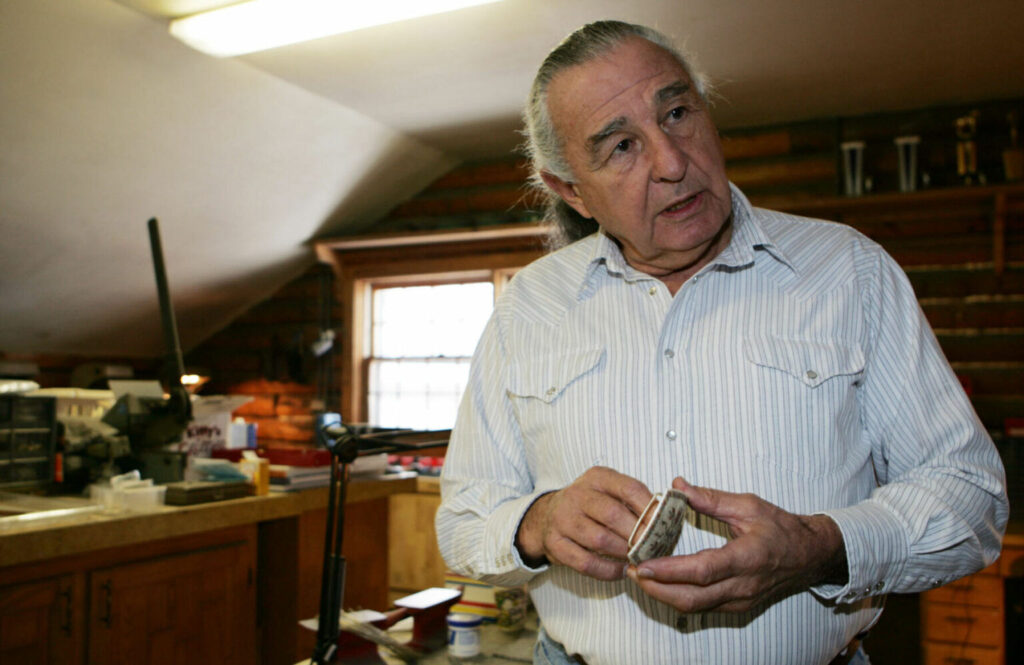
Ben Campbell, former US senator from Colorado and advocate for Native American rights, dies at age 92
Ernest Luning
ernest.luning@coloradopolitics.com
Updated 12 hours ago
Former U.S. Sen. Ben Nighthorse Campbell, who represented Colorado for two terms beginning in 1993 and was the first Native American elected to the chamber since the 1920s, died Tuesday, his family and close associates confirmed. He was 92. Campbell,...
Federal judge sides with Douglas County School District in ex-admin’s discrimination lawsuit
Michael Karlik
michael.karlik@coloradopolitics.com
Updated 17 hours ago
A federal judge concluded last week that a former high school administrator had not proven his claims of religious discrimination against the Douglas County School District. Corey McNellis had worked at Ponderosa High School since 2002 and served as the athletic...
Appeals court orders new menacing trial after faulty self-defense instruction
Michael Karlik
michael.karlik@coloradopolitics.com
Updated 18 hours ago
Colorado’s second-highest court ordered a new trial last week for an El Paso County defendant convicted of felony menacing, concluding an erroneous self-defense instruction may have influenced the verdict. Under Colorado law, self-defense is an affirmative defense, meaning the prosecution...
Investment and innovation expected across the defense community in town
Mary Shinn
mary-shinn@coloradopolitics.com
Updated 20 hours ago
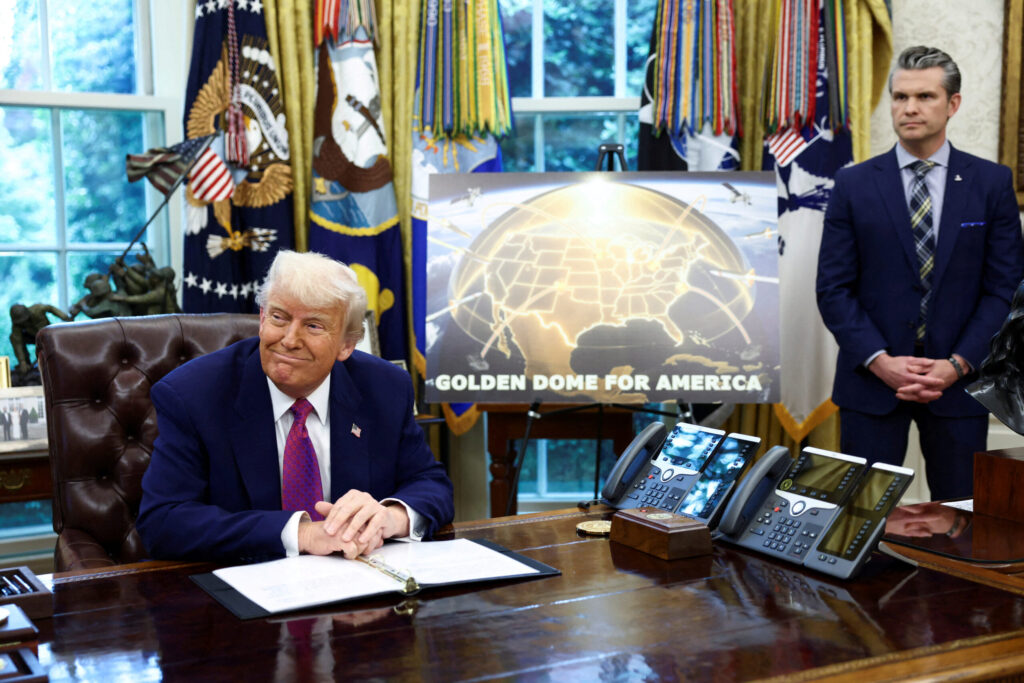
Investment and innovation are on the horizon for the defense community in Colorado Springs over the coming year. In December, the Missile Defense Agency selected 2,100 companies to compete for work on Golden Dome through a contract known as SHIELD...

Colorado eyes shift in particulate oversight amid EV push
Scott Weiser
scott.weiser@gazette.com
Updated 20 hours ago
Colorado’s Air Pollution Control Division proposed shifting oversight of solid particulates as small as one-seventh the width of a human hair from federal to state-only authority on Dec. 19, citing more than 20 years of compliance with national standards. The...

Saudi Arabia strikes Mukalla port over ‘extremely dangerous’ actions by ally UAE
Brady Knox, Washington Examiner
brady.knox.washington.examiner@gazetteedit.wpenginepowered.com
Updated 20 hours ago
Saudi Arabia launched airstrikes targeting Emirati equipment unloading at the port of Mukalla in Yemen on Tuesday after accusing its ally of “extremely dangerous” actions, a major escalation in the war-torn nation. After weeks of high tensions following the Emirati-backed...
Trump’s latest funding cuts dampen bipartisan dealmaking in 2026
Ramsey Touchberry, Washington Examiner
ramsey.touchberry.washington.examiner@gazetteedit.wpenginepowered.com
Updated 20 hours ago
Senate Republicans are optimistic about bipartisanship beyond healthcare next year, despite the looming midterm elections, but some of President Donald Trump’s latest actions could thwart the appetite for deal-making. The administration is dismantling a federal climate center and halting construction...
The 2026 battleground: Congress’s most vulnerable House and Senate seats
Samantha-Jo Roth, Washington Examiner
samantha-jo.roth.washington.examiner@gazetteedit.wpenginepowered.com
Updated 21 hours ago
With control of Congress expected to hinge on a narrow margin in 2026, a small group of House and Senate incumbents is already emerging as the most vulnerable lawmakers of the coming cycle. Both parties are already zeroing in on...
From mental health coverage to bison protection: New Colorado laws that take effect Jan. 1
Marissa Ventrelli
marissa.ventrelli@coloradopolitics.com
Updated 23 hours ago
A new year means new laws in Colorado, covering everything from health insurance and gun shows to “junk fees” and protections for wild bison. Here’s a list of laws passed during the 2025 legislative session that will go into effect...
Appeals court clarifies framework for parents’ First Amendment rights in child-naming disputes
Michael Karlik
michael.karlik@coloradopolitics.com
Updated 23 hours ago
Colorado’s second-highest court overturned a Jefferson County judge’s order last week in a long-running dispute about whether two ex-spouses must call their child by his first name or middle name outside the home. In doing so, a three-judge Court of...